
Featured Sintered Components & OEM Product Series (Part 1)
Explore our engineering capability in sintered metals, powder metallurgy, MIM, and high-precision casting components.
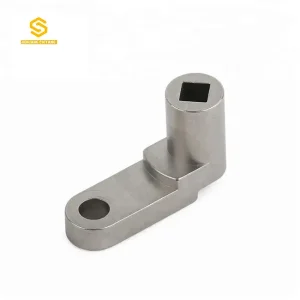
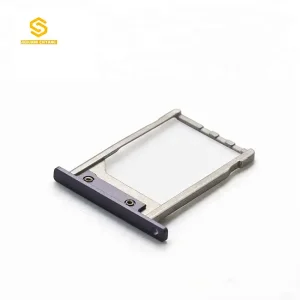
China Special Design for Stainless Steel Custom Metal Parts Powder Injection Molding Components
View Product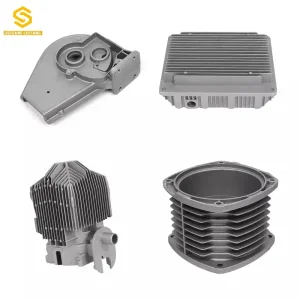
China Custom Professional Aluminum Die Casting Service OEM Factory Steel Die Casting CNC Machining
View Product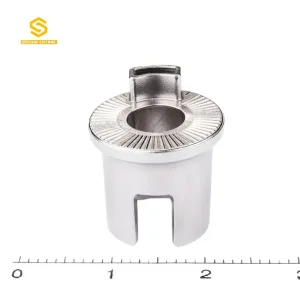
Wholesale OEM Factory for Custom Metal Injection Molding Watch Band Connector MIM Sintering
View Product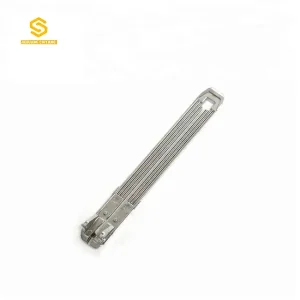
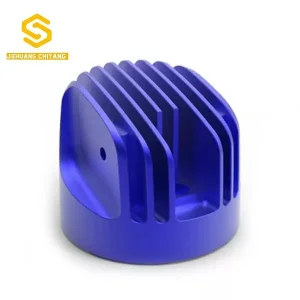
Wholesale Quality Inspection for Precision CNC Pressure Aluminum Zinc Die Casting Factory
View Product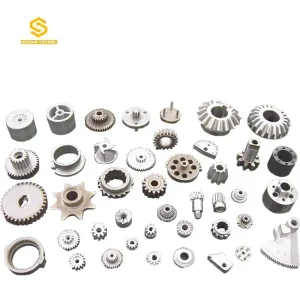
China Supply High Quality Gear Custom Structural Parts Powder Metallurgy Parts Manufacturer
View Product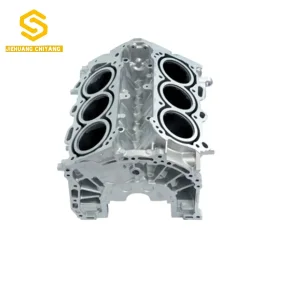
Wholesale Professional Factory for Motorcycle Accessories Windscreen Aluminum Die Casting
View ProductTechnical Whitepaper: Engineering porous sintered filter elements for industrial filtration
An authoritative guide on porous metal physics, pore geometry control, permeability mathematics, and vacuum sintering techniques for industrial OEMs.
Industrial liquid and gas filtration demands structural integrity under thermal shock, high differential pressures, and aggressive corrosive chemical environments. Traditional polymer and paper filter media deteriorate rapidly when subjected to temperatures above 150°C, acidic chemistry, or repeated mechanical backwashing. As leading sintered filter suppliers and custom manufacturing factories, Jiehuang (JHMIM) leverages advanced powder metallurgy (PM) and Metal Injection Molding (MIM) techniques to manufacture highly porous metal filter elements that overcome these performance bottlenecks.
1. Metallurgy of Porous Metal Media & Sintering Mechanisms
Sintering porous metal filters requires solid-state diffusion rather than full melting. Sintering porous stainless steel (316L, 304L, 17-4PH) or titanium involves heating compacted metallic powders in a strictly controlled vacuum atmosphere furnace (operating at temperatures up to 1700°C) or under a dry hydrogen reducing atmosphere. Metallurgical necking occurs between adjoining metal powder granules without collapsing the inter-particle pore networks.
2. Fluid Mechanics & Permeability Engineering (Darcy's Law Calibration)
Calculating the flow rate versus differential pressure across a porous metal filter element relies on Darcy's Law for porous media, adjusted for viscous and inertial resistance losses (Forchheimer equation):
ΔP / L = (μ / α) * v + β * ρ * v²
Where ΔP is the pressure drop across the media thickness L, μ represents fluid dynamic viscosity, α is the specific viscous permeability coefficient, v is the superficial fluid velocity, β is the inertial resistance coefficient, and ρ is fluid density. Our OEM engineering team custom-engineers powder grain particle size distributions (PSD) to maximize flow throughput while maintaining strict absolute micrometer pore cut-off points (0.2 µm to 100 µm).
China Factory Supply Chain Advantages & Manufacturing Ecosystem
Why leading global corporations partner with our Ningbo precision powder metallurgy hub for wholesale sintered filter production.
In-House Gas & Water Powder Atomization
By integrating raw metal powder atomization directly with our vacuum sintering facilities, we ensure strict control over spherical powder morphology, elemental chemistry purity, and batch-to-batch consistency while removing intermediate distribution margins.
Rapid Tooling & Mold Production
Equipped with high-precision CNC EDM wire cutting and 5-axis CNC machining centers, our factory manufactures custom porous filter dies, sintered mesh forming tooling, and MIM molds in as fast as 10 to 14 business days.
30% to 50% Total Cost Reduction
Scale economies from our 28,000 m² factory floor paired with automated powder press machinery enable significant cost savings compared to European or North American sintered filter manufacturers without sacrificing ISO/IATF standards.
Material Selection Matrix for Wholesale Sintered Filters
Compare alloy choices, temperature tolerances, and mechanical attributes to determine the optimal media for your OEM fluid handling system.
| Material Grade | Operating Temp Max | Corrosion Resistance | Tensile Strength (MPa) | Key Industrial Applications |
|---|---|---|---|---|
| AISI 316L Stainless Steel | 550 °C (Air) / 800 °C (Inert) | High (Organic acids, hydraulic oils) | 180 - 240 | Chemical processing, steam filtration, pharmaceuticals |
| Porous Titanium (Gr 1 / Gr 2) | 450 °C (Oxidizing environment) | Exceptional (Wet chlorine, sea water, acids) | 250 - 320 | PEM electrolyzer PTL, seawater desalination, medical devices |
| Sintered Bronze (CuSn10) | 200 °C | Moderate (Atmospheric, pneumatic air) | 80 - 120 | Pneumatic silencers, flame arrestors, oil-lubricated bushings |
| Nickel Alloy (Hastelloy C-276) | 650 °C | Extreme (Strong mineral acids, halides) | 300 - 410 | Aggressive chemical plants, nuclear waste filtration |
| Inconel 600 / 625 | 980 °C | Superior High-Temp Oxidation | 350 - 450 | Hot gas cleanup, aerospace hydraulic systems, turbine vents |
Global Procurement Scenarios & Field Implementations
From high-purity semiconductor gases to heavy industrial catalyst recovery, examine how custom porous sintered filters serve crucial functions.
1. Petrochemical Catalyst Recovery & Hot Gas Cleaning
In high-temperature fluidized bed reactors, precious metal catalyst powders must be reclaimed from exhaust gas streams at temperatures over 500°C. Sintered 316L stainless steel filter candles deliver 99.99% particulate retention at 0.5 µm while enduring continuous reverse-pulse blowback cleaning cycles without structural fatigue.
2. Pharmaceutical Fermentation & Micro-Sparging
Controlled gas aeration in bioreactors demands micro-porous spargers capable of producing micron-sized oxygen and carbon dioxide bubbles. Porous sintered titanium or 316L sparger tubes ensure uniform mass transfer gas diffusion, optimizing cellular yield while complying with 3-A Sanitary Standards and FDA cleanroom requirements.
3. Semiconductor High-Purity Process Gas Filtration
Etching and chemical vapor deposition (CVD) tools require particle-free delivery of ultra-high purity (UHP) specialty gases (e.g., Silane, Ammonia). Sintered nickel and 316L micro-filters prevent sub-micron metallic particle contamination down to 0.003 µm rating, certified via helium leak testing.
Metallurgical Innovations & Industry Growth Trends
Key technological shifts reshaping the porous metal media landscape across green hydrogen, carbon capture, and additive manufacturing.
Hydrogen Economy: PEM Electrolyzer PTLs
Proton Exchange Membrane (PEM) water electrolyzers require porous transport layers (PTL) fabricated from sintered titanium powder or fiber felt. These layers require ultra-smooth surface flatness, controlled 50% porosity, and protective platinum/titanium nitride coatings to resist anodic corrosion in oxygen-rich operational environments.
Additive Manufacturing (3D Printing + Sintering)
Combining Binder Jetting (BJT) additive manufacturing with high-temperature vacuum sintering furnaces enables the creation of complex, custom-contoured porous filter geometries that were previously unachievable with conventional uniaxial die pressing or cold isostatic pressing (CIP).
Decarbonization & Direct Air Capture (DAC)
Next-generation Direct Air Capture plants deploy massive sintered porous metal adsorption structures to maximize air-to-sorbent contact surfaces, requiring high-volume wholesale filter suppliers capable of maintaining rigorous dimensional tolerances across millions of sintered units.
Rigorous Quality Assurance & ISO Quality Compliance
Every sintered filter disc, cartridge, cylinder, and porous component undergoes exhaustive physical and metallurgical inspection before export.
ISO 4003 Bubble Point Pore Testing
Verification of maximum pore size (first bubble pressure) using ethanol or isopropyl alcohol immersion in accordance with ISO 4003 and ASTM E128 standard test methods to guarantee absolute filtration rating thresholds.
ISO 2738 Density & Porosity Evaluation
Measurement of open and closed porosity levels, fluid permeability coefficients, and dry density balances to confirm structural integrity and fluid dynamics specs prior to mass volume assembly.
Burst & Differential Pressure Integrity
High-pressure hydro-static challenge testing to certify that sintered filter elements endure differential pressures up to 210 bar (3,050 PSI) without deformation or media migration into downstream pure flows.
Frequently Asked Questions (Sintered Filter Buyers Guide)
Clear, direct technical answers curated by our senior powder metallurgy engineers for global OEM buyers and engineering design teams.
What is the difference between sintered metal powder filters and woven wire mesh filters?
Sintered metal powder filters feature a 3D depth-filtration tortuous pore structure made by bonding metallic granules under high furnace heat, providing exceptional fine particle entrapment, high compressive strength, and deep cleaning capability. In contrast, woven wire mesh offers 2D surface filtration with uniform square openings; while providing higher flow rates at larger pore sizes, mesh lacks the mechanical rigidity, depth holding capacity, and resistance to severe differential pressures that sintered powder elements offer.
How do you clean and recondition clogged sintered stainless steel filter cartridges?
Sintered stainless steel filter elements are cleanable and reusable. Standard factory reconditioning techniques include ultrasonic bath cleaning with chemical solvents, reverse liquid flow backwashing, gas pulse blowback, or high-temperature burnout furnace baking (to eliminate organic contaminants). Proper cleaning restores fluid permeability back to 95–98% of original baseline performance.
What custom shapes and dimensions can Jiehuang manufacture in-house?
We supply custom wholesale sintered filters in virtually any geometric configuration, including seamless porous tubes (up to 1200mm length), flat sintered discs, conical filter cups, porous sheet media, threaded fittings, and complex 3D Metal Injection Molding (MIM) filter housings integrated directly with porous filtering zones.
What is the minimum order quantity (MOQ) and lead time for custom production orders?
Our baseline MOQ for custom sintered filters is 2,000 pieces for standard geometries, and 5,000 pieces for complex structural powder metallurgy components. Prototyping and initial sample batching (utilizing metal 3D printing or soft tooling) can be executed within 10 to 14 days, while production mold tooling and sample delivery average 30 days.
How do you guarantee international supply chain compliance and IP protection?
Every engineering project begins with a binding bilateral Non-Disclosure Agreement (NDA). Production and quality steps adhere strictly to ISO 9001:2015 and IATF 16949 standards. All material batches carry full mill test certificates (MTC), chemical spectrum analyses, and RoHS/REACH environmental compliance documentations.
Featured Sintered Components & OEM Product Series (Part 2)
Explore additional OEM manufacturing options, atomized powders, precision die castings, and high-temperature vacuum sintering services.
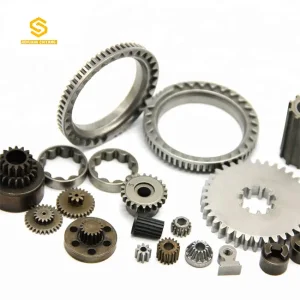
Wholesale Ikari OEM/ODM Plastic Mould China Supplier Metal Injection Molding Used in Automotive SMT Connector
View Product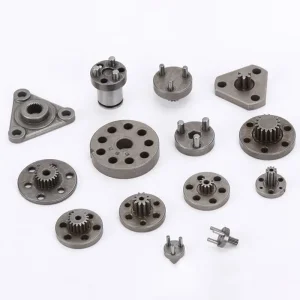
Wholesale China Cheap Price Metal Injection Moulding Powders (MIM) by Gas and Water Atomized Manufacturers
View Product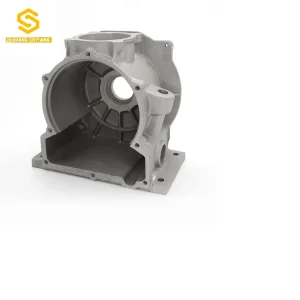
Wholesale OEM Customized Chinese Factory Precision Custom Hardware Accessories Magnesium Zinc Aluminum Parts
View Product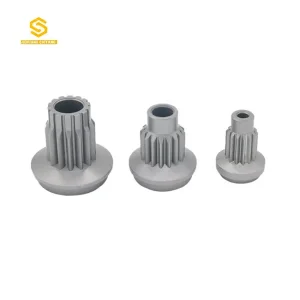
China OEM Ikari Custom Insert Molding Manufacturers Metal Injection Molding Used in Automotive Connector
View Product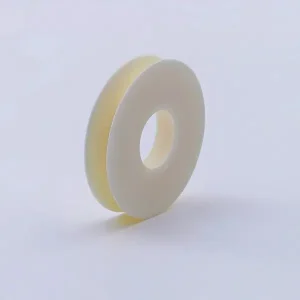
Wholesale What Makes JHMIM a Favorite for Precision Ceramic Injection Molding Parts Supplier
View Product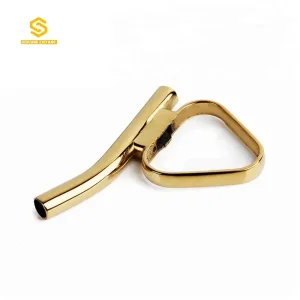
China Professional 1700c High Temperature Vacuum Sintering Furnace for Powder Metallurgy CIM MIM Sintering
View Product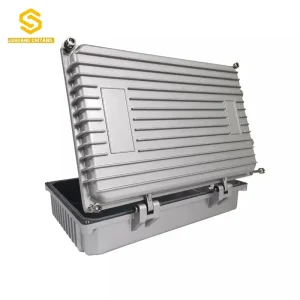
China Factory Outlets High Precision Auto Engines Parts Aluminum Alloy Die Casting Manufacturers
View Product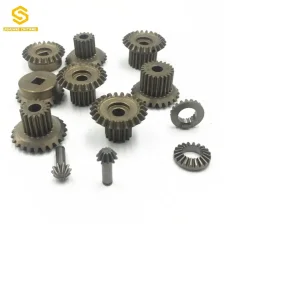
Wholesale Competitive Price for Powder Metallurgy Auto Parts Good Quality Wiper Motor Part Manufacturer
View ProductPartner with China's Premier Sintered Filter Manufacturer
Send us your 2D PDF drawings and 3D STEP models. Our senior metallurgical engineers will analyze your pore rating requirements, fluid compatibility, and tolerance stack-ups, providing a comprehensive factory quotation within 48 hours.