
Featured Wholesale Sintered & MIM OEM Metal Components
Explore our custom manufacturing portfolio featuring high-density sintering, precision metal injection molding (MIM), and powder metallurgy options engineered to exact drawing tolerances.
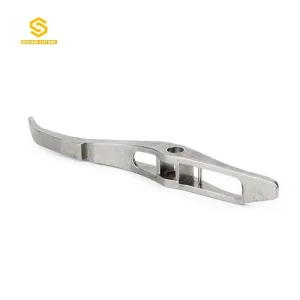
Wholesale Special Price for China High Quality Cheap Price OEM/ODM Service ISO9001 Standard Metal Injection Molding Companies Manufacturer, Supplier
View Specifications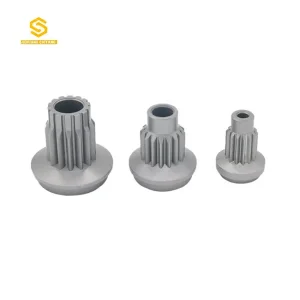
China China OEM Ikari Custom Insert Molding China Manufacturers Metal Injection Molding Used in Automotive Connector Supplier, Factory
View Specifications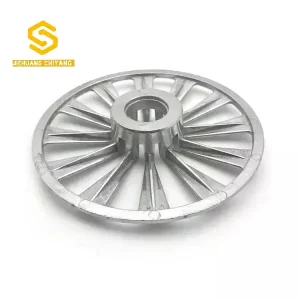
Wholesale China Factory custom A360 ADC12 die cast aluminum die casting auto spare parts Manufacturer, Factories
View Specifications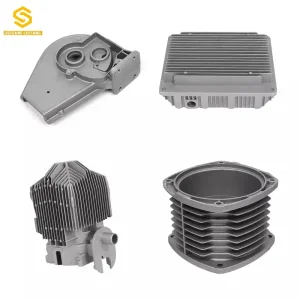
Wholesale Factory For Chinese Factory Precision Custom Hardware Accessories Magnesium Zinc Aluminum Parts Die Casting Investment Casting Manufacturer, Factories
View Specifications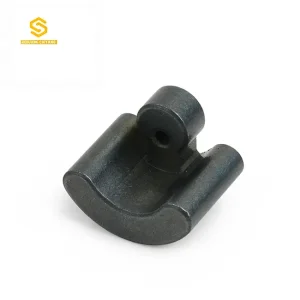
China Discountable price Metal Injection Molding MIM Sintered Parts Manufacturer for Precision Machinery Steel Components Manufacturers, Factories
View Specifications
China Factory Selling Powder Metallurgy Sintering Parts for Car Camshaft Vvt Engine Chain Sprocket Manufacturer, Manufacturers
View Specifications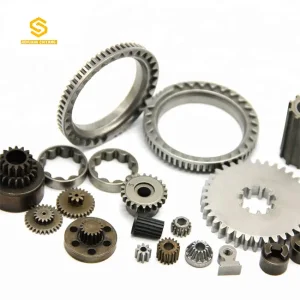
Wholesale Factory making Df-Slm260 Selective Laser Melting Powder Dental 3D Printer Metal Powder High Purity Slm Printing Manufacturers, Supplier
View Specifications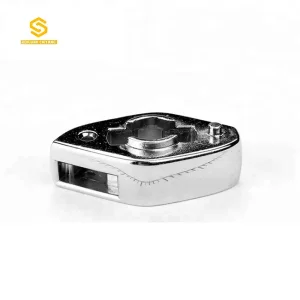
China Metal injection molding stainless steel parts Manufacturers, Factories
View SpecificationsGlobal Commercial Landscape of Sintered Metal Filtration Systems
As modern chemical, semiconductor, aerospace, and renewable energy industries transition toward higher operating pressures, extreme temperatures, and harsh corrosive environments, traditional polymer and paper filter media fail to deliver sustained operational stability. Porous sintered metal filters represent the pinnacle of fluid-solid separation technology.
Green Hydrogen & Fuel Cell Expansion
The rapid acceleration of proton exchange membrane (PEM) and alkaline water electrolysis projects worldwide has created unprecedented demand for titanium sintered porous transport layers (PTLs). Custom-engineered sintered titanium porous sheets act as liquid-gas diffusion layers, requiring consistent micro-porosity, high electrical conductivity, and extreme resistance to anodic oxidation.
As a leading wholesale sintered filters manufacturer, Ningbo Jiehuang Chiyang Electronic Tech Co., Ltd. produces uniform titanium and stainless steel sintered media optimized for maximum gas bubble detachment and minimal ohmic drop.
Semiconductor & Ultra-Pure Gas Filtration
Microchip fabrication plants require sub-micron particle filtration in high-purity process gases such as silane, ammonia, and specialty etch gases. Sintered nickel (Ni200) and 316L stainless steel filter cartridges eliminate particle generation down to 0.003µm under vacuum and high-pressure flow regimes.
Our state-of-the-art sintering furnaces deliver seamless monolithic filter tubes with polished surface finishes, ensuring zero outgassing and strict compliance with global microelectronics manufacturing standards.
Engineering Principles of Porous Metal Sintering & Fluid Dynamics
Understanding how powder morphology, compaction pressure, thermal profiles, and alloy chemistry dictate porosity, permeability, mechanical strength, and backwash cleanability.
1. Powder Morphology & Compaction
Sintered porous metal elements originate from spherical, water-atomized, or gas-atomized metal powders. Powder size distribution directly determines the mean pore size. We utilize multi-axial mechanical pressing, cold isostatic pressing (CIP), and gravity settling to produce uniform preforms before high-temperature sintering.
- Spherical Powder: High permeability & low pressure drop
- Irregular Powder: Higher mechanical interlocking strength
- Controlled Porosity Volume: 30% to 65% void ratio
2. Solid-State Diffusion & Necking
Sintering is conducted in vacuum or hydrogen-reducing atmosphere furnaces at temperatures below the metal melting point (typically 1100°C to 1350°C for stainless steel). Atomic diffusion creates metallurgical bonds ("necks") between adjacent particles without collapsing the interconnected pore matrix.
- High Tensile & Burst Strength under pressure surges
- No media migration vs. fiber/mesh membranes
- Thermal shock immunity up to 500°C ΔT
3. Darcy's Law & Bubble Point Verification
Fluid throughput across a sintered filter element is calculated using Darcy's Law for porous media permeability ($\Delta P = \frac{\mu \cdot v \cdot L}{\kappa}$). Quality assurance includes ASTM E128 Bubble Point Testing to determine maximum pore size ($D = \frac{4\gamma \cos\theta}{\Delta P}$) and ISO 4022 permeability measurements.
- 100% Non-destructive pore size validation
- Minimal differential pressure drop design
- Long backwashing lifetime (reusable media)
| Alloy Grade | Composition Spec | Max Temp (°C) | Corrosion Resistance Profile | Primary Industrial OEM Application |
|---|---|---|---|---|
| 316L Stainless Steel | Fe-17Cr-12Ni-2.5Mo (Low Carbon) | 500°C (Air) / 650°C (Red.) | Excellent against general organic acids, alkalis, and hydraulic fluids | Chemical sparging, CIP/SIP pharma filtration, steam traps |
| Titanium Grade 1 / 2 | Pure Unalloyed Titanium (CP-Ti) | 400°C | Superior in wet chlorine, seawater, nitric acid, and oxidation cells | PEM Electrolyzer PTL sheets, sea water desalination, biomedical |
| Inconel 600 / 625 | Ni-Cr-Fe Superalloy | 950°C | Exceptional resistance to high-temp oxidation, carburization, and chloride pitting | Aerospace jet engine exhaust sampling, nuclear waste processing |
| Sintered Bronze | CuSn10 (89% Cu, 11% Sn) | 200°C | Good against air, inert gases, oils, and non-corrosive liquids | Pneumatic silencers, oil mufflers, flame arrestors, bronze bushings |
| Monel 400 | 67% Ni, 30% Cu alloy | 550°C | Outstanding in hydrofluoric acid, marine environments, and strong alkalis | Alkylation chemical plants, offshore oil rig gas treatment |
Localized Application Scenarios across Key International Markets
How our sintered metal filter elements are deployed across diverse regional operating environments to resolve critical fluid handling challenges.
North America: Oil & Gas / Refining
In Texas, Alberta, and the Gulf Coast refineries, sintered 316L and Hastelloy filter cartridges are used in hydraulic fracturing fluid recovery, catalyst retention in fluid catalytic cracking (FCC) units, and high-pressure amine gas sweetening plants. Their ability to withstand continuous thermal cycling without pore distortion makes them preferred over disposable elements.
European Union: Food, Beverage & Pharma
Strict EU cGMP and FDA guidelines require inline steam sterilization (SIP) and chemical washdowns (CIP). Our porous sintered metal filter discs and spargers supply micro-bubble aeration for bioreactor fermenters and trap culinary steam particulate in German, French, and Swiss pharmaceutical manufacturing plants.
Asia-Pacific: Automotive & Electronics
Across Japanese, South Korean, and Chinese industrial hubs, our sintered metal parts and powder metallurgy gears power VVT engine chain sprockets, automotive fuel injection assemblies, and ultra-clean gas lines for semiconductor fab expansions in Taiwan and Singapore.
OEM Engineering Solutions & Design for Manufacturability (DFM)
From initial 2D/3D drawing review to rapid tooling, mold flow simulation, and serial production, Ningbo Jiehuang delivers turn-key porous metal component engineering.
System Solutions Matrix
-
Gas-Solid Separation: Dust removal from hot gas streams in power generation and incineration plants.
-
Liquid-Solid Filtration: Catalyst recovery in petrochemical slurry reactors with cleanable multi-tube bundles.
-
Gas Sparging & Aeration: High-efficiency gas absorption through controlled micron bubble dispersion.
-
Flame Arrestor Elements: Porous sintered metal disks preventing flame propagation in explosive gas lines.
5-Step DFM Engineering Protocol
- 2D/3D Drawing Analysis: Our engineering team checks step files for wall thickness uniformity, taper angles, and pore gradient feasibility within 24 hours.
- Powder Selection & Blending: Tailoring specific grain size distributions to match required micron ratings and flow rate specifications.
- Compaction Tooling Design: Custom die sets engineered with precision shrinkage allowances for high-temperature sintering.
- Controlled Atmosphere Sintering: Continuous belt and vacuum furnace sintering monitored by dew point and oxygen sensors.
- Quality Verification & CMM Report: 100% key-dimension inspection, bubble point testing, density testing, and material certification.
Next-Generation Sintering: Technology Outlook & R&D Horizons
Strategic metallurgical developments driving higher efficiency, additive manufacturing integration, and extreme-environment performance for global OEMs.
AM + Powder Metallurgy Hybrids
Combining Selective Laser Melting (SLM) metal 3D printing with conventional powder sintering. This enables solid outer structural housings with integrated, complex inner porous filter cores in a single manufacturing step without welding joints.
Asymmetric Pore Gradient Media
Developing multi-layer sintered structures where pore sizes transition from coarse support layers (40µm) to ultra-fine filtration membranes (0.2µm). This architecture maximizes cake filtration efficiency while reducing overall pressure drop by up to 40%.
High-Entropy Alloys (HEAs)
Investigating multi-principal element sintered alloys for extreme chemical synthesis environments. Sintered HEAs offer unmatched resistance to molten salts, strong acids, and severe hydrogen embrittlement.
Wholesale Procurement & Engineering FAQ
Detailed technical answers to common questions asked by B2B buyers, process engineers, and sourcing directors.
What is your minimum order quantity (MOQ) for wholesale sintered filter elements?
Our standard MOQ for wholesale sintered metal filters and metal injection molding (MIM) parts is generally 2,000 pieces per batch. For large powder metallurgy structural gears, the MOQ is 5,000 pieces. However, prototype pilot runs and initial design verification batches are supported on a per-project basis.
How do you clean and backwash sintered porous metal filter elements?
Sintered metal filters can be regenerated using several methods: reverse liquid/gas backwashing, ultrasonic bath cleaning, chemical solvent flushes, or high-temperature burnout for organic contaminants. This reusable nature drastically reduces lifetime operating costs compared to single-use polymer cartridges.
Can Ningbo Jiehuang custom produce sintered filters directly from customer STEP files?
Yes. We specialize in OEM contract manufacturing. You provide 3D STEP/IGES CAD files along with 2D drawings specifying material grade, micron rating, flow rate requirements, and dimensional tolerances. Our engineering team returns a complete DFM evaluation and quote within 48 hours.
What tolerances can be achieved on custom sintered porous metal components?
Standard as-sintered dimensional tolerances range from ±0.05mm to ±0.1mm depending on geometry and size. For critical fitting surfaces, post-sintering secondary CNC machining, sizing, or grinding can achieve tolerances as tight as ±0.005mm.
How do sintered metal filters compare to woven wire mesh filters?
While woven wire mesh provides surface filtration with fixed apertures, sintered porous metal filters provide depth filtration with a 3D interconnected tortuous pore network. Sintered media features vastly higher mechanical strength, superior collapse pressure resistance, and zero wire displacement under high turbulence.
Extended Precision Powder Metallurgy & Sintered Hardware Catalog
Review additional precision components, titanium parts, powder copper bushings, ceramic connectors, and die casting components manufactured at our facility.
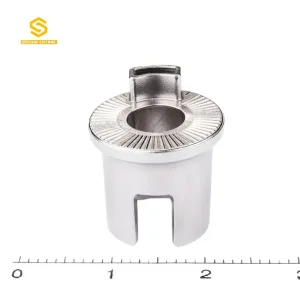
China OEM/ODM Supplier High Precision Powder Injection Molding Manufacturer, Factories
View Specifications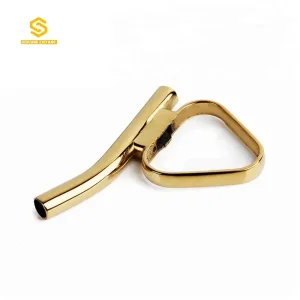
China Chinese Professional OEM Metal Injection Molding Process for Stainless Steel Parts Customized Hardware Suppliers, Factories
View Specifications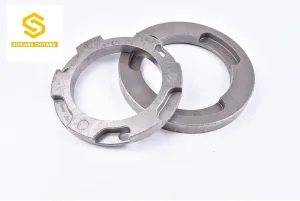
Wholesale PM motorcycle sintered parts Factory, Factories
View Specifications
China Ordinary Discount Custom Metal Injection Molding Stainless Steel Parts for Complex CNC Metal Components Sintering Metal Parts for Machinery Spare Parts Manufacturers, Factories
View Specifications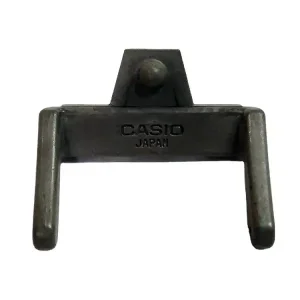
Wholesale Ultra Titanium Case Parts Stainless Steel Watch Band Charms Manufacturers, Factory
View Specifications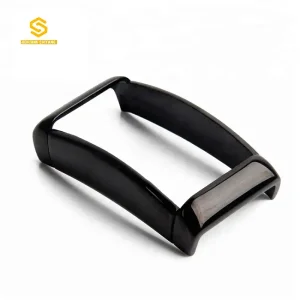
Wholesale Manufactur standard China OEM Powdered Copper Based Sintered Metal Parts Supplier, Factory
View Specifications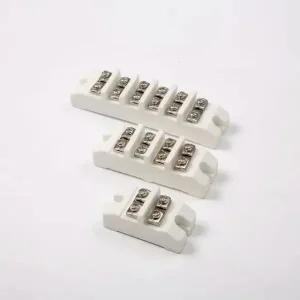
Wholesale Ceramic Terminal Connector Supplier, Factories
View Specifications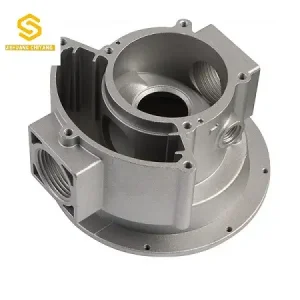
China 2023 High quality Custom CNC Machine Aluminum Die Casting for Auto Spare Parts Manufacturer, Suppliers
View SpecificationsPartner with a Leading Wholesale Sintered Filters Manufacturer
Submit your 2D drawings (PDF) and 3D STEP models today. Receive an engineer-reviewed DFM analysis and transparent quotation within 48 hours. NDA protected & 100% quality guaranteed.