
Macro Industry Solutions & The Sintering Paradigm Shift
Modern industrial manufacturing demands an unprecedented balance between geometric complexity, mechanical strength, and unit-cost scalability. As global original equipment manufacturers (OEMs) shift away from subtractive CNC machining to reduce material waste and energy consumption, powder metallurgy (PM) and metal injection molding (MIM) have emerged as pivotal technological pillars. Sintered metal parts provide near-net-shape manufacturing capability, allowing precise batch production of complex components with minimal post-processing.
Economic Efficiency
Sintering consolidates multi-part assemblies into single, high-integrity structural components. By eliminating extensive scrap metal generated during traditional turning or milling operations, wholesale buyers achieve predictable landed costs even during raw material price volatility.
Custom Material Engineering
Unlike standard wrought alloys restricted by rolling mill availability, powder metallurgy allows exact chemical alloying. Sintered steel, copper-infiltrated iron, stainless steels, and advanced ceramic matrices can be tailored for unique magnetic, thermal, or wear characteristics.
High-Volume Repeatability
State-of-the-art multi-cavity tooling coupled with automated compaction presses (up to 1,000 tons) guarantees part-to-part dimensional tolerance within ±0.02mm, making powder metal parts ideal for automotive powertrains and industrial robotics.
Sintered Alloy Engineering & Material Selection Matrix
Selecting the appropriate powder alloy system requires a comprehensive understanding of yield strength, apparent density, sintered hardness, and thermal expansion coefficients. The technical table below outlines the mechanical benchmarks of primary sintered alloys manufactured by accredited suppliers under MPIF Standard 35 specifications.
| Material Classification | Standard Designation | Density (g/cm³) | Tensile Strength (MPa) | Yield Strength (MPa) | Primary Industrial Applications |
|---|---|---|---|---|---|
| Sintered Iron-Nickel Steel | FN-0205 / FN-0208 | 6.8 – 7.4 | 380 – 650 | 280 – 480 | Automotive timing gears, oil pump rotors, structural brackets. |
| Copper-Infiltrated Steel | FC-0208-IN | 7.2 – 7.6 | 550 – 850 | 450 – 680 | Heavy-duty power tool gears, lawn & garden drive components. |
| Austenitic Stainless Steel | SS-316L (MIM / PM) | 7.5 – 7.8 | 480 – 580 | 220 – 300 | Medical instruments, chemical valve housings, marine hardware. |
| Pre-Alloyed Steel | FL-4405 / FLN2-4405 | 7.0 – 7.5 | 600 – 1100 | 480 – 850 | High-stress planetary gears, transmission synchronizer rings. |
| Titanium Alloy (TiMIM) | Ti-6Al-4V (Grade 5) | 4.4 – 4.5 | 860 – 960 | 780 – 880 | Aerospace fasteners, surgical implants, defense mechanisms. |
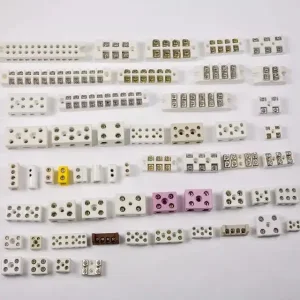
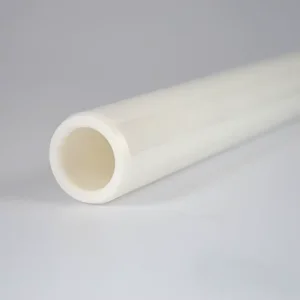
| Structural Ceramics | ZrO₂ (Zirconia) | 5.9 – 6.05 | 1200 (Flexural) | N/A (Hardness 1200 HV) | Wear-resistant ceramic tubes, wire guides, terminal blocks. |
Sintering Thermal Kinetics & Microstructure
During the sintering cycle—typically conducted in atmosphere-controlled continuous mesh-belt furnaces at temperatures ranging from 1120°C to 1350°C—solid-state diffusion occurs at atomic contact points between powder particles. Neck growth occurs rapidly, converting volatile binder residues into clean metallographic structures. Precision atmosphere control (Endothermic gas, pure Nitrogen-Hydrogen mixes, or high-vacuum environments) prevents oxidation and precisely manages decarburization or carbon pickup.
Secondary Densification Treatments
For applications requiring hermetic sealing, extreme fatigue resistance, or superior surface hardness, secondary operations are performed:
• Resin / Copper Impregnation: Fills residual interparticle pores to ensure leak-tight performance under hydraulic pressures.
• Surface Sinter-Carburizing & Nitriding: Case hardens the outer boundary up to 60+ HRC while maintaining a ductile core.
• Warm Compaction & High-Temperature Sintering: Pushes densities beyond 7.5 g/cm³ without secondary forging.
Global Commercial Realities & Wholesale Procurement Strategy
Navigating global supply networks for custom powder metallurgy components demands rigorous evaluating of vendor manufacturing capability, tooling economics, lead times, and total cost of ownership (TCO).
Tooling ROI & Volume Amortization
Powder metallurgy compacting dies and MIM injection molds require initial capital expenditure. However, hardened tool steel dies (e.g., D2, tungsten carbide) routinely survive 100,000 to over 1,000,000 press cycles. When amortized across medium-to-high production runs (5,000+ units), unit costs plummet drastically compared to subtractive techniques.
Supply Chain Resilience
Leading Chinese manufacturing hubs in Ningbo and Zhejiang provide integrated ecosystems featuring raw atomized metal powder synthesis, tooling fabrication, vacuum sintering, secondary CNC machining, and electroplating within tight geographic radiuses, insulating buyers from global lead-time spikes.
Supplier Vetting Criteria
When evaluating wholesale suppliers, procurement directors must verify certification under IATF 16949 (Automotive Quality Management) and ISO 9001. Facilities equipped with automated CMM inspections, optical sorters, and in-house metallographic laboratories ensure zero-defect delivery.
Localized Application Scenarios & Sector Integration
Sintered parts form the internal skeleton of modern industrial machinery across major global markets. Below is an engineering overview of how tailored powder metal components solve operational challenges in key sectors.
1. Automotive Powertrains & EV E-Axles
Components: Variable Valve Timing (VVT) rotors, sintered steel timing gear rings, oil pump drive gears, transmission synchronizer hubs.
Technical Requirement: High Hertzian contact stress endurance and dynamic fatigue strength. Powder metallurgy allows oil-impregnated porous gears to maintain self-lubrication, drastically reducing frictional wear and operating acoustic noise levels in Electric Vehicle (EV) gearboxes.
2. Medical Surgical Devices & Instruments
Components: MIM endoscopic articulation joints, surgical stapler jaws, scalpel handles, titanium bone fixators.
Technical Requirement: Biocompatibility, high surface finish, and intricate internal geometry. Metal Injection Molding of 316L stainless steel and Ti-6Al-4V enables complex 3D shapes that would be impossible to machine with conventional cutters, meeting strict ISO 13485 standards.
3. Power Tools & Industrial Hardware
Components: Planetary gearboxes, impact driver anvil mechanisms, joint elements, armatures.
Technical Requirement: High impact resistance and resistance to torsional shearing. Heat-treated copper-infiltrated steel (FC-0208-IN) and pre-alloyed FLN2-4405 deliver extreme surface hardness while withstanding repetitive high-torque dynamic shock loads.
4. Smart Electronics & Consumer Hardware
Components: Foldable smartphone hinges, smartwatch housings, ceramic terminal blocks, camera ring bezels.
Technical Requirement: Ultra-miniaturization, pristine cosmetic surface aesthetics, strict dimensional tolerances (±0.01mm). Ceramic Injection Molding (CIM) and micro-MIM yield lightweight, non-magnetic, and scratch-resistant consumer enclosures.
Quality Control Framework, Metrology & Compliance
A seamless wholesale supply partnership depends on transparent quality assurance protocols, standardized testing methods, and strict compliance with international manufacturing norms.
Metrology & Inspection
Certified factories employ multi-sensor Coordinate Measuring Machines (CMM), optical profile projectors, carbon-sulfur analyzers, and X-ray fluorescence (XRF) spectrographs to audit powder chemical purity and component dimensioning at every stage from green compact pressing to final heat treatment.
Non-Destructive Testing
To detect micro-cracks or internal voids, advanced production lines utilize ultrasonic velocity testing and magnetic particle inspections (MPI). Pores density distribution is verified using density balance systems based on Archimedes’ principle.
Global Regulatory Compliance
All delivered sintered metal components adhere strictly to global environmental standards:
• RoHS & REACH: Complete freedom from hazardous heavy metals.
• Conflict Minerals Compliance: Responsible sourcing of raw powders.
• ISO 14001: Eco-friendly manufacturing and solvent recovery systems.
Technology Roadmap & Future Outlook (2025–2035)
The powder metallurgy sector is evolving rapidly through integration with artificial intelligence, additive manufacturing, and green hydrogen sintering technologies.
AI-Driven Compaction & Thermal Control
Real-time sensor arrays inside press dies monitor powder density distribution dynamically, adjusting compaction strokes automatically to eliminate density gradients in complex multi-level parts.
Binder Jetting Additive Hybridization
Industrial Binder Jetting (3D Printing) bridges the gap between low-volume prototyping and mass tooling. Sintering furnaces are optimized to handle both press-and-sinter parts and printed geometries concurrently.
Green Hydrogen Sintering Infrastructure
Transition from natural gas and cracked ammonia atmospheres to 100% green hydrogen reduction atmospheres, reducing carbon emissions during sintering by up to 85% worldwide.
Frequently Asked Questions: Technical & Wholesale Procurement
Comprehensive answers to common technical queries raised by design engineers, quality assurance managers, and global procurement buyers.
Q: What is the difference between Powder Metallurgy (PM) and Metal Injection Molding (MIM)?
A: Powder Metallurgy (Press & Sinter) uses uniaxial mechanical or hydraulic presses to compact dry metal powders into 2.5D shapes. It is ideal for larger parts (up to 150mm+) such as spur gears and bushings. Metal Injection Molding (MIM) mixes fine metal powders with a polymeric binder to injection mold highly complex 3D geometries (undercuts, cross holes, thin walls) typically weighing under 100g, achieving densities above 96%.
Q: How do sintered metal parts compare to fully machined wrought metal in tensile strength?
A: Modern high-density sintered alloys (densities > 7.4 g/cm³) achieved via copper infiltration, warm compaction, or MIM match 85% to 98% of equivalent wrought metal tensile strength. Secondary heat treatments (such as case hardening or quench-and-tempering) push yield strengths well over 1,000 MPa, making them suitable for high-stress structural uses.
Q: Can sintered parts be plated or welded like conventional steel components?
A: Yes. However, because conventional PM parts possess interconnecting surface porosity, parts must first undergo resin impregnation or steam treatment to seal pores prior to electroplating (nickel, chrome, zinc) to prevent internal solution entrapment. MIM parts, having higher relative densities (>97%), can be electroplated, passivated, or laser-welded directly without resin sealing.
Q: What dimensional tolerances can wholesale sintered parts factories reliably maintain?
A: As-sintered dimensional tolerances for standard press-and-sinter parts typically range from ±0.05mm to ±0.1mm depending on dimensions. By implementing secondary sizing (coining or repressing), tolerances can be tightened to ±0.015mm. MIM parts achieve standard tolerances of ±0.3% to ±0.5% of nominal dimensions as-sintered, with tighter requirements finished via quick CNC turning or grinding.
Q: What is the typical tooling lead time and sample verification protocol?
A: Prototype tooling and first-article samples (FAI) generally take 3 to 4 weeks for Press & Sinter PM, and 4 to 6 weeks for multi-cavity MIM tooling. Factories submit comprehensive initial sample inspection reports (ISIR / PPAP Level 3) including CMM dimensional checks, material spectroscopic analysis, and mechanical destruction tests prior to launching mass production.
Q: How does self-lubrication work in sintered bronze and iron bushings?
A: Controlled interconnecting porosity (typically 18% to 25% by volume) acts as a microscopic reservoir. By vacuum-impregnating the sintered matrix with synthetic lubricant, the bearing retains oil inside its pores. During rotation, frictional heat and capillary action draw oil to the bearing surface; when rotation stops, oil draws back into the matrix.