
High-Precision OEM Sintered & Cast Metal Components
Explore our core manufacturing product spectrum, engineered for seamless scalability from initial metal 3D printing rapid prototyping to mass powder metallurgy batch production.








The Paradigm Shift in Wholesale Sintering 3D Printed Metal Components
How combining indirect additive manufacturing (Binder Jetting / Metal FFF) with high-vacuum sintering furnaces delivers near-net-shape, isotropic metal components at 40% lower cost than direct laser melting.
In modern high-precision engineering, industrial buyers face a perpetual trade-off between geometric complexity and volume manufacturing costs. Direct metal additive manufacturing processes such as Selective Laser Melting (SLM) and Direct Metal Laser Sintering (DMLS) excel at producing unconstrained geometries for rapid prototyping. However, their high capital expenditure per print hour, thermal stress distortion, and low volumetric build rates render them cost-prohibitive for high-volume serial production.
Conversely, traditional Metal Injection Molding (MIM) delivers exceptional per-part economics for small, intricate metal components, but requires high upfront tooling investments and long lead times. The solution bridging this gap is Indirect Additive Manufacturing with Sintering Technology (comprising Binder Jetting Additive Manufacturing, Metal Fused Filament Fabrication / MFFF, and 3D Printed Sand/Molds for Investment Casting).
By decoupling the shaping phase (3D printing a "green body" with organic binder matrices) from the densification phase (controlled thermal debinding and high-temperature vacuum sintering), modern OEM factories achieve isotropic metallurgical properties equivalent to wrought alloys, reaching densities between 97.5% and 99.8% of theoretical limits.
Global Industrial Status & Economic Viability
Understanding Total Cost of Ownership (TCO) and cross-industry adoption vectors for sintered 3D printed metal parts.
Total Cost of Ownership (TCO)
Unlike direct laser melting, indirect sintering utilizes low-cost gas or water atomized metal powders (the same powders used in MIM). Combined with ultra-fast printing throughput (printing thousands of voxels simultaneously via inkjet heads), the price per cubic centimeter drops drastically for medium-to-high batch quantities.
Geometric Liberty Without Supports
In Binder Jetting additive sintering, the surrounding unbound metal powder acts as a natural structural support during the printing stage. This eliminates arduous post-processing support removal and surface scarring common in DMLS/SLM, enabling complex internal lattice networks and conformal fluid channels.
Transition from Prototype to Scale
Global OEMs in Tier-1 automotive, medical devices, and industrial machinery now utilize sintering 3D metal printing as a bridging technology. It validates tooling-less designs during pre-series testing, seamlessly scaling into multi-cavity MIM tooling without changing metallurgical alloy compositions.
| Manufacturing Attribute | Indirect Sintering AM (Binder Jet) | Direct Metal Printing (SLM/DMLS) | Metal Injection Molding (MIM) | 5-Axis CNC Machining |
|---|---|---|---|---|
| Raw Material Cost | Low (Standard MIM Powders) | Very High (Spherical AM Powders) | Low (Powder Feedstock) | Medium to High (Solid Barstock) |
| Tooling Cost & Lead Time | Zero Tooling / 3-5 Days | Zero Tooling / 3-5 Days | High Tooling ($5k-$25k) / 4-6 Wks | Zero Tooling / 1-3 Days |
| Build/Throughput Rate | Ultra High (1000-4000 cm³/hr) | Low to Medium (20-100 cm³/hr) | Ultra High Mass Production | Medium (Machining cycle dependent) |
| Relative Sintered Density | 97.5% - 99.2% (99.8% with HIP) | 99.5% - 99.9% | 98.0% - 99.5% | 100% (Solid Stock) |
| Optimal Production Batch | 10 to 10,000 Pieces | 1 to 500 Pieces | 5,000 to 1,000,000+ Pieces | 1 to 1,000 Pieces |
Technology Roadmap & Future Outlook
Advanced thermal debinding profiles, AI-driven shrinkage simulation, and grain boundary refinement technologies shaping the future of sintered metal parts.
Sintering 3D printed metal parts requires precise control over physical chemistry, kinetic reactions, and thermal phase transformations. The journey from a fragile "green part" to a fully dense, structural engineering component follows a rigorous process chain:
Digital Twin & Anisotropic Shrinkage Simulation
Because printed metal green bodies undergo linear volumetric shrinkage between 12% and 20% during thermal sintering, advanced finite element analysis (FEA) software creates inverse-deformed CAD geometry. AI algorithms model gravitational sag, friction forces against sintering setters, and thermal gradient variances to guarantee final dimensional fidelity within ±0.1 mm tolerances.
Catalytic & Solvent Debinding Systems
Prior to thermal sintering, primary polymeric binder components must be extracted. Utilizing solvent extraction (wash debinding) or catalytic nitric acid vapor processing, the binder matrix is selectively depolymerized, leaving open pore channels ("brown body") for gas evacuation without disturbing the delicate powder geometry.
High-Vacuum & Partial Pressure Thermal Sintering
The brown part enters a high-vacuum furnace operating at temperatures up to 1380°C (depending on alloy chemistry such as 17-4PH, 316L, or Inconel 718). Under controlled hydrogen, argon, or vacuum atmospheres, solid-state necking and liquid-phase sintering pull metal grains together, eliminating micro-porosity and maximizing mechanical tensile strength.
Hot Isostatic Pressing (HIP) & Post-Metallurgical Refinement
For critical aerospace and medical applications requiring zero internal voids, parts undergo Hot Isostatic Pressing (HIP) at pressures reaching 100-200 MPa. Coupled with specialized solution annealing and precipitation hardening heat treatments, fatigue strength matches or exceeds traditional wrought metal stock.
China OEM Manufacturing Ecosystem & Efficiency Advantages
Leveraging Ningbo’s world-class powder metallurgy ecosystem to deliver fast turnaround, low material costs, and unmatched scale flexibility.
Ningbo Precision Metallurgy Cluster
Our facility is situated at the epicenter of China’s advanced powder metallurgy and die casting cluster in Ningbo. This grants direct physical access to high-purity inert gas atomization plants, specialized binder formulators, and secondary CNC machining centers within a 30-minute supply chain radius.
Rapid Iteration to High Throughput
With combined in-house capabilities across Metal 3D Printing, Powder Metallurgy (PM), Metal Injection Molding (MIM), and Precision Die Casting, our engineering department reviews your drawings to select the most cost-effective process at every product lifecycle phase.
Uncompromising Quality Assurance
Every single batch produced undergoes 100% optical CMM dimensional verification, density testing via Archimedes principle (ASTM B962), X-ray fluorescence metallurgical alloy analysis, and destructive microstructural cross-section evaluation.
Localized High-Performance Application Scenarios
Custom sintered metal additive components tailored for extreme operating environments across global industries.
Automotive & EV Power
Complex variable valve timing actuators, planetary gear carrier assemblies, electric vehicle powertrain sensor housings, and turbocharger wastegate linkage components in 17-4PH and Fe-Ni alloys.
Medical & Surgical Hardware
Biocompatible 316L stainless steel and titanium (Ti-6Al-4V) endoscopic surgical graspers, orthopedic drill guides, dental surgical brackets, and custom prosthetic articulation joints.
Aerospace & Defense
Lightweight topological brackets, jet engine fuel atomization nozzles, UAV payload hinges, and high-density tungsten heavy alloy counterweights manufactured with zero internal micro-voids.
Robotics & Automation
End-of-arm tooling grippers, customized pneumatic valve manifolds, wear-resistant tool steel inserts, and complex micro-gearboxes for humanoid robotics actuation systems.
Global Compliance & Rigorous Quality Assurance
Adhering strictly to international powder metallurgy standards to ensure seamless global delivery and zero-defect performance.
Operating under certified ISO 9001:2015 and automotive-grade IATF 16949 management systems, Ningbo Jiehuang Chiyang Electronic Tech Co., Ltd. implements robust quality gates across all stages of production. Every metal powder batch is validated for particle size distribution (PSD), tap density, and chemical purity prior to binding and thermal processing.
Our engineering testing facility complies fully with MPIF Standard 35 (Materials Standards for Metal Injection Molded Parts / Powder Metallurgy) and ASTM B883 / ASTM B962 parameters. Export components comply 100% with global REACH and RoHS environmental standards, complete with full material test report (MTR) certification, CMM inspection sheets, and 3D optical scanning heatmaps included with every consignment.
Standard Compliance
Full conformance to ASTM B883 (MIM Materials), ASTM F3055 (Sintered Additive Stainless Steels), MPIF Standard 35, ISO 9001, and IATF 16949.
Advanced Metrology
Utilizing Zeiss 3D Coordinate Measuring Machines (CMM), Keyence optical comparators, metal spectrographic analyzers, and salt-spray corrosion chamber testing.
Global Logistics & NDA Protection
Strict internal IP security with customer-signed NDAs. Fast air express and ocean freight clearance with localized engineering communication in English.
Explore Additional OEM Manufacturing Capabilities
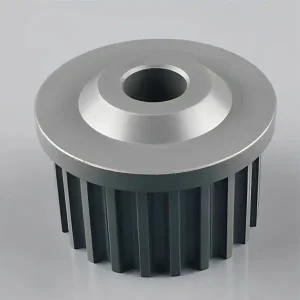
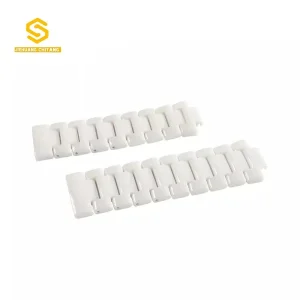
From powder metallurgy timing gears to titanium injection molding and die cast housings—view our extended OEM hardware catalog.




Frequently Asked Questions (FAQ)
Clear technical answers to help procurement managers and design engineers evaluate sintered 3D metal parts manufacturing.
Accelerate Your Project with Free DFM Engineering Analysis
Send your 2D PDF and 3D STEP files to our Senior Metallurgical Engineers. We provide a complete Design for Manufacturability (DFM) report and transparent quotation within 48 hours.
Request a Quotation & DFM Review