
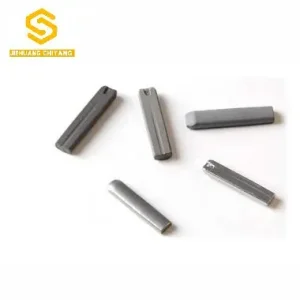
China Factory Directly supply Sintered Steel Timing Gear Rings Custom Die Casting Parts Manufacturers, Factory
View Details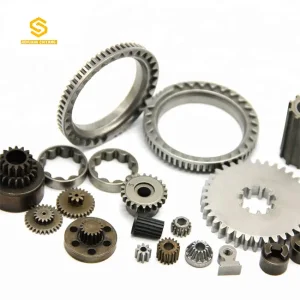
Wholesale Top Quality OEM High Precison 304 Stainless Steel Parts China Metal Fabrication Factory Suppliers, Factories
View Details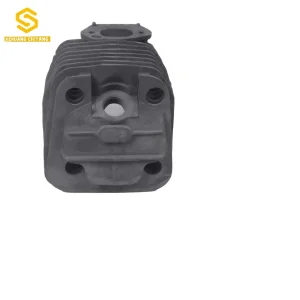
Wholesale Customized Engine Cylinder Kit Oxidation Aluminium Die Casting Metal Spare Parts China Manufacturer Manufacturer, Factory
View Details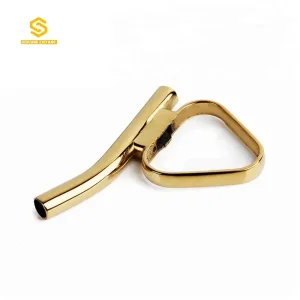
China Cheapest Factory Customized Powder Metallurgy Partspowder Metallurgy Sintering Iron Mini Bevel Gear Manufacturers, Factories
View Details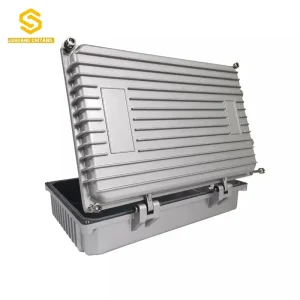
China factory Outlets for 12 Years China Manufacturer High Precision Auto Engines Parts Aluminum Alloy Die Casting Manufacturers, Factories
View Details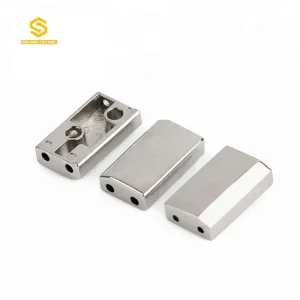
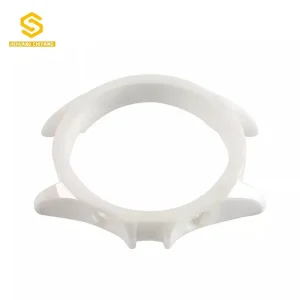
Wholesale Customized ceramic injection molding watch case for wrist accessories Suppliers, Factories
View DetailsSintering Titanium: Materials Science & Powder Metallurgy Engineering
A Comprehensive Whitepaper on Solid-State Diffusion, Microstructural Density Control, and Vacuum Thermal Processing of Titanium Alloys.
The Thermodynamics of Titanium Sintering
Titanium (Ti) and its alloys (such as Ti-6Al-4V) possess a extraordinarily high affinity for interstitial elements, specifically oxygen ($O_2$), nitrogen ($N_2$), and hydrogen ($H_2$). Solid-state sintering of titanium requires precise control over thermodynamics and kinetics to prevent chemical embrittlement while driving mass transport. Unlike standard ferrous powder metallurgy, titanium sintering operates at elevated thermal windows ($1200^\circ\text{C}$ to $1380^\circ\text{C}$) under ultra-high vacuum conditions ($\le 10^{-3}\text{ Pa}$) or ultra-pure argon atmospheres.
During the vacuum thermal cycle, neck formation between spherical or irregular titanium powder grains occurs primarily via volume diffusion and grain-boundary diffusion. Achieving targeted theoretical densities ($>98.5\%$) without macroscopic grain coarsening necessitates rigorous control of the heating rate, isothermal dwell time, and controlled cooling phases to yield an optimal $\alpha + \beta$ dual-phase microstructure.
Interstitial Purity & Oxygen Control
The mechanical integrity of sintered titanium components is directly governed by interstitial oxygen content. While oxygen acts as a solid-solution strengthener in titanium, concentrations exceeding $0.20\text{ wt}\%$ cause severe ductility loss and drastic reduction in impact toughness.
| Titanium Grade | Composition / Alloy Type | Sintered Density (%) | Tensile Strength (MPa) | Yield Strength (MPa) | Elongation (%) | Primary Applications |
|---|---|---|---|---|---|---|
| CP-Ti Grade 2 | Commercially Pure Ti | 98.5% - 99.2% | 480 - 550 | 345 - 410 | ≥ 18% | Medical Implants, Chemical Valves |
| Ti-6Al-4V Grade 5 | $\alpha + \beta$ Alloy (6% Al, 4% V) | 98.0% - 99.5% | 890 - 980 | 820 - 910 | ≥ 10% - 14% | Aerospace Structural, Automotive, Defense |
| Ti-6Al-7Nb | Biomedical Grade (6% Al, 7% Nb) | 98.2% - 99.4% | 900 - 1000 | 840 - 920 | ≥ 12% | Surgical Instruments, Orthopedic Implants |
| Ti-15Mo | Beta ($\beta$) Phase Alloy | 97.8% - 99.0% | 780 - 860 | 690 - 750 | ≥ 15% | Low-Modulus Bone Stints, Marine Sensors |
Manufacturing Technical Routes: TiMIM vs Press-&-Sinter vs SPS
Selecting the optimal powder metallurgy processing technology based on geometric complexity, mechanical requirements, and batch volumes.
Titanium Metal Injection Molding (TiMIM)
Combines the design freedom of plastic injection molding with the structural performance of titanium alloys. Fine spherical titanium powder ($D_{50} \approx 15\text{--}25\,\mu\text{m}$) is blended with a multi-component polymer binder to formulate feedstock.
- Geometry: Extreme complexity (undercuts, thin walls down to 0.5mm, internal cross-bores).
- Target Parts: Medical scalpels, watch cases, surgical tweezers, aerospace latch components.
- Batch Volume: Medium to mass production (2,000 to 1,000,000+ pcs/year).
Cold Isostatic Pressing & Vacuum Sintering (CIP+Sinter)
Used primarily for larger structural shapes or axial symmetrical components. Coarse or HDH (Hydride-Dehydride) titanium powder is compacted at extreme hydraulic pressures ($>400\text{ MPa}$) prior to high-vacuum thermal consolidation.
- Geometry: Moderate 2.5D complexity, cylindrical shafts, large plates, porous filter discs.
- Target Parts: Chemical pump impellers, filter cartridges, structural aerospace fittings.
- Batch Volume: Low to high volume OEM production.
Spark Plasma Sintering (SPS) / FAST
Utilizes pulsed direct electrical currents combined with uniaxial pressure to consolidate titanium powders within minutes. Minimizes thermal exposure, maintaining fine nanocrystalline grain structures.
- Geometry: Simple disks, billets, targeted functionally graded materials (FGM).
- Target Parts: Defense armor tiles, sputter targets, high-performance R&D prototypes.
- Batch Volume: Specialized low-volume / high-value applications.
Macro-Industry Solutions & Engineering Deployments
How global OEMs utilize sintered titanium components to achieve weight reduction, chemical inertness, and structural reliability.
Aerospace & Defense
Sintered Ti-6Al-4V fasteners, bracketry, hydraulic connectors, and turbine blade lock blocks achieve a 45% weight saving over nickel-based superalloys or steel, with high fatigue limits under cyclic thermal loading.
Medical & Surgical Technology
Biocompatible Ti-6Al-7Nb and CP-Ti Grade 2 implants and surgical jaws. Sintering enables porous trabecular surface structures ($\approx 60\text{--}70\%$ porosity) that facilitate rapid bone ingrowth and osseointegration.
Consumer Electronics & Wearables
Smartwatch cases, foldable smartphone hinges, and high-end audio housings manufactured via TiMIM deliver premium tactile aesthetics, scratch resistance, and low mass density without skin irritation (nickel-free).
China Factory 4.0: Supply Chain Resilience & Cost Advantages
Leveraging Vertically Integrated Titanium Powder Production, Automated Solvent Debinding, and Continuous Vacuum Sintering Furnaces.
End-to-End Raw Material Integration
Our manufacturing ecosystem bridges raw titanium sponge processing, Electrode Induction Melting Inert Gas Atomization (EIGA) powder production, and automated compounding. By controlling raw powder morphology (sphericity $>95\%$, tap density $>2.7\text{ g/cm}^3$), we eliminate supply chain bottlenecks and guarantee batch-to-batch microstructural consistency.
Through Industry 4.0 digital twin furnace monitoring, heating cycles are continuously adjusted in real-time based on residual gas analysis (RGA), preventing oxidation and ensuring zero-defect yield across high-volume wholesale contracts.
Economic Analysis: Sintering vs Subtractive CNC Machining
Titanium alloys are notoriously difficult to cut via standard CNC milling due to low thermal conductivity and high tool wear rates. Machining complex titanium parts typically results in material scrap rates exceeding $70\text{--}80\%$.
Global Strategic Procurement, Quality Assurance & Regulatory Compliance
Meeting International Engineering Audits with ISO 9001, IATF 16949, ISO 13485, and Full Material Traceability.
Quality Infrastructure
Every batch of wholesale sintered titanium components undergoes non-destructive ultrasonic testing, Coordinate Measuring Machine (CMM) dimensional verification, and ONH elemental gas analyzer testing to certify oxygen purity compliance.
Regulatory Compliance
100% compliant with REACH, RoHS, and Conflict-Free Mineral frameworks. Fully equipped to provide First Article Inspection (FAI) reports, PPAP Level 3 documentation, and mill test certificates (MTC) for aerospace and medical buyers.
Global Logistics & Support
Dedicated engineering support hubs providing Design for Manufacturability (DFM) consultations within 24 hours. Flexible shipping options including VMI (Vendor Managed Inventory), DDP, and expedited air transport for global OEMs.
Future Technological Roadmap & Sintering Innovations
Pioneering Next-Era Titanium Powder Metallurgy Processes for Industrial Scalability.
-
Phase 1: Ultra-Low-Oxygen Low-Cost Hydrogenated Powders
Commercialization of low-cost Hydride-Dehydride (HDH) titanium powders with tailored morphology to substitute expensive spherical plasma-atomized powders without degrading fatigue limits.
-
Phase 2: Hybrid Binder-Jetting Additive Sintering (BJ+Sinter)
Combining high-speed binder jetting 3D printing with high-temperature vacuum sintering to manufacture custom titanium geometry without hard tooling investments.
-
Phase 3: Nanocrystalline & Beta-Titanium Alloy Formulation
Development of ultra-high-strength beta-phase titanium sintered alloys achieving tensile strengths above $1100\text{ MPa}$ while maintaining high biocompatibility and lower elastic modulus.
Frequently Asked Questions (Engineering & Sourcing Q&A)
Detailed Answers to Technical and Procurement Questions Regarding Wholesale Sintering Titanium Components.
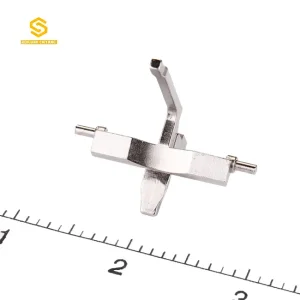
Wholesale Good quality Stainless Steel Sintered Powder Metallurgy Parts MIM Metal Injection Molding MIM Gear Parts for Electronic Components Factory, Factories
View Details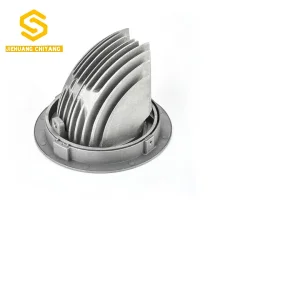
China China New Product Die Castings Anodized Powder Coating Precision Pressure Parts Enclosure Zinc Alloy Aluminum Die Casting Manufacturer, Suppliers
View Details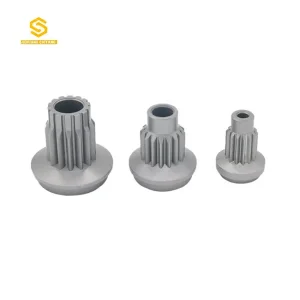
China Good Wholesale Vendors China High Quality CNC Metal Powder Metallurgy Machining Brass Parts Manufacturer, Suppliers
View Details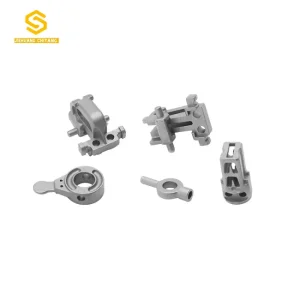
China China Factory for OEM MIM Sheet Metal Powder Injection Molding Machine Steel Stainless Custom Parts Suppliers, Factories
View Details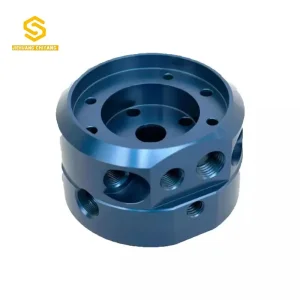
China Supply ODM High Precision China Customized Zinc Aluminum Die Casting Products Manufacturers, Factories
View Details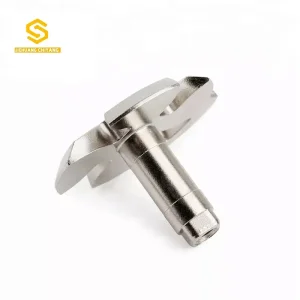
Wholesale Good Wholesale Vendors Factory Custom MIM Metal Injection Molding MIM Gear Part for Electronic Components Manufacturer, Manufacturers
View Details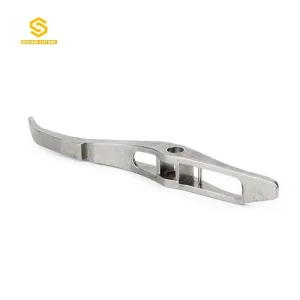
China Ordinary Discount Custom Metal Injection Molding Stainless Steel Parts for Complex CNC Metal Components Sintering Metal Parts for Machinery Spare Parts Manufacturers, Factories
View Details
Wholesale Supply OEM/ODM China Customized Powder Metallurgy Compacting Mold for Sale – Powder Metallurgy Mold Manufacturer Powder Metallurgy Parts Manufacturer, Suppliers
View DetailsReady to Optimize Your Titanium Components Sourcing?
Partner with China's Premier Sintering Titanium Manufacturer & OEM Engineering Supplier. Request a Free Engineer DFM Review & Comprehensive Quotation within 48 Hours.