
Precision Sintered & Molded Metal Products
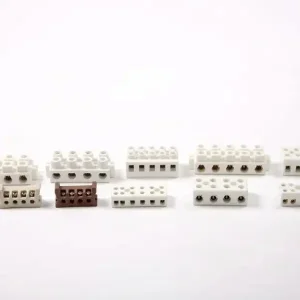
Direct factory wholesale supply covering high-density sintered gears, MIM structural components, die-cast housings, and ceramic hardware.






1. Global Macro Architecture of Sintered Metal Parts
Examining supply chain shifts, high-density powder consolidation, and technical benchmarks driving modern wholesale sinter manufacturing.
Market Trajectory & Volume Demand
The global sintered metal components sector is undergoing an unprecedented structural expansion. Driven by lightweighting mandates in automotive powertrains and miniaturization in medical robotics, high-volume powder metallurgy (PM) and Metal Injection Molding (MIM) factories have transformed from regional suppliers into core tier-1 engineering hubs. Sintered parts offer near-net-shape geometries with material utilization rates exceeding 95%, rendering traditional subtracted CNC machining obsolete for multi-thousand-unit production runs.
Supply Chain Resilience & Material Security
Wholesale buyers and procurement leaders prioritize suppliers offering end-to-end atomization control, precision tool building, and atmosphere-controlled continuous sintering. China's industrial clusters—specifically advanced manufacturing entities like Ningbo Jiehuang Chiyang Electronic Tech Co., Ltd. (JHMIM)—integrate raw metal powder chemistry with automated compaction press arrays to mitigate supply chain volatility and deliver consistent density profiles.
2. Thermodynamics of Sintering & Microstructure Evolution
Detailed physical chemistry breakdown of solid-state diffusion, liquid phase necking, and porosity engineering.
Solid-State Diffusion Stage
During early-stage thermal treatment (typically at 0.6–0.8 Tm in absolute melting temperature), mechanical contact points between compacted metal grains transform through surface and volume diffusion. Vacancy concentration gradients drive atomic transport into interstitial gaps, forming initial particle necks without dimensional collapse.
Liquid Phase Sintering (LPS)
By introducing secondary additives (e.g., copper in iron-carbon matrices or nickel in heavy alloys), a transient liquid phase wets solid grain boundaries. Capillary pressure accelerates rapid grain rearrangement and pore dissolution, elevating final mechanical strength to wrought-equivalent levels.
Controlled Atmosphere Control
Continuous mesh-belt and vacuum sintering furnaces utilize disassociated ammonia (75% H2 / 25% N2) or ultra-pure argon to maintain dew points below -40°C. This eliminates oxides, controls carbon potential, and ensures uniform shrinkage coefficients across complex 3D profiles.
3. Structural Comparison: Powder Sintering vs. Alternate Technologies
Quantitative comparison matrix guiding engineering managers toward optimal process selection for high-volume component sourcing.
| Performance Metrics | Powder Metallurgy (PM Sintering) | Metal Injection Molding (MIM) | Precision CNC Machining | High-Pressure Die Casting |
|---|---|---|---|---|
| Primary Material Alloys | Iron-Copper, Sintered Steels, Bronze | 17-4PH, 316L Stainless, Titanium | Aluminum, Stainless, Brass, Titanium | ADC12, A380 Aluminum, Zamak 3 Zinc |
| Achievable Density | 85% – 95% (Impregnation option) | 96% – 99% (Near Wrought) | 100% Solid Wrought Metal | 90% – 95% (Porosity Risk) |
| Geometric Complexity | Medium (2.5D Axial Compaction) | Extreme (Complex 3D Under-cuts) | High (Tool Path Constrained) | High (Draft Angle Dependent) |
| Typical Part Weight Range | 5 g to 2,000 g | 0.2 g to 286 g | 10 g to 50,000 g | 50 g to 10,000 g |
| Tooling Cost Amortization | Moderate (Hardened Tool Steel) | Moderate to High (MIM Injection Mold) | Zero Initial Tooling Cost | High (Cast Steel Die Sets) |
| Unit Cost at High Volume | Lowest (Sub-Second Cycles) | Very Low (Multi-Cavity) | Very High (Linear Machine Time) | Low (Limited to Non-Ferrous) |
4. Sector-Specific Application Scenarios & Case Analysis
How specialized OEM sinter factories solve critical mechanical challenges across global manufacturing ecosystems.
Automotive Electric Drives & VVT Systems
Variable Valve Timing (VVT) rotors, oil pump gears, and planetary gear carriers produced via high-tonnage compaction (10,000 kN) achieve high surface fatigue limits. Sinter-hardening processes allow immediate induction cooling during sintering, eliminating secondary heat-treatment steps while preserving dimensional integrity across high-torque drive assemblies.
Medical Surgical Tools & Titanium MIM
Using bio-compatible Titanium MIM (Ti-6Al-4V) and surgical 316L stainless steel, factories produce complex articulators, scalpel handles, and endoscopic graspers. These components feature intricate internal radius channels that cannot be accessed by cutting tools, delivering zero-porosity surface finishes suitable for passivated sterilization protocols.
Industrial Power Tools & Lock Hardware
High-density sintered steel bevel gears and ratcheting pawls resist impact fracture in extreme conditions. Oil-impregnated porous bronze bearings provide lifetime self-lubrication (via capillary action releasing oil during friction heat buildup and re-absorbing it upon cooling) for heavy-duty electric motors and architectural locksets.
5. Next-Generation Technological Trends in Sintering
How AI-assisted thermal profiling and hybrid binder systems are expanding the boundaries of wholesale powder metallurgy.
AI-Driven Sintering Simulation & Distortion Modeling
Simulating localized thermal gradients during the debinding and sintering cycles prevents gravity sag and thermal warp in heavy structural components. Advanced Finite Element Analysis (FEA) models anisotropic shrink rates (typically 12%–18% in MIM), automatically adjusting tool mold cavity dimensions prior to physical steel cutting.
Additive Powder Sintering Hybridization
Combining Selective Laser Sintering (SLS) and Binder Jetting with conventional batch sintering furnaces enables zero-tooling rapid prototyping. Design engineers verify functional mechanical samples in identical production alloys (316L, 17-4PH) within days before committing capital to multi-cavity production tooling.
Specialized Hardware & Custom Sinter Assemblies
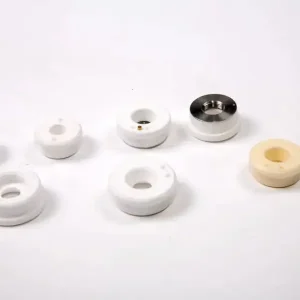
Explore our full line of sintered titanium, medical hardware, die-cast housings, and laser ceramic products.






6. Frequently Asked Questions by Engineering & Sourcing Teams
Expert guidance on minimum order quantities, tooling lead times, dimensional tolerances, and material certifications.