
Featured Hardware Accessories & MIM Spare Components
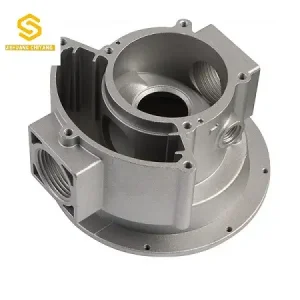
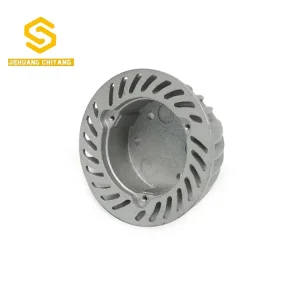
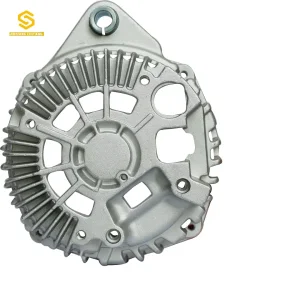
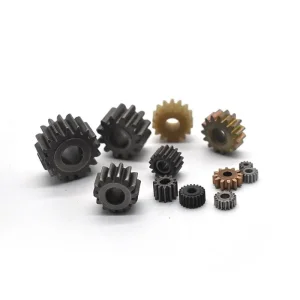
Explore our high-density powder metallurgy, aluminum/zinc die casting, and specialized titanium OEM manufacturing solutions.
Wholesale Titanium Folding Scalpel Manufacturing Dynamics
In the evolving landscape of high-precision instruments, the query "Wholesale Titanium Folding Scalpel s Manufacturer & Manufacturers" represents a highly specialized B2B procurement intent. Buyer personas entering this search funnel—ranging from medical device procurement managers and surgical tool designers to outdoor Everyday Carry (EDC) brand owners—are seeking direct OEM/ODM industrial capability rather than retail consumer goods. They require scalpel handles engineered with extreme strength-to-weight ratios, flawless chemical inertness, corrosion resistance, and micro-mechanical precision.
Historically, titanium pocket scalpels and folding scalpel handles were manufactured utilizing 5-axis CNC subtraction milling. While CNC machining offers prototyping flexibilities, it exhibits severe economic limitations during mass production: material waste exceeds 70% due to raw titanium billet scraping, cycle times are prohibitively long, and delicate internal locking mechanisms (such as frame locks, liner locks, and ceramic ball detent pockets) require complex, multi-setup repositioning. As a primary OEM manufacturer based in Ningbo, China, Jiehuang (JHMIM) shifts this paradigm through advanced Titanium Metal Injection Molding (TiMIM) and high-density powder metallurgy processes.
Technical Roadmap: TiMIM Processing for Folding Scalpels
Achieving structural perfection in a folding scalpel requires a rigorous metallurgical workflow. A titanium folding scalpel handle must securely hold replaceable surgical blades (such as standard #11, #24, or custom scalpels) while enduring repeated pivot rotations, lock engagements, and sterilizations without mechanical fatigue or wear slop.
Gas-Atomized Ti-6Al-4V Powders
We utilize ultra-fine spherical titanium alloy powder (Grade 5 Ti-6Al-4V or CP-Ti) with particle size distribution (d50) between 15 to 25 microns. Spherical morphology ensures optimal binder wetting and fluid rheology during injection molding.
Multi-Stage Solvent Debinding
Green molded parts undergo catalytic solvent debinding to remove paraffin wax systems without disturbing green density. This eliminates internal micro-voids, micro-cracks, and geometric distortion prior to high-temperature sintering.
Ultra-Vacuum Sintering Furnace
Sintering takes place under high vacuum conditions (<10⁻³ Pa) at temperatures exceeding 1250°C. Controlled argon backfilling prevents oxygen and nitrogen interstitial contamination, guaranteeing ductility and ASTM F2885 compliance.
Future Engineering Outlook: Next-Gen Folding Mechanisms
The technical roadmap for wholesale titanium folding scalpel manufacturing focuses on three key innovations:
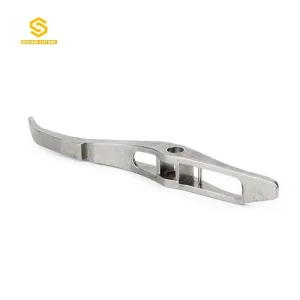
- Monolithic Frame Integration: Molding single-piece skeletonized handles with built-in spring arms for liner locks, removing secondary assembly screws.
- Self-Lubricating Ceramic Bearing Cavities: Sintering micro-pockets directly for Zirconia ceramic ball bearings, achieving zero blade play during deployment.
- PVD & Anodization Surface Engineering: Post-sintering physical vapor deposition (TiN, DLC) and electrochemical color anodizing for biological identification and tactile grip.
Macro Industry Solutions for Wholesale Titanium Scalpels
Medical & Endoscopic Surgical Instruments
Surgeons demand lightweight, ergonomically balanced tools that minimize hand fatigue during prolonged micro-procedures. TiMIM handles offer complete chemical resistance to autoclave sterilization, gamma radiation, and aggressive harsh disinfectant chemicals without structural degradation.
Tactical & Outdoor EDC Brand Customization
Everyday Carry (EDC) enthusiast brands require sleek, compact folding scalpels that function as utility pocket knives. We partner with international brands to produce custom handles featuring tritium vial slots, bottle opener cutouts, and quick-release blade replacement levers.
Aerospace & Precision Crafting Tooling
In aerospace cleanrooms and composite fiber processing, non-magnetic, spark-resistant cutting devices are mandatory. Wholesale titanium folding scalpel frames ensure zero magnetic interference around sensitive avionics and radar sub-assemblies.
China Factory 4.0: Supply Chain Resilience & Cost Advantages
Situated in Ningbo's High-Tech Zone, Ningbo Jiehuang Chiyang Electronic Tech Co., Ltd. (JHMIM) operates a state-of-the-art 28,000 square meter intelligent production campus. For global buyers evaluating supply chain risks, JHMIM presents an unbeatable balance of cost efficiency, engineering rigor, and capacity agility.
Automated Compaction & Mold Shop
Equipped with 1,000-ton (10,000 kN) automated powder pressing machines and multi-cavity injection units imported from Japan and Germany. We run continuous 24/7 unmanned production shifts monitored by centralized MES (Manufacturing Execution Systems).
In-House Tooling & Prototyping
Eliminate 3rd-party tooling delays. Our dedicated mold workshop creates high-precision injection dies, MIM tooling, and metal 3D-printed verification prototypes in days rather than weeks, accelerating time-to-market for wholesale clients.
Process Comparison: TiMIM vs. Traditional CNC Machining
| Performance Metric | JHMIM Titanium MIM (TiMIM) | Traditional 5-Axis CNC Milling | Investment Casting |
|---|---|---|---|
| Material Utilization Rate | 95% - 98% (Near-Net Shape) | 15% - 30% (High Scrap Rate) | 60% - 70% (Gate/Runner Waste) |
| Unit Cost at High Volume (>5k pcs) | 30% to 50% Lower | High (Linear Machine Hours) | Moderate to High |
| Internal Feature Complexity | Unlimited (Undercuts, Threads) | Tool Access Limited | Moderate (Draft Angle Required) |
| Dimensional Repeatability | CT4 - CT6 (±0.3%) | ±0.01 mm | CT7 - CT9 |
| Surface Finish (As-Sintered) | Ra 1.6 - 3.2 µm | Ra 0.8 - 1.6 µm | Ra 6.3 - 12.5 µm |
Enterprise Sourcing Matrix & Technical RFQ Requirements
To ensure seamless communication between enterprise procurement teams and JHMIM application engineers, review the standard technical parameters required when submitting a Request for Quotation (RFQ) for wholesale titanium folding scalpels or custom metal components:
1. Material Grade Selection
Specify between Ti-6Al-4V (Grade 5) for high mechanical tensile strength (>895 MPa) or Commercially Pure Titanium (CP-Ti Grade 2) for maximum chemical ductility and deep anodization vibrance.
2. Dimensional Tolerances & DFM
Standard MIM sintered tolerance is ±0.3% to ±0.5%. Critical dimensions (pivot pin holes, detent ball seating, blade holder locking interfaces) are finish-machined via secondary precision CNC reaming to ±0.005 mm.
3. Minimum Order Quantity (MOQ)
Commercial production tooling requires an MOQ of 2,000 units for custom TiMIM scalpel handles. Rapid metal 3D-printed prototyping and pilot runs are supported for design verification prior to hard tooling.
Localization Support & Quality Compliance Assurance
Navigating cross-border procurement requires absolute trust in quality management systems, regulatory compliance, and international logistics transparency. JHMIM implements full-traceability protocols for every manufacturing batch exported to North America, Europe, Japan, and Southeast Asia.
International Quality Certifications
Our Quality Control department operates certified ISO 9001 and IATF 16949 management systems. Every shipment includes full First Article Inspection (FAI) reports, CMM dimensional verification, material spectrum composition analysis, and salt-spray corrosion test logs.
Environmental & Material Compliance
All titanium and stainless steel raw powders comply strictly with EU REACH and RoHS environmental standards. For medical buyers, material compositions meet FDA device master file requirements and ISO 10993 biocompatibility guidance.
Frequently Asked Questions (FAQ)
Titanium MIM eliminates up to 95% of raw material scrap compared to CNC subtraction milling. It allows complex ergonomic contours, internal skeletonized cavities, pocket clip grooves, and detent pockets to be molded in a single operation, lowering unit costs by 30% to 50% at mass volume.
Our OEM/ODM handles are engineered to accept standard replaceable surgical blades, including #10, #11, #15, #24, and specialized craft blades (#60). We custom-machine the blade holder arm interface to guarantee click-lock seating without movement.
Yes. We routinely sign formal corporate NDAs with OEM clients prior to accepting technical drawings or 3D STEP files. All client designs are protected under strict intellectual property protocols within our engineering division.
Design for Manufacturability (DFM) analysis and formal quotations are completed within 48 hours. Injection mold tooling design and initial FAI samples require 30 to 35 days. Mass production lead time is typically 3 to 4 weeks depending on batch volume.
Sintered titanium components accept a full range of surface treatments including bead blasting, stone-washing, mirror hand polishing, electrochemical color anodization (gold, blue, violet, bronze), and Physical Vapor Deposition (PVD) coating such as DLC (Diamond-Like Carbon) or TiN (Titanium Nitride).
Precision Gear, Scalpel Handle & Specialized Component Capabilities
Ready to Accelerate Your Titanium Scalpel Production?
Submit your 2D/3D technical drawings today. Our engineering team returns a full Design for Manufacturability (DFM) analysis and itemized factory quotation within 48 hours.