
Explore our core manufacturing catalog spanning Metal Injection Molding, Powder Metallurgy, Titanium Alloys, and Die Casting solutions engineered for rigorous industrial and medical applications.
1. Engineering Whitepaper: Metallurgy & Materials Science of Titanium Scalpels
In modern surgical, microsurgical, and specialized technical cutting domains, the demand for high-precision, corrosion-resistant, and non-magnetic scalpel assemblies has driven a fundamental shift from traditional high-carbon or stainless steels (e.g., 440C, 316L) toward advanced titanium alloys. As a premier wholesale titanium scalpels manufacturer and OEM supplier, our metallurgy team leverages Titanium Metal Injection Molding (Ti-MIM) and advanced CNC finishing to deliver medical cutting tools that redefine sharpness, bio-inertness, and mechanical longevity.
Titanium naturally forms a stable, passivated titanium oxide ($TiO_2$) ceramic surface film. This inert layer prevents ion leaching into biological tissue, eliminating allergic reactions and cell cytotoxicity during delicate ophthalmic, cardiovascular, and neurological operations (compliant with ISO 10993 standards).
Standard stainless steel scalpels distort MRI (Magnetic Resonance Imaging) magnetic fields, generating dangerous artifacts and thermal heating risks. Titanium scalpels feature zero magnetic susceptibility, enabling intraoperative MRI-guided procedures without artifact distortion.
With a density of approximately $4.43 g/cm^3$—roughly 56% that of stainless steel—titanium scalpels significantly reduce surgeon hand fatigue during multi-hour micro-surgeries while maintaining a tensile strength exceeding 950 MPa (Ti-6Al-4V Grade 5).
Metallurgical Grade Selection Matrix for Scalpel Blades & Handles
Choosing the correct titanium grade is critical to balancing sharpness retention, flexibility, and fatigue strength. Below is our comparative technical breakdown:
| Material Grade | Composition (Nominal) | Tensile Strength (MPa) | Yield Strength (MPa) | Hardness (HRC / HV) | Primary Scalpel Application |
|---|---|---|---|---|---|
| Ti-6Al-4V (Grade 5) | Ti-6% Al-4% V | 900 - 1050 | 820 - 910 | 36 - 42 HRC (340-400 HV) | General surgical scalpels, structural handles, micro-scissors |
| Ti-6Al-4V ELI (Grade 23) | Ti-6% Al-4% V (Extra Low Interstitial) | 860 - 960 | 790 - 870 | 34 - 38 HRC | Implantable cutting tools, ophthalmic blades, pediatric surgery |
| CP-Ti Grade 2 | Commercially Pure Titanium | 345 - 480 | 275 - 410 | 160 - 200 HV | Reusable ergonomically contoured scalpel handles, disposable clips |
| Beta-Titanium Alloys (Ti-15Mo) | Ti-15% Mo-3% Al-2.7% Nb | 1100 - 1300 | 1000 - 1200 | 42 - 46 HRC | Ultra-sharp micro-scalpels, neurosurgical tissue dissection tools |
2. Precision Manufacturing Technologies: Ti-MIM vs. 5-Axis CNC & Stamping
Manufacturing titanium scalpels requires strict control over interstitial oxygen contamination, density, surface finish, and edge geometry retention. While traditional CNC machining suffers from rapid tool wear and heavy material waste when cutting titanium, our state-of-the-art Titanium Metal Injection Molding (Ti-MIM) process achieves net-shape precision at high volume.
Spherical Titanium Powder Preparation
Gas-atomized spherical titanium powder ($D_{50} \approx 15-25 \mu m$) with extremely low oxygen content (<0.12 wt%) is blended with a customized multi-component binder system (POM/wax-based).
Multi-Cavity Complex Molding
The feedstock is injected into high-precision tool steel molds to form 'green parts' featuring complex 3D ergonomic handle contours, blade slots, and weight-reduction cavities.
Solvent Debinding & Vacuum Sintering
Debinding removes the organic matrix. High-vacuum sintering ($1280^\circ C - 1350^\circ C$ at $10^{-4}\text{ Torr}$) achieves >97.5% theoretical density without oxidation, yielding near-wrought mechanical performance.
| Manufacturing Parameter | Titanium Metal Injection Molding (Ti-MIM) | 5-Axis CNC Machining | Stamping & Laser Cutting |
|---|---|---|---|
| Material Utilization Rate | 92% - 98% (Near Net Shape) | 15% - 30% (Heavy Scrap) | 40% - 60% |
| Geometric Complexity | Unlimited 3D contoured handles, internal channels | High, but restricted by tool access | Limited to 2.5D flat geometries |
| Production Volume Payback | Ideal for >2,000 pcs (Mass Production) | Best for prototypes (<500 pcs) | High volume simple profiles |
| Blade Edge Sharpening Capability | Post-sinter electrochemical / laser sharpening | Direct grinding required | Stamping burrs require manual deburring |
| Unit Cost Scaling | Drops significantly with scale (30-50% savings) | Flat cost curve (High machine time per unit) | Low unit cost, high initial die cost |
3. China Factory Supply Chain Advantages & Cost Structural Optimization
Headquartered in Ningbo, Zhejiang—China’s premier industrial metallurgy cluster—our enterprise integrates raw material synthesis, precision tool design, MIM sintering, and cleanroom secondary processing. Global B2B buyers benefit directly from our structural supply chain efficiencies.
Localized Raw Material Sourcing & Powder Metallurgy Hegemony
China commands over 60% of global titanium sponge production and advanced gas-atomized powder refinement infrastructure. By sourcing high-purity, low-oxygen Ti-6Al-4V powders directly from domestic metallurgical research partners (including CAS Ningbo Institute), we eliminate international raw material tariffs and secure price stability for long-term supply contracts.
In-House Tooling Design & Sub-Micron Sharpening Ecosystem
Rather than outsourcing mold manufacturing or edge sharpening to third parties, our factory operates a dedicated CNC EDM tooling center and ultra-precision laser sharpening shop within a 30-minute radius. This closed-loop ecosystem reduces DFM modification cycles from weeks to days and ensures strict protection of client IP and CAD drawings.
4. Global Enterprise Procurement Protocols & Engineering Validation
Procurement directors and medical device engineers require more than low unit costs; they demand total quality assurance, rigorous DFM (Design for Manufacturability) analysis, and seamless process validation (IQ/OQ/PQ).
Every client drawing undergoes rigorous 3D Moldflow analysis to optimize gate locations, anticipate volumetric sintering shrinkage (typically 15-18%), and eliminate porosity in critical blade holding sections before steel cutting begins.
We provide comprehensive Production Part Approval Process (PPAP) documentation, including FMEA, Control Plans, Gauge R&R studies, Material Certification, and complete lot traceability from raw powder batch to packaged scalpel.
We routinely enter into legally binding bilateral Non-Disclosure Agreements (NDAs). Customer CAD models, proprietary scalpel edge geometries, and branding marks are stored on air-gapped secure servers with restricted access.
5. Localized Regulatory Compliance & International Shipping Infrastructure
Navigating global medical device regulations requires stringent manufacturing controls. Our facility is certified under ISO 13485:2016 for medical devices and IATF 16949 for precision manufacturing, establishing immediate compliance readiness for FDA 510(k) filings and EU MDR 2017/745 registrations.
ISO Class 8 Cleanroom Packaging & Sterilization Readiness
For sterile single-use or reusable titanium scalpel orders, our finishing bay includes an ISO Class 8 cleanroom line. Scalpels undergo ultrasonic multi-stage cleaning, passivation, and double-pouch Tyvek blister packing compatible with Gamma Irradiation, Ethylene Oxide (EtO), or Autoclave steam sterilization protocols.
Global Logistics & Duty Optimization
We offer flexible incoterms including EXW, FOB Ningbo/Shanghai, CIF, and DDP (Delivered Duty Paid) to the United States, European Union, Japan, and Southeast Asia. Our export team assists clients with HS Code classification (e.g., HS 9018.90 for surgical instruments) to optimize customs clearance and tariff management.
6. Localized Application Scenarios & Specialized Cutting Domains
Titanium scalpels serve specialized medical disciplines and high-tech industrial environments where standard steel tools fail due to magnetism, corrosion, or mass constraints.
Ultraminiature Ti-MIM corneal scalpel handles paired with micro-titanium or diamond blades allow eye surgeons to execute cataract incisions with sub-millimeter depth accuracy and zero tissue dragging.
100% non-magnetic Ti-6Al-4V scalpels enable neurosurgeons to resect brain lesions inside active high-field (3.0 Tesla) intraoperative MRI suites without mechanical deflection or image shadow.
Titanium fine-point vascular scalpels resist corrosion from blood salts and enzymatic fluids, retaining edge geometry during delicate coronary artery bypass grafting (CABG) procedures.
Lightweight, shatterproof titanium scalpels integrated into combat trauma surgical kits resist saline corrosion and high impacts during emergency field triage operations.
In satellite and optic cleanrooms, non-sparking titanium micro-scalpels perform ultra-precise film trimming without magnetic attraction to sensitive sensor payloads.
High-strength titanium scalpel handles withstand repeated autoclave cycles in high-volume veterinary surgical clinics while providing tactile feedback during bone cutting.
7. Industry Trends & Technological Innovation Roadmap (2025–2030)
As surgical procedures shift toward Minimally Invasive Surgery (MIS) and robotic-assisted operating platforms (e.g., da Vinci systems), titanium scalpel technology is rapidly evolving.
Nanostructured Titanium & DLC Surface Coatings
By combining Ti-MIM substrates with physical vapor deposition (PVD) Diamond-Like Carbon (DLC) or Titanium Nitride (TiN) nano-coatings, future scalpel edges will achieve hardness ratings exceeding 65 HRC while reducing cutting friction coefficient by 40%.
3D Printed Tooling & MIM Hybrid Manufacturing
Integrating metal 3D printing for conformal cooling channels within injection mold dies reduces Ti-MIM cycle times by 25%. This hybrid methodology lowers prototyping lead times for custom OEM scalpel designs to under 15 business days.
8. Frequently Asked Questions (FAQ) for B2B Procurement Directors
Detailed technical answers to common engineering, commercial, and quality assurance queries regarding wholesale titanium scalpel manufacturing.
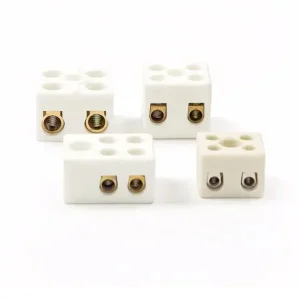
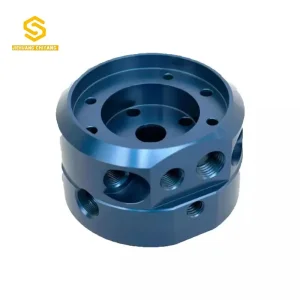
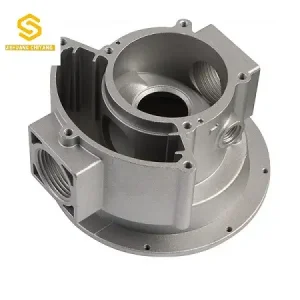
Explore our expanded hardware component lineup engineered for automotive, industrial gearboxes, electronic housings, and medical device structural assemblies.
Ready to Optimize Your Wholesale Titanium Scalpel Supply Chain?
Send us your CAD 2D/3D drawings (STEP, IGES, PDF) today. Our chief metallurgical engineering team will return a free DFM analysis report and itemized quotation within 48 hours.
Request Free DFM Review & Quote