
Featured Precision 3D Printing & Hybrid Additive Modules
Engineered for immediate integration into Chubu region industrial workflows—from rapid design validation to pilot-lot casting and MIM scaling.
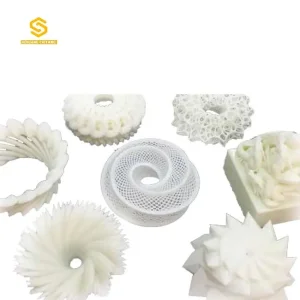
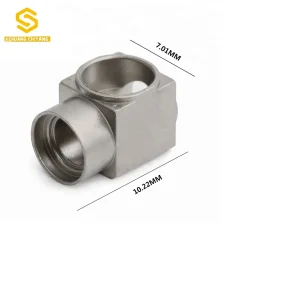

Custom Stainless Steel 316L/17-4PH Hardware Components for Nagoya Heavy Machinery
Explore Technology
Nagoya’s Industrial Renaissance: The Shift Toward Additive Manufacturing
As the engine of Japanese manufacturing (Monozukuri), the Greater Nagoya area commands over 40% of Japan’s automotive output and aerospace assembly.
The Greater Nagoya region—spanning Aichi, Gifu, and Mie prefectures—represents the world's dense industrial cluster for high-value manufacturing. Home to industry titans such as Toyota Motor Corporation, Mitsubishi Heavy Industries, Denso, Central Japan Railway Company, and world-class machine tool builders (Yamazaki Mazak, Okuma, JTEKT), Nagoya requires manufacturing suppliers capable of delivering extreme dimensional accuracy, zero-defect quality levels, and ultra-short development cycles.
Historically reliant on subtractive CNC machining and high-capital hard tooling, Nagoya's Tier-1 and Tier-2 automotive and aerospace supply chains are currently undergoing a structural transformation. Driven by the rapid transition toward Electric Vehicles (EVs), hydrogen fuel cell architectures, lightweight aviation structures, and advanced factory automation robotics, local engineering teams face unprecedented pressure to compress prototype lead times from months to days.
This is where direct-to-digital industrial 3D printing (Additive Manufacturing) becomes a non-negotiable strategic asset. By removing the traditional lead-time bottleneck of steel injection molds and multi-axis CNC setups, additive manufacturing suppliers enable Nagoya-based OEM design teams to execute rapid iterative design loops (Kaizen), test functional prototypes under real thermal and mechanical loads, and effortlessly transition into mass production using scalable Metal Injection Molding (MIM) and Powder Metallurgy (PM) routes.
State-of-the-Art Additive Manufacturing Technologies
From Direct Metal Laser Sintering (DMLS) to Binder Jetting and Hybrid MIM Tooling, our advanced production lines match every engineering tolerance.
Direct Metal Laser Sintering (DMLS / SLM)
Utilizing high-precision Yb-fiber lasers operating in argon-inert chambers, our DMLS process builds full-density metal components directly from 3D CAD data. Ideal for ultra-complex lattice structures, internal cooling channels, and high-strength titanium or stainless steel components for Nagoya aerospace and motor applications.
Metal Binder Jetting (MBJ) & Rapid Sintering
Designed for medium-to-high volume additive production, Binder Jetting deposits liquid binding agents onto micro-fine metal powder beds followed by high-temperature vacuum sintering. Achieves near-MIM mechanical properties without requiring expensive steel tooling, making it cost-effective for batch production run sizes of 500 to 10,000 pieces.
The 3D Printing to MIM Mass-Production Bridge
We resolve the classic dilemma between prototyping speed and mass-production economy. By sharing raw material powders (316L, 17-4PH, Ti-6Al-4V) across both 3D printing and Metal Injection Molding (MIM), Nagoya engineering teams can validate geometry using 3D prints and seamlessly transition to MIM tooling with zero material re-certification risk.
Targeted 3D Printing Solutions for Nagoya Sector Clusters
Delivering tailored engineering components designed to meet the strict quality standards of Chubu’s premier industrial sectors.
Automotive EV Powertrain & Thermal Modules
Next-generation Electric Vehicles require lightweight cooling plates, integrated e-Axle sensor housings, and complex inverter busbar connectors. Our DMLS AlSi10Mg and copper-alloy additive printing allows Nagoya automotive engineers to build conformal fluid channels that improve thermal heat dissipation by up to 35% over traditional CNC machined aluminum blocks.
Aerospace Structural Titanium Brackets
Supporting the aerospace manufacturing corridor surrounding Komaki Airport and Sub-Contractors for Boeing/Mitsubishi Aircraft systems. We manufacture topological optimized Ti-6Al-4V airframe brackets and hydraulic manifold components, achieving buy-to-fly ratios near 1.1:1 while cutting component weight by 45%.
Robotics End-of-Arm Tooling (EOAT)
Nagoya is a global epicenter for industrial automation. We print custom carbon-fiber reinforced polyamides and ultra-light aluminum grippers for high-speed pick-and-place robots. Custom internal air channels molded directly into robot fingers eliminate external pneumatic lines, reducing cycle times and robot arm inertia.
3D Printing Metal & Alloy Technical Specifications
Comprehensive metallurgical data table cross-referencing JIS Japanese standards, density metrics, and mechanical properties.
| Material Grade | JIS Equivalent Standard | Yield Strength (MPa) | Tensile Strength (MPa) | Sintered Density | Primary Nagoya Application |
|---|---|---|---|---|---|
| 17-4PH Stainless Steel | JIS SUS630 | 1,100 - 1,250 | 1,200 - 1,350 | ≥ 99.5% | Automotive fuel injectors, high-stress robotics linkages |
| 316L Stainless Steel | JIS SUS316L | 450 - 550 | 600 - 700 | ≥ 99.7% | Medical instruments, exhaust sensors, fluid manifolds |
| Ti-6Al-4V (Grade 5) | JIS Class 60 / DAT51 | 880 - 950 | 950 - 1,050 | ≥ 99.8% | Aerospace structural brackets, surgical guides & implants |
| AlSi10Mg Aluminum Alloy | JIS ADC12 / A360 equivalent | 220 - 270 | 350 - 410 | ≥ 99.4% | EV inverter cold plates, motor housings, drone arms |
| Inconel 718 Nickel Alloy | JIS NCF718 | 1,000 - 1,150 | 1,300 - 1,400 | ≥ 99.6% | Turbocharger impellers, gas turbine combustion nozzles |
| Maraging Steel 300 | JIS MAS1 / SKD 11 Alt. | 1,900 - 2,050 | 2,000 - 2,100 | ≥ 99.5% | Injection mold inserts with conformal cooling channels |
Rigorous Quality Assurance & Express Logistics to Chubu
Building trust with Japanese OEMs through certified IATF 16949 quality controls, transparent DFM, and direct delivery into Nagoya Port and Centrair Airport.
IATF 16949 & ISO 9001 Certification
Our manufacturing facilities operate under strict automotive and industrial quality management protocols. Every production run undergoes complete FAI (First Article Inspection), PPAP documentation preparation, CMM 3D laser coordinate measuring, and Zeiss CT scanner internal void inspection to guarantee zero defect shipments.
Seamless Nagoya Port & Air Logistics
We provide end-to-end DDP (Delivered Duty Paid) shipping to all manufacturing plants across Aichi, Gifu, and Mie prefectures. Rapid air cargo shipments arrive at Chubu Centrair International Airport (NGO) within 48-72 hours, while standard sea freight connects directly to Nagoya Port with clear customs clearance.
Strict Japanese Corporate NDA & IP Protection
Protecting proprietary CAD designs and intellectual property is foundational to our Japanese client partnerships. We execute bi-lingual (Japanese/English) Non-Disclosure Agreements prior to file evaluation, keeping your 3D geometry safe under military-grade encrypted server infrastructures.
Technology Roadmap: Next-Era Additive Manufacturing
How our ongoing R&D investments are driving down component costs and expanding material possibilities for Chubu industry leaders.
Multi-Laser Quad-Beam SLM Systems
Transitioning to quad-laser 1000W build platforms that increase volumetric metal deposition rates by 300%. This scale dramatically lowers per-part printing costs for large automotive chassis mounts and structural turbine housings.
AI-Powered Real-Time Layer Monitoring
Integrating computer-vision meltpool optical pyrometry to inspect each powder melt layer at 100 frames per second. Any microscopic void or thermal deviation is instantly corrected by laser re-melting, guaranteeing 100% material integrity.
Zero-Carbon Green Powder Metallurgy
Aligning with Toyota’s 2050 Environmental Challenge. Our sintering furnaces are shifting to 100% green hydrogen and renewable electric heat power, providing Nagoya partners with scope-3 carbon footprint reductions for all metal parts.
Frequently Asked Questions for Nagoya Engineering Buyers
Direct technical answers addressing lead times, tolerances, DFM reviews, and transition strategies to mass production.
For standard metal 3D printing orders (DMLS/SLM in 316L, 17-4PH, or AlSi10Mg), typical manufacturing lead time is 3 to 5 business days upon CAD sign-off. Express air freight to Nagoya (Centrair NGO Airport) takes an additional 48 to 72 hours, ensuring your engineering team receives functional samples in less than a week.
Directly as-printed, DMLS metal parts achieve tolerances of ±0.05 mm to ±0.1 mm per 50 mm, with surface roughness around Ra 3.2 - 6.3 μm. For critical bearing surfaces, seal seats, or threaded holes required by Japanese JIS drawings, our in-house CNC post-machining centers bring tolerances down to ±0.005 mm with surface finishes of Ra 0.4 μm.
We provide a complete DFM (Design for Manufacturability) transition roadmap. During the initial 3D printing phase, our metallurgical engineers evaluate wall thickness, draft angles, and draft radii. When your annual volume scales past 2,000 units, we seamlessly transfer the geometry into multi-cavity MIM molds or aluminum die casting dies without modifying material specifications.
Yes. Every batch shipped to Japan includes a complete Mill Test Report (MTR) according to EN 10204 3.1, detailing chemical spectrum analysis, tensile yield strength, elongation percentages, and Archimedes density test results cross-referenced against JIS specifications (e.g., SUS630, SUS316L, ADC12).
We treat intellectual property with extreme diligence. We regularly sign customized Japanese NDA templates before receiving step/igs files. All engineering communication is secured, and CAD data is accessed strictly by designated project engineers on isolated servers.
Comprehensive Powder Metallurgy, Die Casting & OEM Components
Explore our full spectrum of mass-production custom metal components engineered for Chubu industrial projects.

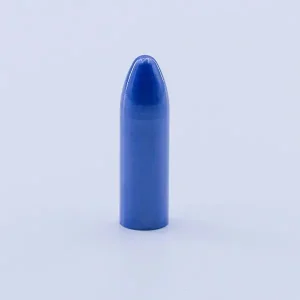

OEM Plastic & Composite Injection Molding & Additive Tooling for Aichi Auto Subsystems
Explore Product

Die-Cast Aluminum & Titanium Medical Product Components for Greater Nagoya Healthcare Tech
Explore Product

Custom OEM Insert Molding & MIM Automotive Connectors for Japanese Tier-1 Electronics
Explore ProductAccelerate Your Nagoya Manufacturing Project Today
Submit your 2D/3D CAD files (STEP, IGES, STL) for an immediate engineer-reviewed DFM analysis and transparent quotation within 24 hours.