
Featured Ceramic Injection Molding Components
Precision-engineered ceramic solutions designed for high-wear, high-temperature, and ultra-cosmetic applications across Italian manufacturing hubs.
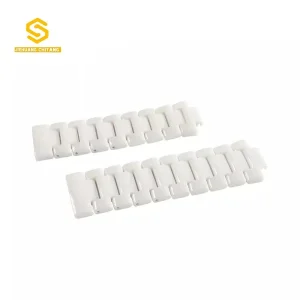
China Ceramic Injection Molding Casting Watch Band For Wrist Strap Manufacturer, Factory
View Product Details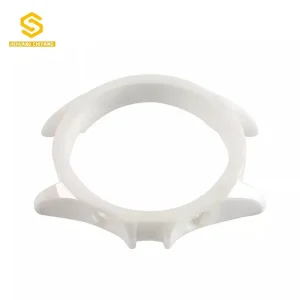
Wholesale Customized Ceramic Injection Molding Watch Case for Wrist Accessories Suppliers, Factories
View Product Details
Wholesale Ceramic Injection Molding Parts Manufacturers, Factories
View Product Details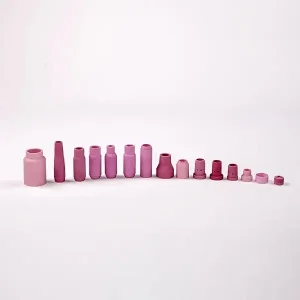
China Ceramic Terminal Strip Manufacturer, Supplier
View Product DetailsItaly’s High-Precision Industrial Ecosystem & CIM Demand
Strategic Procurement Insights for Italian OEMs, Tier-1 Suppliers, and Engineering Houses across Lombardy, Emilia-Romagna, Piedmont, and Veneto.
Italy stands as the second-largest manufacturing economy in Europe, renowned for its advanced industrial machinery, luxury goods, high-performance automotive engineering, and specialized medical technologies. Regions such as Emilia-Romagna (The Motor Valley), Lombardy (Automated Machinery & Fluid Controls), Mirandola (Biomedical District), and Tuscany/Veneto (Luxury Goods & Horology) demand component performance that traditional metals and polymers can no longer deliver under extreme thermal, corrosive, or wear intensive operational envelopes.
Automotive & Motorsport
High-torque ceramic turbocharger vanes, sensor housings, and fuel injection components engineered for Emilia-Romagna’s super sports vehicle supply chains.
Luxury Horology & Wearables
Mirror-polished, scratch-resistant Yttria-Stabilized Zirconia (Y-TZP) bezels, cases, and links tailored for Milanese design houses and luxury timepiece brands.
Biomedical & Surgical Tools
Biocompatible, non-reactive ceramic scalpel holders, endoscopic articulators, and dental abutment blanks for Mirandola's medical OEMs.
Historically, producing complex technical ceramic geometries required diamond-tool multi-axis CNC grinding of solid pre-sintered blanks—a process characterized by excessive tool wear, machine cycle times exceeding hours per unit, and material scrap rates above 60%. Ceramic Injection Molding (CIM) fundamentally changes this economic equation. By combining the geometric design freedom of plastic injection molding with the extreme mechanical properties of advanced ceramics, CIM enables Italian engineers to design near-net-shape components with intricate internal channels, sharp undercuts, and sub-millimeter wall thicknesses that are physically impossible or prohibitively expensive to machine conventionally.
Advanced CIM Material Science & Engineering Process
Understanding the thermochemical transformation from sub-micron ceramic powders to dense high-performance structural components.
Primary Material Formulations for CIM Manufacturing
The success of Ceramic Injection Molding relies on precise powder metallurgy science. Ningbo Jiehuang Chiyang Electronic Tech Co., Ltd. utilizes standardized, high-purity inorganic ceramic formulations customized for specific mechanical, thermal, and electrical requirements:
- Yttria-Stabilized Tetragonal Zirconia Polycrystals ($3Y-TZP / ZrO_2$): Offering flexural strength exceeding $1,200\text{ MPa}$ and fracture toughness up to $8\text{ MPa}\cdot\text{m}^{1/2}$. Highly resistant to wear, impact, and chemical degradation. Ideal for luxury watch cases, wear plates, textile guides, and surgical instruments.
- High-Purity Alumina ($Al_2O_3$, 99.5% to 99.8%): Valued for exceptional electrical insulation, high thermal conductivity relative to ceramics ($30\text{ W/m}\cdot\text{K}$), and extreme hardness ($HV_{0.5} > 1600$). Widely used in electrical terminal blocks, valve discs, fuse tubes, and high-voltage feedthroughs.
- Silicon Nitride ($Si_3N_4$): Exceptional thermal shock resistance and low coefficient of thermal expansion. Perfect for high-speed automotive engine components, welding nozzles, and aerospace bearings.
- Zirconia-Toughened Alumina (ZTA): A composite material delivering a cost-performance balance between pure Alumina and Zirconia for heavy industrial applications.
The 4-Stage Precision CIM Manufacturing Process Flow
| Process Stage | Technical Description | Quality Checkpoints & Parameters |
|---|---|---|
| 1. Feedstock Compounding | Sub-micron ceramic powders are homogeneously kneaded with a thermoplastic binder system (paraffin wax, polypropylene, stearic acid) at controlled temperatures. | Rheological viscosity measurement, powder loading density optimization (typically 55-65 vol%). |
| 2. Precision Injection Molding | Feedstock is injected into multi-cavity hardened steel molds using specialized anti-abrasion screw injection units under high pressure. | Green part weight consistency within ±0.1%, mold temperature control within ±0.5°C. |
| 3. Two-Step Debinding | Solvent extraction removes the primary binder phase, followed by thermal debinding in atmosphere furnaces to decompose backbone polymers. | Pore channel formation without structural slumping, micro-cracking, or residual carbon formation. |
| 4. High-Temp Sintering & Finishing | Parts undergo solid-state atomic diffusion sintering at 1,400°C to 1,600°C. Linear shrinkage of 15-22% occurs as density reaches >99.5%. | Atmosphere control, laser 3D dimensional scan, CNC diamond grinding/lapping for tight tolerances. |
The control of linear shrinkage factors during the sintering phase represents the highest technological barrier in CIM manufacturing. Our engineering team utilizes advanced finite element simulation software to model shrinkage behavior, enabling mold design corrections that achieve consistent tolerances of $\pm 0.3\%$ of nominal dimensions out of the furnace, and down to $\pm 0.005\text{ mm}$ following post-sintering diamond polishing.
China Industry 4.0: JHMIM’s Supply Chain & Cost Advantages
Why Ningbo’s Integrated Manufacturing Ecosystem Delivers Unmatched Resilience, Velocity, and Value for Italian Procurement Teams.
Automated Production Line
Equipped with high-precision Japanese and European electric injection molding machinery, closed-loop thermal debinding lines, and vacuum sintering furnaces operating 24/7.
IATF 16949 & ISO 9001 Certified
Rigorous quality management systems backed by a 30+ specialist QC team. Integrated CMM, optical profile projectors, and density testing guarantee total lot-to-lot consistency.
Ningbo Port Supply Hub Logistics
Located in Ningbo—home to the world's largest deep-water seaport—providing direct, expedited ocean freight routes to Genoa, Trieste, and La Spezia ports in Italy.
In recent years, European supply chain executives have faced compounding disruptions: rising energy costs, localized labor shortages, and inflating raw material prices. By partnering with Ningbo Jiehuang Chiyang Electronic Tech Co., Ltd. (JHMIM), Italian industrial buyers gain immediate access to an agile, vertically integrated supply chain ecosystem.
Our 28,000 square meter facility consolidates tool design, feedstock compounding, injection molding, debinding, sintering, post-machining, PVD coating, and optical inspection under a single quality management system. This vertical integration eliminates subcontractor markups and reduces tooling turnaround times to just 30 days, empowering Italian manufacturers to launch new product lines with speed and cost efficiency.
Localized Italian Application Scenarios & Engineering Successes
How CIM technology solves complex material challenges for leading Italian manufacturing sub-sectors.
1. High-End Horology & Wearable Accessories (Milan, Turin & Vicenza)
Italian fashion houses and timepiece designers require materials that resist scratch damage while delivering luxurious aesthetic depth. JHMIM supplies custom injection molded Zirconia ($ZrO_2$) watch cases, bezels, and bracelet links. Available in high-gloss polished black, brilliant white, and custom metallic tints, our ceramic components achieve a Vickers Hardness of over $1,300\text{ HV}$, ensuring scratch-proof permanence under daily wear.
2. Fluid Power Systems & Hydraulic Valves (Brescia, Bergamo & Modena)
Northern Italy’s valve and pump manufacturers produce high-pressure hydraulic components for industrial machinery and automotive braking systems. Metal valve spools exposed to abrasive slurries or corrosive fluids degrade quickly. JHMIM manufactures dense Alumina ($Al_2O_3$) and Zirconia ceramic valve discs and seal rings that maintain dimensional stability and zero-leakage flatness ($< 0.3\ \mu\text{m}$) across millions of pressure cycles.
3. High-Temperature Electrical & Heating Elements (Piedmont & Lombardy)
Italy’s professional commercial espresso machine, packaging equipment, and heating element industries rely heavily on structural electrical insulators. Our ceramic terminal blocks, porcelain connector strips, and high-temperature fuse housings withstand continuous operational environments exceeding 1,000°C while offering dielectric strength above $15\text{ kV/mm}$.
Complete OEM Ceramic Components Catalog for EU Buyers
Explore our full range of technical ceramics, porcelain connectors, terminal strips, and structural components.
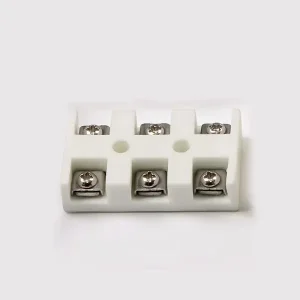
Wholesale Porcelain Terminal Block Manufacturers, Factories
View Product Details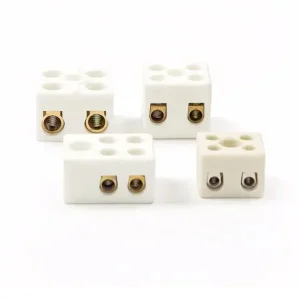
Wholesale Ceramic Resistance Manufacturers, Supplier
View Product Details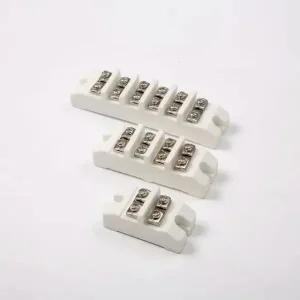
Wholesale Ceramic Terminal Connector Supplier, Factories
View Product Details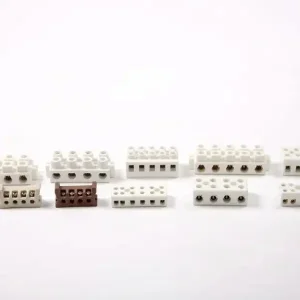
China High Temperature Ceramic Terminal Block Wire Connector Manufacturer, Factories
View Product Details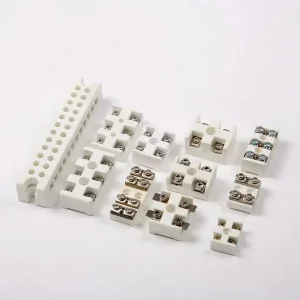
Wholesale ceramic connector block Manufacturers, Factory
View Product Details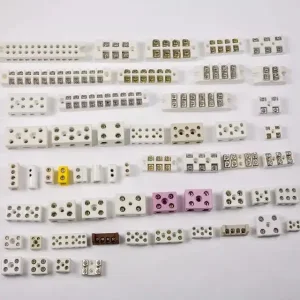
Wholesale Ceramic Terminal Blocks Supplier, Suppliers
View Product Details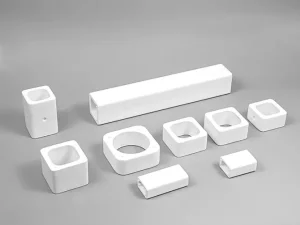
China Fuse ceramics Supplier, Factories
View Product Details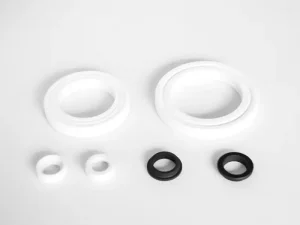
China Ceramic seal Supplier, Factories
View Product DetailsFrequently Asked Technical & Sourcing Questions
Direct answers for Italian engineering leads, quality managers, and international procurement officers.
Q1: How does JHMIM manage the 15-22% sintering shrinkage in CIM parts?
We use customized mold cavity sizing calculated through mold-flow and shrinkage simulation software. By controlling binder purity, feedstock viscosity, and furnace thermal profiles within ±0.5°C, we ensure consistent linear shrinkage across production lots.
Q2: What standard dimensional tolerances can be achieved out of the sintering furnace?
As-sintered tolerances typically comply with ISO 2768-m (±0.3% to ±0.5% of nominal dimensions). For critical features, post-sintering diamond grinding and CNC lapping can achieve micro-tolerances down to ±0.005 mm.
Q3: What is the Minimum Order Quantity (MOQ) for custom CIM components?
Our standard production MOQ for custom ceramic injection molded parts is 2,000 pieces per batch. For pilot sampling or high-value prototype runs, lower quantities can be accommodated alongside custom tooling development.
Q4: Can JHMIM provide non-disclosure agreements (NDAs) before drawing submission?
Yes, absolutely. We regularly enter into bilateral NDAs with Italian OEMs and European design studios before reviewing sensitive 2D (PDF) and 3D (STEP/IGES) CAD drawings.
Q5: What are the surface finish options for luxury Zirconia components?
We offer surface finishes ranging from standard as-sintered matte to high-gloss mirror polishing ($Ra < 0.02\ \mu\text{m}$). Surface treatments also include custom PVD titanium coatings, satin blasting, and laser engraving.
Q6: How quickly can JHMIM deliver quotes and complete tooling for European orders?
Upon receiving complete 2D/3D engineering drawings, our engineering team provides a detailed DFM evaluation and quote within 48 hours. Tooling fabrication and first-article sample delivery typically take 30 days.
Ready to Optimize Your Industrial Ceramic Supply Chain?
Send your CAD drawings today to receive a comprehensive DFM manufacturability evaluation and a competitive factory-direct quote within 48 hours.