
Precision CIM Parts for Hungarian Supply Chains
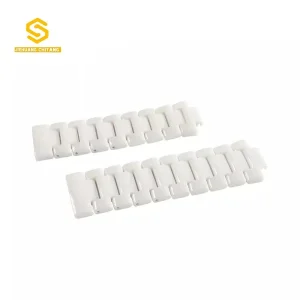
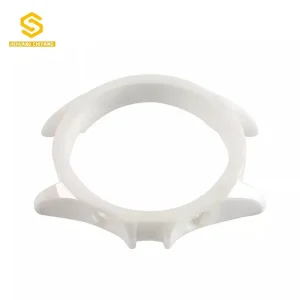

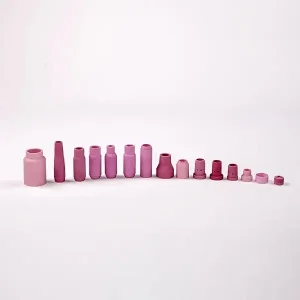
Navigating Hungary’s Industrial Transformation with Advanced Ceramic Injection Molding
Hungary has solidified its position as Central and Eastern Europe’s premier hub for advanced automotive manufacturing, battery electrification technology, and precision medical engineering. Strategic industrial corridors—stretching from Győr (Audi's flagship powertrain hub) and Kecskemét (Mercedes-Benz) to the burgeoning EV powerhouse in Debrecen (BMW Group and CATL)—are driving an unprecedented demand for components that survive extreme operational environments.
Traditional metals and polymers frequently fail under high thermal stress, aggressive chemical exposure, friction wear, and high dielectric requirements. Ceramic Injection Molding (CIM) bridges this critical technology gap. By combining the geometric versatility of conventional plastic injection molding with the extraordinary material properties of technical ceramics ($ZrO_2$, $Al_2O_3$, $Si_3N_4$), CIM enables Hungarian OEMs and Tier-1 suppliers to deploy complex, near-net-shape components that deliver zero defect rates and long-term durability.
Hungary Supply Chain Highlights
- Automotive Cluster Alignment: Supporting ISO/IATF 16949 requirements for Hungarian automotive power electronics and sensor systems.
- Nearshoring Efficiency: Streamlined logistics delivering directly to Budapest, Győr, Miskolc, and Debrecen industrial parks.
- Information Gain Advantage: Direct engineering access to DFM (Design for Manufacturability) analysis tailored to European engineering standards.
- Total Cost Reduction: Eliminates costly diamond-grinding post-machining stages by delivering complex geometries in mass production.
Engineering Benchmark & Manufacturing Scale
Delivering certified E-E-A-T excellence with zero-defect manufacturing protocols, state-of-the-art sintering technology, and strict EU regulatory compliance.
Technical Whitepaper: The Physics and Materials Science of Ceramic Injection Molding
Ceramic Injection Molding represents a paradigm shift in powder metallurgy and advanced materials manufacturing. While traditional machining of ceramic blanks requires diamond tooling and inflicts severe tool wear, CIM forces a homogenized organic-inorganic feedstock into precise mold cavities, followed by solvent/thermal debinding and high-temperature solid-state sintering.
1. Feedstock Compounding & Rheology Control
The CIM process begins with ultra-fine, sub-micron inorganic powders (typically $ZrO_2$ or $Al_2O_3$ with particle sizes between 0.1 µm and 1.0 µm) blended with a multi-component thermoplastic binder system (paraffin wax, polypropylene, and surfactant additives). Achieving a powder loading of 55% to 65% by volume is critical. Higher powder loading minimizes linear shrinkage during sintering, while optimized rheology prevents binder-powder separation under high injection shear rates.
2. Micro-Injection Molding & Green Body Integrity
The compounded feedstock is processed in specialized, wear-resistant injection molding machines equipped with carbide-coated barrels and screws. The mold cavities are precisely oversized (typically by 15% to 25%) to compensate for volumetric shrinkage during final sintering. The resulting "green body" possesses sufficient mechanical green strength to withstand automated handling and inspection.
3. Debinding: Solvent, Catalytic, and Thermal Extraction
To eliminate the organic binder matrix without causing structural micro-cracks, blistering, or pore formation, a two-stage debinding process is employed:
- Primary Debinding (Solvent or Catalytic): Solves the primary wax fraction in an organic solvent (e.g., heptane) or decomposes polyoxymethylene (POM) using gaseous nitric acid ($HNO_3$) atmosphere at elevated temperatures ($110^\circ\text{C}-140^\circ\text{C}$).
- Secondary Debinding (Thermal Pyrolysis): Slowly burns off the residual backbone polymer inside atmosphere-controlled kilns up to $600^\circ\text{C}$, leaving behind a porous "brown body" held together by capillary forces.
4. Solid-State Thermal Sintering & Hot Isostatic Pressing (HIP)
During the final sintering stage in high-temperature vacuum or atmosphere furnaces ($1400^\circ\text{C}$ to $1750^\circ\text{C}$ depending on the oxide/non-oxide formulation), atomic diffusion takes place across grain boundaries. The pores collapse, and the part densifies up to 99.5% of theoretical density. For mission-critical aerospace or surgical applications, secondary Hot Isostatic Pressing (HIP) is performed under argon pressures up to 200 MPa to eliminate residual microporosity.
Material Systems Matrix for CIM Components
Selecting the optimal technical ceramic formulation is essential for achieving target performance criteria in Hungarian manufacturing projects.
| Ceramic Material | Density ($g/cm^3$) | Flexural Strength (MPa) | Thermal Conductivity ($W/m\cdot K$) | Primary Application in Hungary |
|---|---|---|---|---|
| Y-TZP Zirconia ($ZrO_2$) | 6.05 | 1000 - 1200 | 2.5 - 3.0 | Medical implants, luxury watch cases, wear-resistant valving, automotive pumps. |
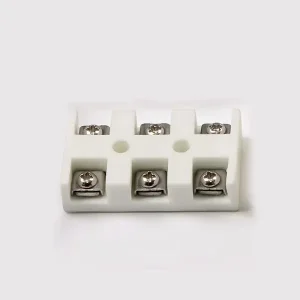
| 99.7% Alumina ($Al_2O_3$) | 3.92 | 350 - 450 | 30 - 35 | High-voltage electrical insulators, spark plug cores, terminal connector blocks. |
| Zirconia Toughened Alumina (ZTA) | 4.50 | 600 - 800 | 20 - 25 | Industrial cutting tools, high-wear automotive guides, fluidic control modules. |
| Silicon Nitride ($Si_3N_4$) | 3.25 | 850 - 1000 | 30 - 40 | High-speed bearing balls, EV turbocharger rotors, extreme thermal shock shields. |
Localized Applications in Hungary's Core Industrial Hubs
From EV power distribution to micro-surgical robotics, our CIM engineering capabilities empower Hungarian manufacturers across key regional sectors.
Automotive & EV Electronics (Győr & Debrecen)
Electric Vehicle battery packs and high-voltage busbars require absolute electrical isolation under high temperature. Ceramic terminal blocks, fuse housings, and sensor housings made from $Al_2O_3$ withstand breakdown voltages exceeding 15 kV/mm while shedding excess heat.
Medical Technology & MedTech (Budapest & Szeged)
Hungary’s medical equipment cluster utilizes Y-TZP Zirconia for biocompatible micro-tools, endoscopic scalpel handles, and dental implant structures. Zirconia offers zero cytotoxicity, high fracture toughness, and complete radiopacity under X-ray diagnostic scan procedures.
High-Voltage Industrial Power & Smart Grid
Hungarian heavy industry and power grid modernizations demand terminal connectors, ceramic resistors, and porcelain connector blocks capable of continuous operation at $500^\circ\text{C}+$ without dielectric degradation or mechanical creep.
Engineering Value Addition for Hungarian OEMs
By switching from multi-piece metallic assemblies to consolidated one-piece CIM ceramic designs, engineering teams in Hungary have achieved an average 38% mass reduction and eliminated secondary surface coating or anodizing operations completely.
Process Comparison: CIM vs. Traditional Manufacturing Routes
Understanding when to specify Ceramic Injection Molding versus CNC Diamond Grinding, Dry Pressing, or Metal Injection Molding (MIM) is critical for commercial success.
| Feature Parameter | Ceramic Injection Molding (CIM) | CNC Diamond Grinding | Dry Pressing & Sintering | Metal Injection Molding (MIM) |
|---|---|---|---|---|
| Geometric Complexity | Extremely High (3D curves, undercuts) | Low to Medium | Low (2.5D prismatic shapes) | Extremely High |
| Annual Volume Scalability | 10,000 to 5,000,000+ units | 1 to 1,000 units | 10,000 to 500,000 units | 10,000 to 5,000,000+ units |
| Surface Finish ($Ra$) | 0.4 – 0.8 µm (as-sintered) | 0.2 – 0.4 µm | 1.6 – 3.2 µm | 1.0 – 1.6 µm |
| Material Waste Ratio | < 2% (recyclable green runners) | > 50% (machining scrap) | < 5% | < 2% |
| Thermal Resistance Limit | Up to 1700°C | Up to 1700°C | Up to 1700°C | Up to 500°C - 800°C |
Quality Systems, EU Compliance & Hungarian Customs Logistics
We provide comprehensive quality assurance paperwork for European compliance, ensuring zero friction when importing technical ceramic components into Hungary.
Strict European Quality Protocols:
- IATF 16949 & ISO 9001 Audited: Complete PPAP Level 3 documentation, including Process Flow Charts, FMEA, Dimensional Inspection Reports, and Full Material Traceability Certificates.
- REACH & RoHS Compliance: All ceramic formulations ($ZrO_2$, $Al_2O_3$, colorants, and glass phases) are fully compliant with EU Regulation (EC) No 1907/2006 and Directive 2011/65/EU.
- Biocompatibility Certification: ISO 10993 compliant grades available for implantable medical devices and surgical instruments distributed in the European Union.
Hungary Delivery & Frictionless Logistics
We operate robust air and maritime logistics routes with customs clearance direct to Hungarian industrial destination sites:
Air Freight Direct to BUD
Expedited air express directly to Budapest Ferenc Liszt International Airport (BUD) with 4-7 business day door-to-door transit.
Rail & Ocean Logistics Hubs
Cost-effective rail cargo via the Silk Road corridor or ocean shipping via Koper/Hamburg directly routed to Zalaegerszeg or Debrecen bonded warehouses.
Technology Roadmap: Next-Generation Ceramic Molding Advances
As Hungarian manufacturing shifts towards Industry 4.0 digitisation and autonomous system production, our R&D roadmap focuses on four key manufacturing breakthroughs:
Micro-CIM Tech (< 0.1g)
Developing ultra-small ceramic components with feature dimensions down to 50 microns. Essential for minimally invasive surgical instruments and micro-fluidic diagnostic chips.
Multi-Material Co-Molding
Combining Zirconia with metallic conductive paths in a single continuous injection molding process, enabling smart integrated sensor housings without wire-bonding.
AI-Driven Shrinkage Prediction
Utilizing neural network simulation software to model localized thermal shrinkage during $1700^\circ\text{C}$ sintering, reducing tooling trial iterations from 4 down to 1.
Zero-Carbon Sintering
Transitioning our high-temperature sintering kilns to green hydrogen-powered heating systems to help European clients meet Scope 3 carbon neutrality goals.
High-Performance Technical Ceramic Catalog for Hungary
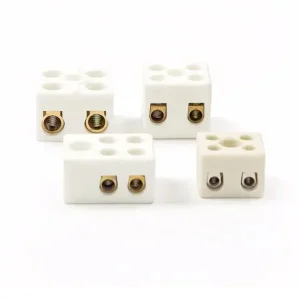
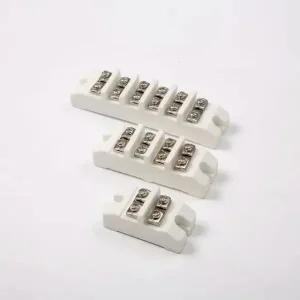
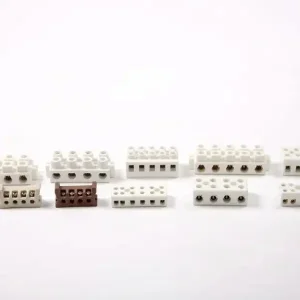
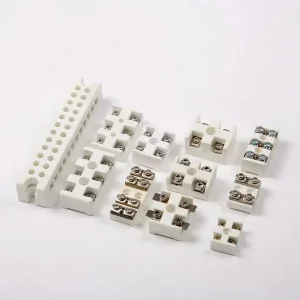
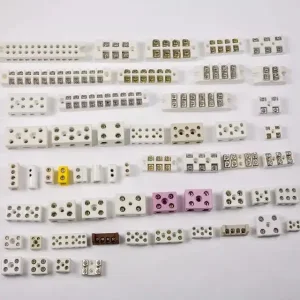
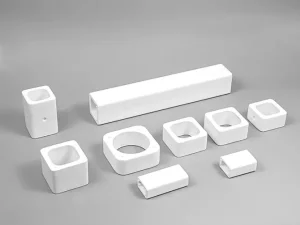
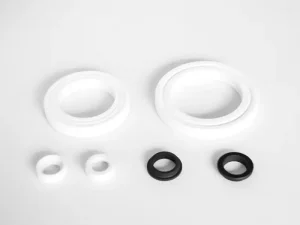
Explore our extensive product line of custom terminal connectors, electrical insulators, high-wear seals, and custom injection molded ceramics.
Frequently Asked Questions (FAQ)
Expert engineering answers regarding DFM, tolerances, material selection, and logistics for buyers in Hungary.
What dimensional tolerances can be achieved with Ceramic Injection Molding?
Standard as-sintered dimensional tolerances for CIM components are ±0.3% to ±0.5% of nominal dimension. With high-precision mold tooling and strictly controlled thermal sintering cycles, JHMIM routinely achieves ±0.1% to ±0.2%. For critical features requiring sub-micron accuracy (such as bearing surfaces or optical alignment pins), secondary diamond grinding or lapping can achieve tolerances down to ±0.001 mm.
How do you handle the shrinkage factor during CIM manufacturing?
Depending on the ceramic powder morphology and binder volume, linear shrinkage during high-temperature sintering ranges between 15% and 25%. Our mold cavity tooling is pre-scaled in 3D CAD using proprietary thermal expansion and shrinkage compensation algorithms. Every tool geometry is verified through mold-flow rheology simulation before CNC or EDM cavity cutting.
Which ceramic material should I choose: Zirconia ($ZrO_2$) or Alumina ($Al_2O_3$)?
Select Alumina ($Al_2O_3$) if your primary operational requirements are electrical isolation, high thermal conductivity ($30\text{ W/m}\cdot\text{K}$), and cost efficiency under high temperature. Select Zirconia ($ZrO_2$) if you require extreme mechanical strength (flexural strength > 1000 MPa), exceptional fracture toughness, superior wear resistance, or biological inertness for medical application.
What is the Minimum Order Quantity (MOQ) for custom CIM tooling and production?
For custom engineering OEM parts requiring dedicated injection mold tooling, our standard production MOQ starts at 2,000 to 5,000 pieces per batch. However, for initial design verification, prototype pilot runs, and functional sampling, we offer prototype tooling options and 3D printing ceramic verification models.
Can you sign Non-Disclosure Agreements (NDA) under European jurisdiction?
Yes. We regularly execute bilingual NDAs with engineering clients across Hungary, Germany, and the wider EU. All customer CAD files, STEP models, and technical specifications are protected under strict internal access protocols and secure data encryption.
How are shipments handled for import into Hungarian industrial hubs?
We provide full DDP (Delivered Duty Paid) or DAP (Delivered at Place) terms to any location in Hungary, including Budapest, Győr, Miskolc, Debrecen, and Zalaegerszeg. We manage all customs clearance paperwork, HS code classification (typically Chapter 69 for technical ceramics), REACH/RoHS certification, and VAT/EORI documentation.
Accelerate Your Hungarian Ceramic Component Project Today
Send us your 2D (PDF) and 3D (STEP/IGES) drawings for a complete engineer-reviewed DFM report and transparent quotation within 48 hours.