
High-Precision Ceramic Injection Molded Components for Argentina
Engineered for extreme wear, high dielectric performance, and severe corrosion resistance in demanding industrial environments across Latin America.
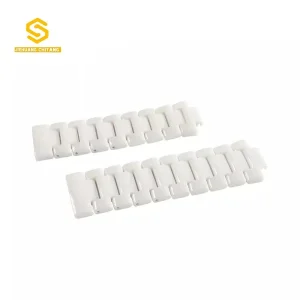
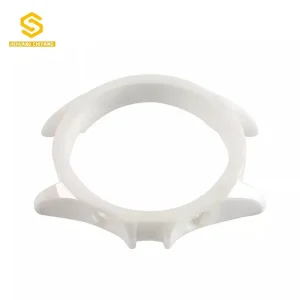
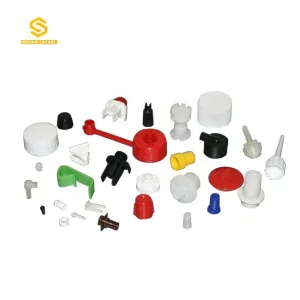
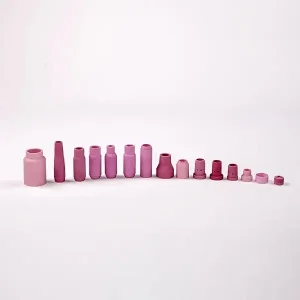
Understanding Ceramic Injection Molding (CIM) Technology
A powder metallurgy evolution enabling mass production of 3D complex, ultra-hard ceramic components with sub-micron dimensional repeatability.
Sub-Micron Feedstock Formulation
CIM merges ultra-fine ceramic powders (99.5% Al2O3, Y-TZP Zirconia) with thermoplastic binder systems (paraffin wax, polyethylene). This homogenization ensures isotropic shrinkage during thermal sintering, preserving structural integrity.
Multi-Stage Thermal Debinding
Extracted green bodies undergo solvent extraction followed by atmosphere-controlled thermal debinding. Organic polymers are pyrolyzed without inducing micro-cracks, void spaces, or internal stresses prior to high-temp densification.
High-Temperature Sintering
Sintered in specialized kilns between 1450°C and 1750°C, the ceramic body achieves near-theoretical density (>99.2%). The final component displays extreme micro-hardness (Mohs 9), heat tolerance up to 1600°C, and complete chemical inertness.
Argentina Industrial & Commercial Landscape for Technical Ceramics
Analyzing key economic growth vectors, localized application sectors, and supply chain demands across Buenos Aires, Córdoba, Rosario, and the Lithium Triangle.
1. Lithium Mining & Salt Flat Processing (Jujuy, Salta, Catamarca)
Argentina sits on one of the world's largest lithium brine reserves within the Puna region. Lithium extraction facilities rely heavily on chemical reagent dosing pumps, evaporative slurry valves, and hydrocyclone nozzles. Standard metallic alloys fail within weeks due to high-salinity brine corrosion and abrasive lithium carbonate slurries. Zirconia (Y-TZP) and Alumina (Al2O3) ceramic components manufactured via CIM offer total resistance to hydrochloric acid, lithium brine abrasion, and extreme thermal fluctuations.
2. Vaca Muerta Oil & Gas Hydraulic Fracturing Sector
Neuquén’s Vaca Muerta shale formation is a primary global energy hub. Downhole drilling instrumentation, hydraulic fracking choke valves, and proppant flow sensors require materials capable of surviving 10,000+ PSI pressure surges and sand-laden abrasive fluids. Injection molded ceramic seals, trim rings, and blast nozzles deliver a 5x service life extension over tungsten carbide components, significantly reducing non-productive rig downtime.
3. Automotive & Agricultural Machinery Manufacturing (Córdoba & Santa Fe)
Argentina’s automotive hubs in Córdoba and General Pacheco, alongside agricultural machinery clusters in Rosario and San Francisco, demand high-volume precision wear parts. Fuel injection sensor housings, oxygen sensor ceramic insulators, fluid dosing spray tips, and heavy-gear pump bushings benefit from CIM's net-shape molding capabilities—eliminating expensive diamond grinding processes.
4. Medical Devices, Biotech & Textile Equipment (Greater Buenos Aires)
The biomedical manufacturing nexus in Buenos Aires requires biocompatible, sterilizable, non-reactive materials for surgical instrument handles, endoscopic clips, and fluidic dosing valves. Additionally, local textile high-speed spinning mills require thread guides and yarn tensioning rollers made of zero-friction Zirconia to prevent synthetic fiber wear at speeds exceeding 5,000 meters per minute.
Why Argentine Enterprise Buyers Source CIM from Ningbo Jiehuang (JHMIM)
Combining state-of-the-art multi-cavity tooling design, raw material synthesis, and direct export capabilities to streamline B2B procurement for South American buyers.
50% Tooling & Piece-Price Economics
European and US technical ceramic suppliers impose massive tooling amortizations and high piece costs. Jiehuang leverages Ningbo’s integrated mold-making cluster to supply high-precision multi-cavity injection molds at a fraction of Western costs, reducing overall project CAPEX.
48-Hour Rapid DFM & Simulation
Our 15+ senior metallurgical engineers perform mold-flow analysis, shrinkage optimization, and Design for Manufacturability (DFM) reviews within 48 hours. We eliminate potential sintering warpage before cutting steel.
IATF 16949 & ISO 9001 Certified Quality
Every shipment bound for Buenos Aires or Rosario undergoes 100% automated optical inspection (AOI), CMM dimensional verification, density testing, and batch material spectral reporting. Total quality control is guaranteed.
Navigating Localized Logistics & Customs for Argentine Procurement
Ensuring seamless import workflows, SEDI clearance compliance, tariff management, and efficient transit from Ningbo Port to Argentine industrial hubs.
Customs Clearance & Regulatory Support (SEDI / SIRA Compliance)
Importing technical components into Argentina requires meticulous adherence to national trade protocols. Ningbo Jiehuang provides full documentation suites including HS Code classification guidance (e.g., HS 6909.11 / 6909.12 for chemical/technical ceramics), Certificates of Origin (Form A / Form R), detailed packing lists, and commercial invoices compliant with AFIP and BCRA payment guidelines. Our experienced export team assists Argentine customs brokers (Despachantes de Aduana) to prevent customs holds at Puerto de Buenos Aires or Zárate.
Logistics Routes & Inventory Buffer Strategy
We provide ocean freight shipping lines connecting Ningbo-Zhoushan Port directly to Buenos Aires (approx. 35–42 days transit) and express air freight via Ezeiza International Airport (EZE) for rapid prototyping and emergency spares. To safeguard Argentine buyers against foreign exchange volatility and shipping line delays, we offer Safety Stock Buffer Agreements, keeping pre-sintered components in stock for immediate release.
Material Performance Comparison for Industrial Applications
Evaluating Ceramic Injection Molding (Zirconia & Alumina) against traditional machining and powder metallurgy alloys.
| Performance Characteristic | CIM Zirconia (ZrO2) | CIM Alumina (Al2O3 99.5%) | Tungsten Carbide (Co matrix) | Stainless Steel 316L (CNC) |
|---|---|---|---|---|
| Vickers Hardness (HV0.5) | 1350 - 1500 HV | 1600 - 1800 HV | 1400 - 1600 HV | 200 - 250 HV |
| Density (g/cm³) | 6.05 g/cm³ | 3.92 g/cm³ | 14.5 g/cm³ | 7.98 g/cm³ |
| Flexural Strength (MPa) | 1000 - 1200 MPa | 350 - 450 MPa | 1500 - 2000 MPa | 600 - 700 MPa |
| Max Operating Temp (°C) | 1000°C | 1600°C | 500°C (oxidation limit) | 800°C |
| Acid & Brine Corrosion Resistance | Outstanding (Immune) | Outstanding (Immune) | Moderate (Cobalt leaching) | Pitting prone in brine |
| Complex Geometry Cost at Volume | Low (Net-Shape Molded) | Low (Net-Shape Molded) | Very High (Diamond Machining) | High (Tool Wear & Time) |
Emerging Global Trends in Ceramic Injection Molding Technology
Key technological advancements driving the next generation of high-tech manufacturing, medical technology, and green energy transition.
1. Micro-CIM Component Miniaturization
Micro-injection molding enables micro-fluidic channels, surgical micro-jaw tips, and telecom fiber optic ferrules with features below 0.1mm and shot weights under 0.05 grams. This breakthrough serves modern minimally invasive medical equipment.
2. Green Water-Soluble Debinding Systems
Transitioning from hazardous solvent extraction to environmentally clean water-soluble binder technologies. This green processing reduces carbon footprints, speeds up debinding cycle times by 30%, and lowers VOC emissions.
3. Ceramic-Metal Co-Injection & Hybrid Assembly
Innovations in multi-component injection molding (2K CIM) allow ceramic cores to be directly co-molded or integrated with metal injection molded (MIM) frames. This yields composite parts with localized insulation, high toughness, and extreme wear faces.
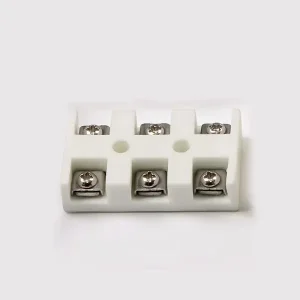
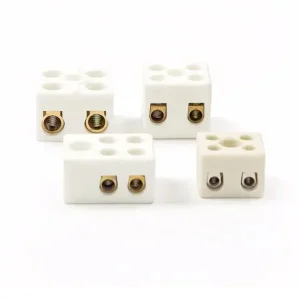
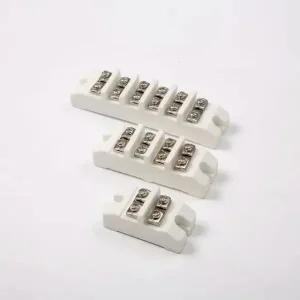
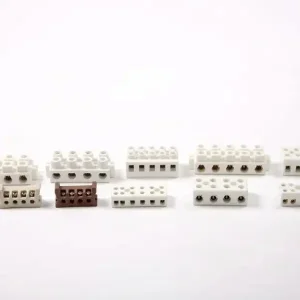
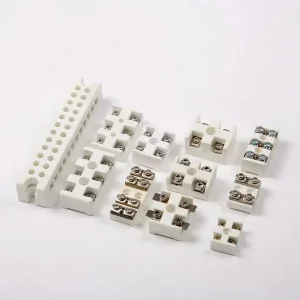
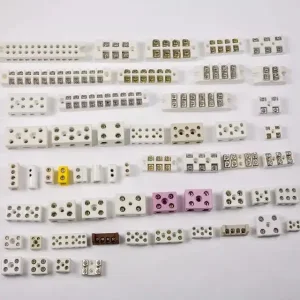
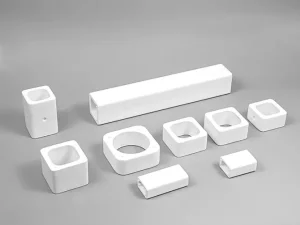
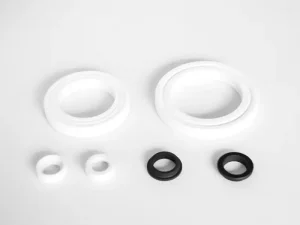
Complete Technical Ceramic & Electrical Insulation Catalog
Explore our wide range of porcelain terminal blocks, high-temperature connectors, ceramic resistors, and dynamic sealing rings tailored for OEM manufacturing.
Frequently Asked Questions for Sourcing Ceramic Injection Molding Parts
Expert engineering answers addressing manufacturing feasibility, tolerance controls, logistics, and tooling investment for South American procurement managers.
Ready to Optimize Your Industrial Ceramic Component Sourcing?
Send us your 2D (PDF) and 3D (STEP/IGES) CAD drawings today. Receive an engineer-reviewed DFM report and transparent tooling & part quotation within 48 hours.
Send Inquiry Now