High-Precision Manufacturing Showcase for Uzbekistan
Uzbekistan’s Industrial Transformation & Additive Manufacturing Ecosystem
Under the framework of the "Uzbekistan - 2030" Strategy, the Republic of Uzbekistan is experiencing an unprecedented industrial modernization. Special Economic Zones (SEZs) such as Navoi, Angren, and Tashkent are aggressively expanding their manufacturing depth across automotive, mining, textile machinery, and biomedical engineering sectors. Traditional subtractive machining and local casting facilities often struggle to meet the strict structural integrity, micro-geometrical tolerances, and rapid iteration requirements demanded by contemporary international engineering standards.
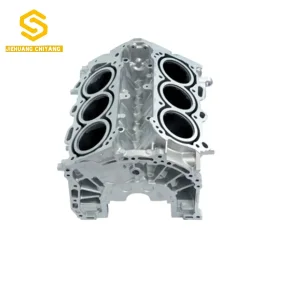
As a leading China 3D printing manufacturer and advanced powder metallurgy tier-1 supplier, Ningbo Jiehuang Chiyang Electronic Tech Co., Ltd. (JHMIM) bridges this critical supply gap. By combining direct additive manufacturing (Selective Laser Melting - SLM, Direct Metal Laser Sintering - DMLS, Stereolithography - SLA) with high-volume production routes like Metal Injection Molding (MIM) and precision die-casting, we provide Uzbek industrial enterprises with end-to-end prototyping-to-mass-production continuity.
Localization & import Substitution
Uzbek OEMs reduce dependency on long-lead European replacement components. Our custom additive production enables immediate localized digital spare part replication for heavy machinery.
Zero Tooling Cost Prototyping
Before committing to expensive production molds for MIM or aluminum die-casting, Uzbek engineers validate fluid dynamics, stress tolerances, and assembly fits using our direct metal 3D printing.
EAC & GOST-R Compliance
Full alignment with CIS region mechanical and structural standards. Complete material mill certs, X-ray non-destructive testing (NDT), and CMM inspection reports provided with every shipment.
Technical Roadmap: Metal & Polymer 3D Printing Technology Matrix
To optimize procurement TCO (Total Cost of Ownership) for Uzbek industrial buyers, selecting the correct additive process and metallurgical formulation is paramount. Our factory operates state-of-the-art multi-laser metal powder bed fusion systems and industrial resin printers alongside high-tonnage sintering presses.
| 3D Process / Technology | Compatible Materials Matrix | Achievable Tolerance | Density / Mechanical Strength | Ideal Uzbekistan Application |
|---|---|---|---|---|
| SLM / DMLS (Direct Metal Laser) | 316L, 17-4PH, Ti-6Al-4V, AlSi10Mg, Inconel 718 | ±0.03 mm to ±0.05 mm | >99.8% wrought-like density | Navoi Mining turbines, custom drill bits, specialized aerospace/defense fixtures |
| Metal Binder Jetting + Sintering | Stainless Steel 316L, Copper, Low Alloy Steels | ±0.08 mm to ±0.12 mm | >97.5% sintered density | Medium-batch automotive engine brackets, specialized hydraulic valve manifolds |
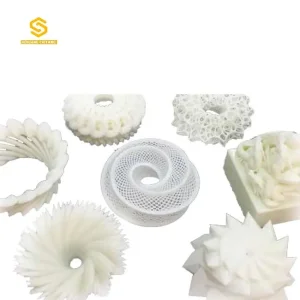
| Industrial SLA / SLS Polymers | PA12, Glass-filled Nylon, High-Temp Resin | ±0.1 mm | High impact resistance, isotropic | Tashkent electronics enclosures, HVAC ducts, assembly line Jigs & Fixtures |
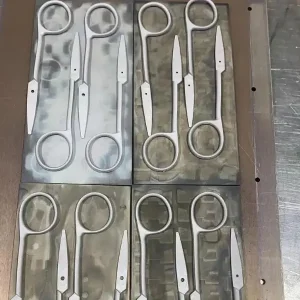
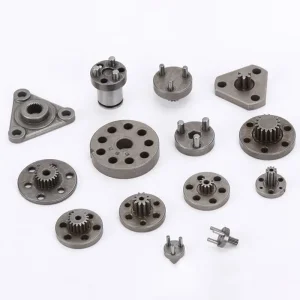
| MIM (Metal Injection Molding)* | Fe-Ni alloy, Titanium, Ceramic, Stainless Steel | ±0.001 mm (Post-CNC) | >98% theoretical density | Mass production (>2,000 pcs) surgical scalpels, lock hardware, micro-gears |
Direct Belt & Road Connectivity to Uzbekistan
The strategic geographic synergy between China and Central Asia via the Belt and Road Initiative (BRI) provides Uzbek buyers with unparalleled logistics speed and freight cost advantages over Western European suppliers. Located in Ningbo—home to the world’s top container port—JHMIM maintains a resilient digital manufacturing ecosystem.
From CAD submission to multi-axis CNC finishing, automated optical inspection (AOI), and direct rail transport via Khorgos or air cargo to Tashkent International Airport (TAS), our production lifecycle guarantees speed, confidentiality, and price competitiveness.
- Direct rail transport lines: Ningbo - Khorgos - Tashkent (12-15 Days delivery)
- In-house DFM (Design for Manufacturability) analysis led by 15+ senior metallurgical engineers
- Strict Non-Disclosure Agreements (NDA) safeguarding proprietary Uzbek military & commercial designs
Supply Chain Resilience Matrix
Raw Material Sourcing: Direct partnerships with top-tier metal powder producers ensures zero raw material bottlenecking.
Quality Assurance Protocol: IATF 16949 & ISO 9001 certified. Every production batch undergoes spectrum analysis, salt spray corrosion testing, dynamic torque testing, and 3D CMM laser scanning.
Warranty Guarantee: 1-Year full replacement warranty on all custom metal injection molded, die-cast, and 3D printed components shipped to Uzbekistan.
Tailored Industrial Solutions for Uzbekistan’s Key Sectors
Automotive & UzAuto Supply Chain
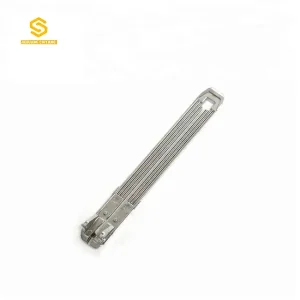
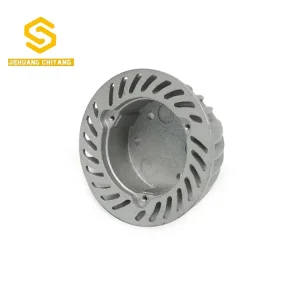
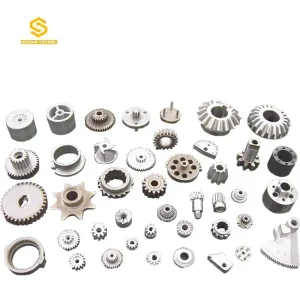
High-volume manufacturing of complex sintered gears, variable valve timing (VVT) components, mirror bracket die-castings, and sensor housings meeting rigorous IATF 16949 standards.
Mining & Heavy Metallurgy (Navoi/Almalyk)
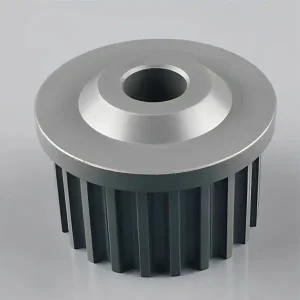
Heavy-duty wear-resistant component fabrication using Cobalt-Chromium, tungsten carbide powder compaction, and 3D printed SLM stainless steel impellers capable of enduring harsh slurry abrasive environments.
Medical Instruments & Healthcare Hubs
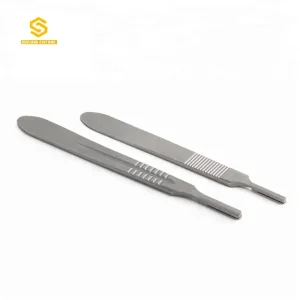
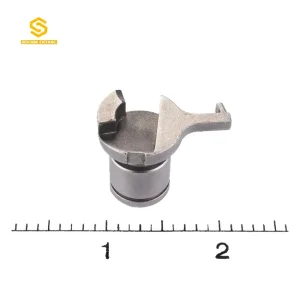
Titanium Metal Injection Molding (Ti-MIM) surgical scalpel handles, custom orthopedic implant prototypes, and laparoscopic instrument claws serving Tashkent's medical device manufacturing sector.
How Uzbek Procurement Managers Can Optimize Unit Costs by 30-50%
When transitioning from classical CNC block machining to metal 3D printing or high-volume Metal Injection Molding (MIM), evaluating geometry-to-volume thresholds is essential. Below is our engineering blueprint designed for Uzbek purchasing directors:
Phase 1: Prototyping & Low-Volume (<100 Units)
Recommended Process: Metal 3D Printing (SLM/DMLS) or Polymer SLS.
Economic Value: Zero tooling costs. Changes in CAD files can be executed instantly between build cycles. Ideal for rapid functional testing in Tashkent testing facilities.
Phase 2: High-Volume Mass Production (>2,000 Units)
Recommended Process: Metal Injection Molding (MIM) or Die-Casting.
Economic Value: Initial mold investment amortizes rapidly. Unit costs drop by up to 50% compared to CNC multi-axis milling while retaining intricate internal cross-sections and thread profiles.
Frequently Asked Questions for Uzbekistan Procurement
How does JHMIM ship custom 3D printed and MIM parts to Uzbekistan?
We provide comprehensive DAP/DDP shipping options to major Uzbek cities including Tashkent, Samarkand, Namangan, and Navoi. Shipments are handled via express air cargo for urgent prototyping (4-7 days transit) or direct international rail freight through Khorgos Dry Port (12-15 days) with all customs documentation and origin certificates included.
Can you provide technical NDA and proprietary drawing protection?
Yes. Before receiving any 2D (PDF) or 3D (STEP/IGES/STL) files, we sign legally binding non-disclosure agreements (NDAs). All digital CAD data sent from Uzbekistan is stored on secure, air-gapped internal servers accessible only by assigned engineering team members.
What minimum order quantities (MOQ) apply to custom projects?
For direct Metal 3D Printing (SLM/SLA/DMLS), there is NO minimum order quantity (MOQ 1 piece). For Metal Injection Molding (MIM) and aluminum/zinc die-casting, the production MOQ starts at 2,000 pieces to amortize tooling setup costs effectively.
Why is 3D printing preferred over conventional milling for complex parts?
3D printing allows for complex geometries like internal cooling channels, weight-reduction lattices, and deep undercuts that are impossible or cost-prohibitive with 5-axis CNC machining. Additionally, material waste is reduced by up to 90%, offering significant savings on expensive alloys like Titanium or Inconel.
What certification and material testing reports are supplied?
Each delivery to Uzbekistan includes a complete quality assurance package: Material Test Report (MTR) according to EN 10204 3.1, Dimensional CMM Inspection Logs, Hardness Test Data, and density certification.