
MIM Solutions Engineered for Mumbai’s Consumer Electronics Ecosystem
High-density stainless steel, titanium, and copper alloy micro-components manufactured in China and delivered with DDP supply chain integration across Maharashtra’s manufacturing hubs.
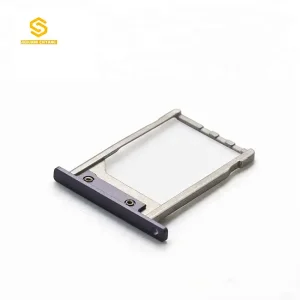
Mumbai Smartphone Dual SIM & Micro SD Card Slot Tray (MIM 316L)
View Specifications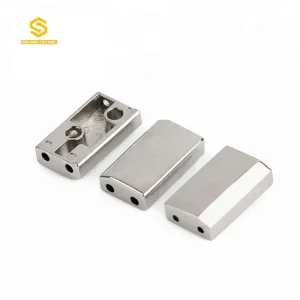
Mumbai Smartwear Precision Stainless Steel Buckle & Deployant Clasp Assembly
View Specifications
High-Polish MIM Stainless Steel Smartwatch Bezel & Middle Frame Chassis
View Specifications
Ultra-Thin Metallic Laptop & Tablet CPU Cooling Fan Impeller Hub
View SpecificationsMetal Injection Molding (MIM) in Next-Generation Electronics
Metal Injection Molding (MIM) has emerged as the definitive micro-manufacturing technology for the global consumer electronics sector. By combining the geometric design freedom of plastic injection molding with the structural integrity and material strength of wrought metals, MIM resolves the classical trade-off between manufacturing complexity and unit production cost.
In modern handheld hardware—ranging from 5G smartphones and foldable screens to hearables, VR headsets, and smartwatches—internal structural space is constrained to sub-millimeter tolerances. Traditional 5-axis CNC machining of complex 3D profiles incurs prohibitive tool wear, excessive material waste (often over 85% chip ratio), and unscalable production cycle times. MIM overcomes these barriers by achieving over 97.5% to 99% theoretical sintered density using ultra-fine metal powders (typically 4–22 µm) blended with advanced polyamorous binder systems.
Key Performance Indicators of China-Grade MIM
- Sintered Density: 97.8% - 99.2% (Wrought-like mechanical property)
- Dimensional Tolerance: ±0.3% standard, up to ±0.05mm with CNC coining
- Surface Roughness: Ra 0.8–1.2 µm raw, mirror polish < Ra 0.2 µm
- Material Yield Rate: >95% (Near-net shape, zero material waste)
- Monthly Output Capacity: >15 Million precision micro-parts
Navigating Mumbai’s Rapidly Expanding Electronics Ecosystem
How Chinese MIM manufacturing powerhouses provide vital component infrastructure to Mumbai, Navi Mumbai, Thane, and the broader Maharashtra electronics industrial corridor.
SEEPZ SEZ & Navi Mumbai Tech Corridors
Santacruz Electronics Export Processing Zone (SEEPZ) and the industrial clusters across Navi Mumbai and Thane represent crucial assembly and hardware engineering nodes in Western India. High-volume Original Design Manufacturers (ODMs) and Contract Manufacturers in these zones demand rapid prototyping and steady batch delivery of ultra-small metal parts for consumer export products.
Smartphones & Wearables Boom in India
Driven by national initiatives like "Make in India" and PLI (Production Linked Incentive) schemes, local manufacturing has shifted from simple SKD (Semi Knocked Down) assembly to deep CKD (Completely Knocked Down) localization. Mumbai-based hardware brands and global tier-1 suppliers require complex MIM camera ring frames, foldable display hinges, and structural side keys.
Acoustics & Hearables Market Dominance
The explosive rise of True Wireless Stereo (TWS) earbuds and premium headphones in India—centered around headquarters in Mumbai and surrounding hubs—requires micro MIM earphone sound nozzles, stainless steel charging contacts, and acoustic cavities engineered with strict wall thickness uniformity (<0.4mm).
MIM Material Spectrum & Engineering Specifications
Detailed material composition matrix customized for consumer electronics applications requiring high yield strength, wear resistance, and cosmetic surface finishing.
| Material Grade | Composition Breakdown | Tensile Strength (MPa) | Yield Strength (MPa) | Hardness | Target Electronics Applications |
|---|---|---|---|---|---|
| MIM 316L | Fe-17Cr-12Ni-2.5Mo (Austenitic) | 520 - 600 | 220 - 280 | 150 - 190 HV | SIM trays, smartwatch bezels, cosmetic buttons, earphone nozzles (Hypoallergenic) |
| MIM 17-4PH | Fe-17Cr-4Ni-4Cu-Nb (Martensitic) | 1,150 - 1,350 | 1,000 - 1,200 | 38 - 45 HRC | Foldable phone micro hinges, tablet chassis latches, load-bearing internal brackets |
| MIM Ti-6Al-4V | Titanium Grade 5 (Lightweight) | 900 - 1,020 | 820 - 910 | 32 - 38 HRC | Ultra-premium smartwatch housings, lightweight wearable frames, acoustic drivers |
| MIM Fe-Ni Alloys | Fe-2%Ni / Fe-8%Ni (Soft Magnetic) | 450 - 680 | 300 - 520 | 160 - 240 HV | Solenoid cores, haptic motor weights, magnetic shielding internal enclosures |
| Copper MIM (C1100) | Pure Copper (>99.9% Cu) | 210 - 250 | 70 - 110 | 50 - 70 HV | Ultra-compact heat sinks, thermal management cores for high-power processors |
The Four-Stage MIM Manufacturing Process
- Feedstock Formulation: Sub-micron elemental or pre-alloyed metal powders are kneaded with thermoplastic polymer binders into homogenous feed pelletized stock.
- Precision Injection Molding: Feedstock is heated and injected into multi-cavity hardened steel molds under high pressure, producing "Green Parts".
- Solvent & Thermal Debinding: Chemical extraction removes primary binder systems, leaving porous "Brown Parts" held together by residual backbone binders.
- High-Temperature Sintering: Vacuum or controlled atmosphere sintering at 1300°C–1380°C eliminates residual binder and achieves solid-state diffusion bonding with 15-20% isotropic shrinkage.
Advanced Surface Treatment Capabilities
Consumer electronics require flawless visual aesthetic quality alongside mechanical durability. Our post-sintering finishing lines offer complete end-to-end surface engineering:
- Physical Vapor Deposition (PVD): Titanium Nitride (TiN), Diamond-Like Carbon (DLC), and Rose Gold decorative coatings.
- Precision Robotic Polishing: Mirror polish achieving surface roughness down to Ra 0.05 µm for premium smartwatches.
- Micro-Sandblasting & Anodizing: Uniform matte textures (Grit 120-320) for non-reflective industrial look.
- Electropolishing & Passivation: ASTM A967 compliant corrosion protection for sweat-resistant wearable electronics.
China Sourcing Advantage for Indian Manufacturers
Why leading electronics companies in Mumbai partner with China-based OEM MIM manufacturers to achieve unprecedented scale, precision speed, and economic viability.
30% - 60% Cost Reduction
By shifting from CNC subtractive manufacturing or domestic low-scale pressing to China multi-cavity continuous sintering MIM lines, Indian procurement teams cut per-unit component costs significantly while eliminating scrap material waste.
Rapid Tooling & Prototype Delivery
In-house CNC toolmaking, EDM spark erosion, and metal 3D printing allow initial T1 mold samples in as little as 15 to 20 days. Speed-to-market is critical for consumer device launch cycles in Mumbai’s retail markets.
IATF 16949 & ISO 9001 Reliability
With 100% automated optical inspection (AOI), 3D CMM coordinate measuring, and strict lot-level traceability, every component lot dispatched to Maharashtra meets international consumer quality thresholds.
Direct Delivery & Customs Smooth Integration to Nhava Sheva (JNPT)
Streamlined international logistics, customs clearance support, and regulatory assistance tailored for Indian electronics manufacturers.
Seamless Freight to Mumbai (Air & Sea)
We maintain dedicated freight-forwarding corridors directly servicing Western India’s primary import gateways:
- Ocean Freight (DDP/CIF): Direct shipping routes from Ningbo / Shanghai ports to Nhava Sheva (JNPT), Mumbai, taking 14–18 transit days. Ideal for bulk mass-production shipments.
- Air Express (DDP/FOB): Express air cargo directly into Chhatrapati Shivaji Maharaj International Airport (BOM), Mumbai within 3 to 5 business days for urgent pilot batch runs.
- Door-to-Door (DDP) Customs Handling: Complete management of import documentation, custom duties under HS Code 7326 / 8108, and local GST compliance.
BIS & RoHS Compliance Framework
Hardware imported into India must comply with stringent environmental and material quality standards:
- RoHS & REACH Certified: Complete absence of hazardous substances (lead, mercury, cadmium, hexavalent chromium) in all feedstock powders and surface plating.
- Nickel Release Compliance: EN 1811 compliant hypoallergenic stainless steel formulations for wearable devices touching skin.
- Full Material Certificate (MTC): Every shipment is dispatched with certified X-ray fluorescence (XRF) material composition and hardness test reports.
Accelerate Your Hardware Design with Expert MIM Engineering
Send us your 2D/3D CAD drawings (STEP, IGES, PDF) today. Receive a full technical DFM review and transparent quotation within 48 hours from our engineering team.
Send Inquiry NowExplore Our Precision Powder Metallurgy & Die Casting Range
From micro-acoustic nozzles to automotive structural components, engineered for global buyers and Mumbai’s manufacturing sector.

Acoustic-Tuned Micro MIM Earphone Sound Nozzle & Acoustic Cavity
View Specifications
Micro-Precision Dental Orthodontic Brackets for Mumbai Medical Electronics
View Specifications
Zinc & Aluminum Die-Cast Structural Internal Frame for Mumbai Consumer Devices
View Specifications
Precision Foldable Phone Hinge & Complex Structural MIM Lock Components
View Specifications
High-Strength Stainless Steel Smart Device Buttons & Camera Ring Hardware
View Specifications
Precision CNC Post-Processed Zinc/Aluminum Heat Sink Casing for Consumer Audio
View Specifications
Custom Powder Injection Molded Wearable Sensors & Structural Internal Connectors
View Specifications
Sintered Copper-Based Thermal Dissipation Cores for Mumbai Smart Electronics
View SpecificationsFrequently Asked Questions by Mumbai Procurement & R&D Teams
Detailed answers to technical, commercial, and logistical questions regarding China MIM supply chains serving Western India.
1. What part wall thickness limits apply to micro MIM parts for consumer electronics?
MIM allows extremely thin wall sections impossible through conventional powder metallurgy or die casting. The recommended minimum wall thickness for stainless steel micro parts (like SIM slots or hearable sound tubes) is 0.30mm to 0.50mm. Walls as thin as 0.20mm are achievable in localized features depending on feedstock flow dynamics and gate placement during mold flow analysis.
2. How does China MIM compare in cost against Indian CNC machining for small batch orders?
For quantities under 1,000 pieces, CNC machining or 3D metal printing may have a lower initial tooling cost. However, once production scales past 2,000 to 5,000 pieces (the typical minimum order quantity for MIM), MIM reduces unit piece price by 40% to 70%. The upfront mold cost is quickly amortized across mass production volumes.
3. Can MIM parts withstand sweat exposure in wearable smartwatches used in humid climates like Mumbai?
Yes. MIM 316L stainless steel and Titanium Grade 5 (Ti-6Al-4V) are highly resistant to artificial sweat, saline moisture, and skin acids. When combined with passivation and PVD DLC (Diamond-Like Carbon) coatings, these parts pass 96-hour artificial sweat immersion and salt spray corrosion tests without pitting or nickel leaching.
4. What are the typical customs duty tariffs when importing MIM parts into Nhava Sheva (JNPT) Mumbai?
MIM components generally fall under Indian Customs Tariff HS Code 7326 (Articles of iron or steel) or HS Code 8108 (Titanium articles). Basic Customs Duty (BCD) typically ranges between 7.5% and 10%, plus applicable Social Welfare Surcharge (SWS) and Integrated GST (IGST) of 18%. Our logistics team provides complete tariff classification support and DDP (Delivered Duty Paid) shipping options to streamline local clearance.
5. What precision tolerances can be maintained on complex hinge mechanisms for smartphones?
As-sintered MIM tolerances are typically ±0.3% of the nominal dimension (e.g., ±0.03mm on a 10mm feature). For ultra-critical interlocking features on foldable phone micro hinges or camera slider tracks, secondary high-precision CNC coining or wire EDM machining achieves tolerances as tight as ±0.01mm to ±0.005mm.
6. How is intellectual property (IP) protected when sharing CAD drawings from India?
We execute legally binding Non-Disclosure Agreements (NDAs) prior to receiving any customer drawing files. All digital models (STEP, IGES, DXF) are managed under strict, encrypted internal PLM systems accessible only to assigned project engineers. Design data is never shared with third parties.
Ready to Optimize Your Hardware Component Manufacturing?
Partner with China’s premier MIM OEM manufacturer serving electronics leaders across Mumbai, Pune, Bengaluru, and global markets.
Send Inquiry Now