
San Francisco Precision OEM Components Spotlight
Featured high-precision MIM, die casting, and powder metallurgy solutions tailored for San Francisco Bay Area industrial hardware developers and medical device innovators.

San Francisco Ultra-Precision Titanium Case Parts & Stainless Watch Charms
View Product Details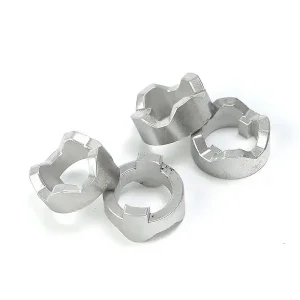
Silicon Valley Custom Titanium MIM Automotive & EV Hardware Components
View Product Details
Bay Area High-Strength Zinc Die Cast Conduit Assemblies & EMT Couplings
View Product Details
California OEM Multi-Alloy Aluminum, Zinc & Brass Precision Die Casting Solutions
View Product DetailsExecutive Summary: Connecting China’s Advanced TiMIM Capability with San Francisco’s Innovation Corridor
The San Francisco Bay Area—spanning Silicon Valley's hardware accelerators, South San Francisco’s biotech hubs, Alameda’s robotics labs, and Fremont’s advanced manufacturing sectors—demands structural metals that balance extreme strength-to-weight ratios, biocompatibility, and intricate micro-geometries.
The San Francisco Hardware Dilemma
Bay Area engineering firms face unprecedented pressure to miniaturize components while upgrading structural integrity. Traditional CNC subtractive machining of Titanium Alloys (such as Ti-6Al-4V) incurs devastating tool wear rates, prohibitive scrap ratios (often exceeding 80% material waste), and cycle times that severely delay time-to-market. Metal 3D printing (DMLS/SLM) offers rapid prototyping flexibility but falls short in unit-cost economics, surface finish, and throughput scaling when production transitions from hundreds to tens of thousands of units.
The China TiMIM Advantage
As a leading Chinese Titanium Metal Injection Molding (TiMIM) manufacturer, we deliver near-net-shape titanium components that bridge the critical gap between mass-production cost optimization and stringent mechanical performance. By combining fine spherical titanium powder atomization with custom polymeric binder systems and high-vacuum sinter-bonding processes, our factory delivers complex 3D geometries featuring >97% theoretical density, tight dimensional tolerances ($\pm 0.3\%$ to $\pm 0.5\%$), and unit cost savings up to 60% compared to 5-axis CNC machining.
Technical Metallurgy: The Physics and Chemistry of Titanium MIM Production
Titanium is exceptionally reactive with atmospheric gases ($O_2, N_2, H_2$) at elevated temperatures. Achieving high-performance metallurgical properties requires ultra-clean feedstock preparation, precision binder formulation, and tightly controlled atmospheric thermal debinding and sintering cycles.
1. Powder Synthesis & Feedstock
We utilize spherical Gas Atomized (GA) and Plasma Rotating Electrode Process (PREP) titanium powders (particle sizes $D_{50} \approx 15-25\,\mu\text{m}$). Powder morphology is critical for feedstock rheology, enabling uniform mold filling without shear-induced powder-binder separation. Alloy offerings include Ti-6Al-4V (Grade 5), Ti-6Al-4V ELI (Grade 23), Ti-6Al-7Nb, and Commercially Pure Titanium (CP-Ti Grade 2 & Grade 4).
2. Multi-Component Debinding
Green components undergo solvent debinding in specialized aromatic hydrocarbon systems to selectively extract primary paraffin wax phases, creating an interconnected pore network. Secondary thermal debinding occurs inside custom vacuum furnaces, where backbone polymer matrices (e.g., polypropylene, EVA) decompose thermally without leaving carbon residue, preventing embrittlement.
3. High-Vacuum Sintering Kinetics
Sintering is conducted at $1250^\circ\text{C}$ to $1380^\circ\text{C}$ under high vacuum ($10^{-3}$ to $10^{-4}\,\text{Pa}$) with partial-pressure high-purity Argon gas sweep. Solid-state atomic diffusion closes interparticle void networks, resulting in uniform isotopic shrinkage ($\approx 12\% - 18\%$). Strict interstitial oxygen management ensures $O_2$ pickup remains below $0.20\,\text{wt}\%$, guaranteeing superior tensile ductility and fatigue life.
Every $0.05\,\text{wt}\%$ increase in interstitial oxygen raises titanium’s yield strength while exponentially reducing tensile elongation. Our proprietary getter-shielded sintering vacuum furnaces maintain interstitial oxygen below $1500\,\text{ppm}$, ensuring compliant ductility metrics for implantable medical actuators and fatigue-critical aerospace fittings specified by San Francisco technology standards.
Manufacturing Engineering Matrix: Evaluating TiMIM Against Alternative Processes
Choosing the optimal manufacturing process is a strategic decision for San Francisco hardware teams balancing lead times, mechanical performance, surface finish, and unit cost scalability.
| Evaluation Parameter | TiMIM (Titanium MIM) | 5-Axis CNC Machining | Metal 3D Printing (DMLS/SLM) | Titanium Investment Casting |
|---|---|---|---|---|
| Geometric Complexity | Extremely High (Undercuts, internal channels, cross-holes) | Moderate to High (Tool access constrained) | Unconstrained (Ideal for topological lattice optimization) | Moderate (Thin walls challenging) |
| Material Yield / Scrap Ratio | >95% Material Utilization | Poor (10% to 30% yield typical) | High (Powder reusability limitations) | Moderate (Gating system waste) |
| Surface Finish ($R_a$) | 1.0 – 1.6 μm (As-sintered) | 0.8 – 1.6 μm | 6.3 – 12.5 μm (Requires extensive post-processing) | 3.2 – 6.3 μm |
| Tensile Strength (Ti-6Al-4V) | ≥ 880 MPa (>97% Theoretical) | ≥ 900 MPa (Wrought stock) | ≥ 920 MPa (Anisotropic without HIP) | ≥ 830 MPa (Cast microstructure) |
| Unit Economics (>5,000 Units) | Lowest Cost per Unit | High (Linear machine time scaling) | Very High (Cost does not decrease significantly) | Moderate to High |
| Dimensional Tolerance | ± 0.3% – ± 0.5% (Down to ±0.02mm) | ± 0.005 mm | ± 0.1 – 0.2 mm | ± 0.5% – ± 1.0% |
Localized San Francisco Bay Area Industry Use-Cases
Our engineering solutions directly serve four cornerstone tech clusters across the San Francisco Bay Area regional ecosystem.
1. South San Francisco Biotech & Surgical MedTech
Medical innovation centers in South San Francisco require biocompatible, non-magnetic components for minimally invasive surgical instruments, endoscopes, orthopedic anchors, and robotic surgical effectors. Our TiMIM process utilizes Ti-6Al-4V ELI (ASTM F2885) to fabricate surgical jaw hinges, needle drivers, and internal fluid connectors with zero heavy-metal cytotoxic leaching and exceptional passivated corrosion resistance.
2. Silicon Valley Consumer Hardware & Smart Wearables
Consumer electronics innovators in Palo Alto, Cupertino, and Mountain View are replacing aluminum and stainless steel with titanium for smartwatches, AR/VR smart glasses frames, foldable screen hinges, and earbud enclosures. TiMIM delivers lightweight luxury aesthetics, high specific strength, skin-friendly hypoallergenic properties, and complex micro-snap fits that cannot be economically machined at scale.
3. Alameda & East Bay Robotics & Autonomous Systems
Robotics ventures across Alameda, Oakland, and Berkeley demand structural lightness to minimize motor payload current and maximize battery life. TiMIM provides lightweight robotic wrist couplings, planetary gear cages, end-effector finger joints, and harmonic drive components with high fatigue threshold endurance under cyclic torsional shock loads.
4. Fremont & Peninsula Aerospace, SpaceTech & EV Hardware
Spacecraft developers and electric vehicle (EV) engineering centers along the Peninsula and Fremont corridor leverage TiMIM for high-temperature sensor housings, fuel injector nozzles, hydraulic valve spools, and structural brackets. TiMIM components withstand cryogenic space environments as well as aggressive chemical exposure up to $400^\circ\text{C}$.
Quality Assurance, Metrology & International Standards
Our quality management ecosystem complies with global aerospace, automotive, and medical device standards, providing full material traceability for every production batch shipped to San Francisco OEMs.
Certified Quality Framework
Our manufacturing complex operates under strict ISO 9001:2015, ISO 13485:2016 (Medical Devices), and IATF 16949:2016 (Automotive) quality management systems. Every project undergoes APQP (Advanced Product Quality Planning) and PPAP (Production Part Approval Process Level 3) documentation prior to mass production volume release.
Advanced Metrology Lab
Our quality control laboratory features Zeiss 3D Coordinate Measuring Machines (CMM), Keyence Optical Profilometers, Optical Emission Spectrometers (OES) for elemental chemical analysis, LECO Oxygen/Nitrogen/Hydrogen determinators, and Instron Universal Tensile Testing benches for lot-level yield strength verification.
Non-Destructive Testing (NDT)
For high-reliability aerospace and surgical hardware, we implement 100% Industrial X-Ray CT Tomography inspection to detect internal void distributions, micro-cracks, or density gradients, ensuring zero functional field failures in critical applications.
Technology Roadmap: Next-Gen Titanium MIM Innovation
Continuous R&D partnerships with leading metallurgy research institutes allow us to push the boundaries of Titanium Powder Injection Molding.
Sub-Micron Nano-Ti Powder Debinding
By transitioning from traditional micro-powders ($15-25\,\mu\text{m}$) to sub-micron ultra-fine titanium powders ($D_{50} < 5\,\mu\text{m}$), our experimental lines have achieved as-sintered theoretical densities exceeding 99.1% with smooth surface finishes of $R_a < 0.6\,\mu\text{m}$, eliminating the need for post-sinter manual polishing on complex optical frames.
Micro-TiMIM (< 0.05 Gram Parts)
Developing specialized micro-injection molding barrels and precision hot-runner tooling systems capable of producing micro-titanium gears, internal auditory implant brackets, and wearable sensors weighing under 50 milligrams with wall thicknesses down to $0.15\,\text{mm}$.
Comprehensive OEM Metal Manufacturing Product Portfolio
Explore our broader OEM capability spectrum—including precision powder metallurgy gears, die cast aluminum housings, copper-based sintered bearings, and micro-MIM components.
San Francisco Industrial Zinc & Aluminum Alloy Die Casting for Auto Parts
View Product Details
Silicon Valley Precision Metal Injection Molding (MIM) Small Hardware Components
View Product Details
Bay Area Engine Cylinder Kits & Oxidized Aluminum Die Cast Structural Spare Parts
View Product Details
California OEM Powdered Copper-Based Sintered Bushings & Self-Lubricating Bearings
View Product Details
San Francisco Rapid Delivery Custom Stainless Steel Die Casting & Metalwork
View Product Details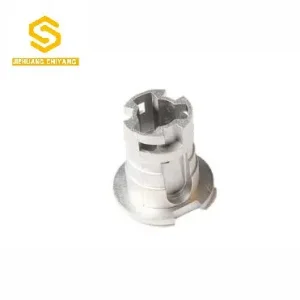
South San Francisco High-Precision Metal Injection Molding Parts for Medical Devices
View Product Details
Fremont Automotive & ATV Aluminum Alloy Cooling Fan Housings & Axial Machine Parts
View Product Details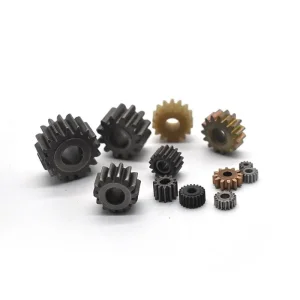
Silicon Valley High-Torque Powder Metallurgy Micro Gears & Planetary Gearheads
View Product DetailsFrequently Asked Questions (FAQ) for San Francisco Engineering Teams
Addressing essential technical, commercial, and supply chain questions raised by Bay Area hardware buyers and procurement managers.