
Featured Industrial Precision Components
Engineered to international IATF 16949 standards, customized for high-stress applications across Kampala's growing industrial and automotive sectors.
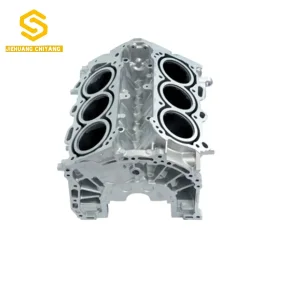
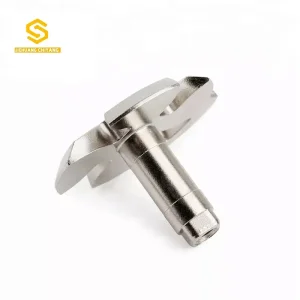
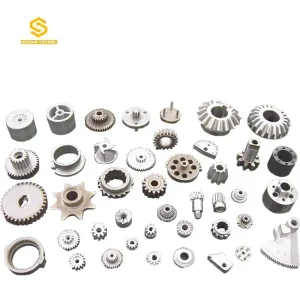
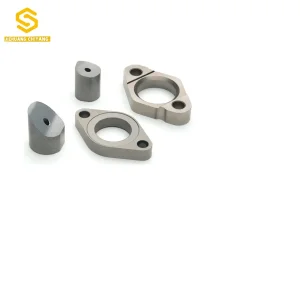
1. Executive Summary: Kampala's Industrial Transformation & The High-Precision Metallurgy Demand
The Greater Kampala Metropolitan Area (GKMA), encompassing key industrial nodes such as Namanve Industrial and Business Park, Kawempe, Nalukolongo, and Kisseka Market commercial clusters, is undergoing an unprecedented manufacturing and infrastructural renaissance. Under the framework of Uganda’s Vision 2040 and the East African Community (EAC) Industrialization Policy, Kampala has evolved from a purely distributive commercial hub into a vibrant epicenter for local assembly, agro-processing, automotive re-engineering, structural hardware production, and telecommunications infrastructure development.
However, local manufacturers and procurement engineers in Kampala consistently face severe supply chain bottlenecks: critical mechanical components—such as high-torque gears, wear-resistant valve guides, complex lock mechanisms, micro-structural brackets, and turbocharger nozzles—are often imported as expensive, low-durability aftermarket parts or require complex multi-axis CNC machining, driving up unit production costs and extending project lead times.
This technical whitepaper provides an in-depth analysis of how advanced Metal Injection Molding (MIM), Powder Metallurgy (PM), and High-Precision Precision Die Casting, sourced directly from Chinese engineering centers of excellence like Ningbo Jiehuang Chiyang Electronic Tech Co., Ltd. (JHMIM), provide Kampala enterprise buyers with an decisive competitive advantage. By substituting conventional machining with near-net-shape powder metallurgy, East African enterprises can achieve up to 50% reduction in component unit costs, superior batch-to-batch repeatability, and metallurgical performance matching wrought stainless steel and titanium alloys.
2. Global Metallurgy Dynamics vs. Kampala Regional Market Needs
Global Precision Metallurgy Trends
The global Metal Injection Molding (MIM) market is expanding at a CAGR exceeding 8.5%, driven by mini-component demands in automotive powertrains, medical robotics, consumer electronics, and defense. High-volume manufacturing is rapidly migrating away from material-wasteful subtractive machining toward net-shape technology. Material formulations such as 17-4PH, 316L, and Titanium (TiMIM) are setting new benchmarks for mechanical strength, fatigue limits, and corrosion resistance under extreme operating conditions.
Kampala Market Intent & Sourcing Challenges
Procurement teams across Kampala face unique operating environments characterized by high-humidity tropical wear, heavy dust contamination in agricultural machinery, and rigorous thermal cycling in automotive systems. Furthermore, supply chain resilience is paramount: importers require strict adherence to standard international certifications (ISO 9001, IATF 16949), transparent total landed cost (TLC) calculations, seamless logistics integration via Mombasa Port and Malaba border control, and zero quality variance.
Technical Process Matrix for Engineering Buyers in Kampala
Understanding the optimal manufacturing method for custom components is essential for maximizing cost efficiency and structural performance:
| Process Metric | Metal Injection Molding (MIM) | Powder Metallurgy (PM) | Aluminum / Zinc Die Casting | Conventional CNC Machining |
|---|---|---|---|---|
| Geometric Complexity | Extremely High (3D shapes, undercuts, threads) | Moderate (2.5D stepped press shapes) | High (Thin walls, hollow housings) | Limited by tool path & axis access |
| Material Utilization Rate | 95% – 98% | 95% – 97% | 90% – 95% | 15% – 40% (High Scrap Rate) |
| Dimensional Tolerance | ±0.3% to ±0.5% (Down to ±0.005mm) | ±0.1% to ±0.3% | ±0.2% to ±0.5% | ±0.001mm to ±0.01mm |
| Relative Unit Cost (Vol > 5,000) | Very Low | Lowest | Low | Extremely High |
| Recommended Application | Complex micro-gears, surgical tools, lock mechanisms | High-torque gears, structural bushings, pulleys | Lightweight engine brackets, heat sinks, housings | Rapid prototyping, low volume (<500 pcs) |
3. The Chinese Manufacturing Advantage: Speed, Efficiency, and DFM Integrity
Why direct factory integration with Ningbo Jiehuang Chiyang Electronic Tech Co., Ltd. delivers unparalleled ROI for East African industrial buyers.
IATF 16949 & ISO Quality Control
Every structural metal or MIM part undergoes rigorous multi-stage quality verification. Our facility houses CMM (Coordinate Measuring Machines), optical spectrum analyzers, salt-spray testing chambers, and automated 100% vision sorting systems, ensuring zero defect rate before shipment to East Africa.
Rapid Tooling & Free DFM Analysis
We provide a comprehensive, engineer-led Design for Manufacturability (DFM) review within 48 hours of receiving your 2D (PDF) and 3D (STEP/IGES) files. Our in-house mold shop shortens sample production cycles down to ~30 days, allowing Kampala enterprises to bring products to market fast.
Optimized Total Landed Cost (TLC)
Through advanced powder atomization, continuous vacuum sintering furnaces, and automated high-tonnage presses (up to 1,000 tons / 10,000 kN), JHMIM minimizes raw material scrap and energy consumption, transferring direct cost savings to our clients in Uganda.
4. Localized Application Scenarios across Kampala & East Africa
Deploying engineered metal components across Uganda's core commercial and industrial engines.
Automotive Aftermarket & Transport Logistics
Scenario: Heavy commercial fleets operating along the Northern Corridor (Mombasa-Kampala-Kigali) demand durable engine, gearbox, and turbocharger replacement components.
JHMIM Solution: High-density MIM turbo VNT nozzle rings, sintered bevel gears, and harden steel wear plates engineered to withstand high torque, abrasive road dust, and continuous elevated temperature exposure.
Agro-Processing & Food Machinery
Scenario: Maize mills, coffee pulping plants, and sugar processing facilities across Mukono, Jinja, and Kampala require food-grade, highly durable mechanical components.
JHMIM Solution: 316L and 17-4PH stainless steel MIM gear sets, cutter blades, and metering valve components that prevent corrosion, eliminate wear particles, and ensure full food safety compliance.
Urban Telecom, Power & Security Hardware
Scenario: Rapid expansion of smart grid electric meters, telecom towers, and commercial security hardware in Kampala Central Business District.
JHMIM Solution: High-precision micro MIM lock cylinders, structural brass/zinc die-cast housings, and electronic connector hardware featuring superior electromagnetic shielding and tamper-proof strength.
5. Industry 4.0 & Advanced Metallurgical Innovations
As manufacturing standards elevate across Africa, JHMIM remains at the forefront of metallurgical research and process technology, offering advanced capabilities that empower Kampala buyers to lead their industries:
Titanium Metal Injection Molding (TiMIM)
Utilizing Grade 5 Titanium alloys for ultra-lightweight, high-strength medical implants, surgical tools, and aerospace-grade components. TiMIM provides outstanding strength-to-weight ratio with total biocompatibility.
Ceramic Injection Molding (CIM)
For applications demanding extreme electrical insulation, extreme hardness (Mohs 9), and zero thermal expansion, our Zirconia (ZrO2) and Alumina (Al2O3) ceramic components provide unmatched durability in harsh chemical environments.
Metal 3D Printing Prototype Bridge
Eliminate tooling risk. Before committing to permanent injection molds, JHMIM utilizes selective laser melting (SLM) metal 3D printing to supply functional prototype samples in identical production alloys for physical testing in Kampala.
Atmosphere-Controlled Sintering Sintering
Our continuous debinding and sintering furnaces operate under controlled Hydrogen/Nitrogen atmospheres, achieving core densities up to 98.5% of theoretical wrought density, giving MIM parts mechanical properties comparable to forged steel.
Comprehensive OEM Product Portfolio
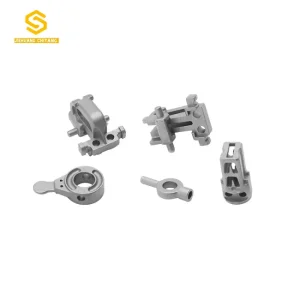
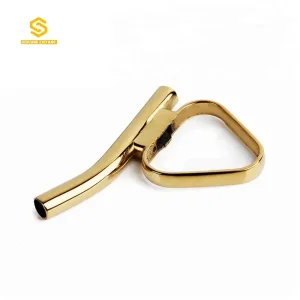
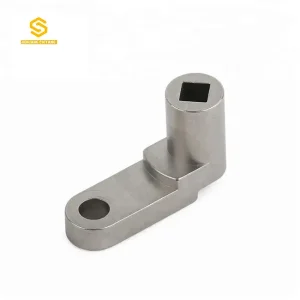
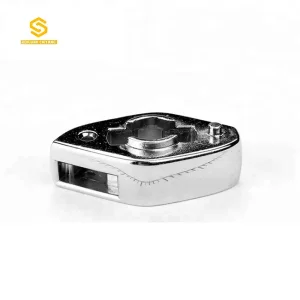
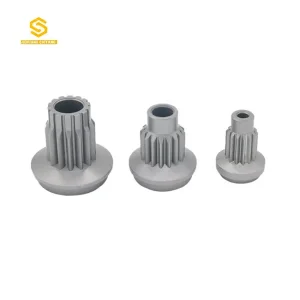
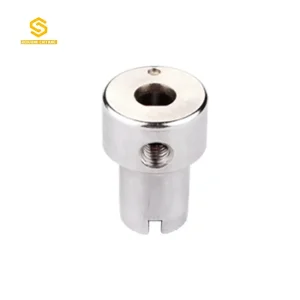
Explore our full range of custom powder metallurgy, sheet metal, sintered gears, and specialized alloy components available for direct export to Kampala.
Frequently Asked Questions (FAQ) for Kampala Buyers
Essential technical, logistical, and commercial guidelines for procuring engineered MIM and powder metallurgy components from JHMIM.
Can you sign our non-disclosure agreement (NDA) before we share CAD drawings?
Yes, absolutely. We routinely execute bilateral Non-Disclosure Agreements (NDAs) prior to receiving proprietary 2D/3D project files. Your intellectual property and CAD geometry are protected under strict corporate security controls.
What is the typical Minimum Order Quantity (MOQ) for East African orders?
Our standard production MOQs are 2,000 pieces for Metal Injection Molding (MIM), 2,000 pieces for CNC precision parts, 2,000 pieces for Aluminum/Zinc Die Casting, and 5,000 pieces for Powder Metallurgy parts. Prototype quantities are evaluated individually.
How long does it take to complete DFM engineering and return a formal quotation?
With complete 2D drawings (defining tolerances/materials) and 3D CAD files (STEP/IGES), our engineering team completes full Design for Manufacturability (DFM) verification and returns an itemized quotation within 48 hours.
What are the primary shipping routes and lead times to Kampala, Uganda?
Ocean freight shipments travel from Ningbo/Shanghai ports directly to Mombasa Port (Kenya), followed by bonded transport along the Northern Corridor to Kampala ICDs (e.g., Nakawa/Ntinda). Average ocean transit is 28-35 days; urgent air freight takes 5-7 days.
Why are both 2D (PDF) and 3D (STEP/IGES) files required for evaluation?
The 3D CAD file provides the exact volumetric geometry for mold flow analysis, shrinkage calculation, and CNC path planning. The 2D drawing specifies critical GD&T tolerances, surface roughness (Ra), heat treatment, and material grades.
How do you guarantee batch quality and dimensional integrity?
JHMIM maintains IATF 16949 and ISO 9001 certifications. Every batch is subjected to CMM inspection, material spectral analysis, density checks, and 100% key dimension verification. All shipments are backed by a 1-year product replacement warranty.
Partner with China's Premier MIM & PM Precision Engineering Center
Transform your product manufacturing cost structure in Kampala with IATF 16949 certified components. Send us your CAD drawings today for a free, comprehensive DFM report and transparent quotation.
Direct Engineering Contact: [email protected] | Phone: +86-13605745108