
High-Precision MIM Components for Indian Auto OEMs
Examine our primary OEM powder metallurgy and MIM component series deployed across auto powertrains, brake assemblies, fuel systems, and mechanical pumps in the Indian subcontinent.


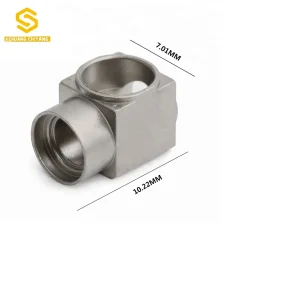

Global Automotive MIM Market Architecture & Technological Shift
Metal Injection Molding (MIM) has transformed from a niche powder metallurgy variant into a cornerstone manufacturing process for modern automotive engineering. By blending the design freedom of plastic injection molding with the structural integrity of wrought metals, MIM empowers Tier-1 automotive manufacturers to produce complex, high-density metal components at massive economies of scale.
Lightweighting & Micro-Geometry Trends
Global automotive original equipment manufacturers (OEMs) are under relentless pressure to reduce vehicle mass, enhance fuel efficiency, and meet strict carbon emissions mandates (such as Euro 6d and India’s BS-VI norms). Traditional machining or investment casting often fails when producing tiny, high-strength parts with multi-axis internal channels or complex undercuts. MIM solves this by creating near-net-shape parts directly from micro-fine metal powders (typically 4–20 microns) bound with polymeric matrices, eliminating costly downstream machining operations.
E-Mobility (EV) Powertrain Evolution
The global transition toward Electric Vehicles (EVs) is altering component design requirements. Internal combustion engine (ICE) parts are giving way to high-torque electric drivetrain components, electronic parking lock actuators, thermal management valve bodies, and battery management system connectors. MIM materials, such as soft magnetic alloys (Fe-Ni, Fe-Co) and high-strength stainless steels (17-4PH, 316L), provide the exact electromagnetic and mechanical performance profiles requested by electric mobility engineers.
The Indian Automotive Landscape: Drivers, Opportunities & Local Manufacturing Challenges
India has emerged as the world's third-largest automotive market by volume, bolstered by strong domestic consumer demand, rapid infrastructure expansion, and government initiatives such as the Production Linked Incentive (PLI) scheme and "Make in India". Automotive clusters across Pune, Chennai, the National Capital Region (Gurugram-Manesar), Sanand, and Hosur represent bustling centers for Tier-1 and Tier-2 suppliers.
Key Growth Drivers in India's Auto Supply Chain
With major domestic automakers—such as Tata Motors, Mahindra & Mahindra, Maruti Suzuki, Hero MotoCorp, and TVS—scaling up production, the demand for precision small-scale metal components is skyrocketing. Indian Tier-1 component makers supply critical assemblies to both local assembly plants and export markets across Europe and North America. However, meeting strict global tolerance specifications requires advanced metallurgical precision that traditional investment casting or conventional pressing struggle to achieve consistently.
Bharat Stage VI (BS-VI) Phase 2 Compliance
The rollout of Real Driving Emissions (RDE) testing under BS-VI Phase 2 in India demands ultra-precise fuel injection nozzles, Variable Geometry Turbocharger (VGT) vanes, and exhaust gas recirculation (EGR) valves. MIM technology allows mass manufacturing of temperature-resistant, anti-corrosive alloy components capable of functioning at temperatures above 800°C without geometric deformation.
Two-Wheeler & Commercial Vehicle Surge
India remains the world's largest market for two-wheelers. The integration of anti-lock braking systems (ABS), automatic headlights, and refined starter motor gears has driven demand for high-strength, wear-resistant MIM spur gears, synchronizer keys, and brake sensor housings across top motorcycle and scooter brands.
Domestic Tooling & Skill Gaps
While India's domestic manufacturing capacity is expanding, high-end multi-cavity MIM tooling design, advanced catalytic debinding systems, and continuous atmosphere sintering furnaces require substantial capital outlay and specialized metallurgical expertise. Consequently, forward-thinking Indian manufacturers actively form strategic global partnerships with verified Chinese MIM specialists to secure cost-efficient, high-volume production without long tooling lead times.
China's MIM Manufacturing Advantage: Empowering Indian Auto Tier-1 Suppliers
As a premier Chinese MIM parts manufacturer (Jiehuang / JHMIM), our operations combine extensive raw material supply chains, automated tooling centers, and deep metallurgical engineering expertise to serve Indian buyers with unmatched efficiency.
1. Scale & Automated Tooling
Our Ningbo facility utilizes multi-cavity hot runner injection molds engineered via high-precision CNC high-speed milling and wire EDM. We convert complex CAD drawings into validated physical prototypes in record time, supporting rapid vehicle model iteration cycles for Indian OEMs.
2. Continuous Debinding & Sintering
By deploying continuous catalytic debinding lines and high-temperature vacuum sintering furnaces (controlled under pure hydrogen or argon atmospheres), we guarantee uniform thermal distribution. This results in consistent linear shrinkage control and eliminates internal void defects.
3. Total Cost of Ownership Optimization
Partnering with JHMIM provides Indian automotive companies with access to optimized bulk powder purchasing rates, lower tooling amortization costs, and refined manufacturing processes. This yields landed component costs that are 30% to 50% lower than domestically machined options.
Technical Benchmark: MIM vs. Alternative Automotive Metal Processes
Choosing the right process requires comparing geometry complexity, mechanical properties, unit costs, and production volume scalability. Below is a comprehensive engineering comparison for automotive component designers.
| Engineering Parameter | Metal Injection Molding (MIM) | CNC Machining | Investment Casting | Press & Sinter Powder Metallurgy |
|---|---|---|---|---|
| Geometric Complexity | Extremely High (3D complex, undercuts, thin walls) | Medium (Limited by tool access & setups) | High (Limited by ceramic core removal) | Moderate (2.5D press-direction geometries) |
| Relative Density (%) | 95% – 99% (Wrought-like density) | 100% (Bar stock material density) | 98% – 99% (Risk of shrinkage porosity) | 80% – 90% (Porous structure) |
| Dimensional Tolerance | ±0.3% to ±0.5% (As-sintered), down to ±0.01mm with sizing | ±0.005mm to ±0.02mm | ±0.5% to ±1.0% | ±0.1% to ±0.3% (Axial plane) |
| Surface Finish (Ra) | 0.8 μm – 1.6 μm (Smooth as-sintered) | 0.4 μm – 1.6 μm (Tooling mark dependent) | 3.2 μm – 6.3 μm (Rough surface) | 1.6 μm – 3.2 μm |
| Material Utilization Rate | > 95% (Near-Net Shape, minimal scrap) | 15% – 50% (High chip waste) | 70% – 80% (Gating/runner scrap) | > 95% (Near-Net Shape) |
| Economic Production Volume | High Volume (5,000 to 10,000,000+ pcs/year) | Low to Medium Volume (Prototypes - 5,000 pcs) | Low to Medium Volume | Very High Volume (> 20,000 pcs) |
Primary Automotive Subsystem MIM Applications Serviced
Our MIM component solutions are deployed in mission-critical vehicle subsystems across passenger cars, commercial transport, and two-wheelers serving the Indian domestic and export markets.
Powertrain & Turbochargers
MIM 17-4PH and HK30 heat-resistant alloys are used to craft VGT actuator arms, turbocharger vanes, cam phaser parts, and variable valve timing (VVT) rotor components capable of resisting severe thermal cycling.
Steering & Transmission
Precision MIM Fe-Ni alloy gears, synchronizer teeth keys, steering column lock pawls, and transmission selector forks provide high impact strength, resistance to fatigue, and smooth meshing performance.
Braking & Safety Systems
Stainless steel 316L and 4605 low-alloy steels are molded into Anti-lock Braking System (ABS) valve bodies, Electronic Stability Program (ESP) hydraulic armatures, and seatbelt retractor locking pawls.
Fuel Injection & Fluid Pumps
High-pressure Common Rail (HPCR) diesel and GDI gasoline fuel injectors require ultra-smooth internal micro-orifices. MIM produces high-density fuel pump impellers, pressure control valve seats, and metering sleeves.
EV Drivetrain & Thermal Control
Electrification componentry includes battery disconnect unit (BDU) connectors, thermal expansion valve bodies, and soft magnetic cores for electric drive inverter sensors engineered with custom Fe-Si and Fe-Ni grades.
Vehicle Electronics & Cabin Hardware
Cosmetic and functional interior/exterior hardware, such as power seat adjustment gearboxes, sunroof drive components, door latch mechanisms, and infotainment control knobs rely on MIM for crisp tactile performance.
IATF 16949 Quality Systems & PPAP Level 3 Documentation for Indian Buyers
Navigating cross-border automotive procurement requires rigorous quality systems, complete batch traceability, and strict adherence to Advanced Product Quality Planning (APQP) protocols.
Comprehensive Quality Protocol
- Raw Material Lot Inspection: Laser diffraction particle sizing, X-ray fluorescence (XRF) alloy chemistry verification, and carbon/oxygen elemental analysis.
- In-Process Quality Control (IPQC): Automated vision system checks for green-state molded parts, debinding weight loss tracking, and furnace atmosphere telemetry monitoring.
- Final Part Validation: Hexagon CMM dimensional checks, micro-hardness testing (Vickers/Rockwell), metallographic grain inspection, and salt-spray corrosion resistance tests.
Seamless Supply Chain Integration to Indian Hubs
JHMIM provides full Production Part Approval Process (PPAP Level 3) packages, including Process Flow Diagrams, PFMEA, Dimensional Results, Material Certifications, and Measurement System Analysis (MSA).
We work directly with logistics providers serving major Indian customs ports—including Nhava Sheva (Mumbai), Chennai Port, and ICD Tughlakabad—offering DDP, CIF, or FOB terms to simplify importation for Indian procurement teams.
Complete OEM Automotive Powder Metallurgy & Sintered Alloy Lineup
Explore our full spectrum of custom sintered structural components, small motor gears, stainless steel MIM hardware, and alloy power transmission solutions tailored for Indian manufacturing plants.








Frequently Asked Questions: MIM Automotive Sourcing to India
Addressing essential engineering, metallurgical, financial, and logistical inquiries from Indian automotive procurement teams and component developers.
What automotive component weight and dimensional ranges are ideal for MIM?
MIM works best for small-to-medium precision components weighing between 0.2 grams and 150 grams. While JHMIM has mass-produced larger components up to 286 grams, parts under 100g maximize cost efficiency against traditional CNC machining. Wall thickness ideally ranges between 0.5 mm and 5.0 mm to facilitate uniform debinding and sintering.
How does JHMIM manage linear shrinkage during the sintering phase?
During sintering, MIM components shrink uniformly by 14% to 20% as the polymeric binder exits and metal particles fuse. Our tooling engineers utilize advanced FEA mold-flow simulations to precisely calculate custom feedstock shrinkage coefficients for every geometry. This maintains tight dimensional tolerances within ±0.3% to ±0.5% out of the furnace, with post-sintering sizing dies used for tolerances as tight as ±0.01 mm.
Which MIM material alloys are recommended for BS-VI automotive engine parts?
For high-temperature and corrosive engine/exhaust environments, we recommend austenitic 316L stainless steel, precipitation-hardening 17-4PH stainless steel, or heat-resistant nickel/iron alloys such as HK30. For high-torque transmission gears and lock pawls, low-alloy steels like FN-0205 (Fe-Ni) or 8620 offer excellent tensile strength and surface hardness after heat treatment.
Can JHMIM supply PPAP Level 3 documentation for Indian Tier-1 audits?
Yes. We routinely provide full IATF 16949 PPAP Level 3 documentation packages to Indian Tier-1 buyers. This includes chemical analysis, physical property test data, CMM inspection reports, Process Flow Diagrams, PFMEA, Control Plans, MSA studies, and initial sample inspection reports (ISIR).
What is the standard lead time for MIM tooling construction and sample submission?
Our standard lead time for constructing multi-cavity hardened steel MIM injection tooling is 25 to 35 days, depending on part complexity. First article samples (T1 samples) are typically dispatched within 7 to 10 days after tooling completion following preliminary debinding and sintering parameter optimization.
What are the Minimum Order Quantity (MOQ) requirements for custom MIM projects?
Because MIM tooling and furnace setup involve initial costs, our standard production MOQ is generally 2,000 pieces per batch for custom MIM parts. However, we support prototype and pre-pilot trial batches for auto OEM validation programs prior to full-scale mass production.
How are shipping and customs cleared for shipments bound for India?
We provide multiple shipping arrangements including FOB Ningbo/Shanghai, CIF Nhava Sheva / Chennai / Mundra, or DDP directly to your factory in Pune, NCR, Sanand, or Bengaluru. Our export department handles all commercial invoices, packing lists, COO certificates, and customs documentation needed for streamlined customs processing in India.
Does JHMIM offer non-disclosure agreements (NDA) prior to CAD drawing submission?
Yes. We treat all client intellectual property and technical engineering drawings with strict confidentiality. We routinely sign non-disclosure agreements (NDAs) before receiving 3D STEP/IGES files or 2D PDF engineering prints for DFM evaluations.
Partner with a World-Class Automotive MIM Manufacturer Today
Accelerate your automotive component development cycles. Receive a comprehensive engineer-reviewed Design for Manufacturability (DFM) assessment and detailed cost breakdown within 48 hours.