
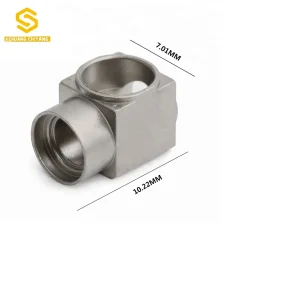
Featured OEM Automotive MIM & Sintered Components
Engineered specifically for powertrain, drive assemblies, and high-wear mechanical systems in North American vehicle manufacturing plants.



Canadian Automotive Industrial Context & Global MIM Integration
Navigating Canada's EV transition, stringent USMCA/CUSMA rules of origin, and sub-zero thermal reliability requirements.
The Canadian Automotive Manufacturing Hub
Canada’s automotive ecosystem—centered largely in Ontario's industrial corridor (Windsor, Kitchener-Waterloo, Cambridge, Brampton, and Oshawa) and Quebec's expanding clean-tech battery ecosystem—represents one of North America's most sophisticated vehicle assembly networks. As Canadian Tier-1 and Tier-2 manufacturers pivot aggressively toward Zero-Emission Vehicles (ZEV) by 2035, the demand for high-strength, lightweight, ultra-precise metallic components has surged exponentially.
- Seamless alignment with CUSMA/USMCA regional content mandates.
- Optimized for severe thermal cycles (-40°C Canadian winters to engine bay heats).
- Support for Magna, Linamar, and Martinrea supply chain protocols.
Global MIM Market Dynamics & EV Shift
Metal Injection Molding (MIM) has transformed from a niche manufacturing alternative into a mainstream core technology for global automotive OEMs. Combining the design freedom of plastic injection molding with the structural integrity of wrought steel, MIM allows engineers to eliminate complex multi-axis CNC machining setups, reduce scrap material rates to under 2%, and consolidate multi-piece welded assemblies into single net-shape components.
- Replacement of expensive 5-axis CNC operations with 98%+ dense MIM parts.
- Critical application expansion into Electric Drive Units (EDUs) & battery disconnects.
- Substantial mass reduction directly supporting EV battery range efficiency.
MIM Metallurgical Science & Production Roadmap for Automotive Applications
In-depth technical breakdown of powder metallurgy chemistry, binder removal, vacuum sintering, and quality assurance under ISO/IATF automotive frameworks.
1. Feedstock Formulation & Fine Metal Powder Rheology
The foundation of reliable automotive metal injection molding lies in master-batch feedstock preparation. Fine metal powders (typically d50 < 15-22 μm produced via gas or water atomization) are homogeneously blended with a multi-component thermoplastic and wax binder system. High-shear compounding ensures precise powder loading (typically 60-65% by volume), which dictates predictable linear shrinkage (typically 15-20%) during high-temperature sintering.
For Canadian automotive parts exposed to extreme environmental stresses, material choice is paramount. Jiehuang (JHMIM) standardizes on high-performance automotive grade alloys:
- 17-4PH Stainless Steel (UNS S17400): Precipitation-hardening stainless offering yield strength exceeding 1,100 MPa post H900 heat treatment. Ideal for turbocharger actuators, door latch pawls, and high-load transmission detents.
- 316L Stainless Steel (UNS S31603): Exceptional ductility and corrosion resistance for exhaust sensor flanges, EGR valve fittings, and fluid metering pumps subject to winter road-salt de-icing fluids (Calcium/Sodium Chloride).
- Fe-Ni Low Alloy Steels (FN-0205, FN-0408): High fatigue limits and case-hardenability via carburizing, perfect for shift-by-wire spur gears, steering column lock pins, and oil pump rotors.
- Titanium Alloys (Ti-6Al-4V): Ultra-lightweight, non-magnetic bi-metallic structural components used in specialized lightweight EV suspension actuators and high-end automotive assemblies.
2. Catalytic Debinding & High-Vacuum Continuous Sintering
The MIM process executes in three tightly controlled stages to achieve near-wrought mechanical properties:
| Process Stage | Operational Parameters | Metallurgical Objective | Automotive Quality Metric |
|---|---|---|---|
| Molding | Multi-cavity hydraulic/electric injection machines; tool temp 130-150°C. | Net-shape formation with intricate undercuts and thin wall sections (>0.5mm). | Zero jetting, flash, or sink marks; dimensional weight repeatability <0.2%. |
| Debinding | Nitric acid vapor atmosphere (catalytic) at 110-130°C. | Rapid removal of primary polyoxymethylene (POM) binder without pore collapse. | 100% backbone binder retention for "green part" structural integrity. |
| Sintering | High-vacuum / Hydrogen atmosphere furnaces up to 1380°C. | Powder particle fusion, pore closure, and density elevation to 97.5-99.2%. | Wrought-like tensile, impact, and fatigue properties (MPIF Standard 35 compliant). |
| Post-Processing | CNC coining, HIPing (Hot Isostatic Pressing), carburizing, PVD. | Achieving tight tolerances (±0.1% or ±0.02mm) and surface hardness >60 HRC. | PPAP Level 3 capability with CPK / PPK values >1.67. |
3. Engineering Benchmarks: MIM vs. Alternative Manufacturing Technologies
When Canadian automotive engineers evaluate component design for mass production, comparing total landed cost, design versatility, and lead times is critical. MIM dominates for complex, small-to-medium parts (<250 grams).
| Performance Attribute | Metal Injection Molding (MIM) | 5-Axis CNC Machining | Die Casting (Zinc/Alum) | Conventional Press & Sinter |
|---|---|---|---|---|
| 3D Geometric Complexity | Unlimited (Undercuts, Micro-Threads) | High (Tool Access Limited) | Medium (Draft Angles Required) | Low (2.5D Axial Profile Only) |
| Material Density | 97.5% - 99.2% | 100% | Variable (Porosity Risks) | 85% - 92% |
| Material Scrap Rate | < 2% (Recyclable Feedstock) | 40% - 75% Scrap Chip Loss | < 5% | < 3% |
| High-Volume Unit Cost | Exceptionally Low | Very High (Scale Inefficient) | Low (Lower Hardness Alloys) | Low |
| Tensile Strength (Steel) | 750 - 1450 MPa | 800 - 1500 MPa | 200 - 400 MPa (Non-Steel) | 400 - 850 MPa |
Macro Industry Solutions for Canadian Tier-1 Manufacturers
Seamlessly bridging Chinese precision manufacturing excellence with Canadian automotive production lines.
PPAP Level 3 & Quality Management
Every automotive part program destined for Canadian assembly lines follows rigorous Advanced Product Quality Planning (APQP). Full Production Part Approval Process (PPAP Level 3) packages are provided, including ballooned drawings, FMEA, Control Plans, IMDS submissions, and full CMM dimensional analysis.
USMCA / CUSMA Regional Alignment
Understanding regional value content (RVC) mandates across North America, our optimized pricing model allows Canadian OEMs to absorb duty structures while maintaining an overall landed cost reduction of 30-50% compared to domestic machine shops.
Rapid Prototyping & Metal 3D Printing
Before committing to production hard tooling, Canadian engineering teams can validate designs with our in-house Metal 3D Printing (Binder Jetting / DMLS) prototyping services, receiving functional metallic test samples in as few as 7 business days.
Expanded Portfolio of Sintered & MIM Auto Parts
Explore our complete range of custom powder metal gears, pump parts, valve components, and structural locks.







MIM Solutions Across Automotive Assemblies
Engineering breakdown of where Metal Injection Molding delivers maximum cost savings and reliability in modern vehicles.
Powertrain & Engine Management
MIM allows complex internal oil passages, vane geometries, and heat-resistant alloys to survive continuous combustion environments.
- Variable Valve Timing (VVT) rotor vanes
- Turbocharger wastegate linkages & actuators
- High-pressure fuel injection pump sockets
Transmission & Drivetrain Systems
Extreme wear resistance and high surface hardness via carburizing or nitriding ensure longevity under intense torque.
- Shift-by-wire detents & selector levers
- Dual-clutch transmission engagement dogs
- Electric drive unit planetary sun gears
Interior, Safety & Chassis Systems
Safety-critical structural integrity with 100% flaw detection and tight dimensional repeatability.
- Seat recliner mechanism gears & locks
- Airbag deployment sensor housings
- Electronic Parking Brake (EPB) drive components
Frequently Asked Technical Questions by Canadian OEMs
Direct answers regarding quality assurance, thermal limits, tooling lifespans, and logistics to Canada.
Accelerate Your Automotive MIM Program Today
Send us your 2D engineering drawings (PDF) and 3D STEP files. Our metallurgists and tooling engineers will provide a comprehensive DFM manufacturability report and formal quotation within 48 hours.