
Featured MIM Innovations for Australian Medical OEMs
High-density, complex metal components engineered for next-generation surgical instruments, orthopedics, and diagnostic devices across Australia.
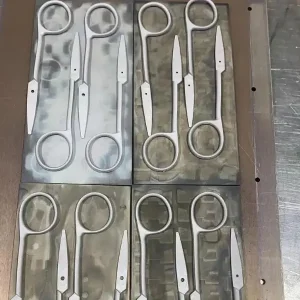
Australia Grade MIM Titanium Scalpel Handle
Ultra-lightweight Ti-6Al-4V Grade 5 titanium scalpel handles optimized for surgical ergonomics, corrosion resistance, and thermal sterilization repeatability.
Explore Tech Specs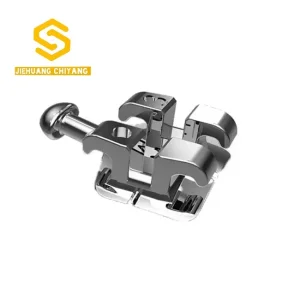
MIM Mesh Base Metal Orthodontic Brackets
Micro-injection molded 17-4PH dental brackets featuring micro-retentive mesh bases for superior bonding strength in Australian orthodontic applications.
Explore Tech Specs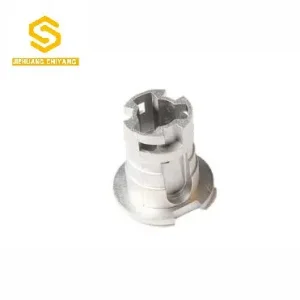
Complex MIM Structural Components for Medical Tech
Precision sintering of complex internal micro-lumens, linkages, and housings for laparoscopy and endostaplers manufactured for OEM device assembly.
Explore Tech Specs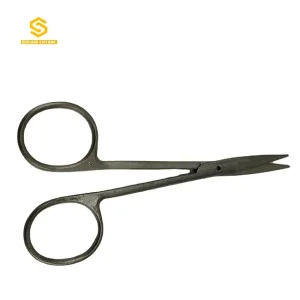
Surgical Stainless Steel Forceps Jaw Assemblies
High-tensile 316L and 17-4PH MIM forceps components engineered with micro-serrations and anti-galling joints for Australian surgical tools.
Explore Tech Specs1. The Commercial & Industrial MedTech Landscape in Australia
Australia’s medical technology ecosystem is undergoing a dramatic structural transformation. Driven by world-class clinical research, robust federal backing via the National Reconstruction Fund (NRF), and a booming healthcare innovation network across Sydney, Melbourne, Brisbane, and Adelaide, Australian MedTech manufacturers are accelerating the commercialization of complex surgical devices, diagnostic equipment, and wearable therapeutics.
Regional MedTech Hub Dynamics
Australian biomedical innovation is highly concentrated in strategic state clusters:
- Victoria (Melbourne BioPark & Monash Cluster): Premier center for orthopedic implants, robotic surgery systems, and diagnostic hardware.
- New South Wales (Sydney Tech Central): Pioneer in minimally invasive surgical instruments (MIS), cardiovascular accessories, and digital health devices.
- Queensland & South Australia (Brisbane & Adelaide Hubs): Rapid growth in bio-ceramics, custom prosthetic linkages, and point-of-care analytical devices.
Regulatory Compliance & TGA Alignment
Bringing medical hardware to market in Australia requires unwavering compliance with the Therapeutic Goods Administration (TGA) framework and ISO 13485 standards. Australian OEMs face stringent demands regarding material biocompatibility, metallurgical homogeneity, and full lot-level traceability from raw powder to finished component.
2. Technical Roadmap & Advanced MIM Metallurgy for Medical Applications
Metal Injection Molding (MIM) combines the geometric design freedom of plastic injection molding with the structural integrity of wrought metals. For Australian medical technology factories, MIM provides an unmatched route for mass-producing small, highly complex micro-metal parts.
| Material Specification | Key Mechanical Properties | Biocompatibility / ASTM Specs | Primary Medical Applications |
|---|---|---|---|
| 17-4PH Stainless Steel | Tensile Strength: 1150 MPa Yield Strength: 1000 MPa Hardness: 38-44 HRC |
ASTM F899 (Surgical Grade Stainless) | Surgical forceps, endoscopic grippers, needle holders, structural instrument housings. |
| 316L Stainless Steel | Non-magnetic, Superior Pit Corrosion Resistance, Elongation: >40% | ASTM F138 / ISO 5832-1 Compliant | Orthodontic brackets, implantable sensor housings, fluidic valves, scalpel fittings. |
| Ti-6Al-4V (Grade 5 TiMIM) | Density: 4.43 g/cm³ High Strength-to-Weight Ratio, Osseointegrative |
ASTM F2885 / ASTM F136 (Implants) | Orthopedic fixators, bone screws, spinal cages, dental implants, surgical handles. |
| Cobalt-Chromium (Co-Cr-Mo) | Extreme Wear & Fatigue Resistance, High Biocompatibility | ASTM F75 / ISO 5832-4 | Joint replacement linkages, dental prosthetics, high-load wear clips. |
| Alumina Ceramic (CIM) | Dielectric Strength, Inert, Wear Resistant (Vickers Hardness > 1500) | ISO 6474 Bioceramic Standard | Insulated electrosurgical tips, ceramic pump pistons, blood analysis valves. |
Feedstock Homogeneity
Custom compounding of gas-atomized spherical powders (<15 µm) with multi-component thermoplastic binders ensures uniform volumetric shrinkage during debinding and sintering cycles.
Vacuum Sintering Precision
Atmosphere-controlled vacuum sintering furnaces operate up to 1380°C under high-purity Hydrogen or Argon, achieving microstructural grain refinement and densities exceeding 98.5% of theoretical wrought density.
Post-Sintering Finishing
Automated electropolishing, passivating to ASTM A967, and PVD titanium nitride (TiN) coating provide ultra-smooth, sterile-ready surface finishes tailored to Australian hospital sterilization protocols.
3. Solving Critical Manufacturing Bottlenecks for Australian MedTech
Australian medical device engineers often face hard engineering trade-offs between component complexity, unit cost, and production scale. Traditional machining methods present sever limitations when scaling production.
Traditional Machining Bottlenecks
- High Material Scrap Rates: Machining titanium scalpel handles or 17-4PH forceps from solid bar stock wastes up to 75% of high-grade raw alloy.
- Tool Wear & Setup Costs: Micro-milling titanium or superalloys causes rapid cutter wear, multi-axis setup delays, and excessive machine downtime.
- Geometric Constraints: Internal undercuts, cross-hole lumens, knurling textures, and micro mesh bases are cost-prohibitive or physically impossible to CNC machine.
The JHMIM Engineering Solution
- Near-Net-Shape Efficiency: MIM achieves 95-98% material utilization, virtually eliminating raw material waste for costly metals like Titanium Grade 5.
- One-Step Multi-Feature Molding: Complex geometries—including internal threads, branding logos, serrated jaws, and pivot pins—are molded in a single automatic cycle.
- Scalable Cost Economics: Amortized tooling costs deliver 40% to 60% per-unit savings over 5-axis CNC machining at annual quantities above 2,000 units.
4. Localization Support, TGA Regulatory Alignment & QA Framework
Navigating international supply chains demands flawless documentation and absolute quality verification. JHMIM provides Australian OEMs with total regulatory security through end-to-end quality assurance.
Complete Validation Packages
Every shipment to Australia comes complete with full Quality Inspection Dossiers, including Material Test Certificates (EN 10204 3.1), CMM Dimensional Reports, First Article Inspection (FAI) reports, and Heat Treatment charts.
Sub-Micron Precision Metrology
Our quality control lab features Zeiss 3D Coordinate Measuring Machines (CMM), Keyence Optical Profilometers, density testing suites, and inductively coupled plasma (ICP) material analyzers.
Australian Engineering On-Call
We provide seamless technical support matched to Australian Eastern Standard Time (AEST). Our DFM engineers review client STEP models within 48 hours to streamline tool manufacturing.
5. China Industry 4.0 Hub: Supply Chain Resilience & Speed
Combining advanced automation, smart powder metallurgy labs, and large-scale manufacturing infrastructure in Ningbo, China, JHMIM bridges high-end engineering with rapid global delivery.
Integrated Manufacturing Ecosystem
Spanning 28,000 m² of certified production space, our facilities operate automated continuous debinding-sintering lines, high-speed electric injection molding presses, and automated visual sorting systems capable of zero-defect batch delivery.
By controlling mold design, feedstock preparation, molding, sintering, and secondary machining under one roof, we eliminate intermediate vendor markups and supply chain delays.
Rapid Prototyping via Metal 3D Printing (SLM)
To de-risk capital tooling investment for Australian startups and R&D labs, JHMIM offers pre-tooling functional prototypes via direct Selective Laser Melting (SLM / DMLS). Verify form, fit, and clinical ergonomics in 17-4PH or Titanium before releasing production MIM molds.
6. Global Procurement Strategy & Total Cost of Ownership (TCO)
Strategic sourcing for Australian MedTech factories isn't just about buying parts—it's about building supply chain resilience, controlling landed cost, and accelerating time-to-market.
Transparent Tooling Investment
Precision MIM multi-cavity tooling offers extreme longevity (>500,000 cycles). JHMIM maintains and guarantees tooling for the full life of your product run without secondary modification fees.
Agile Freight & Logistics
Direct air freight connections from Shanghai/Ningbo to Sydney (SYD), Melbourne (MEL), and Brisbane (BNE) ensure express delivery within 3 to 5 business days for urgent production batches.
Risk Mitigation & Stock Buffers
We offer scheduled release programs (Blanket Purchase Orders) and safety stock holding in our facilities to protect Australian manufacturers against demand spikes or ocean freight disruptions.
Accelerate Your Australian MedTech Production
Submit your 2D PDF & 3D STEP drawings today. Receive an engineer-reviewed DFM analysis and transparent quotation within 48 hours under strict NDA protection.
Send Inquiry Now7. Comprehensive Medical MIM & Metallurgy Components Catalog
Explore our full line of precision sintered medical components, custom surgical handles, micro-brackets, and ceramic assemblies built for global OEM supply chains.

Sintered S.S. Structural Parts for Australian Medical Hardware
High-density sintered stainless steel structural parts with high fatigue strength, designed for internal medical mechanism linkages.
Explore Tech Specs
Custom MIM Ergonomic Medical Knife Handle
Precision molded knife handles with knurled surface grips, anti-slip textures, and hollow core balance for surgical precision.
Explore Tech Specs
Powder Metallurgy Surgical Handle Assemblies
Heavy-duty stainless steel powder metal handles built for orthopedic reamers, drivers, and high-torque surgical gearboxes.
Explore Tech Specs
Precision MIM Medical Scalpel Blade Holders
Autoclavable 316L MIM scalpel quick-release blade holders engineered for Australian hospital operating theater standard specifications.
Explore Tech Specs
Micro MIM Dental & Orthodontic Bracket Series
Ultra-small, smooth contour MIM orthodontic brackets manufactured with tight dimensional tolerances (±0.015 mm) for maximum patient comfort.
Explore Tech Specs
MIM Surgical Scissors Micro-Rivet & Hinge Components
Complex pivot pins, thumb rings, and blade accessories molded in high-hardness 17-4PH for long-lasting surgical shear strength.
Explore Tech Specs
Wear-Resistant Alumina Ceramic Medical Components (CIM)
Biocompatible Al2O3 ceramic components engineered for high wear resistance, electrical insulation, and chemical inertia in diagnostic equipment.
Explore Tech Specs
Precision Aluminum Die Cast Medical Device Enclosure
Lightweight ADC12 / A380 precision vacuum aluminum die-cast housings for portable medical diagnostic devices and surgical power tools.
Explore Tech Specs8. Frequently Asked Questions (FAQ) for Australian Procurement Directors
Get technical answers regarding MIM manufacturing capabilities, lead times, regulatory compliance, and tooling commitments.
Our standard metal injection molding process achieves dimensional tolerances of ±0.3% to ±0.5% of nominal dimension directly as-sintered (e.g., ±0.03 mm on a 10 mm dimension). For ultra-critical mating features on surgical instruments, secondary CNC coining, sizing, or grinding can hold tolerances down to ±0.005 mm (5 microns).
We provide comprehensive material and process documentation required for TGA technical file compilations. This includes raw powder chemical composition certificates (EN 10204 3.1), ASTM material standard verification, IQ/OQ/PQ sintering furnace validation data, and full lot-level trace records maintained for 10 years.
Titanium Grade 5 (Ti-6Al-4V) is notorious for low thermal conductivity and rapid cutter wear during CNC milling. MIM molds near-net shapes directly from gas-atomized titanium powder, reducing scrap rates from 80% to under 3% while delivering identical mechanical strength and density (>97.5%). This translates into a 40–60% cost savings for Australian device OEMs.
For functional prototype validation prior to tooling, we offer Metal 3D Printing (SLM) in 5 to 7 business days. Custom precision MIM tooling fabrication and first article sample submission (FAI) typically require 25 to 35 calendar days. Mass production cycles range between 2 and 3 weeks following sample approval.
Our standard production MOQ is 2,000 pieces per run for MIM components. However, for specialized low-volume, high-value medical devices or pilot clinical runs in Australia, we can accommodate pilot production batches by combining tooling cavity strategies. Contact our engineering team to review your volume projections.
Intellectual Property security is fundamental to our OEM partnerships. We routinely execute bilateral Non-Disclosure Agreements (NDAs) governed by international commercial law before receiving any CAD files. All design assets are stored on air-gapped, encrypted servers with restricted access granted only to assigned project engineers.