
MIM Components for Malaysian Tactical Suppliers
High-density, mil-spec sintered alloy parts optimized for defense applications, small arms mechanisms, and electro-optical assemblies produced for tier-1 suppliers in Malaysia.

Wholesale MIM Injection Molding For Weapon Industry Suppliers, Factories in Malaysia
View Part Details
China ODM Powder Metallurgy Mold for High Complexity Tactical Hardware & Defense Factories in Malaysia
View Part Details
High Quality Die Cast Aluminum & Zinc Alloy Parts Service for Military & Defense Suppliers in Malaysia
View Part Details
OEM Powder Metallurgy Hardened Iron Sector Gear for Weapon Industry Suppliers & Factories in Malaysia
View Part Details1. The Evolution of Weapon Manufacturing & Defense Procurement in Malaysia
Malaysia's defense and security ecosystem is undergoing a major technological transformation. Driven by national defense policies aiming for self-reliance and modern military readiness, defense suppliers and contract factories across industrial hubs—such as Shah Alam, Subang, Lumut, Penang, and Pekan—are upgrading their manufacturing infrastructure. Key events like the Langkawi International Maritime and Aerospace Exhibition (LIMA) underline Malaysia's role as an emerging defense technology node within the ASEAN region.
Historically, weapon components, tactical firearm mechanisms, electro-optical sighting brackets, and missile actuator assemblies relied heavily on traditional multi-axis CNC machining or investment casting. However, complex geometries present severe manufacturing bottlenecks: high material wastage (often exceeding 70% chip loss), long cycle times, rapid tool wear on hardened alloy steels, and inconsistent dimensional repeatability across high-volume batches. To maintain strategic competitiveness, Malaysian weapon industry suppliers are adopting Metal Injection Molding (MIM) as a primary net-shape manufacturing process.
Complex Geometries
MIM combines the design freedom of plastic injection molding with the mechanical integrity of wrought metal, easily producing 3D complex features like internal splines, undercuts, and cross-holes.
Material Efficiency
Achieves up to 98% raw material utilization, drastically reducing unit costs for expensive defense-grade stainless steels, low-alloy hardened steels, and titanium alloys.
Extreme Durability
Sintered densities ranging from 96% to 99% of theoretical limits deliver exceptional fatigue strength, impact toughness, and corrosion resistance under harsh humid tropical environments.
2. Metallurgical Engineering & Defense Material Benchmarks
Weapon systems demand extraordinary structural integrity under high cyclic pressure, thermal shock, and aggressive chemical exposure (such as propellant combustion residue). At Ningbo Jiehuang Chiyang Electronic Tech Co., Ltd. (JHMIM), our custom Metal Injection Molding processes adhere to rigorous international metallurgical standards, including MPIF Standard 35, ASTM B883, and ISO quality management guidelines.
Below is a technical matrix showcasing primary MIM defense alloys utilized by weapon manufacturers and defense integrators in Malaysia:
| MIM Material Designation | Equivalent Standard | Sintered Density | Tensile Strength (MPa) | Yield Strength (MPa) | Hardness Range | Typical Tactical Application |
|---|---|---|---|---|---|---|
| MIM 17-4PH | ASTM A564 Grade 630 | ≥ 7.60 g/cm³ | 1,150 - 1,350 | 1,000 - 1,170 | 38 - 44 HRC (H900) | Trigger groups, firing pin retainers, sear latches, bolt catches |
| MIM 316L | ASTM A276 Type 316L | ≥ 7.80 g/cm³ | 520 - 600 | 220 - 280 | 65 - 80 HRB | Naval small craft hardware, corrosion-resistant tactical optical mounts |
| MIM 4605 (Fe-Ni) | MPIF 35 MIM-4605 | ≥ 7.55 g/cm³ | 1,480 - 1,650 | 1,250 - 1,400 | 45 - 52 HRC (Heat Treated) | High-impact hammers, selector levers, safety block catches |
| MIM Titanium (Ti-6Al-4V) | ASTM B348 Grade 5 | ≥ 4.42 g/cm³ | 880 - 970 | 800 - 880 | 32 - 38 HRC | Aerospace defense drone brackets, ultra-lightweight tactical rail fittings |
| Tungsten Heavy Alloys | ASTM B777 Class 3 | ≥ 17.5 g/cm³ | 850 - 980 | 620 - 700 | 28 - 35 HRC | Kinetic penetrators, counterweights, recoil mitigation balances |
Key Manufacturing Tolerances & Surface Quality
- Dimensional Precision: Standard as-sintered tolerances range from ±0.3% to ±0.5% of nominal dimensions. Critical dimensions can be held to ±0.05 mm (±0.002 inches) through precision sizing, coining, or post-CNC machining.
- Surface Roughness: Typical as-sintered surface finish ranges from Ra 1.6 to Ra 3.2 µm. Post-process electropolishing, bead blasting, or chemical passivation can refine surface finish down to Ra 0.8 µm.
- Complex Micro-Features: Minimum wall thicknesses as thin as 0.5 mm can be produced reliably, allowing lightweight structural webbing inside firearm receivers and optical housings.
3. China Sourcing Synergy & Malaysian Compliance Framework
Procuring custom defense hardware requires a balance between technological capacity, strict quality control, cost efficiency, and supply chain security. As an established OEM/ODM leader with over 20 years of powder metallurgy and MIM manufacturing experience in Ningbo, China, JHMIM (Ningbo Jiehuang Chiyang Electronic Tech Co., Ltd.) provides an unmatched manufacturing backbone for weapon industry suppliers across Malaysia.
Chinese Manufacturing Scale & Cost Competitiveness
Our 28,000 m² state-of-the-art manufacturing facility operates advanced continuous debinding and sintering vacuum furnaces, 1,000-ton compaction presses, and automated optical inspection (AOI) lines. By leveraging Ningbo's world-class raw material supply chains and industrial infrastructure, we deliver unit cost reductions of 30% to 50% compared to Western defense component suppliers without compromising mechanical integrity.
Localized Support & Malaysian Compliance Assurance
We work seamlessly with tier-1 contractors supplying the Ministry of Defence Malaysia (MINDEF). Our engineering team assists local Malaysian defense factories with Design for Manufacturability (DFM) reviews, material certification (PMI testing), and compliance support for localized defense offset programs and research guidelines set by organizations such as the Science & Technology Research Institute for Defence (STRIDE).
Strict IP Protection & Confidentiality (NDA)
Defense engineering demands absolute security. JHMIM strictly enforces Non-Disclosure Agreements (NDAs), encrypted CAD data storage, and isolated internal production workflows to safeguard sensitive weapon designs and proprietary client intellectual property.
4. High-Precision MIM Applications in Tactical & Military Hardware
Metal Injection Molding is ideal for manufacturing lightweight, ultra-durable, highly intricate components where structural failure is not an option. Here are key application areas where JHMIM components are deployed by weapon suppliers and defense equipment factories in Malaysia:
Small Arms Firing Mechanisms
Components such as hammers, sears, trigger bows, disconnectors, ambidextrous safety levers, and firing pin stops produced in heat-treated MIM 17-4PH and MIM 4605 steel.
Tactical Optics & Sighting Systems
Complex mounting clamps, throw levers, elevation dials, flip-up sight detents, and protective housings for thermal imaging scopes used in coastal patrol and infantry operations.
Unmanned Platform Assemblies
Precision gimbal joints, release mechanisms, actuator gears, and micro-latches for aerial reconnaissance drones and remote-controlled weapon stations (RCWS).
Naval & Maritime Military Gear
Corrosion-resistant 316L and duplex stainless steel valves, fast-locking latches, and structural brackets engineered to withstand high humidity and marine salt exposure.
Law Enforcement Equipment
High-strength lock pawls, internal ratchets, restraint hinges, and non-lethal equipment triggers requiring smooth ergonomic surfaces and high yield strength.
Ammunition & Heavy Ordnance Parts
Fuze body mechanisms, arming switches, counter-balance tungsten weights, and stabilizing fins for guided munitions and mortar training gear.
5. Global Procurement Trends & DFM Optimization for MIM
The global defense industry is moving rapidly toward modular weapon platforms, weight-reduction initiatives, and shortened supply chain lead times. Modern tactical weapons demand high power-to-weight ratios, driving engineers to design thinner walls, organic topologies, and multi-functional consolidated parts.
Design for Manufacturability (DFM) Guidelines for Weapon Engineers
To maximize the economic and functional benefits of Metal Injection Molding, weapon design engineers in Malaysia should implement the following engineering best practices during initial CAD development:
- Uniform Wall Thickness: Maintain consistent wall sections (ideally between 1.0 mm and 4.0 mm) to prevent sink marks, void formation, or differential thermal shrinkage during solvent debinding and high-temperature vacuum sintering.
- Draft Angles & Radius Transitions: Incorporate internal radii of at least 0.5 mm at corner intersections to minimize stress concentration points under high impact firing stress. Minor draft angles (0.5° to 1.0°) ease mold ejection.
- Part Consolidation: Re-engineer multi-piece welded or mechanically fastened assemblies into a single, unified MIM component. This eliminates assembly labor, improves dimensional tolerances, and increases structural fatigue resistance.
- Gating & Support Strategy: Design planar reference surfaces or temporary support ribs to prevent distortion during thermal sintering when binder removal causes parts to shrink uniformly by 15% to 20%.
Precision Sintered & Molded Metal Solutions
Explore our full line of OEM/ODM high-precision MIM parts, powder metallurgy components, ceramic injection moldings, and specialized die-cast assemblies engineered for global defense markets.

Custom Precision MIM Small Metal Parts Manufacturer for Tactical & Defense Assemblies in Malaysia
View Part Details
Stainless Steel Sintered PM MIM Gear Part for Weapon Control & Military Electronics in Malaysia
View Part Details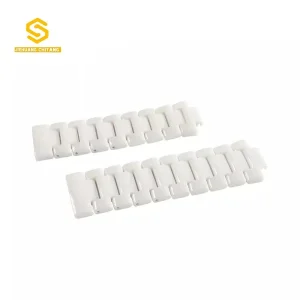
Ceramic Injection Molding (CIM) Wear-Resistant Parts for Defense & Tactical Suppliers in Malaysia
View Part Details
Top Grade Powder Metallurgy Shaft Sleeve Sintered Metal Parts for Defense Machinery in Malaysia
View Part Details
OEM Stainless Steel MIM Parts for Tactical Communication Headsets & Defense Equipment in Malaysia
View Part Details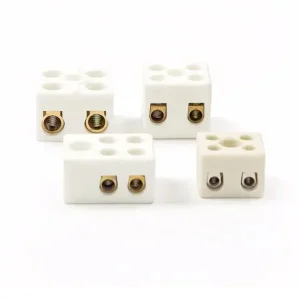
High Temperature Ceramic Resistance Components for Military Electrical & Radar Systems in Malaysia
View Part Details
Precision Custom Hardware Magnesium, Zinc & Aluminum Die Casting Parts for Tactical Gear Suppliers
View Part Details
High Strength Powdered Metallurgy Sintered Structural Parts for Defense Weapon Suppliers in Malaysia
View Part DetailsFrequently Asked Questions by Defense Buyers
In-depth answers covering compliance, physical properties, quality control, prototyping, and logistics for weapon manufacturers in Malaysia.