
Featured Sintered & Cast Metallurgy Solutions for Bulgaria
Direct OEM component engineering certified to IATF 16949 and ISO 9001, providing near-net-shape structural precision for Eastern European manufacturers.


Precision Anodized Aluminum & Zinc Die-Casting Components for Bulgarian Industrial Systems
View Product Details
High-Precision Starter Flywheel & Pulley Assemblies for Automotive Plants in Plovdiv
View Product DetailsUnlocking Structural Value in Bulgaria’s Advanced Manufacturing
An analytical overview of how Metal Injection Molding (MIM) eliminates expensive CNC machining passes and multi-part assembly steps for European OEMs.
The global precision manufacturing sector is undergoing a structural transition toward near-net-shape powder metallurgy technologies. For industrial hubs across Bulgaria—specifically in the Trakia Economic Zone (Plovdiv), Sofia Tech Park corridor, Ruse manufacturing clusters, and Gabrovo toolmaking centers—the demand for intricate metal components with high tensile strength, precise dimensional repeatability, and competitive cost structures has never been higher.
Metal Injection Molding (MIM) combines the geometric design freedom of plastic injection molding with the mechanical integrity of wrought metals. By blending ultra-fine metal powders (typically 3 µm to 20 µm particle size) with customized thermoplastic polymer binders, MIM enables the high-volume production of complex 3D structures that are technically impossible or economically prohibitive to achieve via conventional 5-axis CNC machining, investment casting, or subtractive metal working.
| Manufacturing Technology | Geometric Complexity | Material Utilization Rate | Surface Finish (Ra) | Economic Volume Threshold | Unit Cost at High Volume |
|---|---|---|---|---|---|
| Metal Injection Molding (MIM) | Extreme (Undercuts, micro-threads, internal channels) | > 95% | 0.8 µm – 1.6 µm | 2,000 – 1,000,000+ units | Lowest (30–50% saving vs CNC) |
| Direct 5-Axis CNC Machining | Moderate to High (Tool access constraints) | 15% – 40% (High material waste) | 0.4 µm – 0.8 µm | 1 – 500 units | Extremely High |
| Investment Casting (Lost Wax) | Moderate (Draft angles required) | 60% – 70% | 3.2 µm – 6.3 µm | 500 – 10,000 units | Medium to High |
| Press & Sinter Powder Metallurgy | Medium (2.5D planar press direction) | > 90% | 1.6 µm – 3.2 µm | 5,000 – 500,000+ units | Very Low |
| Additive Manufacturing (SLM 3D Printing) | Extreme (Prototyping focus) | > 85% | 6.3 µm – 12.5 µm | 1 – 200 units | High (Tooling-free) |
Unlike press-and-sinter powder metallurgy (PM), which yields density around 85–92%, MIM components achieve 96.5% to 99% of theoretical material density after high-temperature vacuum sintering. This delivers mechanical properties (yield strength, elongation, wear resistance) virtually identical to wrought metals certified under ISO and ASTM standards.
Targeted Engineering Applications Across Bulgaria’s Industrial Zones
How JHMIM supports Tier-1 automotive suppliers, defense manufacturers, medical device innovators, and power tool builders in Bulgaria.
Automotive & Mechatronics (Plovdiv & Sofia)
Bulgaria’s automotive sector accounts for over 10% of national GDP, anchored by major component plants in Plovdiv and Sofia. JHMIM provides high-density 17-4PH and Fe-Ni steel turbocharger vanes, variable valve timing (VVT) rotors, sensor housings, and electronic steering lock pawls with micro-tolerances down to ±0.03 mm.
Defense & Armaments (Kazanlak & Karlovo)
Bulgaria possesses a deep historical legacy in defense engineering, centered around Kazanlak and Karlovo. MIM technology provides gas blocks, trigger mechanisms, safety levers, and optical sight brackets in hardened 420 stainless steel and 4140 low-alloy steel that resist extreme impact and thermal shocks.
Medical Devices & Orthodontics (Sofia & Varna)
Bulgaria’s emerging biomedical instrument cluster requires ultra-biocompatible, corrosion-resistant surgical jaws, endoscopic graspers, and mesh-base orthodontic brackets. JHMIM supplies 316L surgical stainless steel and Titanium (Ti-6Al-4V) components produced under strict ISO 13485 cleanroom-compatible conditions.
Electrical & Industrial Power Tools (Gabrovo & Ruse)
For hand tools, electrical switchgear, and industrial machinery plants along the Danube and Balkan regions, MIM delivers planetary gears, ratchet teeth, solenoid armatures, and high-permeability soft magnetic Fe-Si components with long wear cycles.
Consumer Electronics & Smart Home Locks
Supporting smart building automation across European markets, JHMIM produces complex stainless steel smart-lock deadbolts, biometrics sensor bevels, micro-hinges, and smartwatch frames finished with PVD and mirror electroplating.
Hydraulics, Valves & Fluid Control Systems
High-pressure hydraulic spools, mini ball valves, pump impellers, and fluid nozzles in 316L and duplex stainless steel. Free from internal voids and pinhole leaks under hydro-testing up to 300 bar.
Feedstock Chemistry, Debinding Kinetics & Sintering Science
How JHMIM controls grain growth, binder burn-off, and isotropic linear shrinkage to deliver tight dimensional tolerances.
1. Metal Powder Characterization & Binder Formulation
The foundation of elite MIM quality lies in powder morphology. JHMIM utilizes gas-atomized and carbonyl metal powders with spherical particle geometry, yielding tap densities exceeding 60%. These powders are intimately mixed at elevated temperatures ($160^\circ\text{C} - 190^\circ\text{C}$) with a multi-component binder system consisting of primary paraffin wax, polypropylene (PP), and surfactant modifiers.
- Particle Size Distribution: D10 = 3.2 µm, D50 = 8.5 µm, D90 = 18.2 µm for optimal sinter-packing density.
- Custom Binder Systems: Solvent-extractable wax binders for rapid solvent debinding, alongside Polyoxymethylene (POM) catalytic binders for nitric acid debinding.
- Rheological Stability: Melt Flow Index (MFI) strictly controlled to prevent jetting, sink marks, or binder-powder phase separation inside the mold cavity.
2. Two-Stage Debinding Protocol
Before sintering, the green part (molded state) must undergo controlled binder extraction to form a brown part (skeleton structure):
Stage A: Solvent Debinding: Parts are immersed in an organic solvent (such as heptane or trichloroethylene) at $50^\circ\text{C} - 60^\circ\text{C}$ for 6 to 12 hours. This removes 70–80% of the primary paraffin wax, leaving interconnected micro-porosity throughout the part.
Stage B: Thermal Debinding & Pre-Sintering: The brown parts are transferred to a continuous debinding-sintering furnace. In an atmosphere-controlled zone ($300^\circ\text{C} - 600^\circ\text{C}$), the secondary backbone polymer slowly decomposes into gas without destabilizing the fragile metallic skeleton.
3. High-Temperature Vacuum Sintering & Shrinkage Control
Sintering takes place in high-vacuum or ultra-pure hydrogen/argon atmospheres at temperatures ranging from $1,250^\circ\text{C}$ to $1,380^\circ\text{C}$ (depending on the alloy standard). As solid-state diffusion occurs, metal atoms migrate across grain boundaries, causing the pores to collapse and the part to shrink uniformly by 14% to 22% linearly (volumetric shrinkage ~40–50%).
| Material Grade (MIM Standard) | Sintered Density (g/cm³) | Tensile Strength Rm (MPa) | Yield Strength Rp0.2 (MPa) | Elongation A (%) | Hardness |
|---|---|---|---|---|---|
| MIM 17-4PH (H900 condition) | 7.75 – 7.82 | 1,150 – 1,300 | 1,050 – 1,180 | 4.0 – 8.0 | 38 – 44 HRC |
| MIM 316L (Austenitic SS) | 7.85 – 7.92 | 520 – 580 | 210 – 250 | 40.0 – 55.0 | 140 – 180 HV |
| MIM 420 (Martensitic SS) | 7.65 – 7.72 | 1,450 – 1,650 | 1,200 – 1,350 | 1.5 – 3.0 | 48 – 54 HRC |
| MIM Fe-Ni (FN-0800 Low Alloy) | 7.55 – 7.65 | 450 – 600 | 280 – 380 | 12.0 – 20.0 | 150 – 220 HV |
| TiMIM (Ti-6Al-4V Grade 5) | 4.42 – 4.48 | 890 – 980 | 820 – 910 | 10.0 – 15.0 | 32 – 36 HRC |
Chinese Manufacturing Resilience & JHMIM Operational Efficiency
Integrating Ningbo’s world-class logistics port with state-of-the-art automated powder compaction and vacuum sintering facilities.
1. Vertical Integration from Powder to Finished Part
Ningbo Jiehuang Chiyang Electronic Tech Co., Ltd. (JHMIM) operates a fully vertically integrated supply chain. From raw powder sourcing (under long-term strategic contracts with top global powder suppliers) to in-house feedstock blending, tooling design, CNC secondary finishing, and PVD coating, every step is executed within our 28,000 m² facility. This eliminates middleman markups and protects project schedules against external supply bottlenecks.
2. High-Capacity Equipment Fleet
Our factory floor houses 1,000-ton (10,000 kN) automated powder compacting presses, Japanese-imported Nissei injection molding machines, continuous atmosphere debinding furnaces, and high-vacuum sintering chambers. Whether your batch order requires 2,000 pilot parts or 500,000 annual production units for EU automotive platforms, JHMIM guarantees seamless scalability.
3. Cost Savings of 30% to 50% for European Buyers
By pairing optimized Chinese tooling amortizations (often 50% less expensive than Western European moldmaking) with automated high-speed sintering operations, JHMIM delivers landed cost advantages of 30% to 50% for Bulgarian OEMs—without sacrificing material purity or dimensional integrity.
Technology Roadmap: Next-Generation MIM Horizons
Strategic developments in titanium injection molding, micro-MIM, green binder systems, and metal binder jetting integration.
Micro-MIM Engineering (< 0.05 g)
Development of ultra-fine micro-injection molding capabilities utilizing nano-scale metal powders (D50 < 2 µm). Enables mass production of endoscopic surgical teeth, micro-gears for medical robotics, and sub-millimeter aerospace actuators.
Titanium TiMIM Expansion
Scaling low-interstitial Ti-6Al-4V titanium powder molding. By controlling oxygen pick-up below 0.15% during sintering, JHMIM provides ultra-lightweight, bio-inert components for aerospace fittings and luxury horology.
Green MIM & Carbon Neutral Sintering
Implementation of bio-based, water-soluble binders and high-efficiency vacuum sintering furnaces powered by renewable energy grids. Decreasing the carbon footprint per part by 40% to fulfill EU CBAM and ESG requirements.
Quality Assurance & Seamless DDP Logistics to Bulgaria
Ensuring 100% regulatory compliance, comprehensive CMM documentation, and hassle-free EU customs clearance.
IATF 16949 & ISO 9001 Quality System
Our quality inspection laboratory operates Zeiss Coordinate Measuring Machines (CMM), optical profile projectors, metallographic mounting and etching suites, and LECO carbon/sulfur sulfur analyzers to verify material composition.
Full PPAP & FAI Documentation
Every production launch for European buyers includes Level 3 Production Part Approval Process (PPAP) submissions, including DFMEA/PFMEA reports, control plans, Gage R&R studies, and First Article Inspection (FAI) dimensional data.
Door-to-Door DDP Delivery to Sofia & Plovdiv
We handle all EU customs duties, VAT filing, and import clearance documentation. Parts are shipped directly from Ningbo Port to Varna/Burgas seaports or express air freight to Sofia Airport (SOF), arriving at your factory floor ready for assembly.
Frequently Asked Questions by Bulgarian & EU Buyers
Clear engineering answers regarding tolerances, tooling lead times, secondary operations, and NDA compliance.
What linear dimensional tolerances can JHMIM achieve for custom MIM parts?
Standard as-sintered MIM tolerances are typically ±0.3% to ±0.5% of the nominal dimension (e.g., ±0.03 mm on a 10 mm feature). For critical dimensions requiring tighter fits (such as bearing seats or valve spools down to ±0.005 mm), JHMIM integrates post-sintering CNC sizing, coining, or precision grinding operations.
How do you protect proprietary drawing designs for Bulgarian defense or automotive projects?
We strictly honor intellectual property confidentiality. Prior to exchanging 2D/3D CAD drawings (STEP/IGES/PDF formats), JHMIM signs binding Non-Disclosure Agreements (NDAs). All project data is stored on encrypted local servers with restricted internal engineering access control.
Can JHMIM provide functional prototypes before building high-cavity MIM tooling?
Yes. We utilize in-house Selective Laser Melting (SLM) metal 3D printing and single-cavity prototype tooling to produce functional metal prototypes within 7–10 days. This allows your engineering team to validate form, fit, and mechanical performance prior to tooling sign-off.
What is the typical lead time for MIM mold tooling and first sample submission?
Standard MIM mold construction and sample dispatch takes approximately 25 to 35 calendar days. Upon sample arrival in Bulgaria, we provide full FAI measurement documentation for your approval before commencing mass production.
What are the minimum order quantities (MOQ) for custom MIM orders?
Our standard MOQ for production MIM components is 2,000 pieces per batch due to furnace setup dynamics. However, for specialized titanium (TiMIM) components or initial industrial pilot projects in Bulgaria, flexible batch quantities can be arranged.
Are MIM materials fully compliant with EU REACH and RoHS environmental directives?
Yes. All alloy powders, binders, and surface treatments utilized by JHMIM comply 100% with EU RoHS 3 and REACH regulations. SGS material testing certificates and heavy-metal-free compliance reports are issued with every shipment batch.
Additional High-Precision MIM & PM Parts
Discover our broader catalog of custom sintered steel, dental brackets, ceramic moldings, and high-temp molybdenum accessories.
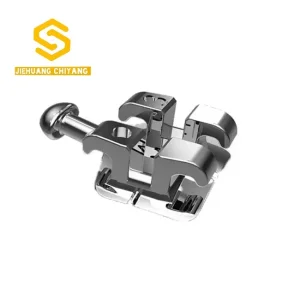



Sintered MIM CNC Machined Stainless Steel Components for Bulgarian Electrical Devices
View Product Details
High-Purity Metal Powder & Selective Laser Melting (SLM) Additive Manufacturing Alloys
View Product DetailsReady to Optimize Component Costs for Your Bulgarian Production Line?
Send your 2D/3D engineering drawings to JHMIM today. Receive a comprehensive DFM manufacturability review and itemized cost breakdown within 48 hours.
Send Inquiry Now