
Precision Titanium & MIM Components for Israeli Industry
High-density near-net-shape Titanium and Alloy MIM parts engineered to replace labor-intensive CNC machining for medical and military-grade applications.

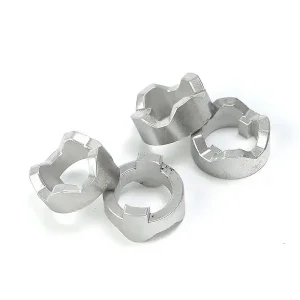


Titanium Engineering for Israel’s Advanced Innovation Hubs
Analyzing the specific metallurgical demands of Silicon Wadi, Yokneam Medical Corridor, Haifa Industrial Complexes, and Tel Aviv Defense Tech Clusters.
Israel has earned its reputation as a global epicenter of high-tech innovation, military optronics, robotic surgery, and autonomous aerospace hardware. Known as "Silicon Wadi," the country hosts one of the world's most concentrated clusters of advanced R&D centers. From surgical robotics developers in Yokneam and Caesarea to electro-optical defense integrators in Haifa and Rehovot, Israeli original equipment manufacturers (OEMs) demand component materials that balance high specific strength, extreme corrosion resistance, and exceptional biocompatibility.
Historically, machining titanium alloys like Ti-6Al-4V (Grade 5) via conventional 5-axis CNC milling presented massive operational bottlenecks. Titanium’s low thermal conductivity causes localized heat buildup on cutting tools, leading to rapid tool wear, excessive energy consumption, and raw material waste rates upwards of 80% (buy-to-fly ratios). For complex miniature components—such as surgical endo-cutter articulation joints, tactical night-vision optical housings, micro-uav gimbal mounts, and dental implant anchors—subtractive machining is prohibitively expensive and slow.
Why Israeli Engineering Teams Shift to TiMIM
- Zero Tool Wear Bottlenecks: Near-net shape forming eliminates tough titanium cutting operations.
- Miniaturization Capability: Seamless integration of internal fluid channels, thin walls (down to 0.5mm), and undercuts.
- Biocompatibility Compliance: Meets ISO 10993 and ASTM F2885 standards for short-term and permanent surgical implants.
- Supply Chain Acceleration: Rapid scaling from prototype to high-volume batch runs (50,000+ units/month) for fast-paced Israeli tech launches.
TiMIM Process Engineering & Material Property Roadmap
Understanding oxygen pickup control, binder chemistry, catalytic debinding, and high-vacuum sintering dynamics for titanium alloys.
1. Spherical Powder Synthesis
Utilizing fine gas-atomized (GA) and plasma-atomized (PA) spherical titanium powders with controlled particle size distribution (d50 < 15-25 μm) to optimize packing density and rheological flow during injection molding.
2. Low-Oxygen Debinding
Multi-component polyolefin/wax binder systems tailored for rapid solvent extraction followed by thermal debinding under inert argon atmosphere, keeping interstitial oxygen levels strictly below 0.20 wt%.
3. Ultra-Vacuum Sintering
High-temperature vacuum sintering (1250°C – 1350°C at < 10-4 Torr) with titanium getter shielding to achieve density exceeding 96.5% of theoretical maximum, yielding fine microstructures with high fatigue resistance.
Titanium MIM Material Mechanical Specification Matrix
| Material Grade | Standard Ref | Sintered Density | Tensile Strength (UTS) | Yield Strength (0.2%) | Elongation (%) | Key Israel Application |
|---|---|---|---|---|---|---|
| Ti-6Al-4V Grade 5 | ASTM F2885 / ISO 22068 | ≥ 4.41 g/cm³ (≥ 97%) | ≥ 890 MPa | ≥ 810 MPa | ≥ 10% | Tactical Optronics, Aerospace Brackets, UAV Joints |
| Commercially Pure Ti (CP-Ti Grade 2) | ASTM F2885 | ≥ 4.38 g/cm³ (≥ 96.5%) | ≥ 480 MPa | ≥ 345 MPa | ≥ 18% | Dental Abutments, Medical Implants, Chemical Sensors |
| Ti-6Al-4V ELI (Grade 23) | ASTM F3001 compliant | ≥ 4.42 g/cm³ (≥ 97.5%) | ≥ 860 MPa | ≥ 790 MPa | ≥ 12% | Surgical Endo-cutters, Implantable Devices |
Turnkey Solutions for Israeli High-Tech Vertical Sectors
Tailored component engineering addresses strict mechanical, thermal, and regulatory constraints across defense, healthcare, and telecom.
1. Defense Tech & Electro-Optics
Israeli defense OEMs require lightweight, extreme-strength titanium housings for handheld thermal optics, drone gimbal arms, and soldier-worn tactical gear. TiMIM delivers intricate internal cavities and mounting flanges that reduce system payload without compromising structural rigidity under ballistic shock vibration.
2. Medical Devices & Surgical Robotics
From Yokneam to Caesarea, Israeli medical tech innovators pioneer minimally invasive surgical robotic levers, laparoscopic jaws, and orthopedic bone anchors. Our Ti-6Al-4V Grade 23 parts offer high biocompatibility, non-magnetic MRI safety, and surface textures ready for passivation and anodization.
3. Micro-Electronics & Aerospace
High-frequency RF connectors, satellite thermal dissipation plates, and smartwatch structural chassis benefited from TiMIM’s CTE matching and thermal performance. Near-net shape molding allows thin-walled structures with micro-pin array configurations for maximal heat dissipation.
Smart Plant Capacity & Supply Chain Resilience for Israeli Importers
Combining 28,000 m² of automated manufacturing power with robust direct supply lines to Israel's primary logistics hubs.
Industry 4.0 Smart Manufacturing Capabilities
At our state-of-the-art production complex in Ningbo, China, Jiehuang (JHMIM) integrates continuous MES (Manufacturing Execution System) monitoring across all stages of titanium processing:
- Automated Powder-Binder Compounding: Closed-loop torque feedback prevents thermal degradation during shear mixing.
- Precision Electric Molding Presses: High-repeatability cavity pressure sensors ensure mold fill accuracy within ±0.01 mm.
- Continuous & Batch Vacuum Sintering: German-engineered vacuum furnaces equipped with multi-zone temperature controls up to 1600°C.
- Automated Optical Inspection (AOI): 100% 3D vision systems inspect critical dimensions, eliminating human error prior to packaging.
Logistics & Direct Trade Lines to Israel
We understand the operational urgency required by Israeli industrial procurement offices. JHMIM provides streamlined logistics channels designed to navigate international customs seamlessly:
- Air Freight Connectivity: Express shipments via Shanghai/Hong Kong direct to Ben Gurion Airport (TLV) for urgent pilot product launches within 3-5 transit days.
- Maritime Shipping Lines: Direct container sea routes connecting Ningbo Port to Ashdod Port and Haifa Port.
- Dual-Use & Export Compliance: Full documentation compliance for non-military commercial titanium components, avoiding customs holds.
- Consignment & Safety Stock Management: Flexible buffer stock options held in dedicated regional warehouses for scheduled JIT deliveries.
Global Procurement Framework & Israeli Quality Compliance
Strict quality assurance frameworks, NDA protections, and engineering review workflows built for international buyer confidence.
1. Strict NDA Assurance
Bi-directional non-disclosure agreements signed prior to receiving CAD files, protecting proprietary IP for Israeli tech startups and defense firms.
2. 48-Hour DFM Feedback
Comprehensive Design for Manufacturability (DFM) analysis identifying wall thickness variations, parting lines, draft angles, and gate locations.
3. Certified Audits
Operating under certified IATF 16949 and ISO 9001 quality management systems. Full EN 10204 3.1 material certificates provided with every lot.
4. Rapid Metal 3D Samples
Direct metal laser sintering (DMLS) titanium prototypes supplied for physical validation before cutting hard steel injection tooling.
Custom OEM Metal Injection Molding Solutions for Israeli Suppliers
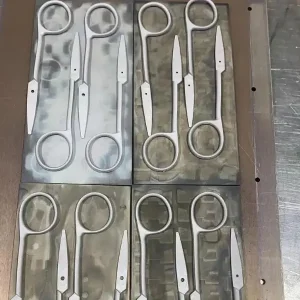
Explore our full line of sintered stainless steel, titanium, alloy gear, and precision die-cast components supplied to international technology leaders.






Frequently Asked Questions by Israeli Engineering & Procurement Teams
In-depth technical answers regarding TiMIM capabilities, material properties, quality controls, and lead times.
5-axis CNC milling of Titanium Ti-6Al-4V suffers from severe tool chatter, slow cutting speeds, and material waste exceeding 80% (buy-to-fly weight loss). TiMIM injects a homogenized titanium powder-binder mixture directly into net-shape molds, producing complex geometry with minimal post-machining. For medium-to-high volume production runs (2,000+ units), TiMIM reduces per-part unit costs by 40% to 60% while achieving equivalent mechanical tensile strength (>890 MPa) and fatigue limit.
Titanium is highly reactive with oxygen, nitrogen, and carbon at elevated temperatures, which can cause embrittlement if uncontrolled. At JHMIM, we utilize fine spherical gas-atomized titanium powder (<25 μm) stored under inert argon gas. Solvent and thermal debinding occur in controlled-atmosphere retorts, followed by high-vacuum sintering (< 10-4 Torr) utilizing active titanium getter shields. This maintains total oxygen content strictly below 0.20 wt% (compliant with ASTM F2885 for implantable devices).
Yes. Our Ti-6Al-4V Grade 5 and Commercially Pure Titanium (CP-Ti) MIM components fully comply with ASTM F2885 (Standard Specification for Surgical Implant Applications via Metal Injection Molding). Our production lines follow clean room cleaning protocols, passivation procedures, and full material lot traceability under ISO 13485-aligned quality frameworks.
Standard as-sintered dimensional tolerance for TiMIM is generally ±0.3% to ±0.5% of nominal dimensions (e.g., ±0.03 mm on a 10 mm dimension). For ultra-tight features such as bearing bores, mating threads, or sealing faces, secondary CNC sizing, coining, or precision milling is performed in-house to achieve tight tolerances down to ±0.005 mm.
Upon receipt of your 2D/3D STEP drawings, our engineering team issues a detailed DFM report and quotation within 48 hours. Metal 3D-printed titanium samples can be dispatched via express air freight within 7-10 business days. Hard steel injection mold tooling and first article inspection (FAI) samples are delivered in approximately 30-35 days, followed by mass production air shipments taking 3-5 days directly to Israel.
Yes. JHMIM regularly exports to international markets including Europe, North America, and Israel. We issue complete dual-use export declarations, HS code classifications, commercial invoices, packing lists, and Certificate of Origin (COO) documentation to guarantee frictionless customs clearance through Ashdod, Haifa, or Ben Gurion customs checkpoints.
Accelerate Your Titanium MIM Engineering for Israel
Submit your CAD model (STEP/IGES) and PDF technical drawings. Receive a comprehensive DFM manufacturability evaluation and transparent tooling/per-unit quotation within 48 hours.
ISO 9001 & IATF 16949 Certified Facility | NDA Protected | Direct Air Shipping to Israel (TLV)