
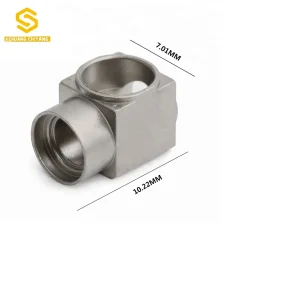
Precision MIM Automotive Solutions — Seattle Market Featured Line
Direct OEM manufacturing and supply of sintered mechanical components tailored for Tier-1 automotive integrators, electric commercial vehicle builders, and advanced sub-system suppliers across Washington State.



Executive Whitepaper: The Seattle Automotive & Mobility Manufacturing Landscape
The Greater Seattle area and the broader Pacific Northwest (PNW) corridor—encompassing Bellevue, Renton, Kent Valley, Everett, and Tacoma—are experiencing a rapid evolution in automotive engineering. Historically recognized as a global capital for aerospace excellence and cloud technology, Seattle has emerged as an incubation epicenter for electric vehicle (EV) commercial fleets, autonomous driving software-hardware integration, maritime electrification, and heavy-duty transportation technology.
Automotive Original Equipment Manufacturers (OEMs), Tier-1 hardware suppliers, and mobility startups operating within the Seattle market face stringent performance mandates: reducing overall vehicle mass, increasing power density in electric drive units (EDUs), ensuring absolute structural reliability in high-vibration environments, and maintaining strict cost-efficiency under volatile global supply conditions.
Metal Injection Molding (MIM) has stepped into this technological gap as an irreplaceable manufacturing pathway. Combining the design freedom of plastic injection molding with the structural integrity of wrought alloy metals, MIM offers Seattle manufacturers the ability to mass-produce complex, net-shape automotive components with 96%–99% theoretical density, micro-scale tolerances (±0.3%), and drastically reduced lead times compared to conventional 5-axis CNC machining or investment casting.
PNW Market Drivers
- EV & Fleet Electrification: Rapid shift toward zero-emission commercial vehicles in WA state.
- Aerospace Metallurgical Crossover: High demand for titanium and 17-4PH stainless steel micro-components.
- Port of Seattle Logistics: Streamlined direct ocean freight import pathways with efficient Customs clearance.
- Zero-Scrap Manufacturing: Over 98% raw material utilization matching Pacific Northwest green compliance standards.
Metallurgical Engineering & Process Physics of MIM
A rigorous examination of powder synthesis, thermoplastic debinding chemistry, and high-temperature vacuum sintering kinetics engineered for critical automotive duty cycles.
4-Stage Precision MIM Manufacturing Pipeline
1. Fine Gas Atomized Powder Feedstock: Metal powders (typically <22 μm particle diameter) are compounded with specialized polymeric binders (wax, polypropylene, stearic acid) at controlled volumetric ratios (60% metal / 40% binder).
2. Precision High-Pressure Injection Molding: The heated feedstock is injected into hardened tool steel multi-cavity molds under computer-controlled pressure profiles, yielding "green" parts with complex geometric details including internal cross-holes, thin ribs, and threads.
3. Solvent & Thermal Debinding: Green parts undergo catalytic or solvent immersion (HNO3 vapor or heptane) to extract the primary binder phase, creating an interconnected pore network within the "brown" component without distorting geometry.
4. High-Vacuum Sintering: Brown parts are subjected to thermal profiles reaching up to 1,380°C in pure hydrogen or high-vacuum atmospheres. Linear shrinkage of 15%–20% occurs predictably, coalescing particles into fully dense metal components.
Material Alloys & Mechanical Performance Metrics
Our OEM manufacturing facility specializes in a comprehensive matrix of automotive-grade alloys designed to withstand thermal shock, cyclic fatigue, and aggressive chemical exposure:
Process Comparison: MIM vs. Alternative Automotive Manufacturing Processes
| Manufacturing Parameter | Metal Injection Molding (MIM) | 5-Axis CNC Machining | Investment Casting | Press & Sinter (PM) |
|---|---|---|---|---|
| Part Complexity | Extremely High (Undercuts, 3D Curves) | Moderate-High (Tool Access Limited) | Moderate-High | Low-Moderate (2.5D Prismatic) |
| Material Utilization | >98% (Zero Scrap Yield) | 15% - 40% (High Scrap Waste) | 60% - 70% (Gates & Risers) | >95% |
| Relative Density | 96% - 99% Theoretical Density | 100% Wrought Material | 92% - 95% (Porosity Risk) | 85% - 92% (Interconnected Pores) |
| Dimensional Tolerance | ±0.3% to ±0.5% standard | ±0.005 mm (High Precision) | ±0.5% to ±1.0% | ±0.2% (Vertical Axis) |
| Unit Cost at Volume (>20k) | Lowest (30%-60% Savings) | Extremely High (Tool Wear/Time) | Moderate | Very Low |
Automotive System Applications Served in Washington State
Engineered metal components optimized for mass reduction, high torque transmission, and high-reliability operation across modern vehicle architectures.
Electric Drivetrains & EV Batteries
EV architectures require lightweight high-strength connectors, battery disconnect safety latches, coolant pump impellers, and high-conductivity copper-nickel thermal management brackets capable of withstanding severe thermal cycling.
Autonomous Sensors & LiDAR Housings
Seattle-based autonomous vehicle developers utilize MIM 316L stainless steel and titanium micro-brackets for LiDAR, radar optical camera mirror mounts, sensor cleaning nozzles, and rugged outer weather-proof housings.
Powertrain & Variable Valve Timing
Precision MIM vane rotors, oil pump gears, turbocharger wastegate actuators, and variable valve timing (VVT) lock pins engineered for optimal surface hardness (up to 60 HRC via post-sintering heat treatment) and zero wear.
Interior Systems, Locks & Safety Hardware
High-security seat belt latch mechanisms, power headrest adjusting gears, steering wheel lock pawls, and door latch mechanisms requiring dense metallic structure to pass crash-test tensile impact tests.
Commercial Fleet & Heavy-Duty Braking
Sintered brake pad wear indicators, hydraulic ABS valve bodies, electronic parking brake (EPB) planetary gearsets, and high-pressure fuel injector clamps for commercial delivery trucks and regional transit fleets.
Design for Manufacturability (DFM) & Seattle Supply Chain Optimization
Procuring metal parts internationally requires total transparency, risk mitigation, and seamless engineering collaboration. Our OEM team provides a comprehensive Free DFM Analysis on every 3D CAD drawing submitted by Seattle engineering teams before mold tooling fabrication begins.
Key DFM Considerations Included in Our Engineering Review:
- Wall Thickness Uniformity: Recommending ideal wall thicknesses (0.8 mm to 8.0 mm) to prevent sink marks or differential thermal shrinkage during sintering.
- Draft Angles & Part Ejection: Optimizing internal and external draft angles (0.5° to 1.0°) to ensure rapid automatic ejection without compromising critical dimensional features.
- Sintering Setter Plate Support: Designing flat reference surfaces or custom ceramic sintering trays to maintain straightness across long or slender profiles.
- Thread & Undercut Integration: Direct molding of external threads and complex internal undercuts, eliminating costly secondary thread-chasing or wire-EDM operations.
Pacific Northwest Logistics & Tariff Mitigation:
We work directly with freight forwarders operating through the Port of Seattle and Port of Tacoma. By providing complete ocean FCL/LCL delivery, air-express prototype shipping, full customs duty clearance, and duty drawback documentation under US Harmonized Tariff Schedules (HTS), we guarantee frictionless supply chain continuity for Washington State assembly plants.
Request DFM Review & Quote
Upload your STEP/IGES 3D CAD models and 2D engineering drawings. Receive a complete engineering DFM report and transparent volume pricing quotation within 48 hours.
IATF 16949 Quality Assurance & Compliance Framework
Zero-defect manufacturing protocols engineered to comply with global automotive OEMs and US Tier-1 quality verification standards.
PPAP Level 3 Documentation
Every automotive production part launch is accompanied by a full Production Part Approval Process (PPAP Level 3) package, including Design FMEA, Process FMEA, Process Flow Diagrams, Control Plans, and Dimensional Results.
Metrology & Inspection Testing
Our quality lab is equipped with Zeiss 3D Coordinate Measuring Machines (CMM), Keyence Optical Profilometers, X-Ray Fluorescence (XRF) material analyzers, Density balances, and Instron Universal Tensile Testers.
Environmental Compliance
Full compliance with RoHS, REACH, and Conflict Minerals reporting directives. IMDS (International Material Data System) entries submitted promptly for seamless automotive component registration.
Advanced MIM Technology Roadmap (2025–2030)
Pioneering future metallurgical processes to meet the next decade of zero-emission mobility and intelligent autonomous hardware.
1. Titanium MIM (TiMIM) for Aerospace & EV Mass Reduction
Utilizing gas-atomized Ti-6Al-4V titanium powders in high-vacuum inert sintering furnaces to produce ultra-lightweight structural mounts and high-temperature brackets that offer a 45% weight reduction compared to stainless steel while maintaining equivalent yield strength.
2. Micro-MIM & High-Aspect Ratio Features
Deploying ultra-fine micro-powders (<5 μm) and specialized mold micro-machining to create intricate components weighing less than 0.05 grams with feature sizes below 50 microns for advanced automotive electronic connectors and medical-grade automotive sensors.
Frequently Asked Questions (Procurement & Engineering FAQ)
Direct answers for supply chain managers, procurement specialists, and automotive design engineers in the Seattle market.
Complete Wholesale Automotive MIM & Sintered Parts Catalog
Explore our full range of automotive components mass-produced for global OEMs and regional Tier-1 assembly plants.







Ready to Accelerate Your Seattle Automotive Project?
Partner with an IATF 16949 certified MIM manufacturer. Send your CAD drawings today and receive a detailed Design for Manufacturability (DFM) review and transparent volume quote within 48 hours.