
Featured Precision MIM Electronics Components
Engineered to Japanese Industrial Standards (JIS) for Next-Generation Smart Devices, Wearables, and Computing Hardware.
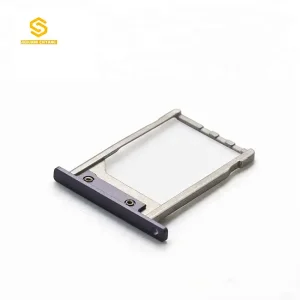
Precision MIM SIM Slot Tray Assemblies for Tokyo Smartphone Manufacturers
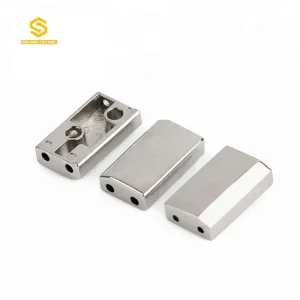
Custom Stainless Steel Smartwatch Clasps & Buckles for Tokyo Wearable Brands

High-Density 316L Stainless Steel Watch Bezel & Frame Modules for Kanto Electronics

Ultra-Thin Metallic CPU Thermal Cooling Impeller Parts for Tokyo Computing Hubs
Tokyo’s Consumer Electronics Industrial Dynamics & Hardware Ecosystem
Analyzing the Convergence of Precision Micro-Engineering, Ota Ward SME Manufacturing Clusters, and Next-Generation Electronics Procurement.
High-Density Micro-Components Demand in Greater Tokyo
The Tokyo Metropolitan Area, alongside the Greater Kanto industrial corridor (including Kanagawa, Saitama, and Chiba prefectures), remains the world's undisputed center for high-end consumer electronics R&D and advanced hardware prototyping. Home to global conglomerates such as Sony, Panasonic, Canon, and Nikon, the demand for complex 3D micro-metal components has shifted exponentially toward high-density Metal Injection Molding (MIM).
Modern device form factors—such as foldable smartphone hinges, ultra-compact acoustic transducers, AR/VR smart glasses, and wearable health monitors—require complex geometries with wall thicknesses under 0.3mm. Traditional CNC machining and Swiss screw turning suffer from excessive tool wear, high material waste, and cycle time bottlenecks when attempting these intricate designs at scale.
Synergy with Ota Ward (大田区) Precision Tooling Networks
Tokyo’s famous Ota Ward precision manufacturing cluster sets the global benchmark for micro-tolerance tooling, EDM wire erosion, and surface polishing. Japanese original equipment manufacturers (OEMs) require overseas manufacturing partners to demonstrate seamless alignment with Japanese Industrial Standards (JIS Z 2500 for powder metallurgy) and strict adherence to zero-defect quality control frameworks.
By integrating state-of-the-art gas-atomized metal powders, proprietary binder removal chemistries, and vacuum sintering furnaces, Jiehuang (JHMIM) bridges the gap between high-volume manufacturing cost efficiencies and the stringent dimensional precision demanded by Tokyo's elite hardware engineering design teams.
Technical Roadmap: From Metal Powder Atomization to Sintered Excellence
Understanding the Metallurgical Physics, Feedstock Chemistry, and Sintering Thermodynamics for Micro-Electronics.
1. Gas-Atomized Powder Selection
We utilize ultra-fine spherical metal powders ($d_{50} \approx 4-10 \ \mu\text{m}$) produced via inert gas atomization (Argon/Nitrogen). The spherical morphology ensures optimum packing density and uniform binder-powder rheology during multi-cavity injection molding.
2. Catalytic Debinding Technology
Utilizing BASF Catamold Polyoxymethylene (POM)-based binder systems, green compacts undergo nitric acid vapour catalytic debinding ($HNO_3$ atmosphere at $110^\circ\text{C}$). This enables rapid debinding without liquid phase transformation, completely eliminating structural distortion in thin-wall electronics parts.
3. Vacuum Sintering & Densification
Sintering occurs in continuous molybdenum-boat vacuum furnaces at temperatures up to $1380^\circ\text{C}$ under partial pressure Argon/Hydrogen atmospheres. Linear shrinkage ($\sim 15-20\%$) is mathematically modeled via finite element analysis (FEA) to ensure final dimensions achieve ISO 2768-m/f tolerances.
Consumer Electronics Material Selection Matrix (MIM vs. Wrought Properties)
| MIM Material Grade | Density (g/cm³) | Tensile Strength (MPa) | Yield Strength (MPa) | Hardness | Primary Tokyo CE Application |
|---|---|---|---|---|---|
| 17-4PH (SUS630) | ≥ 7.60 | 1,150 | 1,000 | 38 - 45 HRC | Foldable Phone Hinges, Wearable Structural Frames |
| 316L (SUS316L) | ≥ 7.90 | 520 | 210 | 180 - 220 HV | Corrosion-Resistant Smartwatch Bezels, Earphone Housings |
| Ti-6Al-4V (Grade 5 TiMIM) | ≥ 4.42 | 900 | 820 | 32 - 36 HRC | Ultra-Lightweight Premium Smart Ring & Wristwear Casings |
| Fe-8%Ni Low Alloy Steel | ≥ 7.55 | 1,480 (Heat Treated) | 1,250 | 48 - 55 HRC | High-Torque Micro Internal Gears, Camera Actuator Cams |
| Cu-W / Cu-Mo Alloys | ≥ 15.2 | 650 | 580 | 210 HB | High-Thermal Dissipation Substrates for AI-Edge Processors |
Macro Solutions for Next-Gen Consumer Electronics
Solving Engineering Bottlenecks in Smart Devices, Foldables, Wearables, and Micro-Acoustic Hardware.
1. Hinge Kinematics for Foldable Displays
Foldable laptops and smartphones engineered in Tokyo design centers require hinges capable of enduring 200,000+ opening/closing flex cycles without torque degradation. MIM technology enables complex multi-link gears, cam slots, and interlocking pins integrated into single sintered bodies, eliminating secondary assembly steps and dramatically improving structural yield rates.
2. Acoustic Performance & Earphone Driver Housings
True Wireless Stereo (TWS) earphones demand non-magnetic, dense, acoustically inert metal cavities to maximize driver resonance and eliminate micro-vibrations. MIM 316L and Titanium alloys allow complex internal acoustic chambers with varied wall thicknesses that are impossible to machine via traditional CNC tooling.
3. Bio-Compatible Wearable Hardware & Watch Components
Direct skin-contact smartwatches and fitness trackers require nickel-release compliance (EN 1811) and extreme sweat/corrosion resistance. Our specialized vacuum sintering cycles for nickel-free austenitic stainless steel (e.g., High-Nitrogen SS) ensure zero skin irritation alongside mirror-like PVD, DLC, and electroplating polishability.
4. Advanced Thermal Management for High-Power Computing
Next-generation mobile AI chips in Tokyo computing hardware generate significant localized thermal flux. Utilizing Copper-Molybdenum (Cu-Mo) and Tungsten-Copper MIM powder formulations, Jiehuang produces micro-channel heat sinks and cooling impellers with tailored thermal expansion coefficients matched directly to silicon dies.
Quality Control Metrology & Regulatory Compliance for Japan
Stringent Inspection Protocols Ensuring Flawless Integration into Japanese Tier-1 Electronics Supply Chains.
IATF 16949 & ISO 9001 Certified
Our manufacturing facilities operate under strict IATF 16949 automotive-grade quality systems. Every production batch undergoes rigorous APQP, FMEA, and PPAP Level 3 documentation checks prior to global export.
Full Metrological Inspection
Equipped with Zeiss 3D Coordinate Measuring Machines (CMM), Keyence optical profile measuring systems, X-ray computed tomography (CT) for internal pore scanning, and metallographic grain structure testing laboratories.
RoHS, REACH & METI Compliance
All materials fully comply with EU RoHS 3, REACH SVHC, and Japan's Ministry of Economy, Trade and Industry (METI) chemical substance safety regulations, backed by SGS/CTI third-party test reports.
Frequently Asked Questions (FAQ) for Tokyo OEM Buyers
In-Depth Answers to Sourcing, Engineering, Lead Times, and Manufacturing Capabilities.
What dimensional tolerances can Jiehuang achieve on MIM parts without secondary machining?
Standard visual/as-sintered tolerances for our MIM components are maintained within ±0.3% to ±0.5% of nominal dimensions (typically ±0.03mm to ±0.05mm for micro-parts under 10mm). For ultra-critical functional features—such as bearing journals or hinge pin slots—we utilize automated secondary coining (sizing) or CNC finish machining to achieve tolerances as tight as ±0.005mm.
How does Jiehuang support prototyping and bridging before full production tooling?
We provide rapid prototyping support through state-of-the-art Metal 3D Printing (Selective Laser Melting / Binder Jetting) and soft-tooling CNC machining. This allows Tokyo design engineers to validate mechanical assemblies, fitment, and thermal properties before investing in high-cavity steel MIM molds.
What logistics routes and turnaround times do you offer for shipments into Tokyo?
Operating out of Ningbo (one of the world's premier deep-water ports), sea freight shipments reach Tokyo, Yokohama, or Chiba ports in just 3 to 5 days. For urgent engineering samples or NPI pilot lots, express air freight delivers directly to Haneda (HND) or Narita (NRT) airports within 24 to 48 hours.
Can you provide custom surface finishes like PVD, electroplating, and DLC for consumer electronics?
Yes. We offer complete turnkey post-processing solutions, including mirror polishing, bead blasting, electroless nickel plating, Physical Vapor Deposition (PVD in gunmetal, rose gold, sapphire blue), Diamond-Like Carbon (DLC) coating, and anodizing for hybrid material assemblies.
How do you handle IP protection and non-disclosure agreements (NDAs) for Tokyo research labs?
IP protection is paramount. We routinely sign legally binding bilingual (English/Japanese) NDAs prior to receiving any 2D/3D CAD drawings. All files are stored on secure air-gapped internal servers with strict user access logging.
What is the typical tooling lifespan and production capacity for high-volume orders?
Our hardened tool steel molds (using imported SKD11 or S136 steel) carry a guaranteed tool life of 1,000,000 shots. Mold maintenance, refurbishment, and replacement are covered at zero cost during active mass production.
Full Lineup: Wholesale Powder Metallurgy & MIM Products
Explore Our Comprehensive Range of Precision Sintered Gears, Connectors, Hardware, and Custom Components.

Precision Stainless Steel MIM Driver Housings & Acoustic Parts for Tokyo Headphones

Wholesale High-Torque Alloy Powder Metallurgy Gears for Tokyo Precision Robotics

Stainless Steel Powder Metallurgy Bearings & Bushings for Tokyo Household Appliances
Customized Sintered Iron Mini Bevel Gears for Tokyo Micro Actuator Systems

Metal Injection Molding SMT Shell Connectors for Automotive & Tokyo Electronics

High-Purity Molybdenum (Moly) Boats for Vacuum Sintering MIM Powder Metallurgy

Electroplated Precision Die Casting Zinc & Aluminum Alloys for Tokyo CE Panels
Custom OEM Powder Metallurgy & Metal Injection Molding Structural Components
Ready to Optimize Your Consumer Electronics Supply Chain?
Send us your 2D/3D CAD drawings (STEP, IGES, PDF) today. Our engineering team provides a comprehensive Design for Manufacturability (DFM) analysis and a formal quote within 48 hours.