
Core MIM Components for Egypt Medical Equipment Factories
Direct-factory OEM component supply tailored for Egyptian surgical instrument manufacturers, dental supply chains, and hospital equipment assemblers in Cairo and Suez Economic Zone.
Macro Industrial Landscape: Egypt's Medical Technology Transformation
Egypt stands as the largest consumer market in the Middle East & North Africa (MENA) region, home to over 110 million citizens. Under the strategic umbrella of Egypt Vision 2030 and the expansion of the Universal Health Insurance System (UHIS), the Egyptian Ministry of Health and Population (MoHP) alongside the Egyptian Drug Authority (EDA) are driving an aggressive campaign to localize medical device manufacturing. Historically reliant on imports for up to 90% of high-precision surgical instruments and bio-compatible hardware, Egyptian factories in key industrial clusters—such as 10th of Ramadan City, 6th of October City, and the Suez Canal Economic Zone (SCZONE)—are actively upgrading their production infrastructure.
Localization Mandates
The Egyptian government's local content requirements aim to elevate domestic medical device assembly from 15% to over 45%. Local factories require micro-precision metal components that meet stringent international regulatory frameworks (ISO 13485, CE Mark, FDA compliance) without the exorbitant tooling costs of traditional CNC machining.
Currency & Landed Cost Optimization
Fluctuating Egyptian Pound (EGP) exchange rates demand maximum capital efficiency for local importers and OEM factories. Metal Injection Molding (MIM) eliminates up to 95% of material scrap standard in subtractive CNC cutting, directly minimizing raw material import tariffs and raw metal wastage.
SCZONE Strategic Hub Logistics
By leveraging China-Egypt bilateral trade channels and duty-free manufacturing privileges within SCZONE ports (Ain Sokhna and East Port Said), medical device factories can seamlessly integrate bulk imported MIM components into local surgical assembly lines for export to Africa and Europe.
Technical Advantage: Metal Injection Molding (MIM) vs. Traditional Processes
Medical technology demands intricate geometry, biological inertness, high yield strength, and mirror surface finishes. Traditional Swiss CNC turning and 5-axis milling of medical-grade 316L stainless steel, 17-4PH, or Titanium grade 5 are labor-intensive and generate massive material waste. MIM combines the design flexibility of plastic injection molding with the structural integrity of forged metal.
| Manufacturing Parameter | Metal Injection Molding (MIM / JHMIM) | 5-Axis CNC Machining | Investment Casting (Lost Wax) | Metal 3D Printing (SLM/DMLS) |
|---|---|---|---|---|
| Complex Geometric Capability | Exceptional (Internal threads, micro-channels, undercuts) | Moderate (Limited by cutting tool reach) | Moderate (Draft angles required) | Extreme (Best for ultra-custom micro volumes) |
| Annual Production Scalability | High (10,000 to 5,000,000+ pcs/year) | Low to Medium (Machine cycle bottle-necks) | Medium (Manual labor intensive) | Low (High unit print cost) |
| Material Density & Mechanical Properties | 97% – 99.5% Density (Near wrought metal) | 100% Wrought Bar Stock Density | 92% – 95% Density (Risk of internal porosity) | 95% – 98% Density (Requires HIP thermal treat) |
| Unit Cost at High Volume | Lowest (30% to 50% savings over CNC) | High (Linear cost increase per minute) | Moderate | Extremely High |
| Surface Finish (As-Sintered) | Ra 0.8 – 1.6 µm (Mirror polish ready) | Ra 1.6 – 3.2 µm (Tool chatter marks) | Ra 3.2 – 6.3 µm (Rough surface) | Ra 6.3 – 12.5 µm (Heavy post-processing required) |
Why Egyptian Factories Partner with Ningbo Jiehuang (JHMIM)
As a premier Chinese OEM MIM manufacturer with over 20 years of powder metallurgy domain authority, Ningbo Jiehuang Chiyang Electronic Tech Co., Ltd. (JHMIM) serves as an end-to-end technical backbone for Egyptian medical device brand owners and assembly plants.
28,000 m² Advanced Production Facility
Equipped with continuous catalytic debinding furnaces, high-temperature vacuum sintering equipment, and multi-cavity precision injection presses. We maintain in-house tooling workshops, ensuring custom mold creation within 25 to 30 days.
- IATF 16949 & ISO 9001 Quality System Certified.
- In-house metallographic labs & CMM optical inspection.
- Class 100,000 cleanroom finishing capabilities for surgical devices.
Rapid Engineering DFM & 48-Hour Quotes
Our senior engineering team—with over 15 R&D specialists—evaluates your STEP or 2D PDF drawings for draft angles, wall thickness uniformity, mold gate placement, and sintering shrinkage factors.
- Free DFM (Design for Manufacturability) report with every quote.
- Rapid metal 3D printing (SLM) prototypes available prior to hard tooling.
- Strict NDA (Non-Disclosure Agreement) protocol to safeguard intellectual property.
Localized Medical Application Scenarios in Egyptian Hospitals
From public university hospitals in Cairo and Alexandria to private medical centers, local medical equipment distributors require components that withstand high-frequency autoclave sterilization and chemical exposure.
1. Minimally Invasive Surgery (MIS)
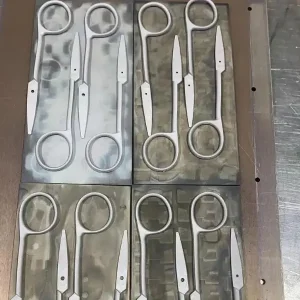
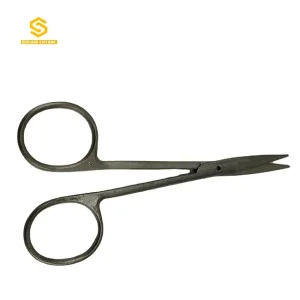
Laparoscopic graspers, endoscopic staple cutters, tissue shears, and suture ratchets require ultra-precise micro-hinges and tooth profiles. MIM provides 316L and 17-4PH components with extreme wear resistance and biocompatibility.
2. Orthopedic & Trauma Hardware
Titanium (Ti-6Al-4V) MIM components—such as specialized drill guides, bone screw insertion tools, alignment hinges, and external fixation joints—offer lightweight performance and high fatigue endurance for orthopedic trauma surgeons.
3. Dental Orthodontic Assemblies
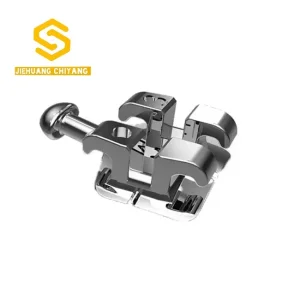
Egyptian dental clinics demand ultra-smooth, comfortable mesh-base brackets and buccal tubes. MIM allows mass production of intricate bracket slots, torque angles, and retention mesh with sub-millimeter tolerances.
5-Step Sourcing Framework for Egyptian Medical Procurement Officers
Navigating international procurement requires smooth execution from engineering review to port clearance at Alexandria or Port Said. JHMIM provides a streamlined 5-step operational protocol.
CAD & Drawing Submission
Provide your 3D CAD files (STEP/IGES) alongside 2D PDF blueprints indicating key tolerances, material grade (e.g., 316L, 17-4PH, Titanium), and surface finishing specifications.
DFM Feasibility & Quote
Within 48 hours, JHMIM engineers return a comprehensive quotation including mold tooling cost, per-piece unit price, and a full Design for Manufacturability (DFM) assessment.
Sample Tooling & Verification
Tooling design and sample creation completed in ~30 days. First Article Inspection (FAI) reports with full CMM dimensional validation are provided before mass production approval.
Mass Sintering & Quality Control
High-volume continuous debinding and sintering. Automated optical inspection (AOI) ensures 100% key-dimension verification across every production batch.
Customs Clearance & Logistics
Full support with Egyptian Nafeza platform cargo tracking, ACID registration compliance, COO (Certificate of Origin), and optimized maritime shipping to Sokhna/Alexandria ports.
Expanded Medical Technology & Sintered Hardware Portfolio
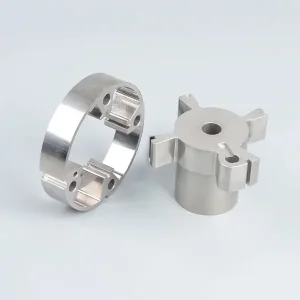
Explore our complete range of sintered, injection-molded, and die-cast custom parts engineered for global medical technology and industrial OEMs.







Technical FAQ: OEM Sourcing for the Egypt Medical Sector
Addressing critical engineering, regulatory, and logistics queries from Egyptian factory buyers and supply chain managers.
How does MIM handle medical-grade biocompatibility standards?
JHMIM utilizes certified raw metal powders including 316L (ASTM F138), 17-4PH (ASTM F899), and Titanium Ti-6Al-4V (ASTM F1472). All sintered parts undergo passivation treatment to remove surface iron traces, passing cytotoxic and corrosion resistance tests required for CE and EDA registrations.
What is the typical Minimum Order Quantity (MOQ) for Egyptian OEM orders?
Our baseline MOQ for custom medical MIM components is 2,000 pieces due to automated mold setup and sintering batch efficiency. For initial pilot prototype runs or localized Egyptian clinical trial testing, smaller batch sizes can be facilitated following DFM approval.
Can JHMIM assist with Egyptian Customs ACID filing and Nafeza documentation?
Yes. We have extensive experience exporting precision hardware to Egyptian ports. We provide full commercial invoice integration with Advance Cargo Information (ACID) numbers, legalized Certificates of Origin (COO), and exact HS Code classifications (e.g., HS 9018 for medical instruments) to guarantee fast customs clearance.
What dimensional tolerances can JHMIM guarantee for micro medical parts?
Standard as-sintered MIM tolerances range between ±0.3% to ±0.5% of nominal dimensions. For critical mating surfaces, micro-hinges, or sub-millimeter pinholes, our secondary CNC machining, grinding, and wire-EDM processes achieve precision tolerances down to ±0.005 mm (5 microns).
Accelerate Your Medical Device Production in Egypt
Send us your 2D/3D component drawings today. Receive an expert engineering DFM review, material specification report, and transparent factory quotation within 48 hours.
Send Inquiry Now