
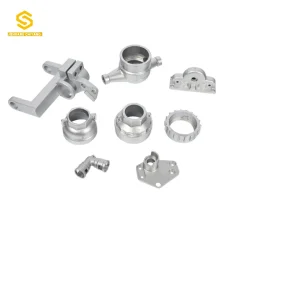
Featured Weapon & Precision Defense Components
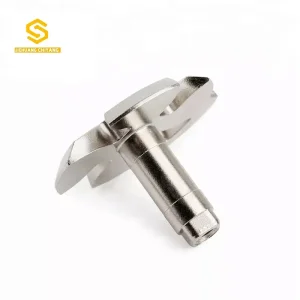
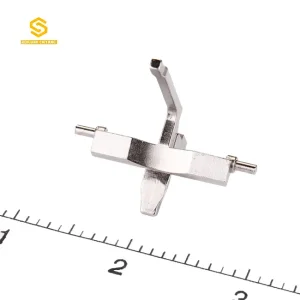
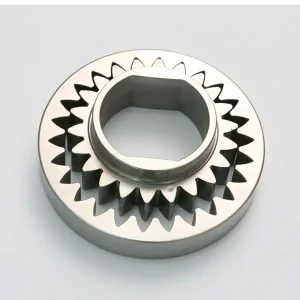
High-precision Metal Injection Molded (MIM) assemblies and sintered metallurgy engineering designed for tactical firearms, defence ordnance, and heavy security applications in Sri Lanka.

Sri Lanka Defense & Industrial Manufacturing Context
As Sri Lanka advances its national defense modernization initiatives, maritime security infrastructure around the Port of Colombo, and local ordnance maintenance protocols under the Ministry of Defence (MoD) and Sri Lanka Electrical and Mechanical Engineers (SLEME), the demand for high-reliability, cost-effective defense hardware components has reached an unprecedented high.
Strategic Demand in South Asia
The defense sector in Sri Lanka requires precision-engineered components that resist tropical maritime corrosion, high friction, and extreme thermal stresses. Traditional subtractive CNC machining for complex weapon components—such as firearm trigger mechanisms, hammers, sears, firing pins, safety selectors, and tactical rail optics mounts—involves massive material waste (up to 75%) and inflated unit costs.
MIM Paradigm Shift for Weapon Suppliers
Metal Injection Molding (MIM) bridges the gap between plastic injection molding versatility and the strength of wrought metals. By delivering near-net-shape components with densities exceeding 98% of theoretical maximums, MIM enables Sri Lankan military hardware suppliers, armories, and industrial contractors to procure complex geometry parts at scale with up to 50% cost reductions compared to conventional CNC milling.
Technical Roadmap: MIM Metallurgy for Defense Applications
Weapon industry components demand strict mechanical properties, including high impact toughness, wear resistance, cyclic fatigue endurance, and corrosion resistance against ambient tropical moisture in Sri Lanka.
17-4PH & 316L Stainless Steel
Martensitic precipitation-hardening stainless steel (17-4PH) offers exceptional yield strength (up to 1100 MPa after H900 heat treatment) and high hardness (40–45 HRC). Ideal for firing pins, receiver latches, and tactical rail lock mechanisms exposed to harsh Sri Lankan coastal operations.
4140 / 4340 Low Alloy Steels
For ultra-high stress structural firearm parts such as hammers, sears, bolt catch releases, and extractors. Quenched and tempered MIM-4140 provides tensile strengths exceeding 1400 MPa with outstanding fatigue resistance under rapid semi-automatic and full-automatic firing cycles.
Tungsten Heavy Alloys (W-Ni-Fe)
High-density tungsten MIM components are utilized in kinetic energy penetrators, counterbalance weights for recoil buffer mechanisms, and gyro-stabilizers for Sri Lankan naval patrol vessel defense mount systems, achieving densities up to 18.0 g/cm³.
| Material Grade | Yield Strength (MPa) | Tensile Strength (MPa) | Hardness | Primary Defense Application |
|---|---|---|---|---|
| MIM 17-4PH (H900) | 1080 | 1200 | 40-44 HRC | Firearm Receiver Latching, Tactical Rails, Marine Locks |
| MIM 316L | 220 | 520 | 75 HRB | Corrosion-Resistant Triggers, Gas Blocks, Marine Hardware |
| MIM 4140 (Q&T) | 1250 | 1450 | 45-50 HRC | Hammer Assembly, Sear, Bolt Catch, Extractor Clamps |
| MIM FN0205 (Fe-Ni) | 450 | 650 | 25-30 HRC | Low-Cost Internal Safety Levers, Non-Structural Assemblies |
| Ti-6Al-4V (TiMIM) | 830 | 900 | 32-36 HRC | Ultra-Lightweight Tactical Rail Mounts, Aviation Defense Parts |
Macro Industry Solutions: MIM vs. CNC & Investment Casting
Evaluating the total cost of ownership (TCO) and manufacturing scalable resilience for weapon manufacturers supplying the Sri Lankan defense sector.
The CNC Machining Bottleneck
Subtractive machining of complex weapon components—such as intricate internal keyways, undercut lugs, and ergonomic trigger profiles—requires multi-axis CNC machines, continuous tool wear replacement, and excessive operator supervision. For batches over 2,000 units, unit prices remain flat and high, restricting Sri Lankan ordnance procurement efficiency.
The Investment Casting Limitations
Investment casting offers shape complexity but suffers from wide dimensional tolerances (±0.5% or worse), poor surface finish (Ra 3.2 to 6.3 µm), and internal shrinkage porosity. Cast weapon parts often require secondary CNC machining operations on critical mating faces, defeating the initial cost advantage.
The JHMIM Metal Injection Molding Solution
JHMIM combines fine elemental or pre-alloyed metal powders (4 to 20 microns) with thermoplastic binder systems. High-pressure injection molding fills complex multi-cavity dies, producing "green parts". Following catalytic/solvent debinding and high-vacuum sintering at temperatures up to 1380°C, the parts consolidate into solid steel components with pristine surface finishes (Ra 1.6 µm) and tight tolerances (±0.3%), fully eliminating secondary machining for 90% of features.
Localized Support, ITAR & Defense Compliance for Sri Lanka
Navigating international defense trade regulations, export controls, and localized supply chain logistics from Ningbo to Colombo.
Strict Non-Disclosure & Security Protocols
Defense projects require absolute IP protection. JHMIM executes comprehensive bilateral NDAs prior to reviewing STEP/PDF technical drawings. Customer CAD data is hosted on isolated air-gapped secure servers with restricted project engineer access.
End-User Certificate (EUC) Assistance
We work in close compliance with international trade protocols and Sri Lankan import customs regulations. JHMIM assists defense buyers with formal material certifications, heat treatment validation charts, and End-User documentation to guarantee seamless customs clearance at Colombo Port.
Direct Freight Corridor: Ningbo to Colombo
Leveraging direct maritime container lanes from Ningbo Port to Colombo, JHMIM ensures standard shipping lead times of 10–14 days. Express air freight options via Bandaranaike International Airport (CMB) are available for critical military prototype and urgent repair batches.
China Factory 4.0: JHMIM Supply Chain Resilience & Capacity
Operating from Ningbo, China, Ningbo Jiehuang Chiyang Electronic Tech Co., Ltd. (JHMIM) represents state-of-the-art powder metallurgy engineering with over 20 years of OEM excellence.
28,000 m² Automated Manufacturing Base
Our facility houses advanced continuous sintering furnaces, German and Japanese feedstock mixing equipment, high-tonnage multi-cavity injection molding machines, and automated 1,000-ton hydraulic powder compaction presses. This infrastructure ensures uninterrupted mass production for high-volume defense procurement programs.
Comprehensive Quality Assurance Laboratory
Equipped with Zeiss CMMs (Coordinate Measuring Machines), X-ray fluorescence material analyzers, micro-hardness testers, carbon-sulfur determinators, and digital optical comparators. Every weapon component lot undergoes 100% critical dimension inspection prior to dispatch.
Partner with China's Premier Weapon MIM OEM
Accelerate your defense component manufacturing for the Sri Lanka market with our free DFM review and transparent 48-hour quotation.
Send Inquiry Now »Global Enterprise & Defense Procurement Checklist
How JHMIM fulfills the rigorous verification standards required by defense contractors, military armories, and industrial buyers in Sri Lanka.
Design for Manufacturability (DFM) Review
Our engineering team performs a full DFM analysis within 24–48 hours of drawing submission. We evaluate parting line placement, wall thickness uniformity (ideally 1.0 mm to 5.0 mm), draft angles, gate locations, and sintering distortion control to prevent costly tool revisions later.
First Article Inspection (FAI) & PPAP Level 3
Before launching mass production, we provide full FAI reports, material test reports (MTR), heat treatment certification, surface treatment salt-spray test results, and CMM dimension mapping to validate compliance with your technical drawings.
Weapon MIM Procurement FAQ: Sri Lanka Market Focus
Detailed answers to technical and commercial questions frequently asked by weapon industry engineers and procurement managers.
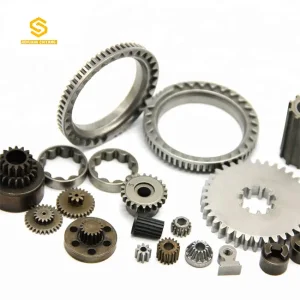
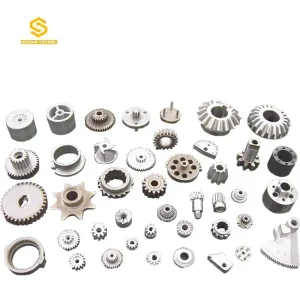
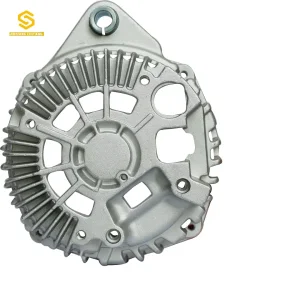
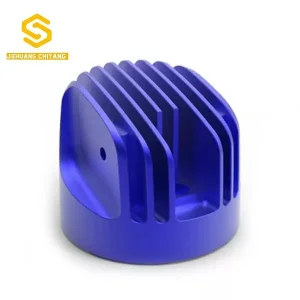
Comprehensive Precision Metallurgy & Custom Casting Catalog
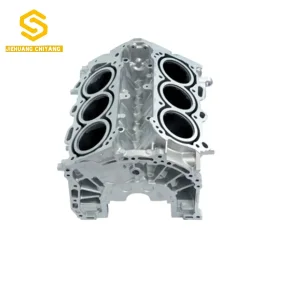
Explore our full engineering capabilities, including die casting, ceramic molding, custom tooling, and high-complexity powder metallurgy for defense, automotive, and industrial suppliers in Sri Lanka.

Ready to Optimize Your Weapon & Precision Defense Supply Chain?
Submit your 2D (PDF) and 3D (STEP) CAD drawings today. Receive an engineer-approved DFM evaluation and transparent wholesale quotation within 48 hours for the Sri Lanka market.
Send Inquiry Now »