
Panama Industry Solutions
Featured OEM Zinc & Multi-Alloy Castings
Engineered specifically for heavy-duty operational demands, tropical salt-mist durability, and precise mechanical tolerances required across Panama's logistics and industrial hubs.
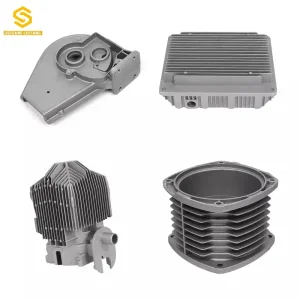
Custom Corrosion-Resistant Zinc & Metal Die Cast Mould Parts for Panama Coastal Enclosures
View Product Details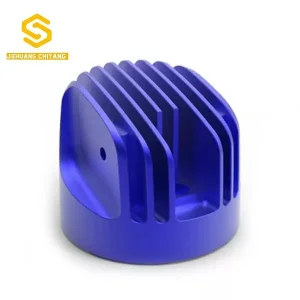
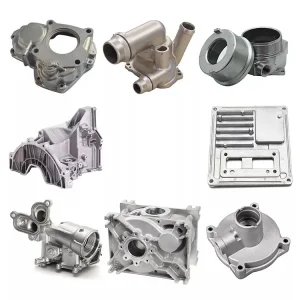
Heavy-Duty Zinc & Aluminum Hardware Fittings for Panama Commercial & Construction Projects
View Product Details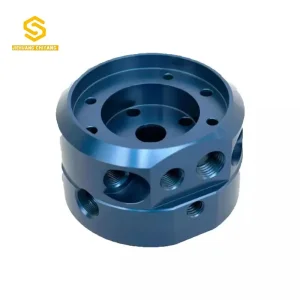
Customized Multi-Alloy (Zinc, Brass, Mg) Die Casting Services for Panama Free Trade Zone OEMs
View Product Details
Panama Industrial Insight
Panama's Commercial & Industrial Die Casting Demand
As the prime logistics crossroads of the Americas, Panama requires specialized metallic hardware capable of enduring high humidity, salt fog exposure, and intensive mechanical duty.
1,000+ Hrs
ASTM B117 Salt Spray Endurance
±0.01 mm
Precision Machining Tolerance
22 Days
Ningbo to Balboa Ocean Route
100%
IATF 16949 / ISO 9001 Audited
Panama's Strategic Market Context & Manufacturing Needs
Panama occupies a unique economic position in Central and South America. Driven by the continuous operational expansion of the Panama Canal, the fast-growing Colón Free Trade Zone (Zona Libre de Colón - ZLC), and major urban infrastructure upgrades across Panama City, the country has evolved from a pure maritime transit zone into a major assembly, logistics, and high-value maintenance ecosystem.
Because Panama experiences a tropical maritime climate characterized by ambient relative humidity frequently exceeding 85% and elevated atmospheric salinity, standard iron and unpassivated aluminum components suffer accelerated oxidation and galvanic corrosion. This creates an enormous demand for **high-grade zinc alloy die castings (Zamak 3, Zamak 5, ZA-8)**, which naturally offer superior fluid tightness, self-healing oxide layers, exceptional castability for ultra-thin wall enclosures, and high impact strength.
Colón Free Trade Zone Logistics
We supply duty-optimized, bulk-packaged OEM zinc parts directly to bonded warehouses in Colón, enabling global re-exporters and local distributors to maintain zero-delay supply lines.
Maritime Salt-Spray Protection
Our zinc castings receive advanced multi-layer surface conversion coatings, chromating, and electroplating, guaranteeing resistance against severe oceanic atmospheric corrosion.
Precision Urban Infrastructure
From modern high-rise glass door hardware in Panama City to electrical smart grid enclosures, zinc die casting provides high structural rigidity with cast-in threads.
Engineering Whitepaper
Metallurgical Physics & Zinc Die Casting Engineering
An in-depth technical comparison of Zamak alloys, hot-chamber casting physics, microstructural integrity, and specialized surface treatments.
1. Alloy Selection Matrix: Zamak 3 vs. Zamak 5 vs. ZA-8
Selecting the optimal zinc alloy requires balancing fluidity, mechanical tensile strength, elongation, and long-term creep resistance under thermal stress. Below is our engineering comparison matrix based on ASTM B86 standard specifications:
| Alloy Designation | Tensile Strength (MPa) | Yield Strength (MPa) | Elongation (% in 50mm) | Hardness (Brinell) | Optimal Panama Application |
|---|---|---|---|---|---|
| Zamak 3 (ANSI Z33520) | 283 MPa | 209 MPa | 10% | 82 HB | Standard enclosures, complex thin-wall electronics, electroplated luxury building hardware. Excellent long-term dimensional stability. |
| Zamak 5 (ANSI Z35531) | 331 MPa | 250 MPa | 7% | 91 HB | Higher tensile strength required for maritime lock mechanisms, industrial pulleys, automotive brackets, and heavy wear components. |
| ZA-8 (Zinc-Aluminum) | 374 MPa | 290 MPa | 6-10% | 100 HB | Structural load-bearing components requiring high creep resistance and superior strength, suitable for cold-chamber casting applications. |
| ZA-12 / ZA-27 | 400-425 MPa | 310-370 MPa | 2-5% | 105-125 HB | Heavy-duty industrial bushings, extreme torque gearboxes, and replacement parts for heavy Panama Canal dredge machinery. |
Information Gain Insight: Unlike aluminum alloys (e.g., ADC12, A380) which require high melting temperatures (~660°C) leading to thermal shock on molds, **zinc alloys melt at approx. 380°C–420°C**. This lower thermal stress extends die mold tooling life up to 1,000,000+ shots (compared to ~100,000 shots for aluminum), drastically reducing amortized tooling costs for OEM buyers in Panama by up to 65% over high-volume production cycles.
2. Hot-Chamber Die Casting Precision & Microstructural Integrity
Our manufacturing facility utilizes advanced automated **gooseneck hot-chamber zinc die casting machines** ranging from 30 to 400 tons of clamping force. In the hot-chamber process, the injection mechanism is submerged directly in liquid molten zinc alloy. This arrangement yields several crucial metallurgical advantages:
- Zero Air Entrapment & Porosity Minimization: Fast injection cycle times (under 100 milliseconds) under hydraulic pressure prevent premature solidification and turbulent gas entrapment.
- Ultra-Thin Wall Capabilities: Fluidity of Zamak allows cast wall thicknesses down to 0.45 mm without cold shuts, minimizing total part weight while maintaining structural ribbing stiffness.
- Direct Precision Threads & Zero Draft Angles: External and internal threads can be cast directly into the part geometry, eliminating secondary CNC tapping operations and cutting production costs.
3. Tropicalization & Surface Finishing Technology
For components deployed along Panama’s Pacific and Atlantic maritime coastlines (e.g., Balboa, Cristóbal, Colón), unfinished metal suffers rapid aesthetic degrade. We implement a rigorous three-stage tropicalization finishing protocol:
- Substrate Ultrasonic Degreasing & Polishing: Automated robotic buffing ensures a flawless mirror surface free of flow lines or micro-blisters.
- E-Coating & Multi-Layer Electroplating: Copper flash layer followed by high-sulfur nickel plating and decorative hard chrome (or PVD vacuum deposition for gold, gunmetal, and matte black finishes).
- Passivation & Nanotech Clear Sealants: Hexavalent-chromium-free (RoHS compliant) trivalent conversion coatings that achieve over 1,000 hours of continuous salt-spray exposure under ASTM B117 testing standards.
Use Cases
Localized Application Scenarios in Panama Industry
How custom zinc castings power key economic sectors across the Isthmus of Panama.
1. Panama Canal & Maritime Port Equipment
Precision container lock mechanisms, marine sensor housings, crane wire pulleys, and shipboard electrical connectors require high ductility and impact absorption under constant humidity.
2. High-End Architectural Hardware
Panama City’s modern real estate boom demands luxurious, electroplated zinc door handles, glass curtain wall brackets, sliding window rollers, and lock cylinders that resist coastal tarnish.
3. Electrical Power & Telecom Networks
Junction boxes, smart electric meter frames, fiber-optic cable connectors, and outdoor transformer hardware benefit from zinc's inherent EMI/RFI shielding effectiveness (up to 80-100 dB).
4. Automotive & Transportation Fleets
Heavy duty logistics fleets operating between Colón and Panama City rely on zinc die-cast fuel system pumps, starter motor brackets, wiper housings, and brake valves for long operational life.
5. Consumer Electronics & Mobile POS Terminals
Financial tech hubs in Panama City integrate micro-precision zinc internal chassis, SIM card trays, hinges, and heat-sink frames providing rigidity and heat dissipation in compact devices.
6. Medical & Hospital Logistics Hardware
Surgical device brackets, hospital bed gears, and fluid control pump bodies require non-porous, smooth surfaces capable of enduring repeated chemical disinfection protocols.
Global Supply Chain Efficiency
China Manufacturing Resilience & Panama Logistics Direct Shipping
Leveraging Ningbo's world-class port infrastructure and industrial manufacturing cluster for rapid delivery into Panama's primary trade gateways.
1. Direct Sea Freight from Ningbo-Zhoushan Port to Balboa & Cristóbal
Our manufacturing complex is strategically situated in Ningbo, Zhejiang Province, home to the world’s largest port by cargo throughput. We maintain established ocean shipping agreements with leading container carriers (COSCO, MAERSK, CMA CGM), offering **direct maritime express routes from Ningbo to Panama (Port of Balboa on the Pacific side, and Port of Cristóbal or Manzanillo International Terminal on the Atlantic side)** in approximately 22 to 26 transit days.
2. DFM (Design for Manufacturability) & Rapid Tooling Lead Times
To keep Panama projects on fast-track development timelines, our senior engineering group provides an engineer-vetted DFM manufacturability evaluation within 24–48 hours of drawing submission (STEP/IGS/PDF format). Key supply chain speed benchmarks include:
- Mold Tooling Fabrication: Completed in 20 to 30 calendar days using high-grade H13 tool steel inserts.
- Prototyping & First Article Samples (FAI): Delivered via DHL/FedEx/UPS express within 3 to 5 business days after trial casting.
- Mass Production Scalability: Capacity to cast over 500,000 zinc units monthly across automated production lines.
3. Colón Free Trade Zone (ZLC) Duty Optimization & Re-Export Packaging
For Panama trading companies re-exporting throughout Central America, Colombia, and the Caribbean basin, we provide custom palletizing, barcode labeling, VCI anti-corrosion polybag wrapping, and bonded warehousing documentation compliant with Panama’s ZLC import/export regulations.
Innovation Roadmap
Technology Roadmap & Sustainable Die Casting
Integrating Industry 4.0 smart factory automation with 100% recyclable green zinc metallurgy.
AI-Powered Thermal Cavity Monitoring
Real-time infrared thermal sensors track die temperature distributions, dynamically adjusting cooling water flow rates to eliminate internal shrinkage voids and cosmetic surface sinks.
Automated Robotic De-gating & Trim Dies
Six-axis robotic arms extract cast runners and process parts through precision hydraulic trim dies, guaranteeing smooth parting lines and eliminating manual labor inconsistencies.
100% Circular Material Recycling
All gating systems, runners, and overflow wells are remelted in-house with zero metallurgical degradation. Zinc’s low melting energy footprint drastically reduces carbon emission metrics per casting.
Full Product Portfolio
Explore Our Complete Zinc & Metal Components Catalog
Browse high-precision die-cast, powder metallurgy, and custom molded parts supplied to industrial buyers in Panama and globally.
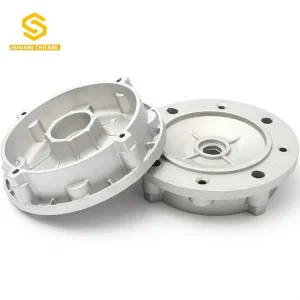
Precision Zinc & Starter Flywheel Die Cast Parts for Panama Fleet Management
View Product Details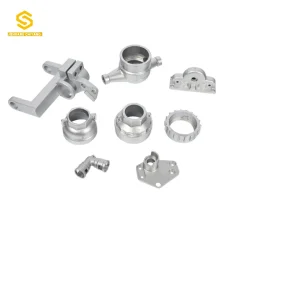
High Precision Zinc Alloy Mould & Die Cast Parts for Panama Telecommunications
View Product Details
OEM Zinc Alloy Marine Lock Hardware for Colón Free Zone Exporters
View Product Details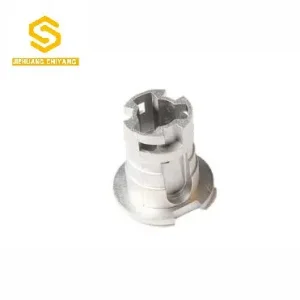
Precision Medical & Device Component Castings for Panama Healthcare Logistics
View Product Details
Micro-Precision Zinc & MIM Electronics Components for Panama Tech Hubs
View Product Details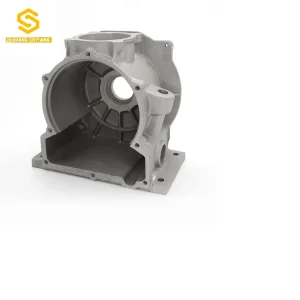
Custom Precision Zinc Hardware Accessories for Panama Power Grid & Utilities
View Product Details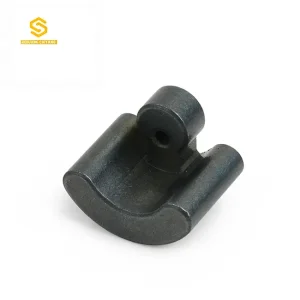
Short Lead-Time Zinc Electronics Accessories for Panama Consumer Goods Distributors
View Product Details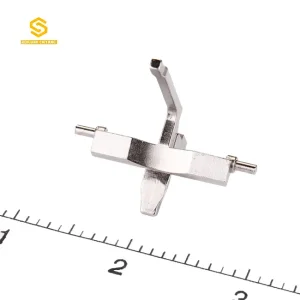
High-Torque Zinc & Powder Metallurgy Gears for Panama Industrial Automation
View Product Details
Frequently Asked Questions
Everything Panama B2B Buyers Need to Know
Clear technical and commercial answers covering engineering support, shipping logistics, custom tooling, and quality assurance.
Tooling design and sample production take approximately 20 to 30 days. Once first-article samples (FAI) are approved, mass production typically takes 15 to 25 days depending on order volume. Direct ocean freight from Ningbo Port to Panama Canal ports (Balboa or Cristóbal) takes 22 to 26 days. For urgent prototype verification, air express (DHL/FedEx) reaches Panama City in 4 to 6 business days.
Zinc alloys (particularly Zamak 3 and Zamak 5) exhibit superior impact strength, fluid tightness, and castability for thin-wall geometry compared to aluminum. Zinc accepts electroplating (chromium, nickel, PVD) far more readily than aluminum, creating an impenetrable barrier against Panama’s high atmospheric humidity and marine salt mist without peeling or galvanic blistering over prolonged exposure.
Yes. We routinely ship to bonded logistics centers in Colón. We handle all required export documentation, packing lists, commercial invoices, and certificates of origin (CO) needed for seamless customs clearance under Panama’s free zone re-export incentives.
Standard casting tolerances follow ISO 2768-m. For critical dimensions, our automated hot-chamber machinery achieves cast tolerances as tight as ±0.03 mm. When post-casting precision CNC finishing is applied, we comfortably hold tolerances down to ±0.01 mm for bearing fits and sealing grooves.
Our standard Minimum Order Quantity for zinc die casting is 2,000 pieces per production run. However, for initial trial orders, prototyping verification, or strategic high-value OEM projects, we offer flexible pilot quantities upon technical evaluation of the part drawing.
Absolute client confidentiality is guaranteed. We execute standard legally binding Non-Disclosure Agreements (NDAs) prior to receiving your 2D/3D engineering drawings. All files remain strictly protected under our internal encrypted access protocol.
We operate strictly under ISO 9001:2015 and IATF 16949 quality management systems. Every raw zinc ingot batch undergoes optical emission spectrometer analysis to guarantee exact Zamak chemical composition. Finished components are verified via CMM dimensional inspection, X-ray porosity scanning, and ASTM B117 salt-spray corrosion chamber testing before shipment release.
We accept 3D vector models in STEP (.stp), IGES (.igs), SolidWorks (.sldprt), and Parasolid (.x_t) formats, accompanied by a 2D PDF drawing detailing critical tolerances, material alloy grades, and surface finishing specifications.
Accelerate Your Panama Engineering Projects Today
Send your 2D/3D CAD drawings to receive a comprehensive DFM review, mold design analysis, and transparent quotation within 48 hours.
Send Inquiry Now