
Engineered Precision: Featured Zinc Die-Cast Solutions
High-density custom zinc and aluminum castings compliant with European EN 12844 standards, optimized for Austrian mechatronics, automotive, and hardware technology sectors.

High Precision Custom Die Cast Products Zinc Alloy & Aluminum Castings for Austrian Automotive OEMs
Explore Specifications
Custom Metal Brass & Zinc Die Casting Mould Parts with Anodizing Finishing for Linz Industrial Machinery
Explore Specifications
OEM Hardware Mold Injection Metal & Zinc Die Casting Components for Vorarlberg Architectural Systems
Explore Specifications
Multi-Alloy Aluminum, Zinc, Brass & Magnesium Die Casting Services for Austrian Smart Sensor Housings
Explore SpecificationsThe Austrian Industrial Landscape: Demand for Precision Zinc Engineering
Analyzing the mechatronics, automotive, and high-end hardware manufacturing hubs across Austria and why world-class zinc die casting provides a competitive edge.
Automotive & Mobility Clusters (ACStyria & Upper Austria)
Austria’s automotive ecosystem around Graz (Styria) and Upper Austria represents one of Europe's most sophisticated Tier-1 and Tier-2 supply networks. With the industry accelerating toward electric powertrains, smart sensor integrations, and lightweight structural nodes, there is an unprecedented demand for complex zinc components (such as Zamak 3 and Zamak 5). Zinc’s superior fluid castability allows wall thicknesses down to 0.45 mm while maintaining mechanical rigidity and EMI/RFI shielding effectiveness vital for modern EV control modules.
Vorarlberg Hardware & Linz Mechanical Engineering
Regionally centered in Vorarlberg, Austria is globally renowned for architectural hardware, luxury door fittings, concealed hinge systems, and smart furniture mechanisms. Concurrently, Linz serves as a heartland for heavy industrial machinery, fluid power equipment, and automated robotics. These sectors mandate components with extraordinary cosmetic surface finish, sub-micron dimensional stability across thermal cycles, and flawless threads. Zinc die casting inherently outpaces aluminum and plastics by eliminating post-machining operations for complex internal geometry.
Navigating Austria's Strict Environmental & Quality Directives
Austrian manufacturers operate under stringent European Union environmental standardizations, including the EU Green Deal regulations, REACH, RoHS, and the Carbon Border Adjustment Mechanism (CBAM). When sourcing metallic components overseas, Austrian buyers demand verified supply chains with detailed Material Safety Data Sheets (MSDS), material spectrographic reports, and CO2 footprint documentation.
Our zinc die casting manufacturing plant integrates energy-efficient electric hot-chamber melting pots, zero-emission closed-loop cooling systems, and full material traceability. By pairing high-speed, automated hot-chamber die casting machines with advanced DFM (Design for Manufacturability) protocols, we help Austrian enterprises reduce raw material wastage by up to 35% compared to conventional CNC subtractive manufacturing while ensuring 100% compliance with Austrian industrial quality norms.
Global Zinc Die Casting Trends & Material Innovations
Why modern Zamak alloys are outperforming aluminum, brass, and engineering plastics in high-density, high-cycle precision applications worldwide.
Advanced Zamak Alloy Selection
Choosing the correct alloy dictates yield strength, impact resistance, and thermal conductivity. We specialize in standardized European zinc alloys including Zamak 3 (ZL0400) for excellent dimensional balance, Zamak 5 (ZL0410) for higher tensile strength and hardness required in mechanical gears, and ZA-8 / ZA-12 for extreme wear resistance in heavy-load bushings.
Cost Efficiency vs. Machining
In high-volume manufacturing, CNC machining incurs high cycle times and tool wear costs. Zinc die casting achieves net-shape or near-net-shape geometry directly out of the mold. Die life for hot-chamber zinc casting frequently exceeds 1,000,000 to 2,000,000 shots—over 4 to 5 times longer than aluminum die-casting tooling life, drastically reducing per-part tooling amortization for long-term projects.
100% Recyclability & Circular Economy
Zinc alloys boast a melting temperature of roughly 380°C to 420°C—significantly lower than aluminum (~660°C). This translates into a 40-50% reduction in thermal energy consumption during processing. Furthermore, 100% of internal runners, overflows, and rejected sprues can be directly re-melted and reused without degrading chemical composition, perfectly aligning with EU circular economy frameworks.
Technical Engineering Roadmap: From Drawing to Mass Production
Our standardized hot-chamber die casting roadmap engineered specifically to satisfy strict DACH-region technical specifications.
1. Automated DFM Analysis & Moldflow Simulation
Every engineering drawing (STEP/IGES/PDF) submitted by our Austrian clients undergoes a rigorous Design for Manufacturability (DFM) check by senior tooling architects. Utilizing MAGMASOFT® and Moldflow simulation software, we analyze:
- Thermal Gradient Equilibrium: Preventing hot spots and internal shrinkage porosity.
- Gating & Runner Optimization: Ensuring laminar metal fluid flow to eliminate gas entrapment.
- Draft Angle Optimization: Reducing draft angles down to 0.5° where tight spatial fitting is mandatory.
- Ejection Pin Layout: Placing ejector pins outside cosmetic and functional sealing surfaces.
2. Precision Hot-Chamber Injection Technology
We operate fully automated hot-chamber zinc die casting units ranging from 30 tons to 400 tons clamping force. The gooseneck mechanism submerged in molten zinc enables cycle speeds up to 1,000 shots per hour for smaller components, maintaining identical shot-to-shot density and microstructural integrity.
3. Secondary Precision CNC Machining & Tapping
While zinc casting provides extraordinary near-net shapes, features such as H7 tolerance bearing bores, fine pitch internal threads, or optical flat sealing surfaces are post-processed on 4-axis and 5-axis Brother® CNC machining centers. Multi-spindle automated tapping systems handle thread sizes down to M1.6 with high repeatability.
4. Advanced Surface Finishing & Corrosion Protection
To resist harsh outdoor operational environments in Central Europe, we provide specialized surface treatments:
- Electroplating: Bright Chrome, Satin Nickel, Matte Black Chrome, Gold, and Copper plating.
- Powder Coating & E-Coating: High-adhesion epoxy and polyurethane finishes passing 500+ hours neutral salt spray testing (ISO 9227 / ASTM B117).
- Passivation & Chromate Coating: RoHS-compliant trivalent chromium conversion coatings for corrosion protection without altering critical dimensions.
Localized Application Scenarios across Austrian Industry Segments
Tailored manufacturing strategies addressing specific operational challenges in key Austrian commercial hubs.
Automotive Actuators & E-Mobility Housings (Graz Sector)
For Austrian Tier-1 suppliers supplying power seats, electronic throttle control bodies, and EV battery management sensors, our Zamak 5 die castings offer exceptional mechanical damping and thermal conductivity. Vacuum-assisted die casting prevents subsurface gas bubbles, allowing zero-leakage performance under high vibration and temperature swings (-40°C to +125°C).
Smart Building Architecture & Security Hardware (Vorarlberg Sector)
Precision door locks, electronic access control bezels, and luxury window fittings produced in Vorarlberg demand high tactile weight, metallic feel, and flawless cosmetic plating. Zinc's heavy specific gravity (6.6 g/cm³) mimics solid brass at a fraction of the raw material cost. We supply pre-assembled zinc lock bodies tested for over 500,000 mechanical actuation cycles.
Industrial Pneumatics & Hydraulics (Linz / Wels Sector)
Pneumatic valve blocks, manifold plates, and pressure regulator caps require smooth internal flow channels without flash or burrs. By utilizing multi-slide die casting technology, we cast intricate cross-drilled internal channels directly without secondary drilling, providing tight sealing faces capable of holding up to 16 bar fluid pressure.
Medical Diagnostic Equipment & Laboratory Instrumentation (Vienna Sector)
Medical instruments produced in the Vienna biotech corridor require biocompatible, easy-to-sterilize surfaces with tight electromagnetic compatibility (EMC). Zinc die castings act as natural EMI shields, protecting delicate microcontrollers from high-frequency interference without requiring secondary conductive spray coatings.
Manufacturing Technology Decision Matrix
Comparing Zinc Die Casting against Aluminum Die Casting, MIM (Metal Injection Molding), and 5-Axis CNC Machining for procurement evaluations.
| Evaluation Parameter | Zinc Die Casting (Zamak 3 / 5) | Aluminum Die Casting (A380 / ADC12) | Metal Injection Molding (MIM) | 5-Axis CNC Machining |
|---|---|---|---|---|
| Min. Wall Thickness | 0.40 - 0.50 mm | 1.20 - 1.50 mm | 0.50 - 1.00 mm | 0.80 - 1.00 mm |
| Dimensional Tolerance | ±0.015 mm / CT3 | ±0.05 mm / CT4 | ±0.03 mm | ±0.005 mm |
| Tool Life Expectancy | 1,000,000 - 2,000,000 shots | 100,000 - 150,000 shots | 300,000 - 500,000 shots | N/A (No tooling mold) |
| Draft Angle Requirement | 0.5° - 1° | 2° - 3° | 0.5° - 1° | 0° (Straight cut) |
| Plating & Finishing Quality | Exceptional (Mirror Chrome) | Moderate (Porous surface) | Good | Excellent |
| Economic Order Quantity | > 2,000 pcs | > 2,000 pcs | > 2,000 pcs | 1 - 500 pcs (High volume costly) |
Quality Management Systems & Direct Delivery Corridors to Austria
Rigorous testing, full PPAP documentation, and streamlined freight routes directly from Ningbo Port to Austrian industrial hubs.
Advanced Metrology Laboratory
Our quality control center is equipped with Zeiss® 3D Coordinate Measuring Machines (CMM), optical vision measuring projectors, X-ray non-destructive porosity scanners, and spectrographic material analyzers. Every batch shipped to Austria includes full inspection reports, Cpk capability studies (>1.67), and raw material melt certs.
PPAP Level 3 & VDA 6.3 Compliance
For Austrian automotive and industrial buyers requiring strict approval protocols, we provide full Production Part Approval Process (PPAP Level 3) packages, including Process Failure Mode and Effects Analysis (PFMEA), Control Plans, Gage R&R studies, and initial sample inspection reports (ISIR).
Optimized Logistics to Central Europe
Situated in Ningbo, China—home to the world's largest container port—we provide seamless logistical routing to Austria. Sea freight transit options link directly to Port of Koper (Slovenia), Port of Rotterdam, or Port of Hamburg, combined with ÖBB Rail Cargo connection directly into hubs across Vienna, Linz, Graz, and Innsbruck with DDP/DAP terms.
Comprehensive OEM Manufacturing Portfolio
Explore our complete range of custom metal components, powder metallurgy parts, die castings, and precision gear solutions built for European industrial standards.

Precision Casting Starter Aluminum & Zinc Die-Cast Pulleys & Flywheels for Upper Austria Drive Systems
Explore Specifications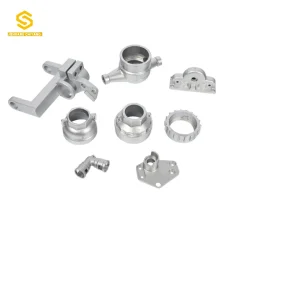
Customized High Precision Aluminium & Zinc Alloy Die-Casting Molds & Components for Graz Assemblies
Explore Specifications
Rapid Delivery Custom Stainless Steel & Zinc Metal Work Casting Parts for Austrian Supply Chains
Explore Specifications
High Precision CNC Powder Metallurgy Machining Gear Parts for Austrian Robotics & Automation
Explore Specifications
Electromechanical & Power Tool Iron-Based Powder Metallurgy Components for Austrian Industry
Explore Specifications
Zinc & Aluminum Alloy Auto Part Castings Engineered for Austrian Tier-1 Vehicle Manufacturers
Explore Specifications
Top Grade Zinc & Aluminum Die-Cast Housing & Structural Parts for Vienna Electronic Equipment
Explore Specifications
Precision Aluminium & Zinc Alloy Die Casting with CNC Machining Finishing for Austrian Buyers
Explore SpecificationsFrequently Asked Questions (FAQ) for Procurement & Engineering Teams
Addressing essential technical, logistical, quality, and compliance questions regarding sourcing zinc die castings for Austria.
What are the primary differences between Zamak 3 and Zamak 5 for Austrian machinery applications?
Zamak 3 is the industry standard zinc alloy in Europe, offering an optimal balance of mechanical properties, excellent castability, and superior dimensional stability. Zamak 5 contains approximately 1% copper addition, which increases tensile strength (up to 330 MPa) and hardness while slightly reducing ductility. Zamak 5 is typically specified by Austrian machinery engineers for gear components, high-torque levers, and structural lock housings requiring extra load-bearing capacity.
How do you guarantee compliance with EU RoHS, REACH, and CBAM directives?
All primary zinc ingots utilized in our foundry are certified high-purity Grade Z1 (99.995% pure zinc). We issue full material safety data sheets (MSDS) and RoHS/REACH compliance declarations with every shipment. For CBAM (Carbon Border Adjustment Mechanism) reporting, we track and report embedded emissions associated with energy consumption during melting, casting, and finishing operations, ensuring Austrian importers remain 100% compliant with EU customs regulations.
Can you protect our intellectual property and sign an NDA under Austrian legal jurisdiction?
Yes. We routinely execute Non-Disclosure Agreements (NDAs) with European OEMs prior to inspecting 2D CAD files or STEP models. All project files, tooling designs, and proprietary drawings are handled under strict encrypted internal access controls. We respect intellectual property rights and work with several global Fortune 500 automotive and industrial clients.
What dimensional tolerances can be reliably maintained in production?
For standard hot-chamber zinc die casting, we maintain ISO 8062 CT3 to CT4 tolerances directly off the mold. For critical features, precision machining allows tolerances down to ±0.010 mm (10 microns). Fine pitch internal threads (e.g., M2, M3) can be directly cast or high-speed tapped according to ISO metric thread standards 6H fit.
What is the typical lead time for mold manufacturing, FAI samples, and mass production?
Custom zinc die-casting tooling development typically takes 25 to 35 calendar days. First Article Inspection (FAI) sample parts are delivered immediately following trial shots via express air courier (DHL/FedEx) along with a 3D CMM inspection report. Upon FAI approval, mass production lead time is usually 3 to 4 weeks depending on order volume and required surface finishes.
What surface finishing options are recommended for high-end door hardware and architectural fittings?
For Vorarlberg and Austrian architectural clients, we offer mirror-polished electroplated Bright Chrome, Pearl Satin Nickel, Matte Black PVD, and electrophoretic coating (E-coat). Because zinc provides an extraordinarily smooth as-cast micro-surface, it serves as the ultimate substrate for mirror-like electroplating without pinhole defects or orange-peel textures common in aluminum.
What is your minimum order quantity (MOQ) for zinc die casting orders?
Our standard production Minimum Order Quantity (MOQ) is 2,000 pieces per batch. For complex multi-cavity tooling or high-value sub-assemblies, lower pilot quantities can be accommodated during initial product launch phases.
How do you manage freight delivery directly to locations in Austria like Graz, Linz, or Vienna?
We provide comprehensive Incoterms including FOB Ningbo, CIF Koper/Rotterdam, and full DDP (Delivered Duty Paid) directly to your factory door in Austria. Under DDP terms, our logistics partners manage all customs import filings, duties, and inland trucking via ÖBB Rail or European road freight networks, delivering directly to your warehouse seamless and hassle-free.
Accelerate Your Project with European-Spec Zinc Die Casting
Send us your 2D/3D CAD drawings (STEP, IGES, PDF) today. Receive a comprehensive DFM manufacturability evaluation and transparent tooling quote within 24–48 hours.