
Featured Precision Components & Custom Manufacturing Options
Explore our premier engineering solutions for advanced thermo-sensory isolation, custom sinter-molded hardware, and high-temperature protection sleeves engineered for maximum operational longevity.
1. Executive Technical Overview & Material Science Breakdown
In modern heavy industries, accurate temperature telemetry under corrosive, erosive, and ultra-high-temperature conditions dictates operational efficiency and product yield. Ceramic thermocouple protection tubes serve as the critical primary barrier safeguarding precious metal thermal elements (such as Type R, S, and B thermocouples) from aggressive chemical vapors, molten metal slag, and intense thermal degradation.
As premier China ceramic thermocouple protection tube suppliers and factories, our facilities leverage advanced material formulations to satisfy diverse industrial requirements ranging from continuous steel casting to semiconductor thermal processing. Selecting the optimum refractory ceramic matrix requires balancing thermal shock resistance, gas impermeability, flexural strength, and chemical inertness.
High-Purity Alumina (C799 / C610)
Ranging from 99.7% pure $\text{Al}_2\text{O}_3$ (KER 710 / C799) to 60-96% Mullite-Alumina blends (C610), high-purity alumina offers exceptional mechanical strength and continuous temperature limits up to 1800°C. C799 features zero open porosity, preventing platinum element contamination by volatile gases in reducing or vacuum kilns.
Silicon Carbide Composites (RSiC / NSiC / SiSiC)
Silicon Carbide protection tubes—including Recrystallized (RSiC), Nitride-Bonded (NSiC), and Reaction-Bonded (SiSiC)—deliver unexcelled thermal shock immunity and high thermal conductivity ($>45\ \text{W/m}\cdot\text{K}$). They are ideal for molten non-ferrous dip measurement (aluminum, copper, zinc) up to 1650°C.
Zirconia & ZTA (YSZ / Mg-PSZ)
Yttria-Stabilized Zirconia ($\text{ZrO}_2$) and Zirconia-Toughened Alumina (ZTA) excel in environments requiring extreme fracture toughness and resistance to molten slag abrasion. With melting thresholds exceeding 2400°C, stabilized zirconia protection tubes handle extreme thermal cycling.
Material Property Benchmark & Engineering Comparison Matrix
| Ceramic Grade | Purity / Composition | Max Temp (°C) | Thermal Shock Resistance | Thermal Conductivity ($\text{W/m}\cdot\text{K}$) | Impermeability (Porosity) | Primary Industrial Application |
|---|---|---|---|---|---|---|
| Alumina C799 | 99.7% $\text{Al}_2\text{O}_3$ | 1800°C | Moderate | 25 – 30 | Impermeable (0%) | Noble Metal (Pt/Rh) Sensor Protection |
| Alumina C610 | 60% $\text{Al}_2\text{O}_3$ (Mullite) | 1500°C | High | 4 – 6 | Impermeable (<0.5%) | Industrial Kilns, Heat Treatment Furnaces |
| NSiC (Nitride SiC) | SiC + $\text{Si}_3\text{N}_4$ Binder | 1550°C | Exceptional | 45 – 50 | Slightly Porous (<8%) | Molten Aluminum & Non-Ferrous Foundries |
| RSiC (Recrystallized) | 99% $\text{SiC}$ | 1650°C | Extreme | 60 – 100 | Porous (15-20%) | Rapid Thermal Cycling, Ceramic Kiln Cars |
| YSZ Zirconia | 95% $\text{ZrO}_2$ + 5% $\text{Y}_2\text{O}_3$ | 2200°C | Very High | 2 – 3 | Impermeable (0%) | Molten Steel Dip Pyrometry, Glass Melters |
2. Global Trends in Ceramic Thermocouple Protection Technology
The global transition toward decarbonized pyrometry, hydrogen-fired continuous furnaces, and automated smart melting systems has altered the structural demands placed on thermal sensor protection assemblies.
Non-Oxide Ceramic Nanocomposites & Layered Coatings
Traditional single-phase ceramics often face a trade-off between gas impermeability and thermal shock survival. Leading Chinese factories are pioneering non-oxide nanocomposites (e.g., $\text{Si}_3\text{N}_4$-$\text{MoSi}_2$ and $\text{BN}$-$\text{TiB}_2$ multiphase ceramics) along with thermal barrier plasma-sprayed coatings. These engineered structures exhibit low thermal expansion coefficients while forming self-healing oxide films that resist chemical attack in sulfurous or carbon-rich gas atmospheres.
IoT Integrated Smart Pyrometry Assemblies
As Industry 4.0 transforms glass and metallurgical processing, thermocouple protection tubes are increasingly paired with integrated acoustic and fiber-optic degradation sensors. By monitoring stress acoustic waves and thermal conductivity drift within the ceramic sheath wall, industrial operators can predict tube micro-cracking and prevent catastrophic sensor destruction before molten metal ingress occurs.
3. Global Procurement Criteria for B2B Enterprise Buyers
Procurement managers and thermal systems engineers from North America, Europe, and the Asia-Pacific region demand high product reliability and strict compliance when sourcing ceramic protection sleeves from OEM Chinese suppliers.
Geometrical Precision & Straightness
For long protection tubes (exceeding 1000mm to 1500mm in length), controlling camber and wall uniformity is vital. Leading Chinese manufacturers use precision vertical sintering to maintain straightness tolerances within $\le 1.5\ \text{mm per meter}$, ensuring smooth installation inside narrow thermowell flanges.
Traceability & ASTM/ISO Compliance
Enterprise buyers mandate strict chemical batch analysis via ICP-OES and X-ray Fluorescence (XRF) to confirm alumina purity ($>99.7\%$). Deliverables must align with ISO 9001:2015, DIN EN 60584 pyrometry guidelines, and ASTM E220 calibration protocols to prevent sensor signal drift.
End-Closure Quality & Leak Integrity
A frequent failure mode in closed-one-end (COE) tubes is micro-porosity or localized stress fractures at the domed end. Quality-driven suppliers implement 100% helium mass-spectrometer leak testing to verify absolute gas tightness at operating pressures up to 10 bar.
4. China Industry 4.0: Manufacturing Efficiency & Supply Chain Resilience
China’s advanced technical ceramics manufacturing hubs (located across Zhejiang, Jiangsu, and Hunan provinces) have modernized through automation, clean energy integration, and sophisticated forming processes.
Cold Isostatic Pressing (CIP) vs Slip Casting
Modern Chinese factories utilize multi-axis automated Cold Isostatic Pressing (operating at hydrostatic pressures up to $200\ \text{MPa}$). CIP produces high-density green bodies with uniform structural grain orientation, eliminating structural voids common in traditional wet slip-casting methods. This results in superior flexural strength and uniform thermal expansion.
Continuous High-Temperature Tunnel Kilns
Equipped with computerized micro-zone temperature controllers and oxygen-ratio monitoring, Chinese continuous sintering kilns maintain consistent firing temperatures up to $1850^\circ\text{C}$. This controlled environment prevents abnormal grain growth and optimizes density across production batches.
5. Field-Proven Industrial Applications & Case Studies
Ceramic protection tubes operate at the heart of harsh processing environments. Below are documented application environments where ceramic formulations outperform metallic thermowells.
Non-Ferrous Molten Metals
Environment: Continuous aluminum degassing and brass holding furnaces at 750°C - 1050°C.
Recommended Material: Nitride-Bonded Silicon Carbide (NSiC) or Syalon Ceramic.
Performance Insight: Resists dross accumulation, thermal shock during immersion, and chemical attack by molten aluminum alloys.
Glass Melting Furnaces
Environment: Glass tank crowns and regenerators at 1550°C - 1650°C with volatile alkali vapors.
Recommended Material: High-Purity Alumina C799 (99.7%).
Performance Insight: Zero open porosity prevents sodium/potassium vapor penetration, safeguarding Type R/S thermocouples from embrittlement.
Semiconductor Single-Crystal Growth
Environment: Czochralski (CZ) silicon pulling and Epitaxial CVD reactors.
Recommended Material: Ultra-High Purity Alumina or Synthetic Quartz.
Performance Insight: Minimizes trace element contamination ($\text{Fe}, \text{Na}, \text{Cr} < 5\ \text{ppm}$), meeting strict semiconductor purity guidelines.
6. Engineering Selection Protocol & Troubleshooting Guidelines
Selecting the ideal ceramic protective sheath requires evaluating operating atmosphere, thermal change rates, mechanical stress, and assembly orientation.
Systematic Selection Steps
- Determine Peak & Operating Temperatures: Select Alumina C799 for up to 1800°C; choose Silicon Carbide for thermal cycling up to 1600°C.
- Evaluate Gas Exposure: Use gas-impermeable C799 or Zirconia to prevent elemental degradation when using noble metal thermocouples (Pt/Rh).
- Assess Thermal Cycling Speeds: If insertion ramp speeds exceed $50^\circ\text{C/min}$, select porous Silicon Carbide (RSiC) or Mullite (C610) over pure Alumina to prevent thermal shock failure.
- Mounting Alignment: For horizontal spans over 800mm at high heat, add external support sleeves to prevent high-temperature creep sag.
Preventing Premature Tube Failure
- Preheating Requirement: Always preheat ceramic protection tubes to 150°C–200°C before inserting them into hot furnaces to flash off moisture and reduce thermal shock.
- Avoid Cold Draft Exposure: Ensure furnace exit ports are sealed to prevent cold air drafts from striking hot ceramic tubes and creating thermal fractures.
- Eliminate Mechanical Stress: Use flexible mounting glands rather than rigid clamps to accommodate normal thermal expansion along the length of the tube.
7. Frequently Asked Questions (FAQ) for B2B Engineering Buyers
Common technical and commercial questions answered by our engineering and export team.
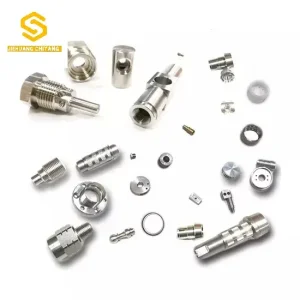
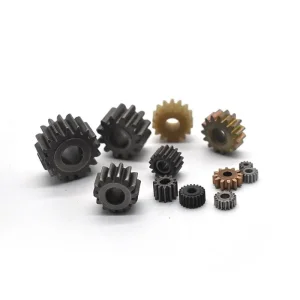
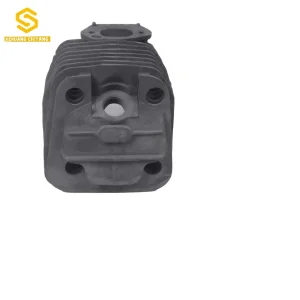
Related Advanced Industrial Components & Sintered OEM Catalog
Discover additional precision components, metal injection molded assemblies, and die-cast structural components engineered by our industrial partners.
Request Technical Engineering Consultation & Bulk Quotes
Submit your detailed CAD models, material specifications (C799, C610, NSiC, YSZ), or operational temperature requirements. Our ceramic engineering team provides full DFM reviews and detailed quotations within 24–48 hours.