
Featured Precision Components & Assembly Solutions
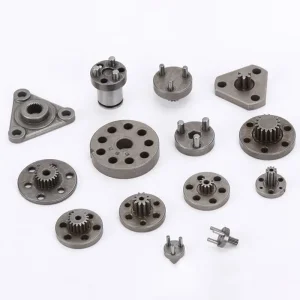
Explore our core OEM precision metal components, sintered gears, structural die castings, and custom metal injection molding parts engineered for high-stress electronics and mechanical applications.
Executive Technical Overview: The Evolution of Consumer Electronics Hinges
The global consumer electronics market is experiencing a profound architectural shift. Driven by the proliferation of foldable OLED smartphones, ultra-thin convertible laptops, dual-screen tablets, smart wearables, and spatial computing AR/VR headsets, the demand for high-density, sub-millimeter precision hinges has reached unprecedented heights. Finding a qualified China Consumer Electronics Hinges Supplier & Suppliers is no longer merely a procurement exercise—it is a core engineering partnership that dictates product yield, dynamic tactile feel, structural integrity, and long-term fatigue life.
Historically, mechanical hinges relied on traditional multi-piece stamped sheet metal, wire EDM, or subtractive CNC machining. However, as form factors shrink and screen bending radii decrease to below 1.5mm (enabling zero-gap folding), legacy manufacturing techniques encounter severe limitations in tolerance stack-up, material strength, and volumetric efficiency. Modern consumer electronics hinges now demand complex three-dimensional micro-geometries, multi-link synchronization gear systems, dual-cam friction modules, and ultra-high-strength metallurgy.
China has established itself as the undisputed epicenter for micro-precision mechanical component engineering. By fusing advanced Metal Injection Molding (MIM), Liquid Metal (Amorphous Alloys), micro-powder sintering, and automated CMM inspection, Chinese tier-1 suppliers deliver multi-axis hinge assemblies that maintain tight torque stability (±0.05 N·m over 100,000 cycles) while significantly scaling production throughput.
Technology Roadmap & Future Outlook for Hinge Mechanisms
As next-generation electronic devices demand seamlessly integrated mechanical interfaces, hinge engineering is evolving rapidly across four critical vectors: material powder metallurgy, kinematic architecture, surface tribology, and miniaturization.
1. Titanium MIM & Amorphous Alloys
Transitioning from traditional SUS630 (17-4PH) stainless steel to Grade 5 Titanium MIM (Ti-6Al-4V) and Zr-based Liquid Metal (Amorphous Alloys). This transition yields a 40% reduction in hinge module mass while boosting yield stress beyond 1,100 MPa, essential for zero-crease foldable phone displays.
2. Waterdrop Zero-Gap Mechanisms
Kinematic micro-gear trains featuring teardrop sliding plates. These structures disperse display bending stress over a broader trajectory, eliminating display panel crease marks while achieving ultra-slim folded device profiles (< 9.8mm overall phone thickness).
3. Dual-Friction Cam Torque Control
Integrating micro-powder sintered friction cams coated with Diamond-Like Carbon (DLC) or PVD titanium nitride. This design ensures consistent free-stop hover capabilities across 0° to 180° fold angles without thermal expansion hysteresis.
Macro Industry Solutions & Application Sectors
Precision hinges are critical mechanical nodes governing user experience and structural integrity across multiple hardware categories. A specialized China Consumer Electronics Hinges Supplier provides custom-engineered architectures tailored to targeted mechanical stress profiles:
Foldable Smartphones & Dual-Screen Tablets
Foldable phone hinges represent the pinnacle of micro-mechanical complexity, containing between 70 to 130 discrete MIM-fabricated components per assembly. Our factory produces synchronized micro-gears, support plates, and link arms using 17-4PH, 4605 low-alloy steel, and Titanium MIM. Key requirements include:
- Zero-backlash gear meshing with tolerances within ±0.008mm.
- Integrated dust-proof sealing grooves and smooth continuous torque.
- Withstanding 200,000+ fold-unfold cycles under severe climatic conditions (-20°C to 65°C).
Ultra-Thin Laptops & 360° Convertible Notebooks
Laptops require stable friction torque, smooth single-hand opening, and 360-degree flip versatility. We leverage high-density powder metallurgy (PM) friction discs combined with precision zinc/aluminum die-cast housings to deliver:
- Constant-torque retention over 35,000 continuous opening cycles.
- Integrated cable-routing channels to protect high-speed display flex cables.
- Lightweight aluminum die casting structural brackets with anodized finishing.
Smart Wearables, AR/VR Headsets & Hearables
Next-generation spatial computing headsets and smart eyewear require ultra-compact, high-strength positioning hinges for adjustable temple arms and optical IPD (interpupillary distance) modules:
- Sub-miniature MIM stainless steel hinges weighing less than 1.2 grams.
- Biocompatible materials (316L, Ti-MIM) resistant to synthetic sweat and corrosion.
- Tactile click detent positioning for customized user ergonomics.
Medical Electronics & Portable Diagnostics
Handheld surgical monitors, point-of-care ultrasonic scanners, and ruggedized industrial tablets demand sealed, heavy-duty positioning hinges:
- Passivated 316L MIM components supporting aggressive chemical sterilization.
- High damping torque capable of supporting heavy display heads without drift.
- Full compliance with medical device biocompatibility guidelines.
China Industry 4.0: Supply Chain Resilience & Efficiency Advantages
Global original equipment manufacturers (OEMs) and brand owners choose a China Consumer Electronics Hinges Supplier not only for cost efficiency, but for unparalleled industrial cluster dynamics, rapid tooling agility, and massive production scalability centered around manufacturing hubs like Ningbo and the Yangtze River Delta.
Cost Performance & Material Efficiency
MIM and powder metallurgy technology achieves near-net-shape geometry with over 95% raw material utilization. Compared to Western CNC machining facilities, unit piece costs are reduced by 30% to 50%, while mold tool development cycles are shortened to just 25–35 days.
Automated MIM & Sintering Lines
Equipped with continuous debinding furnaces, high-vacuum sintering units, continuous atmosphere control, and robotic arm automation. This setup guarantees homogeneous metallurgical grain structures and consistent density (>98% relative density).
End-to-End Vertical Integration
From initial DFM (Design for Manufacturability) mold simulation and feedstock blending to CNC post-machining, PVD/electroplating, automated gear assembly, and 100% optical inspection under one roof.
Quality Assurance, Compliance & Global Enterprise Support
Entering tier-1 global supply chains requires strict adherence to international quality management protocols, environmental directives, and intellectual property protections. Our manufacturing framework ensures seamless global procurement audit readiness:
Strict Quality Governance & Certifications
Operating under certified IATF 16949 (automotive grade) and ISO 9001 quality management systems. Every micro-gear and hinge component undergoes strict statistical process control (SPC):
- 3D Coordinate Measuring Machine (CMM) dimensional verification.
- Laser optical profile scanning for tooth root accuracy.
- Automated torque-angle hysteresis recording and 100% key-dimension sorting.
Environmental & Regulatory Compliance
Full compliance with international environmental standards and supply chain transparency guidelines:
- RoHS 3.0 & REACH SVHC: Heavy-metal-free, hazardous substance restricted materials.
- Conflict-Free Minerals (3TG): Audited tin, tantalum, tungsten, and gold supply chains.
- Non-Disclosure Agreement (NDA) IP protection protocols safeguarding proprietary client CAD models.
Technical Selection Matrix: Manufacturing Processes for Consumer Electronics Hinges
Selecting the optimal engineering route for micro-hinge components depends on part complexity, volume, material density, and mechanical tolerance targets. The matrix below compares primary manufacturing technologies:
| Process Parameter | Metal Injection Molding (MIM) | Amorphous Liquid Metal | CNC Micro-Machining | Sheet Metal Stamping |
|---|---|---|---|---|
| Geometric Complexity | Very High (3D Undercuts/Gears) | Very High (Near-Net-Shape) | Medium to High (Tool Limited) | Low to Medium (2.5D Formed) |
| Dimensional Tolerance | ±0.3% to ±0.01mm (Post-CNC) | ±0.1% to ±0.005mm | ±0.005mm | ±0.05mm |
| Material Choices | 17-4PH, 316L, Ti-Alloys, Fe-Ni | Zr-based / Cu-based Alloys | Aluminum, Brass, SUS | SUS301, Spring Steel |
| Tensile Yield Strength | High (> 1100 MPa for 17-4PH) | Ultra-High (> 1500 MPa) | Medium to High | High (Work Hardened) |
| Tooling Cost & Lead Time | Moderate ($3k-$12k / 30 Days) | High ($10k-$25k / 40 Days) | Zero Tooling (Fixtures only) | Moderate ($4k-$15k / 25 Days) |
| Mass Production Unit Cost | Lowest at Scale (>2,000 pcs) | Moderate to High | High (Machine Time Driven) | Low (Simple Geometries) |
5-Step OEM Engineering Workflow from Drawing to Mass Delivery
We streamline international procurement through a transparent, engineer-led project lifecycle designed to accelerate Time-to-Market (TTM):
DFM & CAD Review
Receiving 2D/3D STEP files, conducting shrinkage simulation, draft angle analysis, and parting line placement within 24 hours.
Transparent RFQ
Itemized breakdown of mold tooling costs, per-piece unit price, surface plating options, and batch MOQ tiers returned within 48 hours.
Tooling & Prototyping
In-house mold building, metal 3D printing or soft tooling prototype samples dispatched for mechanical fit verification within 15–20 days.
Pilot Production & FAI
First Article Inspection (FAI) report complete with full CMM dimensioning, salt spray anti-corrosion test, and torque curve charts.
Mass Volume Assembly
Continuous debinding/sintering, automated gear riveting, 100% cosmetic inspection, and air/sea global logistics handling.
Additional Custom Hardware & Powder Metallurgy Products
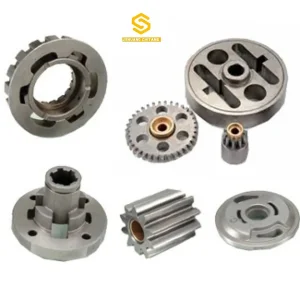
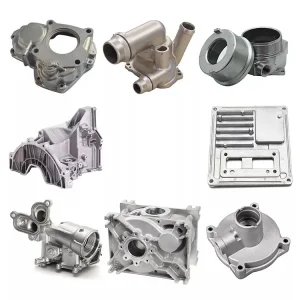
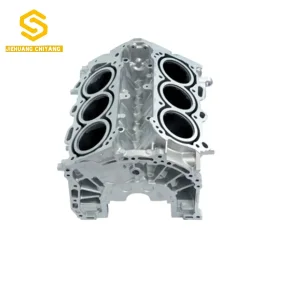
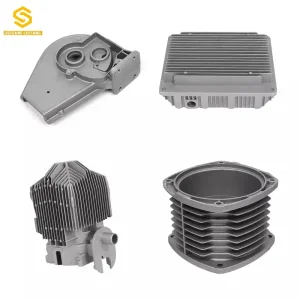
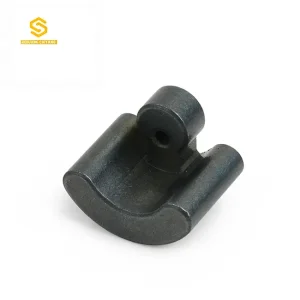
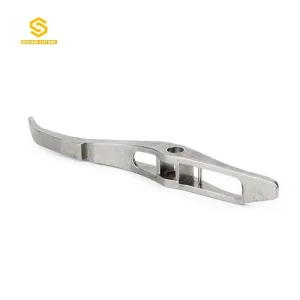
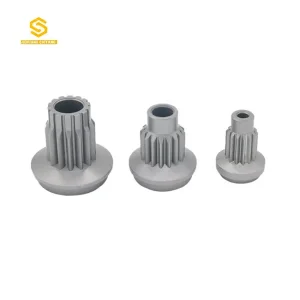
Discover our expanded portfolio of sintered structural parts, metal injection molding components, aluminum/zinc die castings, and CNC finishing services.
Frequently Asked Questions: Consumer Electronics Hinges Sourcing & Engineering
Find authoritative, technical answers to common engineering, procurement, material selection, and quality questions regarding Consumer Electronics Hinges manufactured in China.
MIM combines the design flexibility of plastic injection molding with the high physical strength of wrought metals. Consumer electronics hinges involve complex micro-geometries, internal gear teeth, and undercuts that require multiple axis setups and expensive cutting tools in CNC machining. MIM produces complex 3D near-net-shape components in a single molding cycle, reducing unit costs by 30% to 50% while offering superior material strength (up to 98.5% relative density) and high repeatability for mass production runs exceeding 2,000 units.
Standard as-sintered MIM tolerances are typically within ±0.3% of nominal dimensions (or ±0.03mm for small features). However, for critical hinge features such as gear tooth profiles, pivot pin holes, and friction cam interfaces, post-sintering secondary CNC machining, sizing, or coining allows us to achieve tight tolerances down to ±0.008mm to ±0.01mm, ensuring zero backlash and smooth torque transition.
17-4PH (SUS630) precipitation hardening stainless steel is widely used for structural link arms due to its high tensile strength (>1,100 MPa) and excellent wear resistance. Grade 5 Titanium MIM (Ti-6Al-4V) is increasingly specified for next-gen foldable devices where weight reduction is vital, offering a 40% density decrease compared to steel. Zr-based Amorphous Alloys (Liquid Metal) are selected for high-hardness friction cams and outer housings requiring scratch resistance and zero yield degradation under continuous bending stress.
Torque stability is controlled through metallurgical purity, precise sintering furnace atmosphere management, and specialized surface treatments. We apply Physical Vapor Deposition (PVD) micro-coatings, Diamond-Like Carbon (DLC) films, or Teflon-impregnated nickel plating on contact friction surfaces. Every batch undergoes automated endurance testing using robotic torque testers that record dynamic torque-angle curves across 100,000 to 200,000 folding cycles, maintaining torque decay within ±5%.
Upon approval of 2D/3D STEP drawings and DFM simulations, initial MIM injection tooling and mold fabrication takes approximately 25 to 30 days. First Article Inspection (FAI) samples are delivered shortly thereafter. For urgent early-stage design verification, we offer rapid metal 3D printing (SLM/DMLS) or soft CNC prototype samples within 5 to 7 days prior to committing to hard production tooling.
Our standard Minimum Order Quantity (MOQ) for custom MIM consumer electronics hinge components is 2,000 pieces per batch. For complex multi-component hinge assemblies or pilot market validation projects, prototype or lower volume pilot runs can be evaluated on a case-by-case basis during the engineering DFM stage.