
High-Precision Precision OEM Component Showcase
Explore our custom engineered metal components manufactured via die casting, powder metallurgy (PM), and metal injection molding (MIM).







Global OEM Metal Manufacturing Dynamics & China's Supply Ecosystem
Analyzing the macro-economic shifts, technological converges, and global industrial integration driving high-volume precision OEM fabrication.
Macro Industrial Transformation
The global high-volume original equipment manufacturer (OEM) ecosystem is experiencing a profound paradigm shift. Driven by automated electrification, automotive powertrain evolution, medical device miniaturization, and advanced consumer electronics, demand for complex, near-net-shape metal components has surged exponentially. Global supply chains now demand unprecedented dimensional tolerances, rapid tooling iteration, material integrity, and relentless cost competitiveness. OEM metal manufacturing in China has transitioned from traditional labor-intensive casting to ultra-automated, smart-factory powder metallurgy (PM), metal injection molding (MIM), and high-pressure die casting (HPDC) centers.
China's OEM Manufacturing Advantage
China's comprehensive manufacturing value chain provides global buyers with unmatched strategic agility. By co-locating raw material atomization, precision mold tooling fabrication, heat treatment facilities, advanced physical vapor deposition (PVD) coating, and automated CNC finishing, Chinese manufacturers achieve drastic lead-time reductions. This vertical integration eliminates supply chain friction, empowering Tier-1 automotive and global industrial conglomerates to scale from pre-production DFM prototypes to million-unit monthly runs seamlessly while complying with stringent IATF 16949 and ISO 9001 frameworks.
Information Gain Insight: Modern OEM metal procurement is no longer simply about per-unit casting price. True Total Cost of Ownership (TCO) optimization requires analyzing alloy utilization efficiency, post-process machining elimination, dimensional thermal stability, and integrated design-for-manufacturability (DFM) support at the earliest engineering phase.
High-Volume Manufacturing Paradigms Compared
Selecting the optimal production technology—MIM, Powder Metallurgy, High-Pressure Die Casting, or CNC Finishing—for complex part geometries.
Metal Injection Molding (MIM)
MIM combines the design flexibility of plastic injection molding with the structural strength of wrought metals. Utilizing fine metal powders (typically 4–20 μm) blended with thermoplastic polymer binders, green parts are molded, thermally/catalytically debound, and sintered near solidus temperatures. MIM achieves 95-99% theoretical density, ideal for small, ultra-complex components like surgical tools, firearm locks, micro gears, and smartwatch frames.
Press & Sinter Powder Metallurgy (PM)
Conventional Powder Metallurgy utilizes automated multi-stage hydraulic and mechanical presses (up to 1,000 tons / 10,000 kN compaction force) to compress elemental or pre-alloyed powders into rigid dies. The green compact is subsequently sintered in continuous mesh-belt protective atmosphere furnaces. PM is the undisputed standard for high-volume planetary gears, engine timing sprockets, self-lubricating oilite bushings, and high-torque automotive transmission plates.
High-Pressure Die Casting (HPDC)
Precision die casting (aluminum A380/ADC12, zinc alloy Zamak series, and magnesium) forces molten alloy under extreme hydraulic pressure into hardened steel molds. HPDC is unmatched for producing lightweight structural housings, thin-walled electronic enclosures, heat sinks, and automotive structural brackets requiring excellent thermal management, high EMI/RFI shielding, and rapid multi-cavity cycle times.
| Manufacturing Process | Optimal Weight Range | Geometric Complexity | Dimensional Tolerances | Material Scrap Rate | High-Volume Scalability |
|---|---|---|---|---|---|
| Metal Injection Molding (MIM) | 0.1g to 250g | Extreme (3D undercuts, micro-holes) | ±0.3% to ±0.5% (±0.03mm micro) | < 2% (Feedstock recyclable) | Very High (> 50,000 pcs/mo) |
| Powder Metallurgy (PM) | 5g to 3000g | Moderate (2.5D stepped profiles) | ±0.05mm to ±0.1mm | < 3% (Near-net shape) | Ultra High (> 100,000 pcs/mo) |
| Aluminum / Zinc Die Casting | 10g to 15,000g | High (Thin walls, deep pockets) | ±0.05mm to ±0.2mm | < 5% (Runners remelted) | Ultra High (> 200,000 pcs/mo) |
| Subtractive CNC Machining | Unrestricted | Limited by tool access/axes | ±0.005mm to ±0.01mm | 40% to 85% (High waste) | Low to Medium (Prototyping/Pilot) |
Cross-Sector OEM Engineering Applications
Delivering critical mission-ready components customized for global industrial, medical, and electronic ecosystems.
Automotive & Electric Powertrain Systems
In modern Automotive OEM production, weight reduction and high mechanical endurance are paramount. Sintered steel gears, VVT (Variable Valve Timing) rotors, seat recliner mechanisms, turbocharger vanes, and electric drive unit (EDU) parking lock pawls depend on high-volume PM and MIM production. Vacuum-assisted aluminum die castings provide lightweight housing protection for EV battery controllers, inverter modules, and onboard charger units.
Medical Instruments & Surgical Implants
Medical OEMs utilize 17-4PH and 316L stainless steel MIM, alongside Titanium (TiMIM), to manufacture autoclavable laparoscopic grasper jaws, surgical stapler bodies, dental orthodontic brackets, and prosthetic articulation components. Biocompatibility, pore-free surface finishes after electropolishing, and exacting dimensional repeatability adhere strictly to ISO 13485 standards.
Consumer Electronics & Wearable Hardware
Smartphones, VR headsets, and wearable smartwatches require ultra-miniaturized, high-cosmetic metal hardware. MIM custom hinges for foldable displays, camera module ring brackets, titanium watch cases, and structural internal chassis pieces undergo multi-axis CNC secondary finishing, bead blasting, and continuous PVD anodizing or physical vapor deposition to achieve premium tactile aesthetics.
Industrial Hardware & Heavy Machinery Power Tools
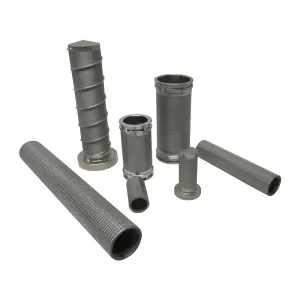
High-torque cordless power tools, hydraulic valve spools, industrial lock cylinders, and fluid filtration systems utilize high-density sintered iron-nickel and stainless steel alloys. Sintered porous metal filters deliver precise micron-rating pore structures for high-temperature, corrosive fluid purification across chemical processing plants worldwide.
Metallurgical Roadmap & Smart Manufacturing Innovation
Integrating AI simulation, hybrid additive manufacturing, and continuous vacuum sintering furnaces into smart OEM fabrication.
AI-Driven Mold Thermal & Flow Simulation
By implementing advanced CAE rheological molding simulations and finite element thermal mapping (FEA) prior to steel tool cutting, engineering teams predict binder-powder segregation, shrinkage distortion, and jetting defects. This virtual prototyping cuts tooling iteration cycles by over 60%, delivering first-article inspection (FAI) approval within accelerated timeframes.
Selective Laser Melting (SLM) Hybrid Integration
Combining additive industrial metal 3D printing (SLM / DMLS) with high-volume MIM molding bridges the gap between low-volume prototyping and mass production. Conformal cooling channels inside injection and die casting molds reduce cycle times by 25% while extending tool life beyond 500,000 shots.
Green Metallurgy & Energy Recovery
Modern powder processing facilities leverage closed-loop solvent debinding systems and high-efficiency atmosphere vacuum sintering furnaces. By reclaiming up to 98% of organic binder solvents and minimizing carbon emissions during high-temperature thermal cycle profiles, manufacturers align with global ESG standards.
The 5-Stage OEM Production Protocol
DFM Engineering
Feasibility assessment, gate location optimization, and draft angle verification from STEP/IGES CAD files.
Precision Tooling
In-house CNC sinker EDM, high-speed milling of hardened P20/NAK80 mold cavities with conformal cooling.
Molding & Debinding
Automated injection molding or compaction press forming followed by continuous solvent or catalytic debinding.
High-Temp Sintering
Atmosphere-controlled vacuum furnace sintering up to 1400°C for theoretical density consolidation.
CMM Quality Assurance
100% key-dimension automated optical sorting, Coordinate Measuring Machine checks, and PPAP Level 3 documentation.
Frequently Asked OEM Engineering Questions
Expert answers to standard procurement, metallurgical selection, and design-for-manufacturability inquiries.
Advanced Hardware & Precision OEM Metal Solutions
Discover our broad manufacturing portfolio spanning zinc die casting, sintered gearboxes, and dental 3D printing alloys.





Accelerate Your High-Volume OEM Manufacturing
Partner with China's leading precision metallurgy and die casting engineering team. Receive an engineer-reviewed DFM assessment and transparent quotation within 48 hours.
Request Engineer DFM Review