
Precision MIM & Metal Components Product Catalog (Part I)
Explore our high-precision sintered components, custom die-casting solutions, and specialized orthodontic metal injection molding parts produced under strict IATF 16949 and ISO 13485 frameworks.







Chapter 1: The Engineering & Metallurgy of MIM Mini MBT Brackets
Comprehensive technical examination of Metal Injection Molding dynamics in manufacturing micro-orthodontic appliances.
Metal Injection Molding (MIM) has emerged as the definitive manufacturing process for modern orthodontic appliances, specifically Mini MBT (McLaughlin, Bennett, Trevisi) brackets. By amalgamating plastic injection molding geometry flexibility with precision powder metallurgy material properties, MIM enables the mass production of miniaturized, highly intricate metal brackets with zero structural compromise.
Information Gain Insight: Unlike conventional multi-piece welded brackets or low-yield CNC micro-milling, single-piece MIM Mini MBT brackets deliver integrated hook-and-base structural homogeneity. This eliminates interface corrosion, reduces bracket profile heights by up to 30%, and delivers consistent 0.018" or 0.022" archwire slot dimensions with tolerance limits as tight as ±0.01mm.
1. Feedstock Formulation & Material Selection
The manufacturing process begins with the formulation of specialized feedstocks. High-grade atomized stainless steel powders—predominantly 17-4PH (AISI 630) and 316L (AISI 316L)—are blended with thermoplastic binder systems consisting of paraffin wax, polypropylene, and proprietary surfactant additives.
- 17-4PH Stainless Steel: Preferred for its exceptional yield strength (>1100 MPa) and high hardness (38-44 HRC after H900 heat treatment). This prevents tie-wing deformation and slot widening under heavy archwire torque loads.
- 316L Stainless Steel: Utilized for applications requiring superior corrosion resistance in oral environments and nickel-conscious patient profiles, exhibiting outstanding biocompatibility and ductility.
- Particle Size Distribution: Spherical powders with d50 particle sizes ranging between 4 µm and 10 µm are mandated to guarantee high green-state pack density and isotropic thermal shrinkage during sintering.
2. Catalytic Debinding & High-Temperature Vacuum Sintering
Once injected into multi-cavity precision molds, the "green" bracket components undergo a two-stage binder removal process. Primary debinding is conducted via nitric acid vapor catalysation (catalytic debinding), removing the primary polyacetal phase without causing micro-cracking or body distortion.
Subsequent vacuum sintering occurs in atmosphere-controlled hydrogen/argon furnaces at temperatures between 1350°C and 1380°C. During this phase, the secondary backbone binder decomposes, and the metal particles coalesce to achieve 98.5% to 99.5% theoretical density. Isotropic shrinkage ratios (typically 15-18%) are calculated using advanced CAD mold dimensioning algorithms to yield net-shape bracket profiles.
Chapter 2: MBT Prescription Precision & Archwire Slot Dynamics
Analyzing torque expression, tip accuracy, friction reduction, and base pad morphology in Mini MBT systems.
Precise Torque in Base
MIM molding allows the MBT torque prescription to be engineered directly into the bracket base pad rather than the face. This maintains parallel slot orientation to the archwire, reducing unwanted rotational play and delivering true three-dimensional tooth movement.
Ultra-Smooth Slot Walls
Sintering density optimization coupled with specialized chemical electrochemical polishing results in archwire slot surface roughness (Ra) below 0.1 µm. This significantly minimizes kinetic friction during leveling and aligning phases.
Laser Structuring & Mesh Base
Advanced Chinese MIM factories implement 80-mesh undercut mesh patterns or direct femtosecond laser micro-etched undercut bases, securing mechanical shear bond strength exceeding 12–15 MPa to withstand masticatory forces.
Integrated MBT Prescription Specifications Table
| Tooth Type / Position | Torque Angle (degrees) | Tip / Angulation (degrees) | In/Out Offset (mm) | MIM Tolerances |
|---|---|---|---|---|
| Upper Central Incisor | +17° | +4° | 0.90 mm | ±0.25° Torque / ±0.01mm Slot |
| Upper Lateral Incisor | +10° | +8° | 1.15 mm | ±0.25° Torque / ±0.01mm Slot |
| Upper Cuspid (Canine) w/ Hook | 0° / -7° | +8° | 0.55 mm | ±0.25° Torque / ±0.01mm Slot |
| Lower Incisors (Central / Lateral) | -6° | 0° | 1.20 mm | ±0.25° Torque / ±0.01mm Slot |
| Lower Cuspid (Canine) | -6° / -11° | +6° | 0.60 mm | ±0.25° Torque / ±0.01mm Slot |
| Bicuspids / Premolars | -7° | 0° | 0.80 mm | ±0.25° Torque / ±0.01mm Slot |
Chapter 3: Global Procurement Dynamics & Market Growth Drivers
Understanding shifting clinician preferences, clear aligner hybrid workflows, and OEM distributor requirements.
The global orthodontic supplies market is witnessing a rapid structural transition towards miniaturized fixed appliances. While clear aligners have expanded their market presence, fixed brackets remain indispensable for complex root movements, severe rotations, and arch expansion cases. Mini MBT brackets represent the sweet spot between clinical efficacy and aesthetic patient comfort.
1. Miniaturization & Soft Tissue Comfort
Modern patients demand discreet treatment solutions. Mini MBT brackets feature a profile height reduction of 25% to 30% compared to standard twin brackets. Rounded tie-wing contours and smooth corner radiuses reduce labial tissue irritation and soft-tissue ulcers.
2. Hybrid Clear Aligner Workflows
Orthodontists globally are adopting hybrid protocols—using Mini MBT metal brackets for initial 3 to 6 months of rapid leveling and root torque adjustment before transitioning patients to clear aligners. This drives volume demand for cost-effective mini bracket kits.
3. OEM White-Label Branding
Global dental distributors in North America, Europe, and South America are increasing reliance on Chinese MIM suppliers for private-label bracket kits, custom laser logo branding on base pads, and automated kit packaging.
Chapter 4: China Industry 4.0: Supply Chain Resilience & Efficiency
How automation, advanced tooling, and localized raw material clusters yield unprecedented cost-to-performance ratios.
China's Yangtze River Delta region (notably Ningbo, Hangzhou, and Shenzhen industrial nodes) has consolidated its position as the world's primary manufacturing engine for precision powder metallurgy and dental MIM products. This regional dominance is anchored in complete supply chain vertical integration.
Automated Tooling & Micro-Molds
Chinese factories leverage 16-cavity and 32-cavity hot runner injection molds with hardened tool steel cores (HRC 60+), delivering sub-micron repeatability across millions of cycles.
Automated Optical Inspection (AOI)
High-speed camera vision systems perform 100% automated optical inspection on 0.018" and 0.022" slots, verifying width, depth, and wing geometry at speeds exceeding 120 brackets per minute.
Continuous Atmosphere Sintering
Utilizing high-capacity push-rod and mesh-belt vacuum furnaces allows 24/7 continuous sintering, slashing energy overheads and delivering unit cost savings of 30–50% versus Western manufacturers.
Raw Material Independence
Domestic supply of gas-atomized ultrafine 17-4PH and 316L powders eliminates geopolitical supply bottlenecks, guaranteeing steady lead times (typically 15 to 25 days for mass order fulfillment).
Precision Sintering & Casting Portfolio (Part II)
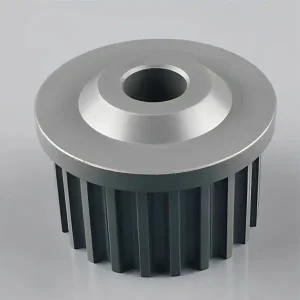
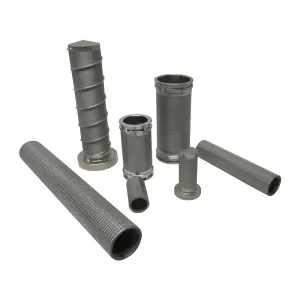
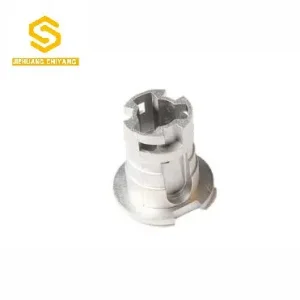
Explore our broader engineering capabilities across sintered engine tensioners, water pump pulleys, sintered metal filters, and advanced ceramic components.




Chapter 5: Technological Process Comparison for Dental Brackets
Evaluating Metal Injection Molding (MIM) against CNC Micro-Milling, Investment Casting, and Automated Stamping.
| Evaluation Parameter | MIM Technology (JHMIM) | CNC Micro-Milling | Investment Casting | Stamping / Assembled |
|---|---|---|---|---|
| Structural Integrity | 100% Monoblock / Single Piece | Single Piece (High Tool Wear) | Multi-piece / Welded Base | Two-Piece Brazed / Welded |
| Slot Dimensional Tolerance | ±0.010 mm (High Consistency) | ±0.008 mm (Frequent Drift) | ±0.035 mm (Poor Precision) | ±0.025 mm (Spring-back risk) |
| Complex Base Undercuts | Integrated 80-Mesh / Laser Base | Flat Base (Requires Etching) | Coarse Irregular Base | Brazed Wire Mesh Base |
| Material Utilization Rate | >95% (Recyclable Feedstock) | 15% – 25% (High Scrap) | 60% – 70% | 50% – 60% |
| Scalable Unit Economics | Extremely Low at High Volume | Extremely High Unit Cost | Moderate to High | Moderate |
| Tie-Wing Comfort Contour | Smooth 3D Spherical Radii | Sharp Machine Tool Edges | Irregular Surface Finish | Flat Pressed Edges |
Chapter 6: Clinical Application Scenarios & Operational Benefits
How precise MIM manufacturing directly translates to chair-time efficiency and predictable tooth movement.
1. Class I & II Malocclusion Alignments
The strict ±0.25° torque control in Mini MBT brackets enables predictable crown-root movement during arch expansion, preventing premature wire binding or notch formation during levelling phases.
2. Simplified Debonding Workflows
Engineered stress-concentration grooves integrated into the MIM base pad allow clean debonding under pliers pressure, ensuring adhesive fails cleanly at the resin-bracket interface without enamel damage.
3. Indirect Bonding (IDB) Compatibility
Dimensional consistency across bracket batches ensures flawless seating within 3D-printed IDB transfer trays, accelerating full-arch placement in digital orthodontics practices.
Sourcing & Manufacturing FAQ
Expert answers to essential questions asked by global dental device buyers, procurement managers, and OEM partners.
1. What distinguishes Mini MBT brackets from Roth prescription brackets in MIM manufacturing?
The primary distinction lies in the torque and angulation (tip) values engineered into the bracket mold cavity. MBT prescriptions feature reduced anterior tip and revised canine/premolar torque angles designed to minimize unwanted movement during space closure. From a MIM manufacturing standpoint, MBT molds require specific core-pin angles and torque-in-base geometry to ensure accurate archwire slot alignment.
2. Why is 17-4PH stainless steel preferred over 316L for orthodontic brackets?
17-4PH is a precipitation-hardening stainless steel offering significantly higher yield strength (up to 1100–1200 MPa post-heat treatment) compared to annealed 316L (~300–400 MPa). This high strength prevents tie-wing deformation when clinicians tie elastic ligatures or power chains, and prevents slot deformation under high-torque rectangular archwires.
3. How do Chinese MIM suppliers achieve consistent 0.018" and 0.022" slot precision?
Slot precision is controlled through micro-milled EDM ceramic or carbide mold inserts with micro-level allowances that compensate exactly for feedstock thermal shrinkage (typically 15.5% to 18.2%). Additionally, 100% automated optical inspection (AOI) with high-magnification telecentric lenses scans every bracket post-sintering, discarding any bracket exceeding ±0.010 mm tolerance limits.
4. What bonding base options are available for custom OEM Mini MBT bracket orders?
Suppliers offer three main base technologies: 1) MIM-integrated 80-mesh undercut bases, 2) Laser micro-etched mechanical retention bases, and 3) Porous sintered spherical powder bases. Laser structured and 80-mesh bases provide the highest shear bond strength (>12–15 MPa) with consistent debonding reliability.
5. What is the typical Minimum Order Quantity (MOQ) for custom or private-label bracket manufacturing?
For standard Mini MBT brackets with custom laser-marked base logos or customized packaging kits, MOQs generally start at 2,000 to 5,000 total bracket sets (or ~20,000 individual bracket pieces). For entirely new custom geometry tooling, pilot production runs can be conducted upon mold approval.
6. How do Chinese MIM factories ensure medical compliance and biocompatibility?
Leading suppliers operate under ISO 13485 medical device quality management systems and maintain FDA 510(k) registrations along with CE Mark certification under the EU Medical Device Regulation (MDR 2017/745). Cytotoxicity, sensitization, and oral systemic toxicity testing (ISO 10993 compliance) are verified by independent accredited testing laboratories.
7. What is the standard production lead time from tooling approval to mass shipment?
New mold construction and prototype sample delivery take approximately 25 to 30 days. Once FAI (First Article Inspection) is approved, full-scale mass production orders are completed within 15 to 20 days, supported by automated injection molding and continuous sintering furnaces.
8. Can non-disclosure agreements (NDAs) be executed prior to sharing CAD designs?
Yes. OEM clients routinely sign legally binding bi-lingual (English/Chinese) Non-Disclosure Agreements before sending 3D CAD models (STEP/IGES) or technical drawings to safeguard proprietary bracket designs and IP rights.
Partner with China's Premier MIM Orthodontic Manufacturer
Accelerate your product launch with ISO 13485 certified engineering, transparent DFM evaluation, zero tooling defect guarantees, and direct factory pricing.
Request Free DFM Review & Quotation