
Precision OEM Product Catalog (Part I)
Explore our high-density, complex micro-components manufactured via Metal Injection Molding, Die Casting, and Powder Metallurgy.






Micro & Mini MIM Engineering: Defining Next-Gen Metal Manufacturing
How advanced powder metallurgy is solving the dimensional and geometric limits of conventional subtractive CNC machining for sub-gram componentry.
Sub-Gram Precision Geometry
Micro Metal Injection Molding (Micro-MIM) specializes in producing components weighing under 0.1 to 5 grams with wall thicknesses as thin as 0.15 mm. It bridges the critical gap between plastic injection molding and high-strength metallurgy.
- Tolerances down to ±0.01mm (±10 μm)
- Sintered relative densities exceeding 98%
- Zero post-machining for micro-threads
Ultra-Fine Powder Atomization
Achieving defect-free mini parts requires spherical metal powders with d50 particle distributions below 3–5 μm. Advanced gas and water atomization techniques ensure uniform feedstock flowability and isotropic shrinkage.
- Catalytic debinding feedstock stability
- Multi-component polymer binder systems
- Elimination of micro-voids & jetting defects
Mechanical Integrity
Unlike die-cast alloys or sintered press-and-sinter metals with open porosity, micro MIM parts exhibit mechanical tensile yield strengths, hardness, and corrosion resistance matching wrought standard alloys (e.g., 17-4PH, 316L, Ti-6Al-4V).
- Full tensile & fatigue limits
- High magnetic permeability (Fe-Ni)
- Biocompatibility for surgical implants
Global Industrial Landscape for Mini MIM Parts
Miniature precision metal components are driving technological miniaturization across medical devices, consumer wearables, automotive sensors, and defense aerospace systems.
Micro-Medical & Surgical Tools
Minimally invasive surgery (MIS) relies heavily on micro MIM components. Endoscopic biopsy forceps, surgical stapler articulation joints, robotic surgery wrist mechanisms, and orthodontic brackets demand bio-inert materials such as 316L, 420 stainless steel, and Titanium Grade 5.
Next-Gen Consumer Wearables & Mobile
The consumer electronics sector requires high aesthetic appeal and structural durability. Micro MIM powers complex foldable phone hinges, smartwatch chassis brackets, TWS earbud charging connectors, and optical image stabilization (OIS) camera actuators.
Automotive Actuators & EV Sensors
Modern electric vehicles (EVs) and autonomous platforms utilize micro MIM parts in ABS braking solenoids, turbocharger wastegate linkages, electric door latch micro-pawls, and high-frequency radar connector housings where thermal stability and high fatigue life are mandatory.
Why Global Procurement Leaders Source Mini MIM Parts from China
China’s manufacturing ecosystem offers unparalleled speed, precision tooling execution, and integrated cost advantages for high-volume precision metal fabrication.
| Evaluation Parameter | Western Supply Chains (US/EU) | China Mini MIM Factories (e.g., Ningbo Hub) | Strategic Advantage for Global OEMs |
|---|---|---|---|
| Micro Tooling Lead Time | 8 to 12 Weeks | 2 to 4 Weeks | Accelerates time-to-market by up to 60%, critical for consumer tech release cycles. |
| Tooling Amortization Cost | $15,000 - $35,000 per mold | $3,500 - $8,500 per mold | Dramatically reduces NPI (New Product Introduction) capital expenditure risks. |
| Feedstock & Powder Sourcing | Import-dependent, long lead times | Domestic vertical integration (BASF licenses + local atomization) | Ensures resilient supply chain continuity with lower raw material surcharges. |
| Process Scalability | Limited micro-cavity press capacity | High-density multi-cavity tooling & 24/7 automated sintering continuous lines | Seamless scaling from 2,000-piece pilot lots to 10M+ annual mass production. |
| Quality Control Ecosystem | High manual inspection overhead | Integrated optical CMM, automated laser sorting, & 100% key-dimension inspection | Zero-defect delivery supported by IATF 16949 and ISO 9001 certifications. |
End-to-End Micro Metal Injection Molding Workflow
From custom feedstock compounding to high-vacuum sintering and post-processing, precision engineering is embedded into every production stage.
1. Feedstock Rheology & Mixing
Micro-powders are blended with proprietary thermoplastic and paraffin binder systems. Homogeneous shear mixing guarantees uniform powder-volume fraction (typically 60-65% metal, 35-40% binder), preventing segregation during injection.
2. Precision Micro-Molding
State-of-the-art electric servo injection molding machines with micro-screw injection units inject the molten feedstock into multi-cavity temperature-controlled steel molds, creating dense "green" parts with intricate features.
3. Catalytic & Solvent Debinding
Green components undergo nitric acid vapor debinding (for BASF polyacetal binder systems) or solvent immersion to dissolve primary binders. This creates an interconnected pore network in the "brown" part prior to high-temp consolidation.
4. Vacuum / Atmosphere Sintering
Brown parts enter continuous or batch sintering furnaces operating up to 1380°C under hydrogen, argon, or vacuum. Metal particles fuse, shrinking uniformly by 15-20% to reach full density and solid metallurgic bonding.
5. Secondary Sizing & Finishing
To meet hyper-critical tolerances (±0.005mm), parts can undergo micro-coining, CNC micro-milling, heat treatment (case hardening, precipitation hardening), electro-polishing, PVD coating, or passivation.
6. Automated Quality Assurance
Using vision inspection systems, 3D optical coordinate measuring machines (CMM), density spectrometers, and X-ray flaw detection, every production lot is verified for dimensional accuracy and structural integrity.
Global Buyer's Guide: Auditing a China Mini MIM Factory
Essential technical benchmarks to evaluate when selecting a manufacturing partner for complex mini components.
DFM (Design for Manufacturability) Depth
Ensure the manufacturer provides comprehensive Moldflow analysis, shrinkage simulation, gate placement optimization, and parting line recommendations before cutting steel for tooling.
Certifications & Quality Management
Verify certified compliance with ISO 9001 (General Management), IATF 16949 (Automotive Standard), and ISO 13485 (Medical Device Standard). Check for statistical process control (Cpk > 1.33 / 1.67).
IP Protection & Confidentiality
Ensure robust Non-Disclosure Agreement (NDA) frameworks, segregated project data servers, and secure internal access protocols to safeguard proprietary product designs and patentable IP.
Precision OEM Product Catalog (Part II)
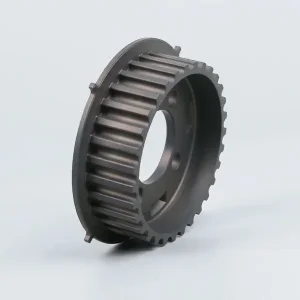
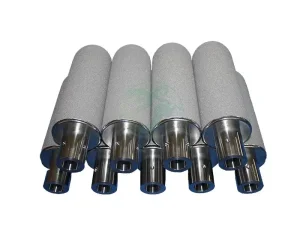
Discover our specialized powder metallurgy gears, custom sintered filters, timing pulleys, and complex MIM assemblies.






Frequently Asked Questions (FAQ)
Addressing engineering, material selection, tolerance control, and procurement queries regarding Mini MIM parts manufacturing in China.
What dimensional tolerances can China Mini MIM manufacturers achieve for micro parts?
Standard as-sintered tolerances for micro MIM components range from ±0.3% to ±0.5% of nominal dimensions. For critical micro features under 5mm, tolerances of ±0.01mm (±10 microns) can be maintained consistently. When tighter tolerances (e.g., ±0.005mm) are required, secondary micro-coining or high-precision CNC finishing is integrated into the workflow.
How does Micro MIM compare to 5-axis Swiss CNC machining for micro components?
While Swiss CNC machining is ideal for low-volume prototyping (1 to 500 pieces), it incurs high per-unit labor and tool-wear costs for complex 3D shapes. Micro MIM requires an upfront tooling investment ($3,500 - $8,500 in China), but reduces individual component costs by 30% to 50% for annual production volumes exceeding 2,000 to 5,000 pieces, while easily manufacturing features CNC tools cannot reach (such as internal splines and blind micro-cavities).
What standard metal alloys are available for Micro MIM parts?
Commonly specified materials include Stainless Steels (316L, 17-4PH, 420, 440C), Low-Alloy Steels (Fe-2Ni, Fe-8Ni, 4140, 8620), Soft Magnetic Alloys (Fe-Ni, Fe-Si, Permendur), Titanium Alloys (Ti-6Al-4V / Ti Grade 5 for bio-implants), Heavy Alloys (Tungsten-Copper, Tungsten-Nickel-Iron), and Ceramic Injection Molding compositions (Zirconia, Alumina).
How do you compensate for the ~20% shrinkage during sintering?
Shrinkage factor (SF) is precisely calculated using advanced computer simulation software, factoring in binder ratio, metal powder density, and heating ramp rates. The mold cavity is scaled up proportionally in the CAD/CAM tooling design stage. Rigorous feedstock quality control ensures uniform density throughout green parts, resulting in isotropic shrinkage during high-temperature sintering.
What is the typical minimum order quantity (MOQ) and lead time for production?
Standard MOQ for Mini MIM parts is typically 2,000 pieces per batch. Prototype mold creation and sample delivery usually take 15 to 25 calendar days. Upon sample approval (FAI report validation), mass production tooling lead times are approximately 3 to 4 weeks depending on annual volume requirements.