
Explore our core OEM capability portfolio featuring ultra-tight tolerance sintered, cast, and precision-machined metal spare parts produced in our China manufacturing facility.



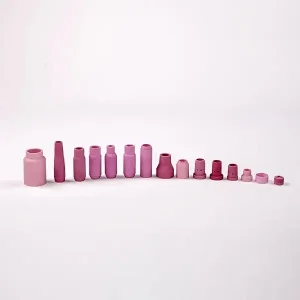




In modern advanced industrial manufacturing, the transition from conventional subtractive machining (e.g., multi-axis CNC milling, turning) to Net-Shape and Near-Net-Shape (NNS) technology represents a paradigm shift in material efficiency, structural integrity, and economic scalability. Net-shape manufacturing refers to processes that fabricate finished metal components directly from raw powder, molten alloy, or feedstocks, requiring zero or minimal secondary finishing prior to assembly.
Globally, the net-shape metal components market is projected to reach over $48.5 Billion by 2030, driven by rapid electrification in automotive powertrains, miniaturization of medical devices, structural lightweighting in aerospace, and high-density power tools. Conventional metal removal processes incur scrap material losses ranging from 50% to as high as 85% when machining complex 3D contours. In contrast, advanced net-shape methodologies—specifically Metal Injection Molding (MIM), Press-and-Sinter Powder Metallurgy (PM), and Vacuum High-Pressure Die Casting (HPDC)—achieve extraordinary material utilization rates exceeding 95% to 98%.
Drastically eliminates raw metal scrap, lowering embedded carbon footprints per component by up to 62% compared to fully forged and CNC-milled routes.
Enables internal cross-holes, undercuts, helical gears, thin-walled ribs, and micro-splines without multi-axis tool collision constraints.
High initial mold investment is rapidly amortized across high volume production runs (10k to 5M+ units), yielding unit cost drops of 30%–70%.
Selecting the optimal net-shape forming process requires a holistic engineering evaluation of material mechanical properties, volumetric density requirements, surface roughness, batch size, and dimensional tolerance limits. The primary net-shape forming routes operated in our China factory include:
MIM combines the plastic injection molding design freedom with the material performance of forged metals. Fine elemental or pre-alloyed metal powders (<20 µm) are blended with a thermoplastic binder system to form a homogeneous feedstock.
Key Advantages: Densities exceeding 96% to 99% of theoretical value, tensile strengths equal to wrought materials, intricate 3D shapes without secondary machining, excellent surface finish (Ra 0.8–1.6 µm).
Compacting coarse metal powders (>45 µm) under extreme rigid tooling pressure (400–800 MPa), followed by high-temperature solid-state sintering in nitrogen-hydrogen atmosphere furnaces.
Key Advantages: Unmatched unit cost efficiency for high-volume structural gears, oil-impregnated self-lubricating bushings, and planar shapes with multi-level step geometry. MPIF 35 standard compliant.
| Manufacturing Attribute | Metal Injection Molding (MIM) | Powder Metallurgy (PM) | Precision Die Casting | 5-Axis CNC Machining |
|---|---|---|---|---|
| Typical Part Mass | 0.1g – 250g (Optimum <100g) | 5g – 2000g+ | 10g – 15,000g | Any mass capacity |
| Relative Density | 96% – 99.5% | 85% – 93% (Sin-Dense up to 96%) | N/A (Cast porosity risks) | 100% Wrought Metal |
| Geometric Complexity | Ultra-High (Complex 3D features) | Medium (2.5D stepped profiles) | High (Thin-wall housings/cavities) | High (Tool access constrained) |
| Standard Tolerances | ±0.3% to ±0.5% (Down to ±0.02mm) | ±0.1% to ±0.3% | ±0.1mm to ±0.3mm | ±0.005mm to ±0.01mm |
| Material Efficiency | >95% (Runner recycled) | >98% (Near zero waste) | >90% (Gating recycled) | 15% – 50% (High scrap rate) |
| Annual Production Threshold | 5,000 to 5,000,000+ pcs | 10,000 to 10,000,000+ pcs | 2,000 to 1,000,000+ pcs | 1 to 5,000 pcs (Low Volume) |
Global tier-1 OEMs choose our China net-shape factory not merely for unit price competitiveness, but for our localized supply chain density, engineering agility, and robust quality control systems. Operating out of Ningbo’s high-tech industrial cluster, our facility seamlessly integrates raw powder preparation, mold tooling design, debinding, sintering, vacuum casting, CNC post-machining, and robotic optical sorting under one umbrella.
In-house multi-cavity hardened toolmaking facilities allow us to deliver first article MIM/Die-casting tooling within 18 to 25 calendar days—compared to 8–12 weeks in Western Europe or North America.
Full quality management standard adherence with zero-defect SPC monitoring, automated 3D CMM inspection, Zeiss optical scanners, and 100% Eddy-Current non-destructive testing for automotive critical safety parts.
Seamless access to local ecosystem partners for physical vapor deposition (PVD), black oxide, Teflon coating, electroless nickel plating, case hardening, gas nitriding, and micro-bead blasting.
Net-shape metal technology is deployed across critical industries where component failure is not an option. Our engineered parts fulfill stringent mechanical performance criteria under thermal, friction, and fatigue stresses.
Applications: Variable Valve Timing (VVT) rotors/vanes, seat recliner gear sectors, turbocharger Variable Nozzle Turbine (VNT) rings, electronic parking brake (EPB) planetary gearboxes, steering column locks, and EV battery coolant connector blocks.
Applications: Endoscopic surgical stapler articulation joints, laparoscopic grasper jaws, dental orthodontic brackets, surgical scalpel handle assemblies, and biocompatible implantable titanium MIM components (Ti-6Al-4V).
Applications: Foldable smartphone liquid metal & MIM hinge mechanisms, smartwatch cases, camera ring housings, fiber-optic transceiver housings, and micro-vibration motor weights.
Applications: High-torque power tool impact clutches, pneumatic cylinder end-caps, hydraulic valve spools, security door lock mortise assemblies, and ceramic high-voltage terminal strips.
Applications: Lightweight structural bracketry, turbine guide vanes, flight control actuator linkage arms, night-vision goggle housing brackets, and missile fin control mechanisms.
As global supply chains demand higher performance and shorter time-to-market, net-shape component manufacturing is undergoing rapid technological evolution. Key breakthroughs transforming our manufacturing operations include:
Cost-effective forming of Ti-6Al-4V for lightweight medical implants and aerospace actuators.
Tool-less net-shape production bridging prototype design and full-scale MIM mass production.
100% pure green hydrogen sintering atmospheres eliminating industrial carbon emissions.
Real-time computer vision and simulation predicting sintering shrinkage down to ±0.01mm.
To minimize tooling revision costs and accelerate project kickoff, our engineering team provides a complimentary Design for Manufacturability (DFM) Review for every technical drawing submitted. When designing or sourcing net-shape metal components, consider these metallurgical design rules:
Maintain uniform wall thickness throughout the part (ideal range: 1.0mm to 4.0mm for MIM; 2.0mm to 10.0mm for Die Casting). Transitions should feature gradual radii (R > 0.5mm) to avoid thermal stress concentration during debinding and sintering.
Incorporate 0.5° to 1.5° draft angles on surfaces parallel to the mold opening direction. For Powder Metallurgy press-and-sinter parts, avoid straight side undercuts unless secondary CNC or multi-action tooling is specified.
Ensure the part design includes at least one flat datum plane or continuous linear edge to sit stably on ceramic sintering trays (checkers), preventing warping at 1350°C sintering temperatures.
Submit 3D CAD models (STEP/IGES) alongside 2D PDF control prints indicating critical CTQ dimensions, geometric tolerances (GD&T), raw material grade (e.g., MIM 17-4PH, 316L, Fe-Ni alloy, ADC12), and surface finish requirements.
A: CNC machining costs scale linearly with production volume because every unit requires dedicated machine spindle time and manual tool changes. In contrast, Metal Injection Molding (MIM) requires upfront mold tooling, but the per-unit cycle time is reduced to seconds. For annual production runs exceeding 5,000 to 10,000 pieces, MIM typically reduces overall component cost by 30% to 65% while eliminating material scrap waste.
A: During thermal sintering, MIM green compacts shrink uniformly by approximately 15% to 20% as binder materials burn off and metal particles fuse. Our China tooling engineers utilize advanced Moldflow software to calculate exact volumetric shrinkage co-efficients for each powder feedstock batch, oversizing the mold cavities accordingly. This guarantees final sintered part tolerances within ±0.3% to ±0.5% (down to ±0.02mm for critical dimensions).
A: Yes. By employing sinter-hardening alloy powders (such as Fe-Ni-Cu-Mo formulations), controlled cooling rate sinter furnaces, and post-sintering heat treatments (carburizing, induction hardening), we achieve tensile strengths exceeding 850–1200 MPa and surface hardness levels up to HRC 55-60, making them suitable for heavy-duty transmission gears.
A: Our standard materials include Stainless Steels (MIM 17-4PH, 316L, 304L, 420, 440C), Low-Alloy Steels (MIM 4140, 4340, 8620, Fe-2Ni, Fe-8Ni), Soft Magnetic Alloys (Fe-Si, Fe-Ni), Titanium Alloys (Ti-6Al-4V, CP-Ti), Aluminum Die Casting Alloys (ADC12, A380, A360), Zinc Alloys (Zamak 3, Zamak 5), and High-Purity Technical Ceramics (Zirconia ZrO₂, Alumina Al₂O₃).
A: For custom Net-Shape tooling projects, our standard production MOQ is 2,000 pieces for MIM and Die Casting, and 5,000 pieces for press-and-sinter Powder Metallurgy parts. Tooling fabrication and first-article prototype samples (T1 inspection batch) are delivered within 25 to 30 days. Rapid 3D binder-jet metal prototypes can be provided in 7 days prior to tooling commitment.
A: IP security is paramount. We routinely sign legally binding Non-Disclosure Agreements (NDAs) prior to receiving engineering CAD files. All project data is stored on encrypted internal servers with restricted role-based access control, preventing unauthorized dissemination.
Browse additional custom powder metal, metal injection molding, die casting, and precision machined assemblies manufactured for international industrial buyers.




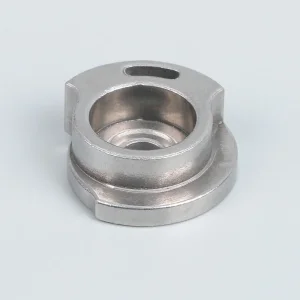


Partner with China's leading net-shape metal parts supplier. Send your 2D control drawings and 3D CAD STEP files today to receive a comprehensive engineering DFM evaluation and transparent factory-direct quotation within 48 hours.