
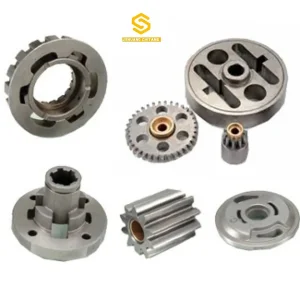
Featured Sintered & MIM Components
Explore engineered powdered metal components, custom sintered structural parts, and metal injection molded complex hardware manufactured to micro-tolerances.







Advanced Powdered Metal Processing: Engineering Principles & Paradigm Shifts
An exhaustive analysis of physical metallurgy, powder synthesis, densification kinetics, and solid-state diffusion mechanisms governing modern Chinese powder metallurgy manufacturing.
The global precision manufacturing sector is undergoing a profound structural transition driven by the necessity for near-net-shape processing, material efficiency, and green manufacturing metrics. At the core of this engineering evolution is the China Powdered Metal Process Manufacturer & Factory ecosystem. Modern powder metallurgy (PM) and its hybrid advanced derivative, Metal Injection Molding (MIM), represent the pinnacle of solid-state physical metallurgy, enabling the production of high-density structural components with geometric complexities that render traditional subtractive CNC machining economically unviable.
1.1 Microstructural Physics of Sintering Dynamics
In classical powder processing, finely divided elemental or pre-alloyed metallic powders—ranging from spherical gas-atomized powders (1–15 μm for MIM) to irregular water-atomized powders (45–150 μm for press-and-sinter PM)—are subjected to extreme mechanical consolidation and thermal treatment. Sintering takes place at temperatures strictly regulated between 75% and 90% of the absolute melting point ($T_m$) of the parent matrix alloy.
During solid-state sintering, mass transport occurs through five concurrent diffusion pathways:
- Surface Diffusion: Atom migration along powder particle surfaces leading to initial neck formation without dimensional shrinkage.
- Lattice/Volume Diffusion: Bulk vacancy movement through particle cores driving macroscopic densification.
- Grain Boundary Diffusion: The predominant mechanism driving pore elimination, where atom fluxes along internal boundaries fill interstitials.
- Vapor Phase Transport: Evaporation-condensation mass transfer operating under local partial vapor pressure gradients.
- Plastic Flow & Dislocation Creep: Stress-induced dislocation glide acting during hot pressing or spark plasma sintering regimes.
1.2 Powder Synthesis & Feedstock Rheology
The structural reliability of sintered components depends entirely on raw material characterization. Chinese powder processing facilities leverage three state-of-the-art powder synthesis routes:
- EIGA (Electrode Induction Melting Inert Gas Atomization): Produces ultra-clean, highly spherical titanium and superalloy powders with minimal interstitial oxygen content (<800 ppm).
- Water Atomization under Inert Shrouding: Yields irregular, high-compressibility iron, copper, and low-alloy steel powders suitable for direct axial compaction.
- Carbonyl Thermal Decomposition: Generates sub-micron iron powders characterized by onion-skin grain morphology, critical for ultra-dense MIM formulations.
In Metal Injection Molding (MIM), custom formulation of the binder system—typically a multi-component blend of primary paraffin wax, secondary polypropylene/polyethylene, and tertiary stearic acid surfactant—is critical. The powder volume fraction (powder loading) must be precisely calculated around 60–65 vol% to prevent phase separation during high-shear injection into multicavity molds.
Technical Roadmap & Metallurgy Innovation Horizons
Pioneering tomorrow's powder metallurgy breakthroughs: from ultra-high density warm compaction to hybrid additive manufacturing integration.
Warm Compaction & High-Temp Sintering
By heating both the pre-lubricated powder mix and the tool die set to 130–150°C, green density is elevated up to 7.4 g/cm³. Subsequent high-temperature sintering at 1280–1350°C under hydrogen/argon atmospheres activates high-rate diffusion, eliminating residual interconnecting porosity.
Titanium & Refractory MIM (TiMIM)
Overcoming extreme reactivity with oxygen and carbon, specialized vacuum debinding and high-vacuum sintering ($10^{-4}$ mbar) enable mass production of Grade 5 Ti-6Al-4V titanium surgical instruments and aerospace brackets with tensile strength matching wrought alloys (>950 MPa).
Hybrid Additive & Binder Jetting Synergy
Bridging toolless prototyping with high-volume production. Integrating metal binder jetting (MBJ) directly into the sintering infrastructure allows seamless transition from complex geometry verification to multi-cavity injection molding production tooling.
Multi-Year Technology Advancement Matrix
Phase I: Micro-Structure Optimization
Implementation of continuous catalyst debinding (nitric acid gas phase) reducing thermal processing cycle times by 65% while eliminating part distortion on thin-wall micro-components (<0.3mm).
Phase II: Sinter-Hardening Alloys
Development of low-alloy chromium-manganese sintered steels that achieve martensitic transformations directly inside the cooling zone of sintering furnaces, skipping separate heat treatment steps.
Phase III: Closed-Loop AI Quality Monitoring
Deploying optical vision AI alongside acoustic resonance testing directly on green compacts to detect micro-cracks before furnace loading, reducing scrap rates to zero defects (PPM < 10).
China Factory Supply Chain Resilience & Structural Cost Efficiency
Why global OEMs choose Chinese powdered metal manufacturers: raw material proximity, vertical ecosystem integration, and rapid industrialization velocity.
In an global industrial landscape marked by supply chain volatility and inflationary input pressures, China's powdered metal processing industry offers unparalleled operational resilience. Global automotive OEMs and tier-1 suppliers derive enormous competitive advantages by anchoring their precision metal sourcing within China's specialized metallurgical hubs—such as Ningbo, Zhejiang.
Upstream Raw Material Security
China commands over 70% of global powder synthesis capacity for iron, copper, tungsten, and rare-earth alloying elements. Localized access to primary reduced iron powders, carbonyl nickel, and ferro-alloy additions insulates factories from international commodity spikes and long sea-transit lead times, guaranteeing uninterrupted factory production schedules.
Vertical Ecosystem Integration
Within a 50-kilometer radius of our Ningbo production campus, every critical secondary service is fully operational: high-precision tool steel mold making, multi-axis CNC secondary finishing, PVD/vacuum coating, induction hardening, gas nitriding, and automated optical sorting. This hyper-dense industrial cluster compresses tooling lead times from months down to weeks.
Logistical & Port Infrastructure Velocity
Operating adjacent to the Port of Ningbo-Zhoushan—the world's largest container port by cargo throughput—enables direct, frictionless maritime export corridors to North America, Western Europe, and Southeast Asia. Accelerated customs clearance, consolidated ocean freight, and daily vessel departures reduce total door-to-door lead times for overseas buyers.
Localized Application Scenarios & Sector-Specific Engineering
How customized powder metallurgy and metal injection molding solve high-stress mechanical challenges across diverse modern industries.
Automotive Powertrain & EV Drive Systems
Variable Valve Timing (VVT) rotors, oil pump gears, transmission synchronizer rings, and electric vehicle drive-unit planetary carriers. Manufactured from low-alloy steel (Fe-Cu-C, Fe-Ni-Mo) with high fatigue resistance (>450 MPa) and densified wear surfaces.
Medical Instruments & Surgical Hardware
MIM 17-4PH stainless steel laparoscopic scissor jaws, endoscopic stapler housings, and titanium orthopedic implant fixations. Requires passivation treatment, zero-biocompatibility risk, and tight dimensional control on intricate shapes.
Smart Consumer Electronics & Wearables
Foldable smartphone display hinges, smartwatch titanium housings, camera glass rings, and micro-actuator gears. Utilizing mirror-polished 316L stainless steel and custom PVD titanium nitride coatings for maximum wear resistance and aesthetic appeal.
Heavy Duty Industrial Power Tools
Sintered bevel gears, planetary gearboxes, impact driver hammer mechanisms, and pneumatic tool couplings. Compaction up to 7.3 g/cm³ coupled with carbonitriding case hardening delivers exceptional impact toughness (>30 J/cm²).
Green Energy & Smart Grid Infrastructure
High-permeability soft magnetic composite (SMC) cores for electric vehicle charging transformers, solar inverter inductors, and smart meter actuator latch mechanisms, providing low core losses at high switching frequencies.
Aerospace & Defense Fluid Control
Sub-miniature hydraulic fluid control valves, turbine blade locking keys, and aerospace fuel injection nozzles produced in superalloys (Inconel 718, Hastelloy C-276) qualified for extreme pressure and thermal exposure environments.
Process Comparison: MIM vs. PM vs. Die Casting vs. CNC Machining
Evaluate trade-offs across geometry complexity, annual production volumes, surface finishes, and unit cost profiles to select the optimal manufacturing route.
| Evaluation Parameter | Metal Injection Molding (MIM) | Press-and-Sinter (PM) | Aluminum / Zinc Die Casting | 5-Axis CNC Machining |
|---|---|---|---|---|
| Optimal Part Weight | 0.1g – 250g | 5g – 3000g | 10g – 5000g | Any Size |
| Geometric Complexity | Ultra-High (Complex 3D features) | Moderate (2.5D Axial Profiles) | High (Thin-wall Cavities) | Limited by Tool Access |
| Relative Cost (100k pcs) | Very Low | Lowest | Moderate | High (Machine Hours) |
| Material Density | 96% – 99.5% | 85% – 94% | 90% – 95% (Porosity risk) | 100% (Wrought Stock) |
| Mechanical Properties | Near-Wrought Equivalent | High Strength (Sinter-Hardened) | Moderate (Non-ferrous only) | Maximum Wrought Properties |
| Material Utilization Rate | > 95% | > 97% | > 90% | 15% – 40% (High Scrap) |
| Surface Roughness ($Ra$) | 1.0 – 1.6 μm | 1.6 – 3.2 μm | 0.8 – 1.6 μm | 0.4 – 1.6 μm |
E-E-A-T Certified Quality Assurance & Compliance Framework
Rigorous metrology inspection protocols, accredited management systems, and complete material traceability fulfilling global automotive and medical buyer requirements.
6.1 Certified Management Infrastructure
Our manufacturing sites operate strictly under audited ISO 9001:2015 and automotive-grade IATF 16949:2016 quality management frameworks. Every production lot undergoes end-to-end documentation control, from incoming powder certification to final shipment authorization.
- Material Compliance: 100% compliance with EU RoHS 3 (Directive 2015/863) and REACH SVHC regulations. Conflict-free minerals sourcing verified.
- Traceability: Integrated MES System tags every sintering batch with unique QR codes mapping furnace thermal history, raw powder heat numbers, and press machine parameters.
- Standard Alignment: Chemical and structural specifications tested according to MPIF 35 (Metal Powder Industries Federation), DIN 30910, and ISO 22068 standards.
6.2 Advanced Analytical Metrology Lab
Quality verification is conducted in-house within our climate-controlled metrology laboratory using high-precision testing instruments:
- CMM Dimensional Inspection: Zeiss Automated Coordinate Measuring Machines checking geometric tolerances down to ±0.005mm.
- Microstructural Metallography: Optical microscope and SEM analysis verifying grain size, pore distribution, and case-hardening depth.
- Chemical Composition Testing: X-ray Fluorescence (XRF) and ICP-OES spectrometers confirming element stoichiometry.
- Mechanical Property Validation: Universal Tensile Testing, Rockwell Hardness ($HRC$), and Charpy Impact testing on direct sintered bars.
Additional OEM Powdered Metal & Casting Products
Browse our comprehensive catalog of MIM micro-connectors, die-cast aluminum fan casings, sintered hardware, and custom SIM tray assemblies.







Frequently Asked Questions by Engineering & Sourcing Teams
Expert answers to complex technical, commercial, and logistical queries regarding custom powdered metal manufacturing in China.
Q: What is the primary difference in application between MIM and traditional Press-and-Sinter PM?
Press-and-Sinter PM relies on uni-axial mechanical compaction, making it ideal for 2.5D geometric shapes such as spur gears, pulleys, and bushings where part length-to-diameter ratio is balanced. Metal Injection Molding (MIM) combines metal powder with a thermoplastic binder to inject parts into complex 3D molds, enabling undercuts, cross-holes, thin walls, and complex contours similar to plastic injection molding.
Q: How do you control dimensional shrinkage during sintering?
MIM parts experience predictable volumetric shrinkage ranging from 14% to 20% during debinding and high-temperature sintering. Our tooling engineers utilize advanced Moldflow analysis and precise feedstock powder-loading calculations (±0.2% variance control) to design scale-factor mold cavities. Continuous atmosphere sintering furnaces maintain uniform thermal zones to guarantee ±0.3% dimensional tolerances.
Q: What density levels can your factory achieve for iron-based sintered structural parts?
Through standard single-press single-sintering processes, we achieve densities of 6.8 to 7.1 g/cm³. Utilizing warm compaction, high-temperature vacuum sintering, or double-press double-sintering (DPDS) techniques, iron-based densities reach 7.3 to 7.5 g/cm³. For MIM stainless steel and low-alloy parts, density regularly reaches 97% to 99.2% of theoretical density.
Q: Can sintered metal parts be electroplated or heat treated?
Yes. Sintered components can undergo case hardening, carbonitriding, induction hardening, and steam treatment. For low-density PM parts with interconnecting surface pores, resin or copper impregnation is performed prior to electroplating (e.g., Nickel, Chrome, Zinc) to prevent electrolyte entrapment. High-density MIM parts can be plated directly without impregnation.
Q: What is your typical tooling and sample lead time for new OEM custom projects?
For MIM and precision die-casting projects, custom mold design and tooling fabrication typically require 25 to 35 calendar days. First Article Samples (T1) accompanied by full CMM dimensional reports and material test certificates are supplied within 7 days post-tooling trial. Rapid metal 3D printing prototyping (DMLS/SLM) is available for design verification within 5 business days.
Q: How do your Chinese manufacturing facilities protect international intellectual property (IP)?
We sign binding non-disclosure agreements (NDAs) governed by international legal standards prior to receiving engineering CAD files (STEP/IGES/PDF). Project data is isolated on secure internal servers with restricted engineer access permissions. Molds built for OEM clients are registered with proprietary identification and are strictly used exclusively for authorized customer purchase orders.
Ready to Optimize Your Precision Metal Components?
Submit your 2D/3D technical drawings today. Our senior metallurgy engineers will provide a comprehensive Design for Manufacturability (DFM) analysis and a competitive direct-factory quotation within 48 hours.