
Featured Sintered & Precision OEM Metal Components
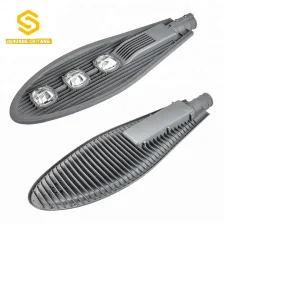
Engineered precision components manufactured via high-density powder metallurgy, metal injection molding (MIM), and advanced die casting techniques.





1. The Paradigm Shift in Powder Metallurgy: China's Role in Modern Manufacturing
The global manufacturing landscape is undergoing a structural transformation driven by the aggressive pursuit of lightweighting, extreme dimensional repeatability, net-shape processing, and raw material conservation. At the nexus of this technological migration stands Powder Metallurgy (PM) and its advanced derivative, Metal Injection Molding (MIM). Once restricted to self-lubricating bronze bushings and basic low-load structural shapes, Chinese powder metallurgy factories have evolved into Tier-1 strategic manufacturing partners producing high-density, mission-critical sintered alloys for global OEMs in North America, Europe, and Asia-Pacific.
As the worldwide PM market accelerates toward an estimated valuation exceeding $12.5 Billion, Chinese suppliers are capturing disproportionate market share due to integrated raw material supply chains (notably elemental iron, stainless steel powders, and rare-earth additive formulations), massive capital investments in continuous vacuum sintering furnaces, high-tonnage multi-axial CNC compaction presses, and stringent adoption of IATF 16949 and ISO 9001 quality control architectures.
In contrast to conventional subtractive machining (where up to 70% of raw stock is transformed into low-value chips) or conventional investment casting (which suffers from long thermal cycle times and high labor overhead), powder metallurgy delivers net-shape or near-net-shape components directly out of the sintering furnace. This structural capability translates into immediate material optimization, lower embodied carbon footprint, and rapid production scales capable of fulfilling millions of precision units monthly.
2. Metallurgy Deep Dive: Sintering Physics, Phase Dynamics & Material Synthesis
Achieving mechanical properties equivalent to or exceeding wrought metals requires precise control over powder morphology, compaction kinetics, thermally activated atomic diffusion, and phase transformations. Modern Chinese PM factories employ advanced solid-state and liquid-phase sintering protocols tailored to explicit alloy compositions.
Powder Atomization & Feedstock
The process begins with water or gas atomization to yield spherical or irregular metallic powders ranging from 2 µm to 150 µm. For MIM applications, ultrafine spherical powders (< 20 µm) are blended with multi-component thermoplastic binder systems (paraffin wax, polypropylene, stearic acid) to create homogeneous feedstock.
Pressing & Debinding Dynamics
In traditional PM, high-tonnage CNC hydraulic presses consolidate powders under 400–800 MPa compaction pressure into "green parts". In MIM, feedstock is injected into complex molds. Catalytic or solvent debinding removes up to 90% of the organic binder prior to sintering.
High-Temperature Sintering
Sintering takes place in continuous mesh belt or high-vacuum batch furnaces at temperatures reaching up to 1350°C under controlled hydrogen, nitrogen, or argon atmospheres. Atomic diffusion drives neck growth between metallic particles, eliminating internal void fractions.
Microstructure Control & Densification Pathways
Mechanical strength, fatigue resistance, and dynamic load limits are directly governed by final sintered density. Porosity in powder metallurgy is no longer treated merely as a defect; it is a controllable microstructural parameter. For self-lubricating bearings, interconnected porosity (15–25%) is intentional. For high-torque transmission gears, valve timing components, or surgical tools, near-theoretical density (>98%) is mandated.
To achieve high density, leading Chinese factories utilize secondary operations such as Warm Compaction, Sinter-Hardening, and Hot Isostatic Pressing (HIP). Sinter-hardening integrates rapid cooling directly within the furnace exit zone, transforming austenite into a fine martensitic matrix without requiring separate oil quenching, thereby minimizing thermal distortion.
3. Global Commercial Landscape & Regional Demand Mapping
The international demand for powder metallurgy parts is evolving rapidly due to macroeconomic transitions, including the acceleration of Electric Vehicles (EVs), the miniaturization of consumer electronics, and increased spending on advanced medical hardware and aerospace systems.
| Geographic Region | Primary Sector Drivers | Predominant Technologies | China Sourcing Integration Level |
|---|---|---|---|
| North America | Automotive Powertrains, Hand Tools, Defense, Medical Devices | MPIF Standard PM, MIM Stainless (17-4PH, 316L) | High: Heavy sourcing of custom OEM gears, sprockets, and MIM brackets. |
| Europe (EU) | EV Drive Units, High-End Industrial Automation, Orthopedics | High-Density PM, Titanium MIM (TiMIM), Ceramic Injection | Strategic: Deep integration with Tier-1 automotive and tool suppliers. |
| Asia-Pacific | Consumer Electronics, Smart Wearables, 5G Infrastructure, Robotics | Micro-MIM, Ultra-Thin Aluminum Die Casting, Sintered Soft Magnetic Alloys | Dominant: China acts as the primary global hub for high-volume electronic MIM components. |
| Latin America & MEA | Agricultural Machinery, Oil & Gas Valves, Fluid Power Systems | Heavy-Duty Sintered Steel Gears, Copper-Infiltrated Iron Components | Growing: Expansion of industrial machinery aftermarket and OEM procurement. |
In the automotive domain, the transition from internal combustion engines (ICE) to hybrid and battery electric vehicles (BEV) has shifted component mix requirements. While traditional multi-speed transmission gears are being consolidated, demand for high-precision magnetic actuators, electric power steering (EPS) gears, thermal management pump rotors, and high-voltage contactor elements made via powder metallurgy has surged.
4. Sector Application Scenarios & Industrial Implementation
Powder metallurgy and metal injection molding are not universal replacement processes; they are targeted engineering choices evaluated against geometric complexity, annual volume threshold, and mechanical strain criteria. Below are real-world application benchmarks across key global verticals:
Automotive Engine & Powertrain
Components: Variable Valve Timing (VVT) rotors/stators, oil pump planetary gears, engine tensioner pulleys, synchronizer hubs.
Engineering Value: Sintered steel alloys (Fe-Ni-Cu-Mo) deliver tensile strengths exceeding 850 MPa post heat-treatment while eliminating teeth gear hobbing costs.
Medical Devices & Orthopedics
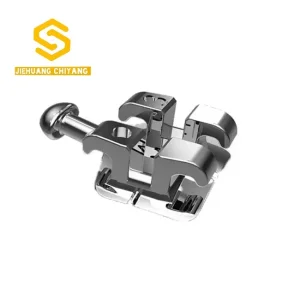
Components: Endoscopic surgical grasper jaws, orthodontic MIM brackets, titanium bone screw plates, scalpel handles.
Engineering Value: MIM utilizing biocompatible 316L stainless steel and Ti-6Al-4V achieves intricate organic curves with zero machining marks, passing ISO 10993 cytotoxicity standards.
Consumer Hardware & Smart Wearables
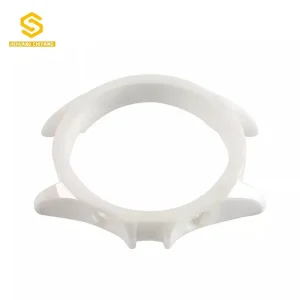
Components: Folding smartphone multi-axis hinges, smartwatch cases, camera ring frames, earphone charge port bezels.
Engineering Value: Extremely high dimensional accuracy (±0.03mm) on wall thicknesses down to 0.4mm, compatible with high-polish PVD mirror coatings.
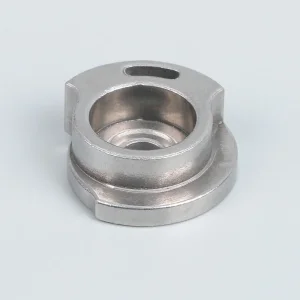
In industrial fluid control, pneumatic cylinders and solenoid valve bodies benefit significantly from custom powder metallurgy sintered metals. For instance, air cylinder end caps and mechanical CAM mechanisms require high wear resistance. Traditional machining requires multi-axis indexing and significant tool wear. Through press-and-sinter powder metallurgy, these complex 3D profiles are pressed in a single stroke, lowering production lead times from weeks to seconds per part.
5. Technology Roadmap & Industry 4.0 Transformation (2025–2035)
The powder metallurgy industry in China is actively converging with additive manufacturing, smart sensor automation, and artificial intelligence to create hybrid production environments. The technical trajectory over the next decade focuses on overcoming historical limits regarding part mass, thermal distortion, and material composition flexibility.
Binder Jetting Additive Integration
Toolless mass production combining 3D printing speed with conventional sintering furnaces. Eliminates upfront mold costs for low-to-medium batch volumes.
Titanium & High-Entropy MIM
Commercialization of low-cost oxygen-controlled Titanium MIM (TiMIM) feedstocks and non-magnetic high-entropy alloys for biomedical implants and aerospace hardware.
AI-Driven Shrinkage Prediction
Integration of neural network simulation tools to predict anisotropic sintering shrinkage down to micron levels, reducing mold iteration cycles from 4 iterations to 1.
Zero-Emission Hydrogen Sintering
Complete decarbonization of sintering furnaces using 100% green hydrogen atmospheres, aligning with global net-zero carbon mandates for international supply chains.
6. Engineering Material Selection & Mechanical Property Matrix
Selecting the optimal material system requires balancing tensile strength, elongation, corrosion resistance, and post-sintering machinability. The table below provides an engineering benchmark based on standard MPIF Standard 35 and ASTM B883 metrics commonly supplied by leading Chinese powder metallurgy manufacturers:
| Material Standard | Composition Class | Sintered Density (g/cm³) | Tensile Strength (MPa) | Yield Strength (MPa) | Hardness | Typical Applications |
|---|---|---|---|---|---|---|
| MIM 17-4PH | Precipitation Hardening Stainless Steel | 7.50 - 7.65 | 1150 - 1250 | 1050 | 38 - 42 HRC | Surgical instruments, aerospace hinges, high-stress gears |
| MIM 316L | Austenitic Stainless Steel | 7.60 - 7.75 | 520 - 580 | 220 | 60 - 75 HRB | Medical implants, watch cases, marine fittings, dental brackets |
| MPIF FN-0208 | Sintered Nickel-Steel Alloy | 6.80 - 7.40 | 450 - 850 (Heat Treated) | 380 - 700 | 25 - 35 HRC | Automotive transmission gears, engine sprockets, power tool cams |
| MPIF FC-0208 | Copper-Steel Sintered Alloy | 6.70 - 7.20 | 350 - 650 | 280 - 500 | 70 - 90 HRB | Structural bushings, lawn care gears, general machinery components |
| TiMIM (Ti-6Al-4V) | Grade 5 Titanium Alloy | 4.40 - 4.48 | 890 - 960 | 820 | 32 - 36 HRC | Weight-critical aerospace components, biomedical implants, premium sports gear |
| CIM Zirconia (ZrO2) | Structural Engineering Ceramics | 5.95 - 6.05 | 2000 (Flexural) | N/A | 1200 HV10 | Extreme wear sleeves, ceramic watch bezels, fiber optic ferrules |
7. Strategic Sourcing Guide: How to Evaluate & Audit a China PM Factory
Navigating supplier selection in China requires an auditing strategy that extends beyond price-per-piece metrics. Global procurement managers must verify technical capabilities, quality control instrumentation, and Design for Manufacturability (DFM) engineering support.
1. Quality Assurance Infrastructure
Verify that the manufacturer maintains operational IATF 16949 certification for automotive parts or ISO 13485 for medical devices. Ensure their metrology lab is equipped with automated Coordinate Measuring Machines (CMM), optical image measuring systems, carbon-sulfur analyzers, micro-Vickers hardness testers, and Archimedes density testing balances.
2. In-House Tooling & DFM Support
Tier-1 factories feature in-house tooling departments utilizing high-speed CNC milling, wire-EDM, and mirror-surface EDM equipment. In-house tooling capability reduces mold lead times by 40% and allows rapid adjustments during the first article inspection (FAI) and PPAP (Production Part Approval Process) phases.
3. Secondary Operation Integration
Rarely is a part complete directly out of sintering. Evaluate the supplier’s secondary capabilities: precision CNC machining, double-disc surface grinding, barrel tumbling, electroplating, PVD coating, steam oxidation (for sealing iron porosity), and thermal passivation.
8. Technical & Commercial Q&A (FAQ)
Expert responses to critical engineering and procurement queries regarding powder metallurgy manufacturing in China.
Additional OEM Factory Product Offerings
Explore additional custom-engineered structural parts, die casting solutions, plastic moldings, and mechanical hardware.






Partner with China's Premier Powder Metallurgy Engineers
Whether you require high-density sintered structural gears, micro-MIM medical stainless components, or lightweight aluminum die cast housings, our engineering team provides complimentary DFM evaluations and transparent quotations within 48 hours.