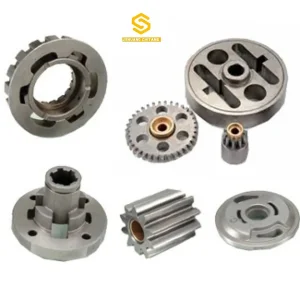
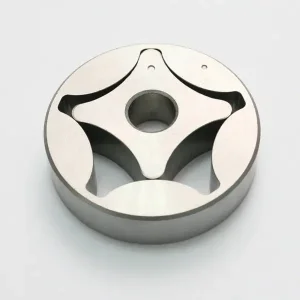
Featured OEM Powder Metallurgy & Casting Products
Precision Sintered Gears, Titanium MIM Hardware, & High-Pressure Die Casting Solutions








Executive Summary: The Evolution of Powder Metallurgy Manufacturing in China
In modern precision mechanical engineering, Powder Metallurgy (PM) and Metal Injection Molding (MIM) have emerged as pivotal technological pathways replacing traditional subtractive CNC machining and investment casting. Driven by high-volume automotive requirements, medical component miniaturization, and consumer electronics demand, Chinese PM & MIM manufacturers lead the global market with advanced material yield efficiency, near-net-shape capability, and structural integrity exceeding 98% theoretical density.
Near-Net Shape Efficiency
Eliminates raw material scrap. Powder metallurgy converts over 95% of initial metal powder into finished functional components, providing significant raw material savings on high-cost alloys like 316L, 17-4PH, and Titanium.
Complex Geometries
MIM combines the design flexibility of plastic injection molding with the structural strength of wrought metals, enabling intricate 3D shapes, internal threads, undercuts, and splines without complex assembly.
Mechanical Superiority
Through microstructural grain refinement during vacuum sintering and Hot Isostatic Pressing (HIP), PM parts achieve high fatigue resistance, superior surface finish, and predictable magnetic properties.
Comprehensive Powder Metallurgy & MIM Process Roadmap
Understanding the end-to-end engineering control required to manufacture high-density sintered metal components from powder synthesis to final secondary operation.
Powder Atomization & Blending
Spherical metal powders (1–45 µm for MIM, 45–150 µm for PM) are produced via gas or water atomization, mixed with custom binder systems (wax, polymer, or catalytic binders) for homogenous flow characteristics.
Compaction / Injection Molding
Powder is shaped using automated high-speed mechanical presses (up to 1,000 tons for conventional PM) or specialized MIM injection molding machines forming a precise green component.
Debinding Phase
For MIM, primary binders are extracted via solvent, thermal, or catalytic nitric acid gas phase debinding, transforming the green component into a porous brown part ready for sintering.
High-Temp Vacuum Sintering
Components pass through continuous atmosphere-controlled belt furnaces or high-vacuum batch furnaces (1100°C to 1700°C). Diffusion bonding fuses metal grains, causing controlled 15–20% volumetric shrinkage to reach final solid density.
Sizing, Heat Treatment & Surface Finishing
Secondary sizing/coining restores ultra-tight dimensional tolerances. Post-sintering processes include carburizing, vacuum heat treatment, PVD coating, electroplating, and precision CNC finishing.
Process Selection Matrix: PM vs MIM vs Die Casting vs CNC
Selecting the correct manufacturing process requires balancing geometric complexity, production run volume, dimensional tolerances, and alloy selection.
| Evaluation Parameter | Powder Metallurgy (PM) | Metal Injection Molding (MIM) | Aluminum / Zinc Die Casting | 5-Axis CNC Machining |
|---|---|---|---|---|
| Target Part Weight | 10g to 2.5kg | 0.1g to 250g (Max 286g) | 50g to 15kg | Unrestricted |
| Achievable Density | 88% – 95% (Oil impregnated available) | 96% – 99% (Wrought-like performance) | Solid shell with center porosity | 100% Solid Wrought Stock |
| Geometric Complexity | Medium (2.5D press-direction shapes) | Extremely High (3D intricate shapes, thin walls) | High (Hollow parts, external ribs) | High (Tool path limited) |
| Dimensional Tolerance | ±0.03mm – ±0.08mm | ±0.05mm (Down to ±0.02mm with sizing) | ±0.1mm – ±0.2mm | ±0.005mm – ±0.01mm |
| Surface Roughness (Ra) | 1.6 – 3.2 µm | 0.8 – 1.6 µm | 1.6 – 3.2 µm | 0.4 – 1.6 µm |
| Material Choice | Fe-Ni, Sintered Steels, Bronze, Cu-Steels | 17-4PH, 316L, Ti-6Al-4V, Tungsten, Fe-Co | ADC12, A380, Zamak 3, Zamak 5 | All machinable metals & alloys |
| Economic Order Quantity (MOQ) | 5,000+ pcs | 2,000+ pcs | 2,000+ pcs | 1 – 500 pcs |
Industrial Application Scenarios for PM & MIM Solutions
How global tier-1 OEMs leverage Chinese powder metallurgy precision across critical industrial vertical sectors.
Automotive Powertrains & VVT Systems
Engine variable valve timing (VVT) rotors, timing gear rings, oil pump gears, transmission synchronizer hubs, and seat adjuster actuators manufactured under strict IATF 16949 quality standards.
Medical Devices & Surgical Tools
Endoscopic surgical stapler jaws, titanium scalpel handles, dental brackets, and orthopedic instrument hinges utilizing biocompatible 316L and Titanium MIM (TiMIM) alloys with passive corrosion resistance.
Consumer Electronics & Wearables
Ultra-thin folding smartphone screen hinges, smartwatch chassis brackets, camera ring bezels, and earbud charging contacts requiring flawless aesthetic surface polishes and high physical yield strength.
Industrial Power Tools & Hydraulics
Planetary gearboxes, wear-resistant hydraulic pump rotors, pneumatic impact driver shafts, and high-torque motor gear sets built using heat-treated iron-nickel and alloyed sintered steels.
China Supply Chain Resilience & Manufacturing Efficiency
Why Ningbo and Yangtze River Delta powder metallurgy clusters offer unparalleled supply chain robustness, technical agility, and total cost control for international procurement.
Upstream Raw Material Dominance
Direct integration with domestic atomized powder producers reduces lead times for elemental, stainless steel, and specialty alloy powders, bypassing global supply chain bottlenecks and stabilizing material pricing.
In-House Tooling Design & Rapid DFM
Complete in-house mold making (wire EDM, CNC high-speed milling, sinker EDM) enables rapid prototype tooling within 15–20 days and seamless Design for Manufacturability (DFM) engineering updates within 24 hours.
Total Quality Control & Traceability
Equipped with 3D CMM, metallographic analysis labs, carbon-sulfur analyzers, torque testers, and salt-spray testing chambers. MES-driven production ensures lot-level material and process traceability.
Technology Roadmap & Future Outlook in Powder Metallurgy
Next-generation innovations reshaping the future of Chinese powder metallurgy and metal injection molding factories.
1. Titanium MIM (TiMIM) Mass Production
Transitioning from high-cost aerospace titanium machining to high-volume Ti-6Al-4V MIM injection molding. Achieving lightweight structural parts with unmatched specific strength and corrosion resistance for consumer electronics and medical implants.
2. Digital Twin & AI-Monitored Sintering
Deploying real-time thermal sensors, AI-controlled atmosphere gas flow, and digital twin simulation within continuous sintering furnaces to eliminate micro-cracking, shrink distortion, and grain growth variances.
3. Ultra-High Density Warm Compaction
Innovations in heated die and powder systems (Warm Compaction) enabling single-press, single-sinter densities exceeding 7.4 g/cm³ for heavy-duty automotive transmission gears without requiring full forging.
4. Binder Jetting Hybrid Synthesis
Blending Industrial 3D Metal Printing (Binder Jetting) with conventional PM sintering infrastructure to create ultra-complex prototype parts without tooling costs, streamlining sample validation prior to mass MIM production.
Global Compliance, Technical Support & Quality Assurance
We provide seamless international integration, robust intellectual property protection, and full quality documentation for every shipment.
Full PPAP & Certifications
Complete Production Part Approval Process (PPAP Level 3) support, including FAI (First Article Inspection) reports, CMM dimension logs, Material Composition Certificates (RoHS/REACH), and chemical analysis.
Strict IP & NDA Safeguards
We execute legally binding Non-Disclosure Agreements (NDAs) prior to receiving customer drawings. CAD models, tooling paths, and custom alloy specs remain protected under strict encrypted data security protocols.
Seamless Global Logistics
Engineered rust-preventive packaging (VCI anti-corrosion bags, custom foam trays, export wooden cases) supported by DDP, FOB, or CIF international freight to North America, Europe, and Asia-Pacific.
Frequently Asked Questions (Technical Sourcing Guide)
Key engineering and commercial questions buyers consider when selecting a Chinese Powder Metallurgy supplier.
Advanced Machinery, MIM Components & Die Casting Products
Sintering Furnaces, Stainless Steel MIM Parts, & Precision Metal Components