
High-Precision Sintered & Molded Metal Products
Explore our certified OEM/ODM manufacturing capability spanning complex auto parts, medical components, sintered pump rotors, and structural hardware engineered to micro-tolerances.
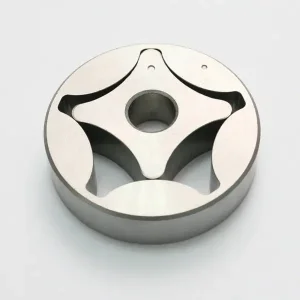
China China Oil Pump Rotor Supplier Manufacturer, Factory
View Product Specs
China Free sample for Custom MIM Metal Powder Injection Molding 17-4pH Auto Parts Tee Tube Manufacturers, Suppliers
View Product Specs
Wholesale Wholesale ODM Powder Metallurgy Diesel Engine Oil Pump Rotor Manufacturer, Manufacturers
View Product Specs
Wholesale OEM/ODM Supplier Customized OEM Manufacturer Anodising Aluminum Alloy Casting Parts Zinc Alloy Casting Parts by Die Casting Mould Suppliers, Factories
View Product Specs
China Custom Sintered Titanium MIM Parts for Auto Parts Supplier, Suppliers
View Product Specs
Wholesale PriceList for Medical Stainless Steel Surgical Components by Metal Injection Molding Supplier, Factories
View Product Specs
Wholesale Factory wholesale Auto Parts Accessory Sintered Engine Parts Tensioner Spare Powder Metallurgy Company Supplier, Suppliers
View Product Specs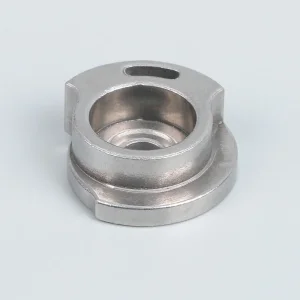
Wholesale Air Cylinder Manufacturer Manufacturers, Factories
View Product SpecsMacro Industrial Demand for China Powder Metal Products
How tier-1 OEMs across North America, Europe, and Asia-Pacific leverage Chinese powder metallurgy ecosystems to eliminate machining bottlenecks and achieve near-net shape material efficiency.
The Economic Transition to Near-Net Shape Fabrication
In modern high-volume mechanical manufacturing, conventional subtractive CNC machining faces crippling challenges: excessive material wastage (often reaching 60–80% scrap rates in complex geometries), rapid tool wear during titanium or stainless steel cutting, and prolonged cycle times. Sourcing managers and mechanical design engineers are rapidly shifting toward Powder Metallurgy (PM) and Metal Injection Molding (MIM) solutions engineered in China.
By compacting and sintering fine metal powders into net or near-net shapes, Chinese industrial suppliers yield component raw-material utilization rates exceeding 95%. This drastically cuts reliance on costly secondary machining, delivering substantial unit-cost advantages for automotive oil pump rotors, surgical instrument jaws, and industrial planetary gear sets.
Sector-Specific Purchasing Dynamics
- Automotive Powertrain & EV Drive Systems: High demand for sintered iron-copper, alloy steel engine tensioners, VVT sprockets, and high-torque oil pump rotors requiring ISO 9001 and IATF 16949 compliance.
- Medical Technology & Surgical Hardware: Exponential rise in MIM 316L and 17-4PH micro-components, endo-cutter handles, and custom titanium (TiMIM) implants requiring full material traceability and biocompatibility.
- Consumer Electronics & Smart Wearables: Rapid adoption of ultra-thin MIM hinges, camera frames, and titanium smart watch housings requiring high surface aesthetic treatments (PVD, mirror polishing).
- Industrial Tools & Fluid Controls: Need for wear-resistant valve bodies, ceramic tubes, and high-density powder metallurgy gears capable of sustaining harsh fatigue stresses.
Material Science, Process Dynamics & Technical Execution
Understanding the physical dynamics of press-and-sinter powder metallurgy vs. metal injection molding, atomization techniques, and atmosphere-controlled thermal sintering.
1. Powder Atomization & Morphology
The structural integrity of any sintered component begins at the powder synthesis level. China's leading factories deploy two main powder creation processes:
Gas Atomization: Produces highly spherical micro-powders (1–25 µm) ideal for Metal Injection Molding (MIM). Spherical geometry guarantees superior feedstock rheology, uniform binder mixing, and consistent flowability during injection molding.
Water Atomization: Generates irregular, spiky powder particles (45–150 µm) with high green strength upon mechanical compaction. This particle morphology is optimized for high-tonnage conventional Press-and-Sinter (PM) processing.
2. Catalytic Debinding & Isotropic Shrinkage
In the MIM technique, custom polymer/wax binder systems carry metal powder into complex mold cavities. Debinding is a critical step:
Using nitric acid vapor catalysis (e.g., Catamold technology), the primary polyacetal binder is rapidly sublimated at reduced temperatures without disrupting the fragile "green" part shape.
During vacuum or hydrogen-atmosphere sintering at temperatures up to 1,380°C, remaining binders burn off, metal particles fuse via atomic diffusion, and the component undergoes precise, predictable isotropic shrinkage (15–20% linear shrinkage) to attain near 98%+ theoretical density.
3. Advanced Alloy Metallurgy & Heat Treatment
Chinese powder metal suppliers work across a spectrum of standardized high-performance engineering alloys:
17-4PH / 316L Stainless Steel: Outstanding tensile strength (up to 1,150 MPa post H900 heat treatment) and excellent corrosion resistance for medical and marine hardware.
Titanium Alloys (Ti-6Al-4V): Lightweight biocompatible solutions for aerospace brackets and surgical implants.
Fe-Ni & Fe-Cu Alloys (MPIF 35): Used in automotive oil pump rotors, timing gears, and structural joints requiring high fatigue endurance limits.
Process Selection Matrix: PM vs. MIM vs. Die Casting vs. CNC
Compare structural properties, dimensional tolerances, tooling investment requirements, and unit economics to select the optimum manufacturing process for your technical drawings.
| Evaluation Parameter | Powder Metallurgy (PM) | Metal Injection Molding (MIM) | Aluminum / Zinc Die Casting | 5-Axis CNC Machining |
|---|---|---|---|---|
| Primary Target Geometry | 2.5D shapes, gears, bushings, structural plates | Complex 3D shapes, undercuts, cross-holes, thin walls | Medium-to-large thin-walled housings & covers | Prismatic shapes, low-volume custom prototypes |
| Relative Density Range | 85% – 92% (Porosity useful for self-lubrication) | 96% – 99% (Wrought-like integrity) | 88% – 95% (Risk of gas porosity) | 100% (Solid wrought stock material) |
| Dimensional Tolerance | ±0.03 – ±0.08 mm | ±0.003 – ±0.005 mm (With sizing) | ±0.05 – ±0.15 mm | ±0.002 – ±0.01 mm |
| Material Efficiency | 95% – 98% | 95% – 98% | 90% – 95% (Including sprue recycling) | 15% – 40% (High scrap rate) |
| Minimum Wall Thickness | 1.5 mm | 0.3 mm – 0.5 mm | 0.8 mm | 0.5 mm |
| Tooling Cost Investment | Moderate ($3,000 – $8,000) | Moderate to High ($5,000 – $15,000) | High ($8,000 – $25,000) | Zero Tooling Cost |
| Production MOQ Requirement | 5,000 pcs | 2,000 pcs | 2,000 pcs | 1 – 100 pcs |
| Unit Economics at Scale | Lowest Unit Cost at Volume | Extremely Low for Complex Parts | Low Unit Cost | High Unit Cost (Time dependent) |
Industrial Inspection & IATF 16949 Metrology Standards
How top Chinese powder metal factories maintain zero-defect quality across mass production runs using state-of-the-art Japanese inspection hardware and rigorous APQP/PPAP protocols.
Advanced Non-Destructive & Dimensional Inspection
To satisfy tier-1 automotive and surgical device procurement specifications, qualified Chinese manufacturers integrate full-spectrum laboratory testing into their everyday production workflow:
- Automated Coordinate Measuring Machines (CMM): Sub-micron 3D inspection verifying complex gear pitch diameters, concentricity, and intricate MIM profile contours.
- X-Ray Micro-Tomography (CT Scanning): Non-destructive 3D evaluation analyzing internal density distribution and detecting hidden micro-voids or sintering porosity.
- Inductively Coupled Plasma (ICP-OES) Spectroscopy: Verification of precise chemical alloy composition to prevent trace element contamination.
- Laser Scan Profile Gauging: 100% inline optical sorting guaranteeing that key dimensions meet CPK > 1.67 statistical process controls.
International Industry Compliance Framework
When sourcing powder metal products from China, verifying compliance with international engineering standards ensures seamless assembly integration:
- MPIF Standard 35: Structural PM materials specification governing density, tensile strength, yield strength, and impact energy limits.
- ISO 22068: International standard for sintered metal materials and structural components.
- IATF 16949 / ISO 9001:2015: Mandatory automotive quality management system covering Advanced Product Quality Planning (APQP), Failure Mode and Effects Analysis (FMEA), and Production Part Approval Process (PPAP Level 3) documentation.
- ISO 13485: Medical device quality management system for biocompatible MIM surgical tools.
Streamlining Sourcing from China Powder Metal Suppliers
Navigating intellectual property protection, international environmental directives, supply chain logistics, and engineering DFM support for seamless global purchasing.
IP Protection & Bilateral NDAs
Protecting proprietary CAD designs and project IP is paramount. Established Chinese suppliers routine execute legally binding Non-Disclosure Agreements (NDAs) governed under local and international trade courts prior to evaluating STEP or PDF files.
All customer drawings stay under encrypted internal access management, preventing unauthorized replication or disclosure.
Environmental & Regulatory Directives
Global industrial buyers must ensure incoming metal parts meet strict international environmental compliance mandates:
RoHS & REACH: Full compliance ensuring metal formulations are free from restricted heavy metals (lead, mercury, cadmium, hexavalent chromium).
CBAM Carbon Footprint Reporting: Modern powder metal suppliers utilize energy-efficient vacuum sintering furnaces and solar-assisted plants to minimize carbon intensity metrics.
Rapid DFM & Global Door-to-Door Freight
Top suppliers provide complimentary Design for Manufacturability (DFM) engineering reviews within 24 to 48 hours, highlighting draft angles, parting lines, and wall thickness uniformity.
Complete logistics support includes DAP/DDP door-to-door delivery via air express (DHL/FedEx) for prototype samples, and ocean/rail freight container shipping with full customs clearing clearance for mass orders.
Frequently Asked Questions by Procurement & Design Engineers
In-depth technical answers regarding minimum order quantities, tooling lead times, dimensional tolerances, and material performance when sourcing powder metal products from China.
Q What is the typical tooling lead time and sample production schedule for MIM parts?
For custom Metal Injection Molding (MIM) tooling, the standard mold design, CNC/EDM tooling fabrication, and initial sample production schedule takes approximately 25 to 35 calendar days. If functional verification samples are urgently required prior to cutting hard steel production tooling, rapid prototyping via direct metal laser sintering (DMLS 3D printing) can be delivered within 5 to 7 business days.
Q How do Chinese powder metal factories ensure consistent dimensional tolerances across high-volume production?
Dimensional consistency is maintained through precise feedstock batch control, strict furnace temperature profiling (within ±1°C in vacuum sintering zones), and automated post-sintering sizing/coining operations. Standard as-sintered tolerances range from ±0.3% to ±0.5% of nominal dimensions. When tighter features are specified (e.g., ±0.005 mm), secondary high-precision CNC turning, grinding, or CNC sizing presses are utilized.
Q What are the Minimum Order Quantity (MOQ) requirements for custom MIM vs. PM production?
Because powder metallurgy processes require setup time for automated compaction presses and specialized thermal furnace batching, standard commercial MOQs are typically 2,000 pieces for MIM parts, 2,000 pieces for die casting components, and 5,000 pieces for conventional Press-and-Sinter (PM) parts. However, smaller pilot run batches can be accommodated for high-value automotive, aerospace, or medical projects.
Q Can powder metal components undergo secondary heat treatments and surface plating?
Yes. Sintered powder metal components (especially MIM parts achieving >96% relative density) respond exceptionally well to conventional secondary operations. They can be carburized, quenched, tempered, or induction-hardened to reach surface hardness levels up to 60 HRC. Furthermore, surface electroplating (nickel, chrome, gold), black oxide, passivation, and PVD coating are routinely applied.
Q Why is both a 2D drawing (PDF) and 3D CAD model (STEP/IGES) required for a formal RFQ?
The 3D CAD model (STEP or IGES format) provides accurate volumetric geometry required for computer-simulated mold filling, debinding shrinkage calculation, and CNC toolpath planning. The 2D PDF drawing is indispensable because it explicitly defines critical linear tolerances, surface roughness requirements, material grade specifications, heat treatment hardness targets, and specific quality control inspection points.
Q How does the density of a sintered part impact its mechanical strength?
Mechanical properties (tensile strength, yield strength, fatigue endurance, and impact toughness) scale exponentially with relative density. Conventional PM parts (85-92% density) contain micro-porosity beneficial for retaining lubricating oils in bearings, but exhibit lower ultimate tensile strength. MIM parts (96-99% density) eliminate interconnected porosity, delivering mechanical performance essentially equivalent to wrought bar stock materials.
Q Are custom titanium alloys suitable for Metal Injection Molding (TiMIM)?
Yes. Titanium Metal Injection Molding (TiMIM) using Ti-6Al-4V or commercially pure titanium powder is highly effective for lightweight aerospace brackets, premium medical devices, and luxury consumer goods. It requires specialized argon-shielded or high-vacuum furnace sintering to prevent oxygen contamination and maintain mechanical ductility.
Q What steps are taken to sign a NDA before sharing proprietary CAD drawings?
Prior to uploading sensitive drawings or project specs, suppliers sign a mutual Non-Disclosure Agreement (NDA). All engineering reviews are conducted under closed internal networks. Project files are never shared with third parties, guaranteeing complete confidentiality for your proprietary intellectual property.
Explore Additional Custom OEM Powder & Cast Components
Discover our comprehensive range of specialized zinc/aluminum die castings, ceramic injection molded tubes, structural mechanical joint elements, and high-volume CNC turned parts.

China Supply ODM High Precision China Customized Zinc Aluminum Die Casting Products Manufacturers, Factories
View Product Specs
Wholesale Wholesale Price Lk 800 Ton Die Casting Machine for Automotive Aluminium Casting Parts Suppliers, Factories
View Product Specs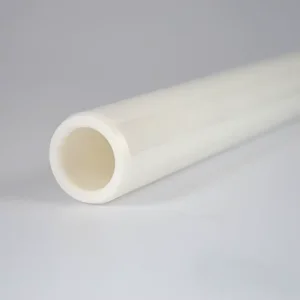
Wholesale Zirconia Ceramic Tube Manufacturer, Factories
View Product Specs
China Professional China China Metal Injection Molding (MIM) Parts for Complex Structural Components Machinery Parts Manufacturers, Factories
View Product Specs
Wholesale Manufacturer for Mechanical Joint Element for Metal Injection Molding Manufacturers, Suppliers
View Product Specs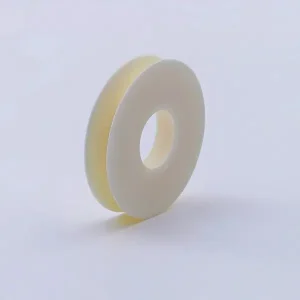
Wholesale What makes JHMIM a favorite for ceramic parts? Supplier, Factory
View Product Specs
Wholesale High Quality MIM Metal Injection Molding Process High Volume Production for Metal Parts for Customized CNC Precision Turning Milling Stainless Steel Parts Machinery Parts Manufacturer, Manufacturers
View Product Specs
China Good quality Powdered Metallurgy Metal Part Powder Metallurgy Manufacturer, Suppliers
View Product SpecsAccelerate Your Hardware Development Program
Submit your 2D drawings (PDF) and 3D CAD models (STEP/IGES) today. Receive a comprehensive DFM engineering feedback report and itemized quotation within 48 hours. Backed by strict NDA protection and a 1-year product warranty.