
Top 8 Sintered & MIM Parts Solutions
Engineered OEM powder metallurgy and injection-molded components for high-stress industrial applications.
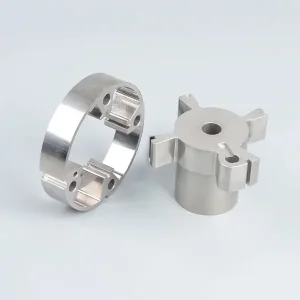
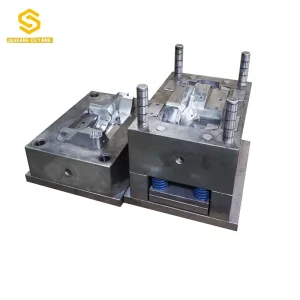



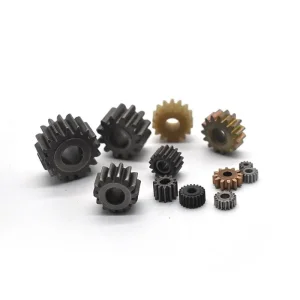


The Strategic Paradigm Shift: China Powder Metals Manufacturing Ecosystem
In the modern landscape of high-precision component manufacturing, global original equipment manufacturers (OEMs) face an escalating trilemma: balancing structural mechanical integrity, geometrical complexity, and total cost of ownership (TCO). Traditional subtractive manufacturing—such as multi-axis CNC milling and turning—incurs exponential cost scaling when faced with complex 3D contours, internal spline features, or micro-geometrical pockets. Conversely, standard investment casting often yields insufficient dimensional repeatability and requires labor-intensive secondary finishing.
This critical gap is bridged by China's advanced Powder Metals (PM) and Metal Injection Molding (MIM) sector. Powered by robust supply chain consolidation, continuous sintering furnace innovations, and Industry 4.0 automation, Chinese powder metallurgy factories have evolved from low-cost component suppliers into strategic co-engineering partners for Tier-1 automotive, medical device, aerospace, and consumer technology conglomerates worldwide.
Core Technical Insight: Solid-state diffusion during high-temperature sintering allows atomized metal powders (iron-nickel, copper-steels, 17-4PH, 316L, and Ti-6Al-4V) to form metallurgical bonds approaching theoretical solid density (>98.5% for MIM and >92-95% for press-and-sinter PM), eliminating structural anisotropy commonly observed in subtractive stock materials.
The Dual Engine: Press-and-Sinter PM vs. Metal Injection Molding (MIM)
Understanding when to deploy traditional Press-and-Sinter Powder Metallurgy versus Metal Injection Molding is pivotal for procurement directors and principal design engineers:
Conventional Press-and-Sinter (PM)
Best for: High-volume structural parts, axial gears, timing pulleys, self-lubricating bushings, and VVT engine components with 2.5D geometries.
- Compaction via high-tonnage automated mechanical/hydraulic presses (up to 1,000 tons).
- Exceptional material utilization exceeding 95%.
- Unmatched cost efficiency for high-torque power transmission systems.
Metal Injection Molding (MIM)
Best for: Micro-geometries under 100 grams, surgical tools, complex latch mechanisms, titanium implants, and smart device hinges.
- Combines plastic injection molding design freedom with full metallic strength.
- Eliminates secondary machining on undercuts, internal threads, and thin walls.
- Achieves high surface finish quality (Ra 0.8–1.6 µm) as-sintered.
Metallurgical & Process Selection Framework
A side-by-side technical evaluation for global sourcing teams selecting manufacturing routes in China.
| Evaluation Parameter | Press-and-Sinter (PM) | Metal Injection Molding (MIM) | 5-Axis CNC Machining | Investment Casting |
|---|---|---|---|---|
| Geometrical Freedom | Moderate (2.5D Shapes, Step Hubs) | Extreme (3D Complex, Undercuts) | High (Tool Path Constrained) | High (Draft Angle Dependent) |
| Sintered Density | 88% – 95% (Fully Densified) | 96% – 99% (Wrought-Like) | 100% (Base Stock Density) | 97% – 99% (Porosity Risk) |
| Dimensional Tolerance | ±0.03 mm – ±0.05 mm | ±0.3% to ±0.5% Nominal | ±0.005 mm – ±0.01 mm | ±0.5% to ±1.0% Nominal |
| Material Scrap Rate | < 3% – 5% | < 2% (Regrind Feedstock) | 40% – 85% (High Waste) | 15% – 30% (Sprues/Runners) |
| Economical Batch Size | > 5,000 units | > 2,000 units | 1 – 1,000 units | > 500 units |
| Unit Cost Scaling | Ultra Low at Scale | Low to Medium | High (Constant Machining Time) | Medium |
China Factory 4.0: Supply Chain Resilience & Structural Cost Advantages
Global procurement teams evaluating Chinese powder metal manufacturers must analyze key operational differentiators beyond simple labor arbitrage. Over the past decade, premier Chinese manufacturing clusters—predominantly concentrated in Zhejiang (Ningbo, Cixi), Jiangsu, and Guangdong—have integrated digital quality management systems and automated powder handling technologies.
1. Upstream Powder Metallurgy Material Synthesis
China commands over 60% of the world's elemental iron, copper, and titanium powder supply chains. Advanced water atomization and gas atomization plants in China produce ultra-fine spherical powders (<15 µm for MIM, 45–150 µm for press-and-sinter) with strict particle size distribution (PSD) controls. This raw material sovereignty shields international buyers from global supply chain volatility and ensures raw powder chemistry complies strictly with MPIF Standard 35, ASTM B883, and DIN ISO 22068 specifications.
2. Advanced Tooling Engineering & Simulation Software
In-house mold design capability is the backbone of Chinese precision factories. Utilizing finite element analysis (FEA) and mold-filling simulation software (such as Moldex3D for debinding/sintering shrinkage predictions), Chinese tooling engineers calculate volumetric shrinkage factors (typically 12% to 22% during sintering) with pin-point accuracy. Dies are crafted using carbide inserts and high-grade D2/H13 tool steel, achieving tool life cycles exceeding 1,000,000 cycles.
3. Automated Vacuum Debinding & Continuous Sintering Muffles
Modern Chinese factories utilize multi-zone continuous mesh belt sintering furnaces and high-vacuum thermal debinding systems. By precisely controlling atmosphere gases (cracked ammonia, pure hydrogen, or argon gas purging), carbon concentration is managed to prevent surface decarburization or oxidation. Microprocessor-controlled temperature zones maintain ±2°C thermal equilibrium across 1,350°C sintering thresholds, guaranteeing uniform grain boundary diffusion and consistent tensile strength performance.
IATF 16949 Quality Audit
100% process control with online automated optical inspection (AOI), CMM dimensional checks, and material spectrographic verification for zero-defect automotive deliveries.
Fast DFM & Rapid Prototyping
DFM reports returned within 48 hours. Metal 3D printing (SLM/DMLS) and soft tooling options accelerate sample verification prior to mass production tooling investment.
Integrated Secondary Finishing
In-house CNC machining, heat treatment (carburizing, induction hardening), steam treatment, resonance deburring, PVD coating, and electroplating under one roof.
Localized Application Scenarios & Global Sourcing Demand
How Tier-1 enterprises across North America, Europe, and Asia leverage Chinese powder metallurgy precision components.
Automotive Powertrain & EV Drive Systems
Demand for variable valve timing (VVT/VCT) phaser rotors, oil pump gears, synchronizer hubs, electronic parking brake (EPB) planetary gearboxes, and seat adjuster components. PM parts deliver self-lubricating porous matrix structures, reducing frictional drag and component wear in ICE and Electric Vehicles.
Medical Instruments & Surgical Hardware
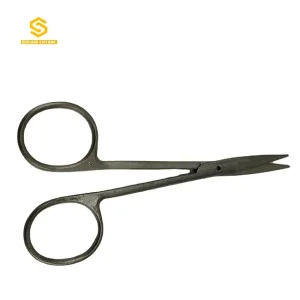
High-density 17-4PH surgical scissors, endoscopic grasper jaws, biopsy forceps, and biocompatible Titanium MIM (TiMIM) dental brackets. MIM technology yields ergonomic curved surfaces and microscopic pinholes that are impossible to machine reliably with standard cutting tools.
Consumer Electronics & Smart Wearables
Complex folding smartphone hinges, smartwatch casings, camera module ring brackets, and fiber-optic connector housings. Powder metallurgy enables non-magnetic stainless steel (316L) parts with high cosmetic polishing appeal and ultra-thin wall sections down to 0.4 mm.
Industrial Tools & Heavy Machinery
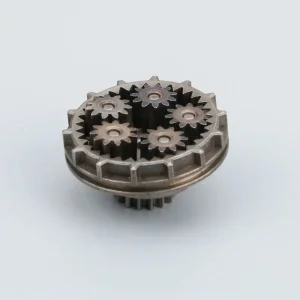
High-torque powder metallurgy planetary gear systems, textile machinery thread guides, pneumatic tool valves, and hydraulic pump plates. Sintered iron-copper and alloy steel parts provide exceptional impact strength and fatigue resilience under high mechanical stress.
Frequently Asked Sourcing & Engineering Questions
Expert insights compiled by senior Chinese powder metallurgy engineers and international procurement specialists.
Standard mold fabrication for conventional PM tooling takes 21 to 28 days. For complex multi-cavity MIM tooling, lead times range from 30 to 45 days including mold flow simulation. Initial T1 samples are dispatched alongside full Dimensional Inspection Reports (CMM) and Material Test Certificates (MTC) within 5 business days post-tooling trial.
Leading Chinese factories operate under strict ISO 9001 and IATF 16949 certified quality management systems. Material chemistries and sintered mechanical properties conform strictly to MPIF Standard 35 (USA), DIN 30910 (Germany), and JIS Z2550 (Japan). With imported vacuum sintering furnaces and CMM testing, dimensional repeatability matches global standards while providing 30–50% total cost savings.
Yes. Chinese factories routinely process austenitic stainless steel (316L), martensitic stainless steel (17-4PH, 420), soft magnetic alloys (Fe-Ni, Fe-Si), and ultra-high-density titanium alloys (Ti-6Al-4V). Soft magnetic sintered components offer superior permeability and low core loss for solenoid valves, sensors, and electric motor stators.
Due to the initial tooling setup, the standard MOQ for conventional press-and-sinter PM components is 5,000 pieces, while MIM component MOQs typically start at 2,000 pieces. Top-tier Chinese facilities feature monthly outputs exceeding 50,000,000 sintered parts, backed by fully automated robotic cell loading and continuous conveyor belt furnaces.
Reputable Chinese OEM manufacturers enforce strict confidentiality protocols. Prior to receiving 2D/3D CAD drawings (STEP, IGES, PDF), comprehensive Non-Disclosure Agreements (NDAs) are signed under legally binding jurisdiction. Project data is stored on encrypted local servers with restricted internal engineering access.
High-Precision Sintered & Die Cast Hardware
Explore additional OEM custom parts engineered for heavy-duty industrial and surgical machinery.





Partner with China's Leading Powder Metal Engineers
Send us your 2D engineering drawings (PDF) and 3D CAD models (STEP/IGES) today. Receive a comprehensive DFM analysis and transparent quotation within 48 hours.