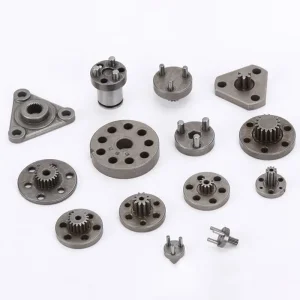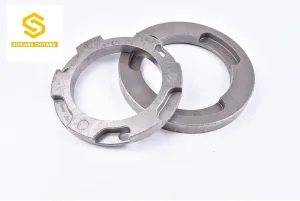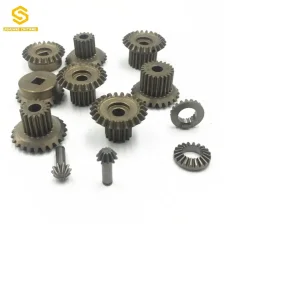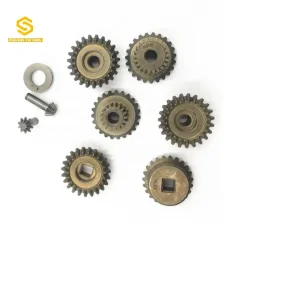
Wholesale Powder Metallurgy Planetary Gear Manufacturer, Manufacturers
Product Description
Powder Metallurgy Process in Planetary Gear Production
Powder metallurgy is the life-blood manufacturing technology for planetary gear components. It offers exceptional precision and material efficiency. This specialized process changes metal powders into complex mechanical components through controlled steps rather than traditional machining methods.
Basics of Powder Metallurgy Technology
Powder metallurgy (PM) creates components directly from metal powders through a near net shape manufacturing process. The technique compacts fine metal particles into a desired shape and heats them below melting temperature to produce planetary gears. This process, known as sintering, creates metallurgical bonds between particles without fully melting the material.
The technology has improved by a lot over time but keeps its focus on creating high-density, precision components. Modern planetary gearsets made through PM technology can achieve gear quality to DIN class 8 after heat treatment with surface roughness measurements of Ra=1.2 μm. The endurance limit in tooth root bending fatigue testing of surface densified PM gears reaches 94-106% of reference gears made through traditional methods.
Advantages Over Traditional Manufacturing Methods
PM offers several benefits compared to conventional gear manufacturing techniques. The process uses more than 97% of the original raw material in the completed part. This reduces waste dramatically compared to machining processes which can waste up to 50% of materials.
Plus, powder metallurgy makes possible:
- Complex geometries that would be difficult or impossible through other metalworking techniques
- Elimination of secondary machining operations through near-net shape capabilities
- Natural sound dampening properties due to controlled porosity
- Lower manufacturing costs while maintaining tight tolerances
- Excellent part-to-part repeatability and consistency
Cost savings become clear in high-volume production scenarios. Industry data shows some manufacturers save up to 30% compared to traditional methods.
Material Composition and Selection
Material choice affects planetary gear performance characteristics. PM gear components use different materials based on function:
Nickel steel works best for input and output flanges because it allows net-shape production without extra operations. Sun and planet gears need low-alloy hybrid steel followed by heat treatment to improve strength properties. Ring gears, which need lower hardness, often use sinter-hardened powder.
Density control plays a vital role during material processing. Modern densification processes can achieve densities above 7.6 g/cm³, which affects mechanical properties. Higher sintering temperatures—typically between 930°C and 1,090°C—improve density, hardness, and bending strength. Peak hardness values of 67.2 HRC occur at 1,070°C.
Step-by-Step Production Process
Planetary gear production through powder metallurgy follows four vital steps:
Powder Production: Methods like atomization, solid-state reduction, electrolysis, or chemical processes create metal powders. The choice of production method depends on quantity needs, desired properties, and economic factors.
Mixing and Blending: Metal powders combine with binders or lubricants to determine final part characteristics. This vital step creates custom alloys with specific properties tailored to gear applications.
Compacting: High-pressure compaction forms the powder mixture into a mold, creating a "green compact". Cold die compaction, iso-static pressing, or hot compaction methods work depending on specific requirements.
Sintering: Controlled heating below melting temperature creates permanent bonds between particles in the green compact. Vacuum furnaces with precise temperature control aid atomic movement between particles.
High-performance planetary gears often need surface densification techniques. These create a structure with a pore-free case and porous core. Densified layers range from 0.35mm to 0.70mm deep. Heat treatments like carburizing at 920°C then improve wear resistance.
This sophisticated process helps powder metallurgy deliver planetary gear components that blend excellent performance with manufacturing efficiency.
Essential Planetary Gear Components and Design
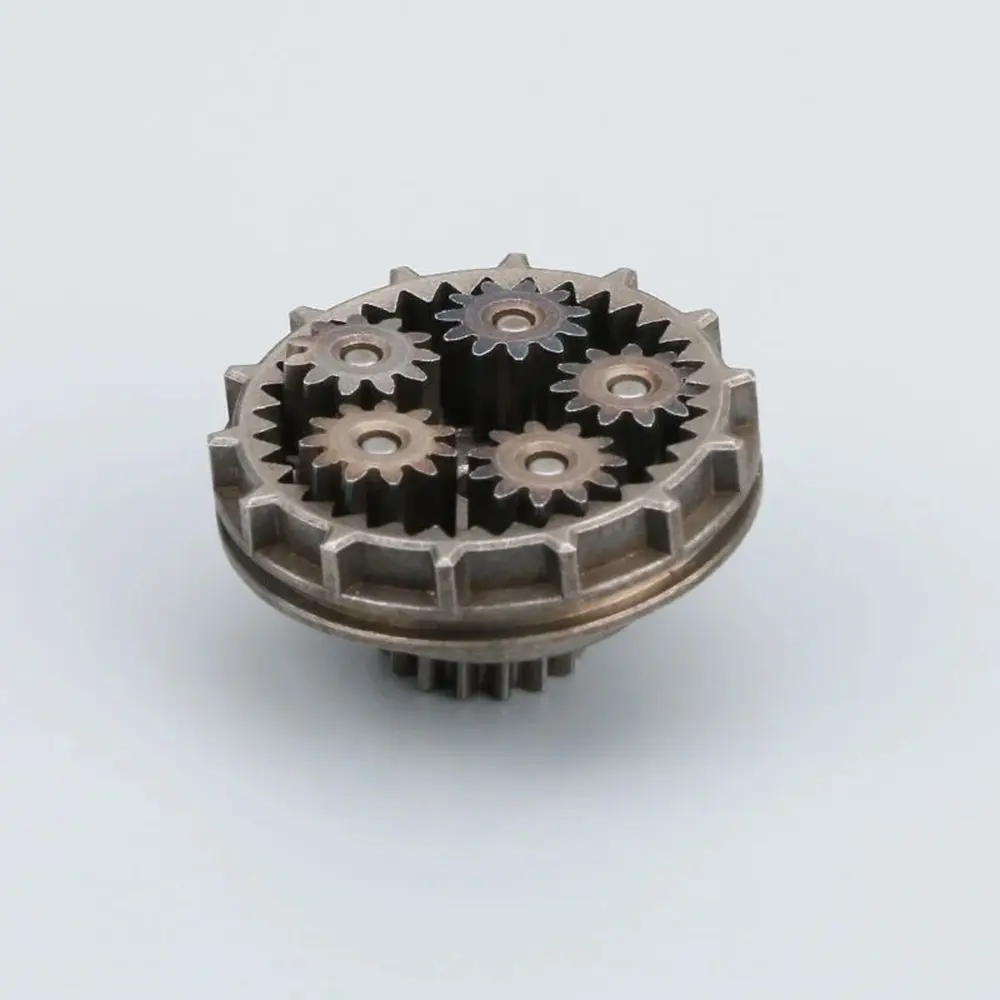
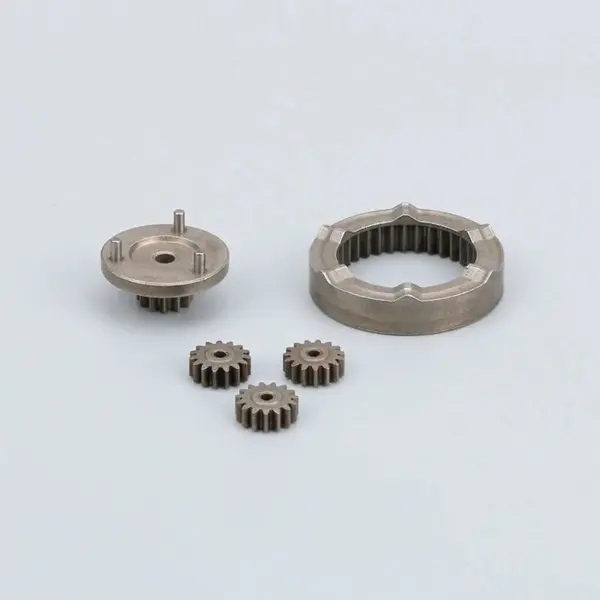
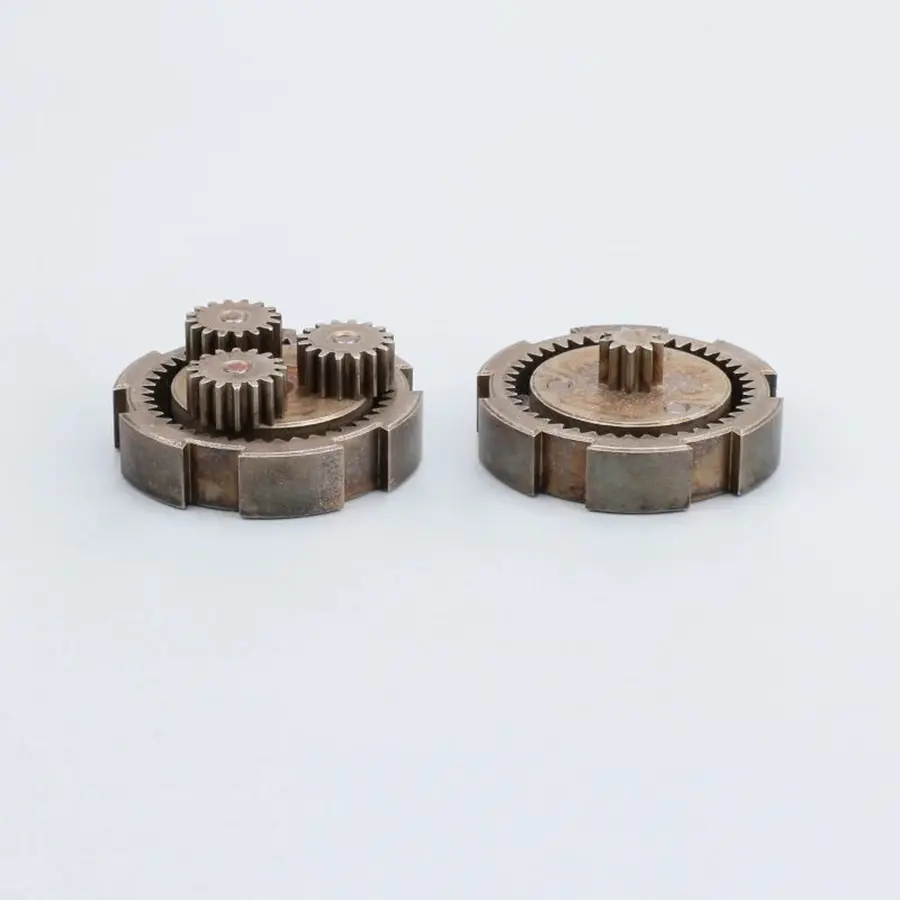
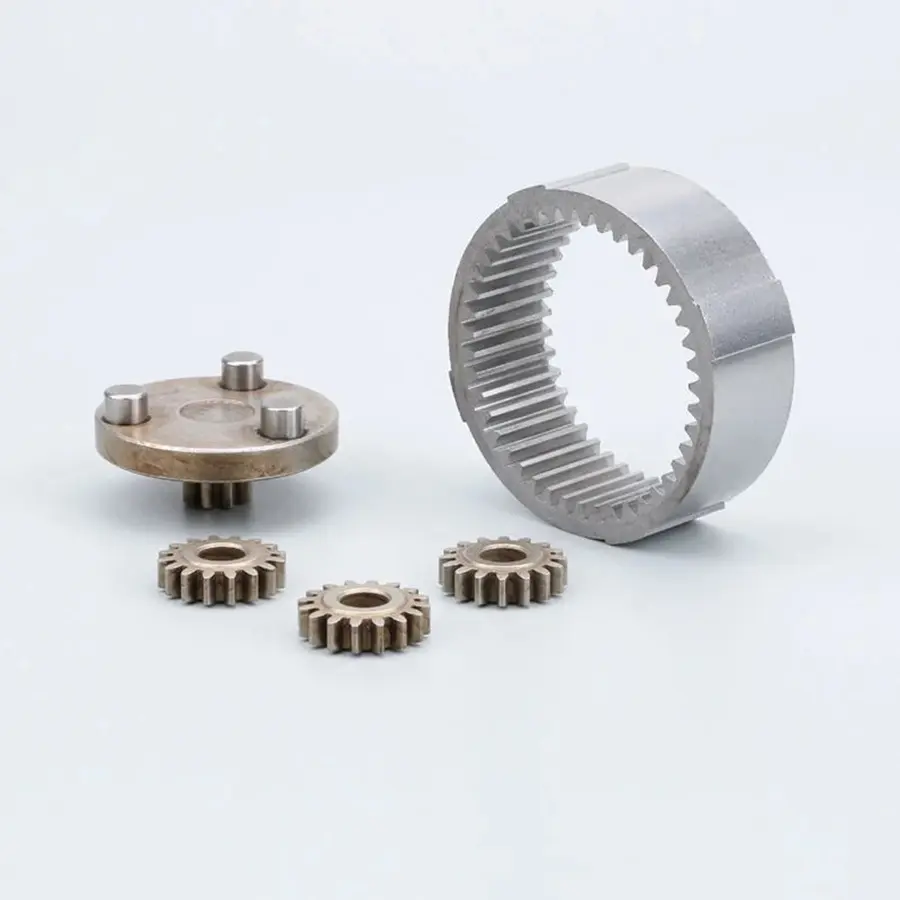
A planetary gear system works at its best when three main parts interact with perfect precision. Each component's design plays a key role in power flow, load handling, and how long the system lasts. You'll find these systems everywhere from car transmissions to factory machines.
Sun Gear Specifications and Functions
The sun gear sits at the heart of every planetary gear system. This external gear connects to the central axis. It usually acts as the main input and drives the whole system with fast-moving, low-torque power. The sun gear's central spot helps spread force evenly to the planet gears around it, which cuts down stress on individual teeth.
Sun gears need exact tooth shapes and perfect sizing to work right. These gears push power to several planets at once in basic planetary setups. This setup can slow speeds down by as much as 10:1 in just one stage. The number of teeth on the sun gear affects the overall ratio and must match specific math rules with other parts for everything to fit together.
Making sun gears through powder metallurgy gives them better materials like nickel steel or low-alloy hybrid steel. Heat treatment follows. This creates parts that resist wear better while staying true to size - a must for smooth running.
Planet Gears: The Load-Bearing Elements
Planet gears stand out as the most unique feature in planetary gearsets. They work between the sun and ring gears. These parts split input power across multiple paths, which:
- Handles more torque
- Spreads structural loads evenly
- Makes the system last longer
- Gives better rotational stiffness
This load-sharing ability makes planetary gear designs special. Three or more planets space out evenly around the sun gear. This setup handles much more torque than regular fixed-axis gears. All the same, planet gears face their own challenges. Manufacturing flaws can make some planets carry heavier loads than others.
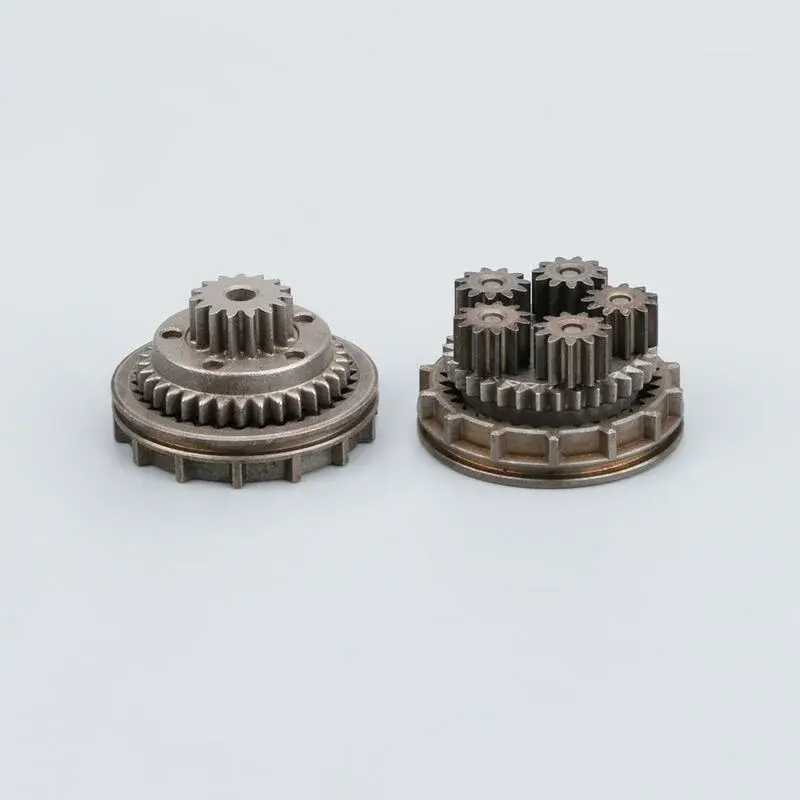
Planet gears spin on their axes while they orbit the sun gear. A carrier structure holds them with planet pins and needle roller bearings. Picking the right bearings for planet gears needs extra care. Space limits often mean using smaller bearings that might wear out faster from heat and repeated use.
Powder metallurgy helps make better planet gears by creating custom alloys that handle stress cycles well. These parts also run quieter thanks to how powder metallurgy naturally dampens sound.
Ring Gear Design Considerations
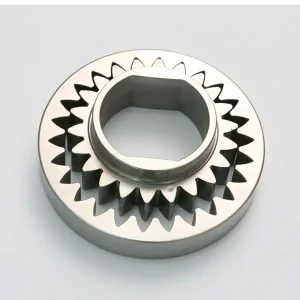
The ring gear (or annulus gear) wraps around the whole planetary system. It has teeth on its inner surface that mesh with the planet gears. The ring gear usually stays still, giving the planets a fixed point to move around. Making these internal teeth brings its own challenges, like fitting issues between ring and planet gears.
Ring gear flexibility changes how well the system works. Research shows that flexible ring gear rims affect both gear teeth contact and the whole system's behavior. The way planet branches line up with external supports can change how the ring bends and how gear teeth share loads.
Ring gears often need different materials than sun or planet gears. Powder metallurgy lets makers create ring gears using sinter-hardened powder mixes. These give the right hardness while keeping their shape after heat treatment.
The teeth numbers on all parts must follow specific rules to fit together properly. For evenly spaced planets, adding the sun gear teeth to ring gear teeth must divide evenly by the number of planets. This math ensures planets can sit evenly while meshing correctly with both sun and ring gears.
Quality Control Standards for Planetary Gearsets
Quality control standards are the foundations of high-performing planetary gear systems that serve ground industrial needs. Manufacturers use sophisticated techniques to achieve precision tolerances down to a thousandth of a millimeter. These techniques ensure optimal performance and longevity of critical components.
Precision Measurement Techniques
The KLINGELNBERG P26 Gear Measuring Center lets manufacturers assess planetary gears with exceptional accuracy. This instrument measures profile errors, lead errors, pitch errors, and runout with precision up to 0.0015mm. Components created through powder metallurgy need even more careful monitoring to maintain dimensional stability during the sintering process.
Quality inspection focuses on these key parameters:
- Profile deviation (fHα) and cumulative profile deviation (Fα)
- Lead angle deviation (fHβ) and lead shape deviation (ffβ)
- Individual pitch error (fp max) and total cumulative pitch error (Fp)
- Radial runout error (Fr) and tooth thickness variation (Rs)
Simple verification methods worked in the past. Now, modern acceleration measurements track all planetary bodies under controlled torque and speed conditions. Test fixtures hold instruments while keeping gear dynamics separate from other system components.
Durability Testing Protocols
Quality assurance depends heavily on reliability testing, particularly for powder metallurgy gears that must perform under extreme conditions. The Weibull distribution serves as the mathematical foundation for reliability models. It defines transmission capacity as the input torque for one million sun gear rotations with 90% survival probability.
Normal-opposite rotation tests serve as a key durability assessment method for large planetary gearboxes. Manufacturers apply and measure dynamic random loads that mirror real-life operating conditions. Powder metallurgy gears go through intense fatigue testing because their material composition affects long-term durability.
Live working mechanism analysis helps manufacturers predict component lifespans. Traditional lifetime models based on constant stress cannot fully capture dynamic random stress conditions. This limitation has led to specialized models that include load parameters, geometric parameters, and material parameters.
Industry Certifications and Compliance
ISO 9001 certification stands as the baseline quality management system standard that reputable planetary gear manufacturers must meet. This worldwide certification confirms products meet consistent quality standards for performance and reliability.
Many manufacturers also pursue AGMA (American Gear Manufacturers Association) certification programs. AGMA offers specialized certificates such as:
- Gear Manufacturing Certificate, which requires courses in manufacturing, parallel axis gearing, and inspection
- Advanced Gear Engineering Certificate that focuses on technical expertise in epicyclic gear design
CE certification remains crucial for manufacturers selling planetary gearboxes in European markets. Product defects often cause critical system failures. These certifications ensure products meet strict safety requirements in applications of all types, from automotive transmissions to aerospace components.
Certification programs for powder metallurgy gears include extra testing requirements. These verify material integrity throughout the sintering process and subsequent heat treatments.
Custom Manufacturing Solutions for Different Industries
Planetary gear manufacturers create products that meet specific requirements in industries of all types. Their specialized solutions need precise engineering and careful material selection to handle unique operational needs.
Automotive Transmission Requirements
Planetary gearboxes play a vital role as key components in automatic transmissions. These gears must deliver both speed reduction and torque amplification. The gears split loads among multiple planet gears, which results in smoother operation and better efficiency. Powder metallurgy creates planetary gear components that naturally dampen sound - a vital feature that reduces cabin noise.
Manufacturers customize sun gears and planet gears with nickel steel and low-alloy hybrid steel. Heat treatment boosts their strength properties. These materials help automotive transmissions handle repetitive stress cycles throughout a vehicle's life.
Heavy Machinery Applications
Heavy machinery needs strong planetary gear systems that can handle extreme loads in tough environments. You'll find these gear systems mostly in reducers for construction equipment like excavators, loaders, and bulldozers. The powder metallurgy process creates exceptionally durable planetary gears by reaching densities above 7.6 g/cm³, which substantially improves mechanical properties.
Planetary gearboxes work well in heavy machinery because:
- Their compact design saves space in machinery
- Quality materials and solid engineering handle harsh conditions
- Load distribution among multiple planet gears makes power transmission smoother
Mining equipment such as hoists, conveyors, and crushers benefit from planetary gear systems that can handle massive loads and impact forces.
Aerospace and Defense Specifications
The aerospace and defense sectors need planetary gears that are both lightweight and extremely precise. These parts must meet strict military specifications since they often work in critical systems. Military helicopters use planetary gears as the final stage gear reduction for the main rotor, and these gears largely determine cabin noise levels.
Powder metallurgy helps manufacturers produce aerospace-grade planetary parts with exact tolerances and specific material compositions. Defense applications require these gears to pass factory available testing (FAT) to meet military specifications. Some systems need special features like zero-backlash design through mechanical or electrical preload systems.
Tank turret systems and other combat vehicles need planetary gears that handle high loads while maintaining quick speed and precise positioning. Manufacturers must balance weight, rotation speed, position accuracies, and shock loads when designing these essential components.
Material Advancements in Planetary Gear Manufacturing
State-of-the-art materials science continues to drive the development of planetary gear manufacturing to improve performance and durability. Manufacturers can now create components that last longer and withstand extreme conditions.
High-Performance Metal Alloys
Modern planetary gear systems are built on advanced metal alloys. Hardened steel remains a popular choice and reaches surface hardness of 45-55HRC through proper heat treatment. Alloy steels with precarbonization carbon content of 0.2%-0.3% achieve better hardness values between 58-62HRC. Manufacturers now use titanium alloys that combine lightweight properties with superior corrosion resistance for applications that just need exceptional strength.
Super alloys are a breakthrough that works specifically in environments with extreme temperatures and pressures. These specialized materials contain traces of cobalt, molybdenum, tungsten, or vanadium to improve heat resistance and durability. The powder metallurgy process helps create these alloys by controlling material composition precisely during fabrication.
Composite Materials Integration
Planetary gear design philosophy has seen a radical alteration with composite materials. Carbon fiber reinforced polymers provide better strength-to-weight ratios than traditional metal components. These composites offer several benefits:
- Higher stiffness and tensile strength
- Reduced weight (approximately one-third that of steel alloys)
- Better resistance to fatigue failure
Glass fiber reinforced polyamide (GFPA) works well in high-speed planetary gearboxes. This material weighs less and maintains excellent thermal stability, making it ideal for aerospace and military applications. Manufacturers can combine these composite materials with metal matrices through powder metallurgy techniques to optimize performance.
Surface Treatment Technologies
Surface treatments revolutionize planetary gear components' performance. Carbonitriding—a thermochemical process that introduces both carbon and nitrogen into steel surfaces—substantially increases wear resistance, hardness, and fatigue strength. This process creates a protective layer with surface hardness values reaching 67.2 HRC at optimal sintering temperatures of 1,070°C.
BALINIT C (WC/C) coating is another state-of-the-art approach that greatly improves protection against scuffing and pitting, especially for planetary gear elements. Of course, nitriding treatments help gears maintain high hardness and wear resistance with minimal deformation.
Chrome plating and Physical Vapor Deposition (PVD) coatings boost corrosion resistance, especially when used in aggressive environments or applications with high operating temperatures. These surface technologies complement powder metallurgy production methods to create planetary gear components that perform exceptionally well.
Conclusion
Powder metallurgy is revolutionizing planetary gear manufacturing. This technology achieves efficiency rates above 97% and delivers superior quality. Manufacturers use advanced measurement techniques and testing protocols to meet strict industry requirements. Their precision tolerances can reach 0.0015mm.
Recent breakthroughs in material science, especially with high-performance metal alloys and surface treatments, have expanded planetary gear capabilities. Modern carbonitriding processes create protective layers that reach surface hardness values of 67.2 HRC. BALINIT C coatings make these gears more resistant to scuffing and pitting.
Planetary gear systems work well in automotive, aerospace, and heavy machinery applications. Each field needs its own specifications and performance characteristics. JIEHUANG helps customers find custom planetary gear solutions that match their industry needs. The company backs this with quality certifications and proven expertise in manufacturing.
These resilient systems combine quick power transfer with long-lasting durability. They will without doubt stay crucial to mechanical engineering. Powder metallurgy processes help these systems perform better and meet the growing demands of industry.
Frequently Asked Questions
Planetary gear systems offer high efficiency, compact design, and excellent load distribution. They can achieve up to 97% energy transmission rate, provide high torque in a small package, and distribute forces evenly among multiple gears, making them ideal for various industrial applications.
Powder metallurgy enables the production of high-precision planetary gear components with minimal material waste. This process allows for complex geometries, eliminates secondary machining, provides natural sound dampening, and offers cost savings in high-volume production scenarios.
A planetary gear system consists of three main components: the sun gear at the center, multiple planet gears surrounding it, and an outer ring gear. Each component plays a crucial role in power transmission and load distribution within the system.
Quality control for planetary gears involves precision measurement techniques, durability testing protocols, and industry certifications. Advanced metrology systems measure profile errors and dimensional accuracy, while dynamic testing simulates real-world conditions to predict component lifespans accurately.
Recent material advancements include high-performance metal alloys, composite materials integration, and advanced surface treatment technologies. These innovations have led to planetary gears with enhanced strength, reduced weight, improved wear resistance, and better performance in extreme conditions.