Featured OEM Powder Metal Components & Engineering Parts
Explore our high-precision sintered, die-cast, and MIM components engineered for industrial, medical, and automotive global OEM applications.

OEM Custom High Precision CNC Machining & Die Casting Auto Spare Parts
View Product Details
Wholesale Metal Injection Molding Metallic CPU Cooling Fan Components
View Product Details
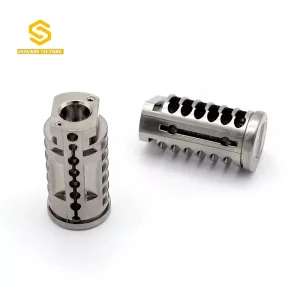
China OEM/ODM High Precision Powder Injection Molding (PIM/MIM) Parts
View Product Details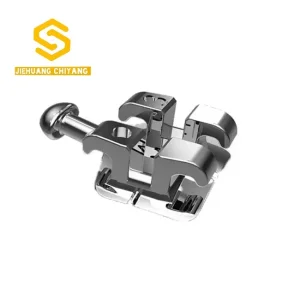
Wholesale Dental Supplies MIM Mesh Base Metal Orthodontic Brackets
View Product Details
Aluminium Alloy Die Casting with High Precision CNC Machining Finish
View Product Details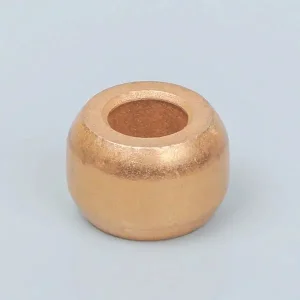
Wholesale High-Density Sintered Bronze & Iron Oil-Impregnated Bushings
View Product Details
Wholesale Medical & Dental Precision Orthodontic Brackets by MIM
View Product Details
Custom ODM Sintered Metal Parts & Powder Metallurgy Structural Components
View Product DetailsExecutive Summary: The Structural Shift in Global Metal Forming
How China’s advanced powder metallurgy ecosystem is reshaping high-volume manufacturing through material efficiency, complex geometry integration, and net-shape precision.
Material Utilization Rate
Traditional subtractive CNC machining wastes up to 60%–80% of raw alloy block weight as scrap. Powder Metal Technology achieves near-net-shape forming with over 95% material utilization, drastically lowering raw material costs for titanium, stainless steel, and nickel superalloys.
Geometric Complexity
Metal Injection Molding (MIM) decouples component complexity from manufacturing cost. Features such as internal cross-drilled channels, micro-splines, undercuts, and thin walls (down to 0.3mm) are molded in a single step without post-machining setup.
Density & Mechanical Parity
Modern high-temperature vacuum sintering combined with Hot Isostatic Pressing (HIP) delivers sintered densities of 97% to 99.5% theoretical density, matching or exceeding wrought metal tensile strength, fatigue life, and corrosion resistance.
Powder Metal Technology Innovations & Global Trends
The convergence of powder metallurgy, binder physics, multi-axis automated sintering, and ceramic matrix composites is redefining OEM design boundaries.
1. Advanced MIM 2.0 & Catalytic Debinding
The transition from thermal solvent debinding to polyoxymethylene (POM)-based catalytic debinding in nitric acid atmospheres has reduced debinding cycles from 24 hours to under 3 hours. This shift prevents shape distortion, minimizes carbon contamination, and permits the mass production of thick-walled metal injection molded components without thermal slump.
- Zero-phase distortion during binder extraction
- Sub-micron particle packing density optimization
- Ultra-low residual carbon level (< 0.03%)
2. Titanium & Specialty Superalloy Sintering
With growing demand in aerospace, medical implants, and premium consumer electronics, China's leading factories have pioneered titanium (Ti-6Al-4V, Pure Ti Grade 2) MIM processing under ultra-high vacuum (< 10⁻⁴ mbar) with argon partial pressure control. Oxygen pick-up is strictly maintained below 1,500 ppm to preserve ductility and fatigue resistance.
- Strict oxygen and nitrogen interstitial control
- Biocompatible Ti-6Al-4V ELI alloy compliance
- Ideal for surgical staplers and aerospace fasteners
3. Micro-MIM & High-Aspect-Ratio Forming
Micro-Metal Injection Molding caters to the miniaturization trend in medical devices, fiber optic transceivers, and micro-gearboxes. Utilizing spherical gas-atomized metal powders with grain sizes below 5 micrometers (D50 < 5µm), Chinese manufacturers produce micro-gears weighing less than 0.01 grams with wall thicknesses of 0.15mm.
- Sub-5 micron powder atomization technology
- Micro-pitch tooth profiles for planetary gearheads
- Optical surface roughness Ra < 0.8 µm as-sintered
Solving Global Sourcing Challenges in Powder Metal Parts
International supply chain directors face complex trade-offs between tooling amortization, lead time, tolerance stack-ups, and vendor technical competency.
| Manufacturing Process | Ideal Annual Volume | Dimensional Tolerance | Geometric Flexibility | Initial Tooling Cost | Material Utilization |
|---|---|---|---|---|---|
| Metal Injection Molding (MIM) | 10,000 – 5,000,000+ pcs | ±0.3% – ±0.5% | Extreme (3D Complex Shape) | Moderate ($3,500 - $12,000) | > 95% |
| Powder Metallurgy (PM Press) | 20,000 – 10,000,000+ pcs | ±0.05 mm (Axial ±0.1mm) | Medium (2.5D Stepped Profiles) | Moderate-High ($5,000 - $25,000) | > 97% |
| CNC Precision Machining | 1 – 5,000 pcs | ±0.005 mm | Medium-High (Tool Access Limited) | Zero Tooling (Fixture Only) | 15% - 40% |
| Aluminum/Zinc Die Casting | 5,000 – 1,000,000+ pcs | ±0.1 mm | High (Hollow Cavities/Thin Ribs) | High ($8,000 - $45,000) | > 90% |
1. Total Cost of Ownership (TCO) Optimization
Procurement executives often look beyond unit pricing. Partnering with qualified Chinese factories yields holistic savings through integrated tooling design, in-house secondary CNC machining, automated inspection, and localized material sourcing that mitigates price swings in nickel, cobalt, and molybdenum.
2. Rapid Prototyping & Tooling Risk Mitigation
To bridge the validation gap prior to hard tooling steel (H13/S136) investment, top suppliers deploy 3D metal printing (Binder Jetting / DMLS) and soft aluminium master molds. This guarantees design verification within 10 to 14 days before committing to full production tooling.
3. Supply Chain Resilience & Traceability
Modern manufacturing facilities in China implement Manufacturing Execution Systems (MES) paired with full raw powder lot tracking, batch sintering logs, and 100% automatic optical inspection (AOI) to guarantee zero defective parts per million (PPM) at destination ports.
Macro Industry Solutions & Sector-Specific Applications
Tailored metallurgical alloys and precision press/sinter routes engineered to meet demanding operational environments across diverse industry sectors.
Automotive & EV Powertrains
As auto OEMs transition to electric powertrains and smart chassis systems, powder metallurgy provides lightweight, high-torque structural components.
- Applications: Variable Valve Timing (VVT) rotors, electric parking brake gears, turbocharger vanes, steering column locks, and seat adjuster gears.
- Materials: Fe-Ni-Cu alloys, FN-0205, heat-treated alloy steel (MPIF 35 standard).
- Key Benefit: Superior damping capacity and reduced NVH (Noise, Vibration, Harshness).
Medical & Surgical Instrumentation
Medical devices demand biocompatibility, high strength, steam-autoclave corrosion resistance, and intricate ergonomic geometries.
- Applications: Endoscopic surgical articulation joints, laparoscopy grasper jaws, orthodontic MIM brackets, and bone drill gearboxes.
- Materials: 17-4PH, 316L stainless steel, Cobalt-Chromium (Co-Cr-Mo), Titanium Ti-6Al-4V.
- Key Benefit: Smooth surface finishes and complex internal lumens molded without burrs.
Consumer Electronics & Wearables
Smartphones, smartwatches, and AR/VR headsets require ultra-sleek, durable structural components with cosmetic surface finishing options.
- Applications: Folding phone screen hinges, smartwatch cases, camera ring housings, optical sensor brackets, and laptop hinges.
- Materials: High-density stainless steel, tungsten heavy alloy (for counterweights), ceramic (ZrO₂/Al₂O₃).
- Key Benefit: Mirror-polished cosmetic surfaces via PVD coating and electrolytic polishing.
Industrial Power Tools & Hardware
Heavy-duty cordless tools, hydraulic valves, and security door locks require extreme wear resistance and fatigue strength under shock loads.
- Applications: Planetary gear carriers, hammer drill ratchets, hydraulic pump rotors, lock cylinders, and cable crimper jaws.
- Materials: Sinter-hardened steels, 4600 series alloy steel, case-carburized iron-nickel powders.
- Key Benefit: Elimination of gear hobbing steps, saving up to 55% in production costs.
Aerospace & Defense Components
Weight reduction paired with mechanical reliability under thermal stress makes MIM and HIP ideal for flight control systems and defense hardware.
- Applications: Drone actuator gears, defense latch mechanisms, fuel nozzle brackets, and sensor housings.
- Materials: Inconel 718, Hastelloy, Titanium Grade 5, 4140 low-alloy steel.
- Key Benefit: High strength-to-weight ratio with 100% NDT radiography verification.
Thermal Management & Heat Sinks
High-performance computing, 5G base stations, and LED drivers demand superior thermal conductivity in intricate shapes.
- Applications: Metallic CPU cooling fan hubs, cold plates, vapor chamber internal structures, and optical transceiver housings.
- Materials: Copper (Cu) powder, Aluminum die-cast alloys (A380/ADC12), W-Cu thermal spreaders.
- Key Benefit: Thermal conductivity up to 380 W/m·K with direct thermal-interface mounting.
Technical Roadmap & Metallurgical Quality Controls
How China’s advanced powder metal factories achieve tight tolerance control, homogeneous grain structures, and zero-defect batch consistency.
DFM & Mold Flow Simulation
Before cutting tool steel, engineers run computer simulations (Moldflow & Simufact Forming) to predict binder-powder segregation, jetting marks, gate shear stresses, and thermal shrinkage scale factors (typically 15% to 22% linear shrinkage depending on feedstock solids loading).
Atmosphere-Controlled Sintering
Continuous mesh-belt furnaces and high-vacuum batch sintering furnaces utilize precise gas profiles (Pure Hydrogen, Dissociated Ammonia, Argon, or Vacuum). Closed-loop temperature control maintains ±2°C across the heating zone up to 1380°C to ensure uniform liquid-phase sintering.
Secondary Operations & Finishing
When critical dimensions demand tolerances tighter than ±0.3% (such as bearing seats or gear pitch circles), automated secondary operations are integrated: CNC coining/resizing presses, thread tapping, CNC grinding, magnetic polishing, and HIP densification.
Global Regulatory Compliance, Quality Audit & Green Manufacturing
Adhering to international quality frameworks and sustainable manufacturing protocols for seamless cross-border logistics and engineering acceptance.
ISO 9001 & IATF 16949
Full automotive-grade quality management systems with PPAP Level 3 documentation, FMEA analysis, Control Plans, and APQP project tracking.
RoHS & REACH Compliant
All metal powders, binders, debinding solvents, and surface plating treatments (e.g., trivalent chromium, electroless nickel) comply strictly with EU environmental directives.
Conflict-Free Minerals
Transparent raw material supply chain audits verifying that tungsten, cobalt, tantalum, and gold are sourced exclusively from non-conflict smelters.
ESG Carbon Reduction
Energy-efficient electric sintering furnaces, closed-loop solvent recovery systems (> 98% recycled), and solar power integration minimize Scope 1 & 2 emissions.
Frequently Asked Technical Questions (Powder Metallurgy & MIM)
Detailed answers from our chief metallurgists and tool engineering design team regarding material selection, tolerances, and process limits.
Q1: What is the practical density limit achieved in MIM vs press-and-sinter powder metallurgy?
Metal Injection Molding (MIM) typically achieves 96% to 99% of theoretical material density due to the high surface area of fine spherical powders (typically D50 = 10-15 µm) and full liquid-phase sintering. Conventional press-and-sinter powder metallurgy uses coarser powders (D50 = 50-150 µm) and press compaction, achieving 85% to 92% density in standard pressings, or up to 95% with double-press double-sinter (DPDS) routes. For applications requiring 99.8%+ density, Hot Isostatic Pressing (HIP) can be applied post-sintering.
Q2: How do as-sintered MIM tolerances compare to CNC machining, and when is secondary machining necessary?
Standard as-sintered dimensional tolerance for MIM components is ±0.3% to ±0.5% nominal dimension (e.g., a 10.00mm feature will be within ±0.03mm to ±0.05mm). Features requiring tighter tolerances—such as bearing press-fit journals (IT6-IT7 grade, ±0.005mm), precise flatness (< 0.01mm), or critical thread pitches—require secondary CNC turning, grinding, or CNC coining operations after sintering.
Q3: Which stainless steel grades are best suited for corrosion resistance vs high strength in MIM?
For maximum corrosion resistance (e.g., medical devices, marine hardware, chemical valves), 316L (UNS S31603) is preferred due to its low carbon content and high molybdenum alloy content. For applications requiring a combination of high yield strength, hardness, and moderate corrosion resistance (e.g., surgical tools, industrial latches, firearm parts), 17-4PH (AISI 630) precipitation hardening stainless steel is ideal, achieving tensile strengths up to 1,150 MPa after H900 heat treatment.
Q4: What are the key design rules for DFM (Design for Manufacturability) in Metal Injection Molding?
Essential DFM recommendations for MIM include: (1) Maintain uniform wall thickness (ideal: 0.8mm to 4.0mm) to prevent sink marks and internal voids; (2) Incorporate generous internal radii (> 0.4mm) to avoid stress concentration during binder extraction; (3) Provide flat support surfaces or custom sintering ceramic setters to prevent part sag at elevated sintering temperatures (1300°C+); (4) Avoid sharp feather edges on parting lines to maximize tool steel mold lifespan.
Q5: What is the typical tooling life expectancy for MIM injection molds and PM pressing dies?
Because MIM feedstocks consist of metal powders embedded in lubricated thermoplastic binders, mold erosion is low compared to die casting. A hardened tool steel MIM mold (using Bohler S136 or ASSAB 8407 hardened to 52-54 HRC) routinely produces 500,000 to 1,000,000 shots before requiring refurbishment. For conventional powder metallurgy pressing dies, tungsten carbide inserts are utilized, delivering 1,000,000 to 3,000,000 compaction cycles.
Q6: How does China Powder Metal manufacturing ensure chemical composition and metallurgical grain consistency?
Leading factories perform ICP-OES elemental spectrometer analysis on every incoming batch of raw powder, accompanied by Hall Flow meters and laser particle size diffraction testing (ISO 13320). Post-sintering, destructive metallographic cross-section analysis verifies grain size, pore distribution, carbon content, and case depth (if heat-treated) in accordance with MPIF Standard 35 guidelines.
Specialized Powder Metallurgy, MIM & Die Casting Components
Explore additional specialized OEM engineering solutions from China’s verified powder metal factories.

China Special Design Metal Injection Molding (MIM) Custom Aluminium Plates
View Product Details
Wholesale OEM/ODM High Precision Plastic Injection Mould & Molding Services
View Product Details
MIM Custom Stainless Steel SS304, SS316, 17-4PH Sintered CNC Hardware Parts
View Product Details
Wear-Resistant & Corrosion-Resistant Sintered Alumina Ceramic Components
View Product Details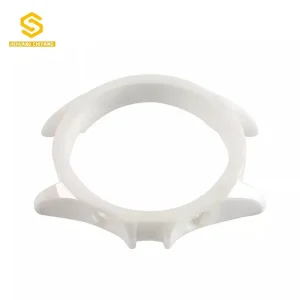
Wholesale Customized Ceramic Injection Molding (CIM) Watch Case Accessories
View Product Details
Precision OEM Customized Zinc Alloy Die Casting Components with CNC Finish
View Product Details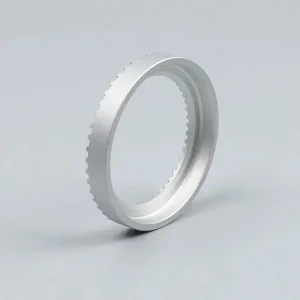
Wholesale High-Precision Automotive Sintered ABS Sensor Rings & Rotors
View Product Details