
Featured Powdered Metal & Molded Components (Part I)
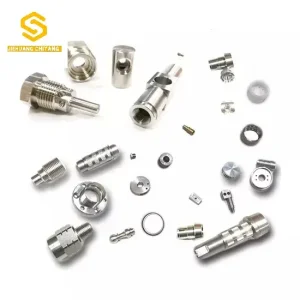
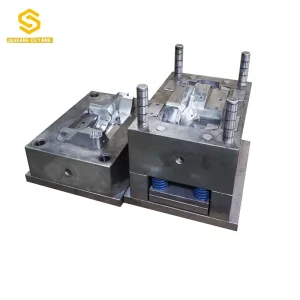
Explore our specialized OEM components engineered via high-density powder metallurgy, micro metal injection molding, and custom alloy die casting.





Global Powdered Metals ("Powered Metals") Market Landscape
Understanding the macro-economic shifts, material technological convergence, and supply chain consolidation defining modern precision metal manufacturing in China.
Market Trajectory & Growth Vectors
The global powdered metals market—frequently searched and referenced by industrial buyers as "powered metals" or powder metallurgy (PM)—is undergoing a dramatic transformation. Expected to expand from $12.5 Billion to over $22 Billion by 2030, growth is accelerated by the automotive transition toward electric powertrains, medical device miniaturization, and high-volume aerospace structural hardware.
China's Strategic Manufacturing Role
China has established itself as the epicenter of advanced powder metallurgy innovation. Facilities such as Ningbo Jiehuang Chiyang Electronic Tech Co., Ltd. (JHMIM) integrate complete vertically integrated production ecosystems—ranging from gas/water powder atomization feedstock mixing to automated 1,000-ton hydraulic compaction and high-vacuum sintering, yielding 30% to 50% cost efficiencies compared to Western CNC subtractive machining.
Convergence of MIM, PM & HPDC
Modern engineering procurement requires hybrid manufacturing strategies. Rather than relying on a single technique, OEM buyers achieve optimized performance by combining Metal Injection Molding (MIM) for ultra-complex 3D micro-geometries, Press & Sinter PM for heavy-duty structural gears, and High-Pressure Die Casting (HPDC) for thin-walled thermal enclosures.
Engineering Powered Metals: Science of Densification & Sintering
A technical breakdown of how Ningbo Jiehuang controls metallurgical microstructures to deliver wrought-equivalent properties in sintered metal components.
In international global sourcing, the phrase "Powered Metals" is widely used interchangeably with Powdered Metals and Powder Metallurgy (PM). Technically, it refers to components fabricated from fine metallic powders compacted under high pressure and thermally bonded below the principal metal melting point via solid-state diffusion sintering. At Jiehuang, our metallurgical controls ensure that whether you specify PM, MIM, or Titanium MIM (TiMIM), the finished component meets rigorous ASTM, MPIF 35, and ISO standards.
1. Metal Injection Molding (MIM & TiMIM)
MIM combines the geometric freedom of plastic injection molding with the structural integrity of high-strength metals. Fine metallic powders (typically <20 μm) are blended with a thermoplastic binder system to formulate feedstock. Once molded, parts undergo catalytic or solvent debinding, followed by high-vacuum sintering where they shrink ~15-20% into near-full-density (96-99%) complex parts such as medical instruments, watch cases, and firearm mechanisms.
2. Press & Sinter Powder Metallurgy (PM)
Ideal for high-volume structural components like spur gears, timing pulleys, oil-impregnated bronze bearings, and sprockets up to 150 mm in diameter. Utilizing 1,000-ton automated compaction presses, elemental or pre-alloyed powders are axially pressed into green compacts and conveyed through continuous mesh-belt atmosphere furnaces (Endothermic or Nitrogen-Hydrogen mixtures) to induce metallic bonding.
3. High-Pressure Die Casting (HPDC) & CNC Finish
For larger lightweight structural housings, heat sinks, and brackets, Jiehuang operates advanced aluminum and zinc high-pressure die casting lines. Integrated in-house CNC machining centers provide sub-micron finishing for critical mounting faces, threads, and bearing bores, allowing global OEMs to consolidate their mechanical purchasing with one certified vendor.
Material Specification & Mechanical Performance Data
The table below illustrates engineering properties achieved across key powered metal alloys mass-produced at Ningbo Jiehuang factory floor.
| Material Grade | Process | Density (g/cm³) | Tensile Strength (MPa) | Yield Strength (MPa) | Hardness | Key OEM Application |
|---|---|---|---|---|---|---|
| MIM 17-4PH (1.4542) | Metal Injection Molding | 7.60 – 7.75 | 1,150 – 1,300 | 1,000 – 1,150 | 38 – 44 HRC | Surgical Tools, Aerospace Fasteners |
| MIM 316L (1.4404) | Metal Injection Molding | 7.80 – 7.90 | 520 – 600 | 220 – 280 | 75 – 85 HRB | Consumer Wearables, Medical Valves |
| Ti-6Al-4V (Grade 5) | Titanium MIM (TiMIM) | 4.40 – 4.48 | 900 – 1,020 | 820 – 910 | 32 – 38 HRC | Watch Cases, Defense & Implants |
| MPIF FN-0208 | Press & Sinter PM | 6.80 – 7.20 | 450 – 700 | 350 – 550 | 25 – 35 HRC | Automotive Timing Gears, Sprockets |
| SAE 841 Bronze | Oil-Impregnated PM | 6.40 – 6.80 | 190 – 240 | 110 – 140 | 40 – 55 HBW | Self-Lubricating Motor Bushings |
| ADC12 / AlSi9Cu3 | Aluminum Die Casting | 2.70 – 2.75 | 310 – 340 | 160 – 180 | 80 – 90 HBW | ECU Housings, Heat Dissipators |
Localized Application Scenarios & Sector Integration
How powered metal manufacturing solves complex engineering challenges across high-demand global vertical markets.
Automotive Powertrain & EV
High-torque sintered planetary gears, variable valve timing (VVT) rotors, seat recliner mechanisms, and sensor brackets. IATF 16949 compliance guarantees zero-defect manufacturing for Tier-1 suppliers.
Medical & Surgical Devices
Biocompatible 316L and titanium MIM parts for laparoscopic jaws, endoscopic staplers, dental tools, and orthopedic instruments requiring high sterilizability and fine micro-tolerances.
Smart Consumer Wearables
Ultra-lightweight titanium watch cases, smart-ring internal armatures, camera bezel rings, and complex folding smartphone hinges requiring mirror polishing and PVD coating readiness.
Industrial Power Tools & Hardware
High-durability ratchet heads, impact wrench drive gears, hydraulic mini-valves, and lock cylinder components manufactured with heat-treated nickel-steel alloys to maximize wear resistance.
Design for Manufacturability (DFM) Guidelines for Powdered Metals
Optimizing component geometries to prevent stress concentrations, eliminate secondary machining, and achieve maximum cost efficiency.
Wall Thickness Uniformity
For Metal Injection Molding, maintain uniform wall thicknesses between 0.8 mm and 4.0 mm. Abrupt section changes induce thermal stress gradients during debinding and sintering, leading to sink marks or dimensional distortion. Use coring and ribs to maintain structural strength while homogenizing wall thickness.
Draft Angles & Ejection Design
Press & Sinter PM components require straight vertical walls parallel to the pressing direction, whereas MIM parts accommodate internal/external threads and undercuts via side-action tooling. A draft angle of 0.5° to 1.5° is recommended on die casting and MIM vertical walls to smooth component ejection.
Radius & Edge Fillets
Avoid sharp internal corners (R < 0.3 mm) which act as severe stress risers during sintering. Incorporating internal radius fillets (minimum 0.5 mm) improves feedstock mold flow during injection and enhances the fatigue strength of final heat-treated steel components by over 35%.
Technology Roadmap & Future Outlook (2025–2035)
How Ningbo Jiehuang is pioneering the next decade of advanced powder metallurgy, additive manufacturing integration, and green factory operations.
Hybrid Additive & Tooling Integration
Deployment of Binder Jet 3D Printing alongside standard MIM tooling for rapid prototyping. Rapid validation allows OEM customers to transition directly from functional metal prototypes to high-volume multi-cavity MIM molds without design risk.
AI-Controlled Closed-Loop Sintering
Implementation of optical sensor arrays inside continuous vacuum sintering furnaces. AI algorithms monitor volumetric shrinkage real-time, dynamically adjusting thermal ramp rates and hydrogen partial pressures to lock in Cpk > 1.67 tolerances.
Green Metallurgy & Net-Zero Carbon Sintering
Transitioning to 100% atomized recycled powder alloys and green hydrogen debinding atmospheres. Carbon-neutral manufacturing workflows to meet stringent European EU CBAM environmental standards for global automotive exports.
Featured Powdered Metal & Molded Components (Part II)
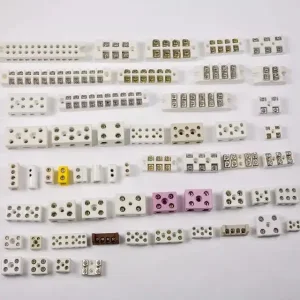
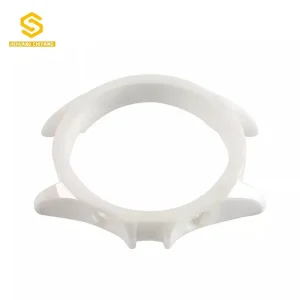
Additional precision components engineered for international original equipment manufacturers (OEMs).



Frequently Asked Technical Questions (FAQ)
Direct answers to crucial technical and operational questions asked by OEM purchasing teams and design engineers.
What is the key difference between Metal Injection Molding (MIM) and traditional Powder Metallurgy (PM)?
The main difference lies in geometric complexity and powder characteristics. Press & Sinter PM utilizes coarser powders (>40 μm) axially compacted in rigid dies, making it best for 2.5D shapes like gears and bushings. MIM uses ultra-fine powders (<20 μm) mixed with polymer binder injected into multi-cavity molds, enabling true 3D shapes (undercuts, thin walls, cross-holes) with densities exceeding 97%.
Why is China the preferred manufacturer for powered metal ("powered metals") components?
China offers a fully integrated industrial supply chain for atomized powders, precision mold making, automated sintering furnaces, and secondary CNC finishing within localized industrial clusters like Ningbo. Factories like Ningbo Jiehuang provide IATF 16949 certified quality at a 30% to 50% lower total landed cost compared to Western suppliers.
What dimensional tolerances can Ningbo Jiehuang hold as-sintered vs post-sizing?
As-sintered MIM tolerances are typically ±0.3% to ±0.5% of the nominal dimension. By adding secondary coining, sizing, or CNC finishing, Jiehuang routinely holds critical dimensions to ±0.005 mm (±5 microns), making parts ready for direct assembly into high-precision gearboxes and actuators.
Can Jiehuang execute proprietary Non-Disclosure Agreements (NDAs) before drawing submission?
Yes. We routinely execute bilateral NDAs with international OEM clients before receiving 2D drawings (PDF) or 3D CAD files (STEP/IGES). All data is restricted to authorized project engineers within our secured network.
What are the minimum order quantity (MOQ) and sample lead times?
Standard production MOQ is 2,000 pieces for MIM and die casting, and 5,000 pieces for press & sinter PM. Tooling fabrication and first-article inspection (FAI) samples typically take 25 to 35 days. Fast-track prototyping via metal 3D printing is available in 5 to 7 days for pre-tooling functional testing.