
Precision Powder Metallurgy & Sintered Metal Parts
Explore our high-performance sintered bushings, planetary gears, and custom OEM die-casting solutions.

China OEM/ODM Manufacturer Powder Metallurgy Parts Power Tools Sintered Metal Planetary Spur Gear Planets Disk
View Detail
China 100% Original China Factory Price High Quality Anodizing Aluminum Die Casting
View Detail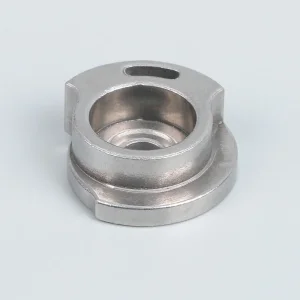
Wholesale Air Cylinder Manufacturer Manufacturers, Factories
View Detail
China Top Grade China Metal Injection Molding Parts (MIM) Suppliers, Factories
View Detail
China Custom Injection Moulding Die Casting Auto Parts Tooling Steel Foundry Casting Moulds
View Detail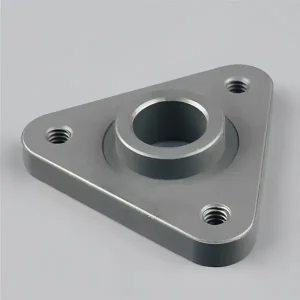
China Sintered Powder Metal Water Pump Flange Supplier Manufacturers, Factories
View Detail
China Rapid Delivery for Custom Stainless Steel Die Casting Parts Metal Work
View Detail
China Massive Selection for China Powder Metallurgy (PM) Sintering Steel Parts with OEM Service
View DetailEngineering Excellence in Sintered Bushings Manufacturing
An in-depth metallurgical analysis of self-lubricating porous sleeve bearings, global market dynamics, and powder metallurgy powder choices.
1. Global Commercial & Industrial Landscape of Sintered Bushings
Sintered metal bushings—commonly recognized as self-lubricating porous bearings—represent a cornerstone of modern tribological engineering. Manufactured via the powder metallurgy (PM) process, these components utilize dynamic capillary action to store lubricating oil within their interconnected pore matrix. When rotational or linear motion occurs, frictional heat causes the impregnated oil to expand and flow out onto the bearing interface, establishing a hydro-dynamic film. Upon cessation of motion, thermal cooling draws the lubricant back into the porous reservoir.
Across North America, Europe, and Asia-Pacific, the global demand for sintered bronze and iron-copper bushings has surged due to aggressive automation, automotive electrification, and the rising efficiency benchmarks of HVAC systems. The transitioning automotive powertrain requires compact, silent, maintenance-free sleeve bearings capable of performing under continuous duty cycles without liquid oil lines or manual grease replenishment.
Technical Information Gain: Sintered bushings offer up to 40% lower mass momentum inertia compared to solid machined brass sleeves, alongside a zero-waste net-shape production route that aligns with modern ESG (Environmental, Social, and Governance) sustainability frameworks.
2. Metallurgical Engineering & Manufacturing Technical Roadmap
The manufacturing process of high-performance sintered bushings requires micro-level control over powder morphology, compaction kinetics, and furnace sintering atmospheres. Below is the technical roadmap executed by tier-1 China powder metallurgy manufacturers:
Powder Formulation & Blending
Controlled mixing of atomized copper (Cu 88-90%), elemental tin (Sn 9-11%), graphite (0.5-1.5%), and organic binders. Iron-copper-carbon powders are utilized for heavy-load applications requiring high compressive yield strength.
Compaction & Density Control
Automated multi-axial CNC compaction presses apply pressures from 200 to 600 MPa. Green density is precisely managed to maintain interconnected open-pore networks ($6.4 - 6.8 \text{ g/cm}^3$ for iron-based, $6.2 - 6.6 \text{ g/cm}^3$ for bronze).
Atmospheric Sintering & Vacuum Impregnation
Sintering takes place in continuous belt furnaces under ENDO-gas or dissociated ammonia atmospheres at $820^\circ\text{C} - 1120^\circ\text{C}$. Subsequent deep-vacuum oil impregnation ($< 10 \text{ mbar}$) achieves $> 95\%$ pore saturation.
Standardized Powder Metallurgy Bushing Materials
Comparative analysis of ASTM, DIN, and ISO standard sintered alloys for self-lubricating sleeve and flanged bearings.
| Material Class | Standard Designation | Chemical Composition | Density (g/cm³) | Oil Porosity (Vol %) | Tensile Strength (MPa) | Max PV Limit (MPa·m/s) |
|---|---|---|---|---|---|---|
| Sintered Bronze | ASTM B438 Grade 1 Type II / CT-1000 | Cu 89.0%, Sn 10.0%, C 1.0% | 6.4 - 6.8 | 19 - 26% | 130 - 150 | 1.75 |
| Iron-Bronze Alloy | ASTM B438 Grade 4 / FC-0208-50 | Fe 60%, Cu 38%, C 0.8% | 5.8 - 6.2 | 18 - 23% | 220 - 280 | 1.25 |
| Sintered Iron-Carbon | ASTM B439 Grade 3 / F-0008 | Fe 99.0%, C 0.8% | 6.0 - 6.5 | 18 - 24% | 180 - 240 | 1.00 |
| High-Copper Sintered Iron | DIN 30910-4 Sint-E10 | Fe 88.0%, Cu 10.0%, C 0.5% | 6.3 - 6.7 | 16 - 21% | 260 - 320 | 1.50 |
Localized Application Scenarios of Sintered Bushings
How engineered self-lubricating bearings drive reliability across demanding industrial sectors.
Automotive Subsystems & EV Actuation
Sintered bronze bushings are installed extensively in automotive HVAC blower motors, windshield wiper linkages, electric seat adjusters, and throttle body valves. High spherical precision ensures smooth motion and low acoustic signature (< 32 dBA), vital for noise-sensitive Electric Vehicle (EV) cabins.
Power Tools & Precision Consumer Appliances
In high-RPM cordless drills, angle grinders, and home blenders, sintered iron-copper bushings withstand shock loads and speeds exceeding 15,000 RPM. Impregnation with high-viscosity synthetic oils (ISO VG 68 with anti-wear EP additives) prevents seizure during peak duty cycles.
Hydraulic Pumps & Fluid Controls
Utilized as gear pump shaft sleeves and water pump flanges, powder metal components provide exceptional dimensional stability in oil and coolant submerged environments. Precision sizing maintains radial clearance between 0.010 mm and 0.025 mm.
Industrial Automation & Robotics
Low-friction linear sleeve bushings and spherical pivot bearings serve in automated assembly arms, pneumatic actuators, and packaging machinery, delivering smooth sliding action with zero external lubrication requirements.
Chinese Factory Supply Chain Resilience & Cost Competitiveness
Why premier global OEMs partner with Ningbo and Yangtze River Delta powder metallurgy leaders.
Raw Material Integration
Direct integration with local high-purity copper and iron powder suppliers ensures stable alloy chemistry, lower shipping overhead, and rapid response to raw material price fluctuations.
Rapid Tooling & DFM Speed
In-house high-speed wire EDM and CNC mold building yield completed tooling sets in 15–20 days. Automated 48-hour Design for Manufacturability (DFM) reviews flag engineering risks early.
Mass Automated Output
Multi-cavity mold tooling matched with automated robot loading lines yields production rates up to 500,000 sintered units monthly, lowering single-unit manufacturing costs.
Technical Roadmap & Future Innovations in Tribology
Advancing lead-free eco-bronzes, nano-lubrication, and bi-metallic sintered architectures.
Lead-Free Eco-Bronze Formulations
Global environmental mandates—including EU RoHS 3 and REACH compliance—have driven the retirement of traditional leaded bronze alloys (e.g., SAE 660). Modern Chinese research focuses on Copper-Tin-Bismuth (Cu-Sn-Bi) and Copper-Tin-Zinc (Cu-Sn-Zn) powder systems. Bismuth acts as a soft matrix lubricant similar to lead without chemical toxicity risks, preserving self-lubricating qualities under dry friction conditions.
Nano-Composite Lubricant Impregnation
Standard mineral oils are increasingly replaced by synthetic polyolester and polyalphaolefin (PAO) oils infused with surface-functionalized nanoparticles such as Molybdenum Disulfide ($\text{MoS}_2$), Hexagonal Boron Nitride ($\text{h-BN}$), or Graphene nanoplatelets. These nanostructures form a tribo-chemical film on internal pore walls, extending operational service temperatures from $-40^\circ\text{C}$ up to $+220^\circ\text{C}$.
Bi-Metallic & Gradient Porous Structure
Through sequential compaction technology, dual-layer sintered bushings combine a dense iron-steel outer shell (for structural hoop strength and interference fit retention) with a porous bronze inner layer (for oil storage and anti-friction sliding). This hybrid geometry cuts material costs by replacing 60% of expensive copper powder with high-strength iron alloy.
R&D Benchmark: High-density liquid-phase sintering coupled with transient vacuum coining achieves internal bore circularity within 0.005 mm, eliminating the need for post-sintering finish reaming.
Quality Control, Testing Standards & Global Compliance
Rigorous metrology and destructive testing guarantee zero-defect shipments worldwide.
Radial Crushing Strength (K-Factor)
Evaluated per ISO 2795 / ASTM B438 using hydraulic crush testers. Measures the structural integrity of sintered rings before oil impregnation to verify proper inter-particle necking during sintering.
Interconnected Oil Porosity (ASTM B328)
Vacuum impregnation and gravimetric water displacement methods measure interconnected pore volume. Saturation efficiency must exceed 90% of total pore volume to ensure lifespan reliability.
3D CMM & Micro-Hardness Metrology
Automatic Zeiss Coordinate Measuring Machines verify roundness, concentricity, and wall thickness uniformity. Micro-Vickers hardness testing (HV 0.1) confirms proper matrix phase formation.
More Custom OEM Powder Metallurgy & MIM Products
Explore our custom OEM stainless steel, MIM, ceramic injection, and specialized alloy components.
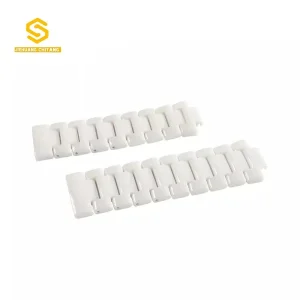
China Ceramic Injection Molding Casting Watch Band For Wrist Strap Manufacturer
View Detail
China Quality Inspection for China SUS 304 Small Size Metal Parts Made by Powder Metallurgy
View Detail
China OEM/ODM High Quality Molybdenum (moly) Boat for MIM Metal Powder Injection Molding
View Detail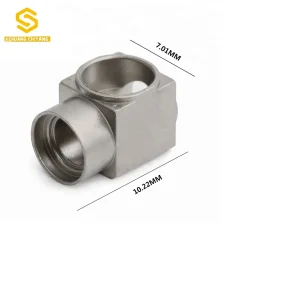
China High Precision Custom Small Metal Parts Manufacturing With MIM Process Supplier
View Detail
China Metal Powder Metallurgy Gear Parts Engine Parts Sprocket Supplier
View Detail
Wholesale Reasonable price Powder Metallurgy Company Custom Powder Metallurgy Products
View Detail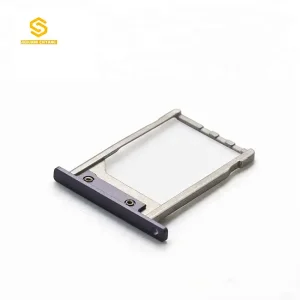
China Special Design for Stainless Steel Custom Metal Parts Powder Injection Molding Components
View Detail
Wholesale Spherical Ti45al8nb Powder with Good Plasticity and Low Brittleness
View DetailFrequently Asked Technical Questions (FAQ)
Clear engineering answers to critical questions regarding sintered bushings selection and assembly.
How is the PV Limit (Pressure-Velocity Factor) calculated for sintered bushings?
The PV factor is calculated by multiplying the specific bearing pressure $P$ ($\text{MPa}$ or $\text{N/mm}^2$) by the sliding linear velocity $V$ ($\text{m/s}$). $P = \frac{F}{d \cdot b}$, where $F$ is load, $d$ is bore diameter, and $b$ is bearing length. Velocity $V = \frac{\pi \cdot d \cdot n}{60 \cdot 1000}$ ($n$ in RPM). Standard oil-impregnated bronze bushings operate safely up to $PV = 1.75 \text{ MPa}\cdot\text{m/s}$.
What press-fit interference tolerance is recommended during installation?
Sintered bushings are installed into rigid housings using a stepped mandrel pin press-fit method. Housing bores are typically machined to H7 tolerance. For bronze bearings, an interference fit of 0.015 to 0.035 mm is standard. Note that pressing shrinks the inner bore diameter by approximately 60% to 80% of the interference value; bore sizing must account for this collapse.
Can sintered bushings be secondary-machined or reamed after installation?
Single-point cutting tools or standard twist drills tend to smear the soft metallic matrix across the pore surface, blinding the lubricating channels. If post-assembly bore correction is required, burnishing pins or ball-izing techniques must be used to expand the inner diameter while preserving microscopic oil pore openings.
What shaft surface roughness and hardness are recommended for long life?
To minimize abrasive wear on the self-lubricating bushing, mating steel shafts should be hardened to $> 50 \text{ HRC}$ (or ground case-hardened carbon steel) with a surface finish roughness of $Ra \le 0.4 \mu\text{m}$ ($16 \mu\text{in}$). Extremely rough shafts accelerate bearing wear, while excessively polished surfaces ($Ra < 0.1 \mu\text{m}$) hinder hydrodynamic film formation.
Request a Free DFM Review & Quote within 48 Hours
Submit your STEP 3D models and PDF 2D technical drawings. Our powder metallurgy metallurgical engineering team will evaluate density distribution, tooling可行性 (feasibility), and provide transparent cost estimates under non-disclosure agreements (NDA).