
Featured Sintered Powder Metal & Precision Components
Explore our core OEM production line items engineered through high-tonnage powder compaction, MIM sintering, and precision die casting.







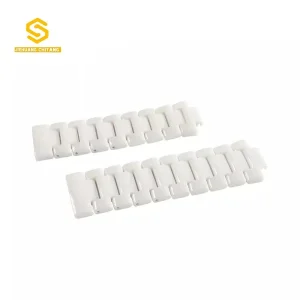
Technical White Paper: Advanced Sintered Powder Metallurgy & MIM Engineering
In modern precision manufacturing, Sintered Powder Metallurgy (PM) and Metal Injection Molding (MIM) represent the apex of net-shape alloy fabrication. As a premier China sintered powder metal manufacturer and OEM integration factory, Ningbo Jiehuang Chiyang Electronic Tech Co., Ltd. (JHMIM) bridges the gap between theoretical solid-state physics and mass-scale component manufacturing.
Powder metallurgy involves transforming elemental or alloy powders into structural components via uniaxial compaction followed by thermal necking under controlled sintering atmospheres. Unlike conventional subtractive CNC machining—which generates up to 70% material waste—powder metal synthesis achieves an extraordinary material utilization rate exceeding 95%. This technical white paper examines the core engineering principles, microstructural evolution, density profiling, and global procurement advantages offered by China's advanced manufacturing ecosystem.
Solid-State Sintering Kinetics
During solid-state sintering, compacted metal powders are subjected to temperatures ranging from 0.7 to 0.9 Tm (absolute melting temperature). Surface energy minimization drives atomic diffusion across particle contact zones, resulting in pore spheroidization, grain growth, and density evolution from green density (typically 6.2–6.8 g/cm³) to final sintered densities reaching up to 7.4 g/cm³.
Liquid-Phase & MIM Sintering
For micro-complex geometries, Metal Injection Molding (MIM) utilizes ultra-fine atomized powders (<15 μm) mixed with thermoplastic binder systems. Catalytic debinding followed by high-vacuum or continuous mesh-belt sintering enables transient liquid-phase densification, achieving near-theoretical densities of 97% to 99% (7.5–7.65 g/cm³) with isotropic mechanical properties.
Isotropic Microstructural Integrity
Unlike rolled bar stock or forged components that exhibit directional grain flow and mechanical anisotropy, sintered powder metal parts present uniform multi-directional tensile, compressive, and fatigue strength. Microstructural homogenization eliminates internal stress concentrations, making sintered gears and structural components remarkably resilient to cyclic fatigue.
Process Engineering Comparison: PM vs. MIM vs. Die Casting vs. CNC
Selecting the optimal manufacturing route requires a granular evaluation of part complexity, annual volume, material chemistry, and dimensional tolerance requirements. The technical matrix below outlines operational parameters derived from JHMIM’s production metrics.
| Manufacturing Parameter | Sintered Powder Metallurgy (PM) | Metal Injection Molding (MIM) | Aluminum / Zinc Die Casting | Subtractive CNC Machining |
|---|---|---|---|---|
| Primary Material Spectrum | Fe-Cu-C, Fe-Ni-Mo, Bronze, Stainless Steel | 17-4PH, 316L, Ti-6Al-4V, Soft Magnetic Alloys | ADC12, A380, Zamak 3, Zamak 5 | Wide spectrum (Alloy, Plastics, Stainless) |
| Achievable Sintered Density | 6.8 – 7.4 g/cm³ (85-94%) | 7.5 – 7.7 g/cm³ (96-99%) | Fully dense cast structure | 100% Solid Wrought Density |
| Geometric Complexity | Moderate (2.5D stepped profiles, spur gears) | Extreme (3D undercuts, internal threads, micro-cavities) | High (Thin-walled housings, complex ribs) | Limited by tool accessibility & setup count |
| Material Utilization Efficiency | 95% – 98% | 95% – 97% (Runner re-granulation) | 90% – 95% (Flash recycling) | 15% – 45% (High scrap volume) |
| Standard Tolerance Range | ISO IT8 – IT10 (±0.03 to ±0.08 mm) | ISO IT7 – IT9 (±0.3% nominal dim) | ±0.05 to ±0.15 mm | ±0.005 to ±0.02 mm |
| Economic Production Threshold | > 5,000 units / year | > 2,000 units / year | > 2,000 units / year | 1 to 1,000 units (Low volume) |
China Factory Ecosystem & Manufacturing Capabilities
Located in the industrial hub of Ningbo, Zhejiang Province, Ningbo Jiehuang Chiyang Electronic Tech Co., Ltd. operates a modernized 28,000 m² manufacturing facility equipped with automated Japanese compaction presses, continuous high-temperature vacuum sintering furnaces, and multi-axis CNC secondary finishing centers.
1. Advanced Alloy Powder Synthesis
Our raw material control starts with gas and water atomized powders sourced from certified global producers. We employ proprietary double-cone optical blending systems to ensure homogeneous lubricants, graphite, and binder dispersion, preventing density gradients during high-pressure compaction.
2. High-Tonnage Automated Compaction
Operating automated CNC multi-plate presses ranging from 15 tons to 1,000 tons (10,000 kN), JHMIM achieves precise control over green density distribution. Dual-action compaction vectors ensure uniform density even across complex multi-level planetary gears and stepped bushings.
3. Controlled Atmosphere Sintering
Equipped with 1700°C high-temperature vacuum sintering furnaces and continuous atmosphere mesh-belt furnaces utilizing dissociated ammonia ($3H_2 + N_2$) or endothermic gas, our thermal profiles guarantee complete binder burn-out, precise stoichiometry, and zero surface decarburization.
Global Enterprise Procurement: TCO & Risk Mitigation
International procurement leaders in North America, Europe, and Japan require more than just lower piece-part costs. They demand total cost of ownership (TCO) predictability, intellectual property protection, rigorous quality management systems, and supply chain resilience.
Total Cost of Ownership (TCO) Optimization
Transitioning from fully machined bar stock to JHMIM sintered powder metal components typically delivers a 30% to 50% reduction in unit price. By eliminating multi-axis milling setups, tool wear overheads, and scrap metal handling, total project amortization is achieved within 6 to 9 months.
Comprehensive DFM & Rapid Tooling
Every drawing submitted to JHMIM undergoes a rigorous Design for Manufacturability (DFM) assessment by our metallurgical team. We evaluate draft angles, corner radii, wall thickness uniformity, and sintering shrinkage factors (typically 12–18% for MIM), delivering engineering reports within 48 hours.
Supply Chain Redundancy & Logistics
Leveraging Ningbo Port—the world’s largest port by cargo throughput—JHMIM maintains seamless international shipping routes. Strategic buffer stock management, safety inventory programs, and VMI (Vendor Managed Inventory) solutions ensure zero assembly line disruptions for global OEMs.
Localization Support, Technical Compliance & Quality Systems
Quality assurance at JHMIM is governed by international automotive and industrial quality management protocols. Our quality engineering division employs over 30 QC specialists operating state-of-the-art metrological equipment.
IATF 16949 & ISO 9001 Certified
Our factory holds strict certification in IATF 16949:2016 for automotive component manufacturing and ISO 9001:2015 for quality management systems. Full APQP, PPAP (Level 3 documentation), FMEA, and MSA protocols are provided for all tier-1 automotive orders.
Advanced Metrology Laboratory
Dimensional verification is performed using Zeiss Coordinate Measuring Machines (CMM), optical profile projectors, digital hardness testers (Rockwell, Vickers), metallographic microstructural analyzers, and X-ray fluorescence (XRF) alloy chemistry spectrometers.
Environmental & Regulatory Compliance
All materials processed at JHMIM comply strictly with RoHS 3.0, REACH SVHC directives, and Conflict-Free Minerals policies. Full material test reports (MTR) and certificate of analysis (COA) accompany every shipment.
Localized Application Scenarios & Industry Case Studies
Sintered powder metal components serve as critical sub-assemblies across diverse high-stress application environments globally:
Automotive Powertrain & VVT Systems
Application: Variable Valve Timing (VVT) sprockets, oil pump rotors, transmission shift forks, and ABS sensor rings.
Performance Gain: Precision sintered steel sprockets offer superior oil retention due to micro-porosity control, reducing mechanical friction by 18% compared to machined steel.
Medical Surgical Devices & Titanium MIM
Application: Endoscopic surgical clamps, titanium scalpel handles, micro-gearboxes for powered surgical tools.
Performance Gain: TiMIM (Titanium MIM) delivers high strength-to-weight ratios with complete biocompatibility, achieving intricate geometric contours impossible to machine cost-effectively.
Industrial & Professional Power Tools
Application: Planetary gearboxes, impact driver anvils, clutch plates, and heavy-duty lock cylinders.
Performance Gain: Heat-treated Fe-Ni-Cu sintered alloys achieve surface hardness ratings of 58–62 HRC, delivering high torque resistance and extended tool operational life.
Industry Trends & Next-Generation Metallurgy
The powder metallurgy sector is undergoing rapid technological convergence. JHMIM stays at the forefront of industrial innovation by integrating state-of-the-art manufacturing trends into our OEM operations:
Binder Jetting & Additive Manufacturing
Combining 3D metal printing with conventional vacuum sintering allows rapid prototyping without hard tooling. JHMIM utilizes binder jetting technology to deliver physical functional samples within 5 to 7 business days for design validation.
Micro-MIM & Ultra-Thin Walls
As consumer electronics and medical devices shrink, Micro-MIM capabilities allow the production of parts weighing less than 0.1 grams with wall thicknesses down to 0.2 mm, while maintaining strict dimensional repeatability.
Decarbonized Sintering & Green Manufacturing
JHMIM is committed to reducing the carbon footprint of powder metal production. By implementing waste heat recovery on continuous sintering furnaces and using recycled high-purity alloy powders, we support global corporate sustainability goals.
Frequently Asked Questions (Technical & Procurement FAQ)
Answers to critical questions asked by design engineers, quality assurance managers, and global procurement officers.
Depending on alloy composition and density, heat-treated sintered Fe-Ni-Mo steels reach tensile strengths between 750 MPa and 1,200 MPa, comparable to standard wrought carbon steels. For high-stress applications, secondary sizing or Hot Isostatic Pressing (HIP) can further enhance yield strength and elongation properties.
Yes. Sintered parts with density above 7.2 g/cm³ can be directly electroplated (nickel, chrome, zinc, black oxide). For lower-density PM parts (6.8–7.0 g/cm³) with open porosity, resin impregnation or steam treatment is applied prior to plating to prevent salt entrapment and internal corrosion.
We routinely sign legally binding Non-Disclosure Agreements (NDAs) prior to receiving customer 2D/3D CAD files. All project drawings, tooling data, and proprietary designs are stored on encrypted internal servers with restricted engineer-level access.
Standard production MOQs are 2,000 pieces for MIM and die casting, and 5,000 pieces for powder metallurgy parts. Prototype samples produced via 3D metal printing or single-cavity prototype tooling can be delivered in 15 to 25 days. Mass production tooling lead time is typically 30 days.
The 3D STEP/IGES model provides accurate volumetric geometry for mould design, flow simulation, and weight calculations. The 2D PDF drawing defines critical dimension tolerances, surface finish (Ra values), material specification, heat treatment hardness, and quality inspection criteria. Both are essential for an precise quotation within 48 hours.
Additional Precision OEM Components & Assembly Solutions
Discover our extended OEM product lineup spanning automotive variable timing, surgical tools, sintered filtration, high-temperature sintering equipment, and large die cast housings.
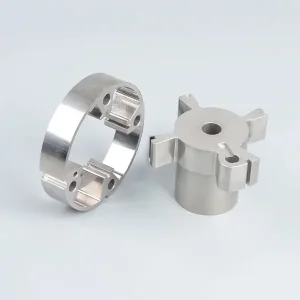
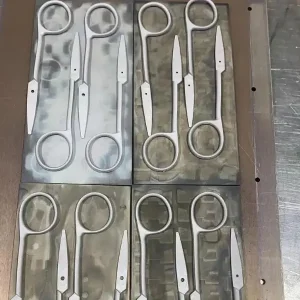





Initiate Your Powder Metal OEM Project with JHMIM
Partner with China's leading sintered powder metal manufacturer. Send us your 2D PDF and 3D STEP drawings today for a free DFM review and detailed quotation within 48 hours.