
Direct OEM manufacturing portfolio featuring precision die casting, MIM sintered components, and metallurgical spare parts engineered for high-stress global applications.

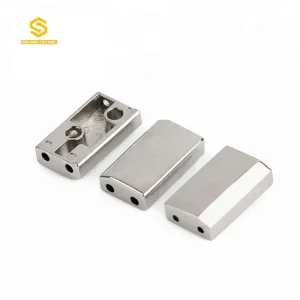





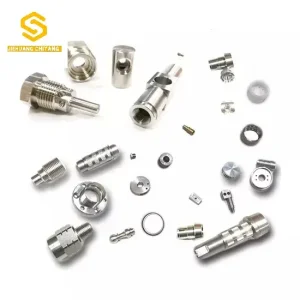
Evaluating the evolution of powder metallurgy (PM), solid-state sintering, and Metal Injection Molding (MIM) across Tier-1 supply chains.
Executive Technical Overview
The global sintered metal manufacturing landscape is undergoing a paradigm shift driven by stringent decarbonization targets, aggressive lightweighting requirements in Electric Vehicle (EV) architectures, and the mini-structural complexity demanded by medical robotics and 5G telecommunication infrastructure. Traditional subtractive manufacturing (CNC milling, turning, grinding) incurs significant material wastage—often generating scrap rates upwards of 60% on complex geometries. In contrast, advanced powder metallurgy and high-density sintering technologies, led by premier Chinese manufacturing hubs like Ningbo Jiehuang Chiyang Electronic Tech Co., Ltd. (JHMIM), provide structural components with near-theoretical densities (>98%), superior mechanical isotropy, and drastic unit-cost optimization.
As global OEMs (Original Equipment Manufacturers) transition to high-volume, highly complex component architectures, China's sintered metal sector has evolved beyond simple porous bushings and low-load iron powder structural parts. Today, state-of-the-art Chinese sintering factories leverage atmosphere-controlled continuous continuous-mesh belt furnaces, high-vacuum batch sintering units, automated hydraulic press lines up to 1,000 tons (10,000 kN), and multi-axis CNC secondary finishing equipment. This integrated ecosystem ensures strict adherence to international standards including MPIF Standard 35, DIN 30910, ISO 9001, and IATF 16949 for automotive quality management.
Supply Chain Consolidation in China
China accounts for over 45% of total global powder metallurgy production capacity. Strategic clusters in Zhejiang Province (such as Ningbo and High-Tech Innovation Zones) combine raw material micro-atomization refineries, precision mold tooling houses, thermal debinding facilities, and chemical analysis laboratories within a 50-kilometer radius. This geographic concentration drastically cuts product development lead times from initial 3D CAD design for manufacturability (DFM) reviews down to first-article prototype production.
Information Gain: Density vs Dynamic Mechanical Strength
A critical engineering misconception among procurement specialists is that sintered metals inherently lack tensile strength compared to wrought metals. Modern solid-state diffusion bonding and liquid-phase sintering allow iron-nickel (Fe-Ni), stainless steels (316L, 17-4PH), and titanium alloys to achieve sintered densities up to 7.85 g/cm³. When combined with secondary heat treatments such as carburizing, carbonitriding, or hot isostatic pressing (HIP), ultimate tensile strength (UTS) can exceed 1,100 MPa with fatigue endurance limits rivaling forged steels.
Engineering benchmark matrix selecting the optimal net-shape manufacturing process based on component geometry, wall thickness, tolerance, and volume.
| Process Technology | Suitable Material Spectrum | Geometrical Complexity | Dimensional Tolerance | Density Range (g/cm³) | Typical MOQ | Economic Advantage Threshold |
|---|---|---|---|---|---|---|
| Metal Injection Molding (MIM) | 17-4PH, 316L, 420, Ti-6Al-4V, Fe-Ni alloys, Tungsten | Extreme (Undercuts, internal threads, 3D curves) | ±0.3% to ±0.5% (CT4-CT6) | 7.50 – 7.85 (95–99%) | 2,000 Pcs | Complex parts < 100g replacing multi-axis CNC milling |
| Powder Metallurgy (PM Press & Sinter) | Fe-Cu-C, FN-0205, FC-0208, Stainless 304/316, Bronze | Medium (2.5D shapes, multi-level gears, splines) | ±0.05 mm (ISO IT8-IT10) | 6.40 – 7.30 (82–93%) | 5,000 Pcs | High-volume structural gears, bushings, pulleys |
| Aluminum & Zinc Die Casting | ADC12, A380, Zamak 3, Zamak 5, Aluminum-Silicon | High (Thin-walled housings, deep cavities, cooling fins) | ±0.05 mm to ±0.1 mm | 2.70 – 6.60 (Cast solid) | 2,000 Pcs | Large, lightweight structural enclosures and heat sinks |
| CNC Precision Machining | All Metals (Aluminum, Stainless, Titanium, Brass) | High (Limited by cutting tool reach) | ±0.005 mm (Micron grade) | 100% (Wrought stock density) | 1 – 500 Pcs | Low-volume prototypes or extremely tight tolerance features |
| Metal 3D Printing (DMLS / SLM) | Ti64, Inconel 718, 316L, CoCr, Tool Steels | Unrestricted (Internal lattice channels) | ±0.1 mm to ±0.2 mm | 99.0–99.8% | 1 Pc | Rapid engineering validation prior to MIM mold creation |
Sintering Physics & Microstructural Mechanics
Sintering is fundamentally a thermally driven solid-state mass transport mechanism. During thermal consolidation (typically performed between 1,120°C and 1,380°C under synthetic H2/N2 dissociated ammonia or high-vacuum environments), fine metal particles undergo surface diffusion, grain boundary diffusion, and volume diffusion. This process forms robust sintering necks between adjacent powder granules, progressively shrinking micro-porosity and eliminating voids. In MIM, binder removal (debinding via solvent or catalytic HNO3 vapour) precedes high-temperature sintering, resulting in isotropic mechanical properties identical to wrought bar stock.
Comprehensive Sintered Alloy Grade Reference
Precipitation Hardening Stainless Steel: 17-4PH (UNS S17400)
Combines high yield strength (up to 1,100 MPa after H900 heat treatment) with excellent corrosion resistance. Widely specified for surgical instrument jaws, aerospace latch mechanisms, and high-pressure hydraulic valve bodies.
Austenitic Stainless Steel: 316L (UNS S31603)
Non-magnetic alloy with ultra-low carbon content offering superior pitting resistance in chloride environments. Ideal for biomedical implants, luxury watch clasps, marine hardware, and chemical processing sensors.
Sintered Iron-Nickel Steel: MPIF FN-0205 / FN-0208
Widely utilized in conventional powder metallurgy. Fe-Ni-C chemistry provides optimal impact toughness and fatigue life for automotive oil pump gears, transmission synchronizer hubs, and power tool planetary gearboxes.
How Chinese sinter metal manufacturing solves critical mechanical engineering challenges across key export markets in North America, Europe, and Asia-Pacific.
Automotive Powertrains & EV Drive Modules
Application Focus: Variable Valve Timing (VVT) rotors, Variable Displacement Oil Pump vanes, Electronic Steering Lock (ESL) pawls, and EV traction motor parking gears.
Technical Requirement: Automotive OEMs demand zero-defect quality (PPM < 10) certified to IATF 16949. Sintered Fe-Ni-Mo alloy gears withstand extreme torsional fatigue (>450 Nm) while reducing gear meshing noise (NVH optimization) due to the micro-damping capacity inherent in sintered matrix structures.
Medical Technology & Surgical Instrumentation
Application Focus: Laparoscopic graspers, harmonic scalpel blade holders, endoscopic stapler hinges, and orthodontic brackets.
Technical Requirement: Requires 100% biocompatibility, autoclavability, and microscopic surface precision. MIM processing utilizing 17-4PH and 316L stainless steel delivers complex articulate joint features with wall thicknesses as thin as 0.35 mm, avoiding costly multi-axis micro-machining.
Consumer Electronics & Smart Wearables
Application Focus: Foldable smartphone liquid-metal/MIM hinge mechanisms, smartwatch outer cases, camera ring frames, and optical fiber connectors.
Technical Requirement: Exceptional cosmetic finish requirement (PVD titanium plating, mirror polishing) combined with elevated yield strength to endure over 200,000 fold cycles without structural deformation.
Industrial Equipment & Smart Automation
Application Focus: Hydraulic orbital motor gears, pneumatic actuator couplings, lock hardware cylinders, and power tool impactors.
Technical Requirement: Heavy wear resistance achieved through induction hardening or steam treatment (forming an adherent protective ferrosoferric oxide Fe3O4 layer inside surface pores).
Ensuring rigorous quality verification, dimensional stability, and material traceability from raw powder batching to final assembly.
ISO 9001 & IATF 16949 System
Full APQP, PPAP Level III documentation, FMEA defect analysis, and Statistical Process Control (SPC) real-time tracking across all press and sintering operations.
Metrology & Inspection Lab
In-house Hexagon CMM (Coordinate Measuring Machines), optical profile projectors, Zeiss metallographic microscopes, density testing kits (Archimedes method), and SPECTRO X-ray spectrometers.
Tooling & Mold Engineering
In-house wire EDM (Sodick), CNC high-speed carving, and heat treatment. Mold life guaranteed up to 1,000,000 shots with automated multi-cavity ejection designs.
Next-generation innovations shaping the future of powder metallurgy, additive integration, and sustainable green manufacturing.
Phase 1: AI-Assisted DFM & Shrinkage Simulation
Implementation of finite-element sintering simulation software to accurately predict 15-20% volumetric mold shrinkage during debinding and sintering, ensuring mold tooling dimensions are right the first time.
Phase 2: Ultra-High-Temperature Sintering (>1380°C)
Advancing continuous vacuum sintering technology for exotic materials such as Titanium alloys (TiMIM), Cobalt-Chromium, and soft magnetic alloys (Fe-Si, Fe-Ni-Co) with zero carbon contamination.
Phase 3: Hybrid Powder Metallurgy & Binder Jetting
Combining high-speed Binder Jet 3D Printing with traditional sintering furnace infrastructure to allow low-volume custom metal parts without mold tooling capital expenditure.
Phase 4: Green Energy & Low-Carbon Decarbonization
Transitioning sintering atmospheres to green hydrogen (H2) fuel lines and recycling 99.5% of feedstock scrap, aligning with global Net-Zero carbon directives.
Direct engineering insights addressing critical buyer queries regarding manufacturing tolerances, tooling timelines, material selection, and quality guarantees.
Explore our full scope of custom-manufactured powder metallurgy components, stainless steel injection molded parts, and precision castings.






Ready to Optimize Your Metal Component Costs?
Submit your 2D PDF and 3D STEP drawings today. Our senior metallurgical engineers return a comprehensive Design for Manufacturability (DFM) assessment and detailed cost breakdown within 48 hours.
Request Engineering Quote & DFM Review