






The Strategic Paradigm Shift: Titanium Alloys in Modern Surgical Instrumentation
Analyzing the global migration from conventional martensitic stainless steels (420/440C) to Grade 5 Titanium (Ti-6Al-4V) and Grade 23 (Ti-6Al-4V ELI) in next-generation scalpel handles and surgical systems.
Ergonomic Haptics & Surgeon Fatigue Mitigation
In prolonged microsurgical procedures (such as neurosurgery, ophthalmic reconstructions, and cardiovascular bypasses), instrument weight directly correlates with hand tremor amplitude and muscle fatigue. Titanium's ultra-high strength-to-weight ratio allows Chinese contract manufacturers to forge handles that weigh 45% less than traditional 316L or 420 stainless steel counterparts without sacrificing structural rigidity.
Furthermore, titanium’s lower thermal conductivity prevents cold-shock sensation during initial tactile contact in climate-controlled operating rooms, elevating tactile sensitivity for delicate tissue dissection.
MRI Compatibility & Passivation Resistance
Modern hybrid operating theaters utilize intraoperative Magnetic Resonance Imaging (iMRI). Traditional surgical handles fabricated from ferromagnetic stainless steels present deflection hazard risks and image artifacts. Grade 5 Titanium (Ti-6Al-4V) is fully non-magnetic, making titanium scalpel handles mandatory for emergency iMRI procedures.
Additionally, titanium spontaneously forms a tenacious, self-healing TiO2 passive oxide layer, granting absolute immunity against aggressive enzymatic detergents, steam autoclave thermal cycles, and gamma-radiation sterilization routines.
TiMIM vs 5-Axis CNC vs Powder Metallurgy: Engineering Trade-offs
Evaluating manufacturing methodologies for OEM titanium scalpel handle procurement based on geometry complexity, material density, tolerance stack-up, and unit cost scaling.
| Evaluation Parameter | Titanium MIM (TiMIM) | 5-Axis CNC Machining | Press & Sinter PM | Investment Casting |
|---|---|---|---|---|
| Geometrical Freedom | Extreme (Internal channels, hollow knurling) | High (Tool access constrained) | Low (2.5D planar profiles) | Medium (Draft angle dependent) |
| Sintered Density (% Relative) | 96.5% – 99.2% (Wrought Equivalent) | 100% (Bar stock base) | 88% – 93% (Porous core) | 92% – 95% (Risk of micro-voids) |
| Dimensional Tolerance | ±0.3% to ±0.1% (CT4 - CT6) | ±0.005 mm (Micro-milling) | ±0.5% | ±0.8% |
| Surface Finish (As-Process) | Ra 1.6 – 3.2 µm (Smooth finish) | Ra 0.8 – 1.6 µm (Tool marks) | Ra 3.2 – 6.3 µm | Ra 4.0 – 6.3 µm |
| Break-Even Volume (Units) | 2,000 to 500,000+ | 1 to 2,000 | 10,000+ | 1,000 to 10,000 |
| Material Utilization | >95% (Near-net shape, zero waste) | 15% – 30% (High scrap loss) | >90% | 70% – 80% (Gating scrap) |
TiMIM Powder Metallurgy Deep-Dive
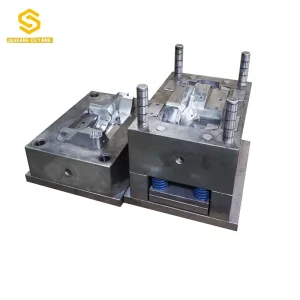
Titanium Metal Injection Molding combines spherical HDH (Hydride-Dehydride) or gas-atomized titanium powder (D50 = 15-25 µm) with a custom polymer-wax binder binder system. High-pressure injection molding fills complex multi-cavity dies. After solvent debinding, thermal vacuum sintering at 1,300°C–1,380°C under ultra-clean argon purge yields densities surpassing 98% of theoretical maximum.
Hybrid CNC Finishing & Blade Fitting
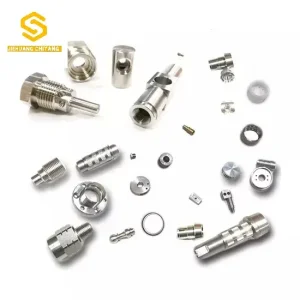
While TiMIM forms 95% of the scalpel handle geometry (including 3D anti-slip scale patterns, finger slots, and weight-reduction cavities), the blade-attachment fitting tip requires high-precision 5-axis CNC micro-milling. Locking slots for standard surgical blades (#3, #4, #7 handles, ISO 7153-1 fitment) are machined to micron-level tolerances (±0.008 mm) to eliminate blade wobble during incision.
Hot Isostatic Pressing (HIP) Upgrade
For critical surgical applications (such as orthopedic power scalpel mounts and spinal dissecting handles), JHMIM incorporates secondary Hot Isostatic Pressing (HIP) at 900°C under 100 MPa argon pressure. HIP eliminates residual internal microporosity, driving final density to 99.9% and boosting fatigue life by over 300% under high-frequency mechanical oscillation.
Global Procurement Criteria for Titanium Medical Hardware
Navigating global supply chain compliance, ISO 13485 certification, FDA CFR 820 medical device requirements, and total cost of ownership (TCO) optimization.
Regulatory Compliance & Traceability
Medical device OEMs in North America and Europe demand total lot traceability. China manufacturers must maintain full chemical heat numbers, raw powder spectrographic reports, and vacuum sintering run graphs. JHMIM tracks every surgical handle lot back to its virgin raw titanium powder batch, complying fully with ISO 13485 QMS and EU MDR 2017/745 mandates.
Biocompatibility & Cytotoxicity Standard
Surgical handles contact surgeon gloves and patient tissue fluid directly. Material selection demands strict adherence to ISO 10993-5 (cytotoxicity) and ISO 10993-11 (systemic toxicity). Sintered Grade 5 titanium products undergo automated passivating and ultrasonic de-greasing in Class 100,000 cleanroom environments to ensure non-pyrogenic surfaces.
Total Cost of Ownership (TCO) Economics
While raw titanium powder incurs higher material costs than stainless steel scrap, near-net-shape TiMIM reduces raw material waste by 80%. When ordering batch volumes over 5,000 pieces, unit cost drops by 40% to 55% compared to milling titanium solid bar stock on multi-axis machining centers.
Future Directions: Advanced Coatings & Additive-MIM Hybrids
Exploring next-generation surgical hardware innovations coming out of Ningbo Jiehuang Chiyang Electronic Tech Co., Ltd. R&D center.
High-Performance Surface Treatments & Anti-Glare Technologies
Under bright surgical lights, mirror-polished metal handles create optical glare that strains surgical teams. JHMIM's technical roadmap integrates advanced PVD (Physical Vapor Deposition) functional coatings onto titanium handles:
Frequently Asked Questions by Global Medical Instrument Buyers
Addressing engineering, quality assurance, tooling lead times, and customization specifications for China titanium scalpel handle manufacturing.
What titanium alloys do you process for surgical scalpel handles?
We primary manufacture handles using Ti-6Al-4V (Grade 5) and Ti-6Al-4V ELI (Extra Low Interstitial, Grade 23). Grade 23 is preferred for ultra-critical medical instruments due to its superior damage tolerance, low oxygen content (<0.13%), and enhanced fracture toughness during repetitive autoclave cycles.
Can JHMIM manufacture custom ergonomic scalpel handles based on 3D CAD models?
Yes. We specialize in custom OEM/ODM production. You provide your STEP/IGES 3D files and 2D drawings. Our engineering team conducts a complete Design for Manufacturability (DFM) review to optimize gating, parting lines, and shrinkage factors for TiMIM or 5-axis CNC production.
What is the typical tooling lead time and sample production period?
Precision injection tooling design and fabrication takes approximately 25 to 30 days. First Article Inspection (FAI) sample parts are delivered with full CMM dimensional reports, surface roughness test profiles, and material chemical composition analysis within 35 days of drawing sign-off.
How do you guarantee the precise fitting of standard surgical blades (#3, #4, #7)?
The blade-holding tip geometry is precision CNC micro-milled post-sintering or wire-EDM eroded to adhere strictly to ISO 7153-1 and ISO 7740 standards. We verify 100% fitment retention force using automated optical comparators and physical plug gages.
What are your Minimum Order Quantities (MOQ) for titanium scalpel handles?
For TiMIM molded titanium handles, the standard production MOQ is 2,000 pieces per batch to amortize tooling setup costs efficiently. For pure CNC machined titanium prototypes or low-volume specialized handles, pilot runs starting at 500 pieces can be evaluated.
What quality management certifications does your factory hold?
Ningbo Jiehuang Chiyang Electronic Tech Co., Ltd. operates under certified ISO 9001:2015 and IATF 16949 quality systems. Our quality lab features CMM optical measuring machines, SPECTRO material analyzers, hardness testers, and salt-spray corrosion chamber systems.




Partner with China's Premier Titanium Hardware Manufacturer
Send your 2D PDF and 3D STEP drawings to Ningbo Jiehuang Chiyang Electronic Tech Co., Ltd. Receive a detailed DFM engineering assessment and complete pricing breakdown within 48 hours.