
Precision Metal Parts Direct from Factory
Explore our core catalog of high-density powder metallurgy, MIM, and custom machined metal parts engineered for demanding global applications.
The Evolution of Industrial Metal Additive Manufacturing & Wholesale Procurement
In the rapidly evolving landscape of advanced mechanical engineering, the global demand for wholesale 3D printing metal parts suppliers and factories has shifted from rapid prototyping to full-scale end-use serial production. Industrial Additive Manufacturing (AM)—encompassing Selective Laser Melting (SLM), Direct Metal Laser Sintering (DMLS), and Binder Jetting (BJ)—has matured into a pillar of modern industrial manufacturing. When combined with traditional powder metallurgy (PM) and Metal Injection Molding (MIM), additive manufacturing enables global procurement teams to re-engineer supply chains, minimize lead times, and produce metal parts with geometric complexities that were previously impossible to machine.
1. The Strategic Advantage of Chinese Metal 3D Printing & Metallurgy Factories
China has established an unassailable strategic lead in the global supply chain for custom metal part manufacturing. Partnering with a top-tier Chinese OEM manufacturer like Ningbo Jiehuang (JHMIM) grants global enterprises distinct structural advantages:
- Integrated Raw Material Supply Chains: China controls over 70% of the global refined spherical metal powder supply chain (including gas-atomized 316L, 17-4PH, Ti-6Al-4V, and Inconel alloys). This backward integration yields a 20-35% material cost advantage for wholesale metal 3D printing and powder metallurgy projects.
- Multi-Laser Industrial AM Infrastructure: Leading Chinese production facilities house multi-laser SLM systems (up to 800mm x 800mm build envelopes) capable of continuous 24/7 additive production with automated powder recycling circuits, lowering machine-hour overheads.
- Seamless DFM and Process Hybridization: Chinese OEM factories provide Design for Manufacturability (DFM) reviews that bridge the gap between metal 3D printing and high-volume MIM sintering or CNC finishing. A prototype printed via DMLS can be directly optimized for subsequent mass production molds without design distortion.
- Rigorous Quality Control Systems: ISO 9001 and IATF 16949 certifications ensure that batch-to-batch microstructural integrity, isotropic mechanical properties, and dimensional tolerances (down to ±0.01mm via post-machining) strictly comply with Western automotive and aerospace benchmarks.
2. Comparative Technical Matrix: 3D Printing vs. MIM vs. PM vs. CNC
Procurement directors must select the optimal manufacturing route based on part geometry, annual production volume, and budget limits. The following engineering matrix illustrates how metal 3D printing compares against alternative powder metallurgy and subtractive processes:
| Manufacturing Process | Optimal Volume (Pcs) | Geometric Complexity | Initial Tooling Cost | Relative Unit Cost | Typical Material Density |
|---|---|---|---|---|---|
| Selective Laser Melting (SLM 3D) | 1 – 1,000 | Extremely High (Lattices, Internal Conformal Channels) | $0 (No Tooling) | Medium - High | 99.5% – 99.9% |
| Metal Injection Molding (MIM) | 2,000 – 100,000+ | High (Complex 3D Shapes, Undercuts, Thin Walls) | $3,000 – $15,000 | Low (Scalable) | 96.0% – 99.0% |
| Press & Sinter Powder Metallurgy | 5,000 – 500,000+ | Moderate (2.5D Gears, Bushings, Structural Plates) | $4,000 – $20,000 | Lowest | 88.0% – 95.0% |
| 5-Axis CNC Machining | 1 – 500 | Moderate to High (Tool Access Constrained) | $0 (Fixture Cost Only) | High (Material Waste) | 100% (Wrought Metal) |
| Aluminum/Zinc Die Casting | 2,000 – 500,000+ | Moderate to High (Housings, Thin Walls) | $5,000 – $30,000 | Low | 92.0% – 97.0% |
3. Global Enterprise Procurement Needs & Risk Mitigation
Sourcing metal parts internationally requires comprehensive risk control frameworks. Overseas buyers must ensure that wholesale suppliers offer clear verification at every manufacturing milestone:
1. Material Traceability & Certificate of Analysis (CoA): Every shipment of raw powder or finished parts must be accompanied by X-Ray Fluorescence (XRF) and Inductively Coupled Plasma (ICP) spectroscopy reports confirming chemical compliance (e.g., ASTM F3184 for Stainless Steel 316L, ASTM B348 for Grade 5 Titanium).
2. Density & Mechanical Testing Integrity: Additive metal parts and sintered MIM components undergo Archimedes density verification, micro-hardness testing (Vickers/Rockwell), and tensile yield testing. Hot Isostatic Pressing (HIP) is applied to eliminate internal micro-voids in critical aerospace or medical components, reaching near-wrought mechanical fatigue resistance.
3. Comprehensive Intellectual Property & NDA Protection: Reputable Chinese factories operate under strict digital asset containment protocols. CAD geometries, STEP files, and proprietary DFM modifications are stored on encrypted internal servers with non-disclosure agreements (NDAs) executed prior to drawing exchange.
4. Macro-Industry Solutions & Localized Application Scenarios
Custom metal 3D printing and powder metallurgy components serve high-stakes engineering sectors worldwide:
Aerospace & Defense
Lightweighted turbine brackets, fuel injection nozzles with internal conformal cooling passages, and high-strength Ti-6Al-4V structural nodes produced with zero material waste.
Medical & Surgical Devices
Biocompatible porous orthopaedic implants, customized endoscopic instrument jaws, scalpel handles, and surgical robot actuators manufactured via Titanium MIM and SLM 3D printing.
Automotive & EV Powertrains
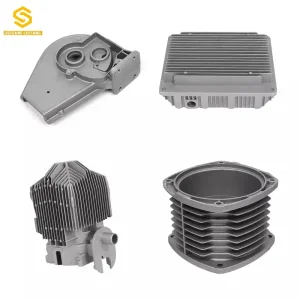
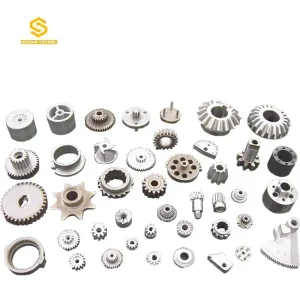
Sintered planetary gearboxes, variable valve timing (VVT) rotors, turbocharger vanes, and lightweight aluminum die-cast housings for electric vehicle motor controllers.
5. Emerging Industry Trends: 2025 to 2030
The metal parts manufacturing sector is experiencing rapid technology convergence. Key technical trajectories include:
• Industrialization of Binder Jetting (BJ): Binder Jetting metal 3D printing bridges the speed gap between SLM and MIM. By jetting a liquid binding agent onto a metal powder bed and furnace-sintering the green body, BJ achieves 10x faster build rates without needing support structures.
• Hybrid Additive-Subtractive Manufacturing: Combining 3D metal printing with integrated 5-axis CNC post-milling on a single machine bed guarantees tight sealing surfaces (Ra 0.4 µm) while preserving intricate additive core geometries.
• AI-Driven Generative Design & Topology Optimization: AI algorithms recalculate mechanical strain vectors to remove non-structural mass. The resulting organic lattice structures reduce part weight by 30-50% while increasing stiffness-to-weight ratios—ideally suited for 3D metal printing platforms.
Additional Heavy-Duty & Precision OEM Offerings
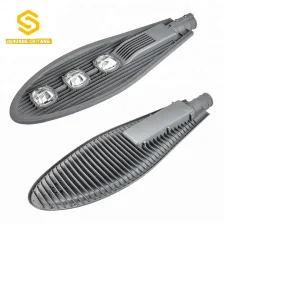
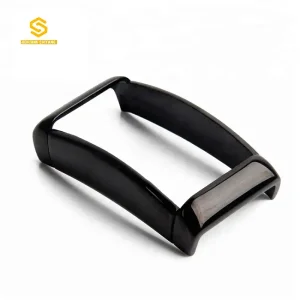
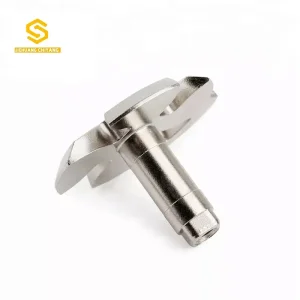
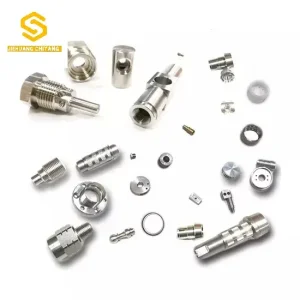
From aluminum die-casting housings to sintered planetary gears and custom watch frames, review our specialized production capabilities.
Frequently Asked Questions by Global Buyers
Clear engineering insights to streamline your procurement evaluation, tooling commitment, and production ramp-up.