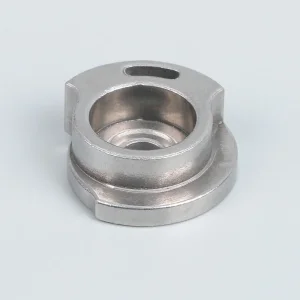
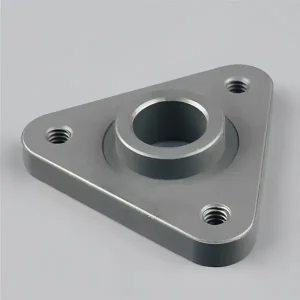
OEM Precision Components & Engineering Assemblies
Direct factory supply featuring Metal Injection Molding (MIM), Sintered Powder Metallurgy, Die Casting, and Additive Manufacturing raw capabilities.






Industrial Additive Manufacturing Metal Powders: Global Sourcing & Metallurgical Engineering Benchmark
An executive guide to high-performance spherical metal powders for Laser Powder Bed Fusion (LPBF), Electron Beam Melting (EBM), Directed Energy Deposition (DED), and Metal Injection Molding (MIM) applications.
Executive Synthesis: The Strategic Shift to Additive Powder Metallurgy
The global manufacturing ecosystem is undergoing a fundamental structural transition from subtractive tooling to powder-bed additive manufacturing and advanced powder metallurgy. As original equipment manufacturers (OEMs) in aerospace, medical technology, automotive powertrain electrification, and heavy industrial machinery demand components with complex internal lattice geometries, conformal cooling channels, and unprecedented strength-to-weight ratios, the fundamental limiting factor has shifted from printer kinematics to metal powder feedstock consistency.
Establishing a robust bulk supply chain for wholesale additive manufacturing metal powders requires deep technical due diligence regarding production atomization routes, particle size distribution (PSD) metrics, rheological flowability, chemical gas impurities (O, N, H), and lot-to-lot microstructural stability. This document serves as a comprehensive procurement framework and engineering specification guide for global buyers, materials scientists, and enterprise supply chain executives.
Global Additive Manufacturing Metal Powder Market Dynamics
Aerospace & Defense Propulsion
Aerospace tier-1 integrators are accelerating the adoption of high-temperature Nickel-Based Superalloys (Inconel 718, Inconel 625, Hastelloy X) and Titanium Nitride/Ti-6Al-4V powders. The push toward single-piece rocket engine combustors, turbine blade cooling structures, and satellite structural brackets demands atomized powders with zero hollow gas bubbles (porosity-free), enabling 100% theoretical mechanical density post-sintering or laser melting.
Medical Implants & Surgical Tools
Biomedical engineering requires spherical Titanium Grade 23 (Ti-6Al-4V ELI) and Cobalt-Chrome (CoCrMo) powders compliant with ASTM F136 and ASTM F75. Additive manufacturing enables porous trabecular surface structures that promote osseointegration in orthopedic hip and knee implants, a capability impossible via conventional machining or casting methods.
Automotive & EV Powertrain Scaling
High-volume automotive production hinges on cost-effective Iron-Silicon, AlSi10Mg Aluminum alloys, and Copper powders (Cu-Cr-Zr). Powder metallurgy and binder jetting facilitate rapid mass production of lightweight electric vehicle motor rotors, thermal management cold plates, and high-torque transmission gears while minimizing raw material scrap rates by over 90%.
Industrial Metal Powder Atomization Technologies
The physical properties, spherical sphericity ratio, and internal porosity of metal powders are directly dictated by the primary atomization process employed during factory manufacturing.
VIGA (Vacuum Induction Gas Atomization)
VIGA technology utilizes high-frequency induction melting in a sealed vacuum chamber followed by high-pressure inert gas jet atomization (Argon or Nitrogen). It is the ideal process for manufacturing high-purity Stainless Steels (316L, 17-4PH), Tool Steels, and Nickel-base superalloys. VIGA guarantees extremely consistent spherical morphology, controllable PSD, and low inclusion counts.
EIGA (Electrode Induction Melting Gas Atomization)
Crucible-free atomization process engineered specifically for reactive alloys such as Titanium (Ti-6Al-4V, Ti Grade 1) and Zirconium. A pre-formed alloy rod is rotated and melted via induction without touching ceramic refractories, preventing ceramic inclusion contamination and keeping interstitials (Oxygen < 1000 ppm) extremely low.
PREP (Plasma Rotating Electrode Process)
PREP utilizes a high-speed rotating metal bar melted by a plasma arc torch inside an inert atmosphere. Centrifugal force ejects micro-droplets that solidify into perfectly spherical powders with zero satellite particles and zero entrapped gas pockets. Preferred for high-reliability aerospace, rotating discs, and medical implants.
Comparative Matrix of Industrial Metal Powder Production Routes
| Atomization Route | Applicable Alloys | Sphericity Index | Satellite Particle Level | Oxygen Inclusion Pick-up | Primary AM Application |
|---|---|---|---|---|---|
| VIGA (Vacuum Gas) | SS316L, 17-4PH, Inconel, Tool Steels | > 0.92 (High) | Low to Moderate | Low (< 200 ppm) | LPBF, DED, MIM |
| EIGA (Electrode Gas) | Ti-6Al-4V, Titanium Aluminide, Reactive Metals | > 0.95 (Very High) | Very Low | Ultra-Low (< 120 ppm) | LPBF, EBM, Aerospace AM |
| PREP (Plasma Rotating) | Ti-Alloys, CoCr, Superalloys | > 0.99 (Perfect) | Zero Satellites | Lowest (< 80 ppm) | High-Rel EBM, Rotating Components |
| Water Atomization | Low-Alloy Steels, Copper, Iron Powders | Irregular / Angular | N/A | High (> 1500 ppm) | Press & Sinter PM, Friction Materials |
Critical Powder Characterization & Standardized Metrics
Ensuring defect-free 3D printing prints and density parity with wrought metals demands tight adherence to international ISO/ASTM testing protocols.
Particle Size Distribution (PSD)
Precision laser diffraction measurement (ISO 13320). Custom tailored distributions: 15–45 μm for LPBF laser beds, 45–106 μm for DED powder feeding, and 0–25 μm / 45–150 μm for EBM and Binder Jetting.
Hall & Carney Flowability
Evaluated via ASTM B213 / ASTM B964. High flowability (< 18 s/50g) ensures rapid, smooth recoater blade spreading without drag marks or powder packing voids across large print beds.
Apparent & Tap Density
Tested under ASTM B212 / ASTM B527. High tap density (> 55% of theoretical material density) reduces volumetric shrinkage during sintering and prevents interstitial void creation.
Chemical Interstitial Purity
LECO combustion analysis monitors Oxygen, Nitrogen, Hydrogen, and Carbon levels. Low gas pick-up maintains fatigue life, fracture toughness, and corrosion resistance of finished parts.
Wholesale Metal Powder Alloy Specifications
Full certified material traceability delivered with lot-specific Certificate of Analysis (CoA), CMM data, and SEM microstructural micrographs.
| Alloy Grade | Standard Compliance | Chemical Composition Highlights | Flow Rate (s/50g) | Tap Density (g/cm³) | Target Industrial Applications |
|---|---|---|---|---|---|
| Stainless Steel 316L | ASTM F3184, EN 10088-3 | Cr: 16.5-18.5%, Ni: 10.0-13.0%, Mo: 2.0-2.5%, Fe: Bal. | ≤ 16.0 | ≥ 4.60 | Chemical processing valves, medical devices, marine hardware |
| 17-4PH (1.4542) | ASTM A564, UNS S17400 | Cr: 15.5-17.5%, Ni: 3.0-5.0%, Cu: 3.0-5.0%, Nb: 0.15-0.45% | ≤ 15.5 | ≥ 4.55 | Aerospace structural brackets, high-strength gearing, tooling |
| Ti-6Al-4V Grade 23 (ELI) | ASTM B348, ASTM F136 | Al: 5.5-6.5%, V: 3.5-4.5%, O: < 0.13%, Ti: Bal. | ≤ 24.0 | ≥ 2.50 | Orthopedic implants, surgical tools, jet engine airframes |
| Inconel 718 (UNS N07718) | ASTM B637, AMS 5662 | Ni: 50-55%, Cr: 17-21%, Nb: 4.75-5.5%, Mo: 2.8-3.3% | ≤ 14.5 | ≥ 4.85 | Gas turbine nozzles, aerospace combustion chambers, oil/gas shafts |
| AlSi10Mg Aluminum | ASTM F3318, DIN EN 1706 | Si: 9.0-11.0%, Mg: 0.2-0.45%, Fe: ≤ 0.55%, Al: Bal. | ≤ 21.0 | ≥ 1.55 | Automotive heat exchangers, drone frames, aerospace housings |
| Cobalt-Chrome CoCrMo | ASTM F75, ISO 5832-4 | Co: Bal., Cr: 27.0-30.0%, Mo: 5.0-7.0%, Ni: ≤ 0.5% | ≤ 15.0 | ≥ 4.90 | Dental copings, artificial joints, high-temperature wear components |
Global Procurement Packaging, Storage & Compliance
Hermetic Argon Packaging
To eliminate environmental humidity absorption and oxygen contamination during ocean freight transit, wholesale metal powders are sealed in moisture-proof aluminum foil bags under high-purity Argon gas, packaged inside UN-certified steel drums (10kg, 25kg, 50kg, and 250kg bulk containers).
Regulatory Standard Compliance
All factory powder lots comply strictly with EU REACH regulations, RoHS III environmental directives, and ITAR defense logistics guidelines. Heavy metal contents (Pb, Cd, Hg, Cr VI) are rigorously controlled below 10 ppm thresholds.
Custom Alloy Development
In addition to standardized catalog powders, our metallurgical laboratory provides OEM micro-alloying services. We formulate proprietary chemical compositions, modify PSD curves, and produce experimental trial batches (> 50kg) within 15 business days.
Powder Reusability & Circular Metallurgy Framework
Maximizing return on investment (ROI) in industrial 3D printing requires closed-loop powder recycling without compromising mechanical properties.
Sieving & Ultrasonic Reconditioning
During repeated LPBF or DED print cycles, un-melted powder experiences thermal stress, minor oxidation, and satellite accumulation. Implementing automated ultrasonic sieving systems (mesh sizes from 20 μm to 63 μm) restores powder fluidization and eliminates spatter inclusions.
Virgin-to-Recycled Blend Optimization
Our empirical metallurgical studies demonstrate that blending recycled powder with 20–30% virgin powder maintains constant tensile strength (UTS), elongation at break, and fatigue limit over 15 consecutive reuse cycles for Ti-6Al-4V and Stainless Steel 316L.
Thermal De-gassing & Restoration
For high-value superalloys, thermal vacuum degassing at elevated temperatures removes adsorbed surface moisture and volatile contaminants, restoring initial Hall flow values and lowering pickup during heavy print builds.
Technology Roadmap: Next-Generation AM Alloys
Pioneering tomorrow's materials science through advanced micro-alloying and AI-assisted powder morphology design.
High-Entropy Alloys (HEAs)
Formulating multi-element equiatomic alloys (FeCoNiCrMn) offering extreme thermal stability, radiation resistance, and cryogenic toughness for outer-space exploration and next-generation nuclear reactors.
Refractory Metal Atomization
Pioneering plasma atomization techniques for Tungsten (W), Molybdenum (Mo), and Tantalum (Ta) powders targeting high-temperature plasma facing shields and aerospace rocket nozzles.
AI-Driven PSD Customization
Utilizing machine learning neural networks to predict exact particle size distribution mixes that optimize laser energy absorption and melt-pool dynamics based on printer laser spot diameter.
Frequently Asked Questions by Enterprise Buyers
Direct answers to crucial questions regarding order volumes, technical validation, packaging, and custom alloying.
What is the Minimum Order Quantity (MOQ) for wholesale metal powder orders?
For standard catalog alloys (such as SS316L, 17-4PH, and Ti-6Al-4V), our standard MOQ starts at 10 kg for evaluation samples and 100 kg for wholesale bulk orders. For custom proprietary alloy development or non-standard particle size distributions, the minimum trial batch size is 50 kg.
How do you ensure zero cross-contamination between different metal alloy atomization runs?
Our factory operates dedicated atomization towers segregated by alloy families (e.g., dedicated Titanium/Reactive metal towers versus Stainless Steel/Nickel towers). Between production batches, full vacuum chemical purging and mechanical dismantling of powder collection cyclone tubes are conducted, verified via optical emission spectroscopy.
Which Particle Size Distribution (PSD) is right for my 3D printing equipment?
Generally, Laser Powder Bed Fusion (LPBF / DMLS) machines (EOS, SLM Solutions, Bambu, Trumpf) require 15–45 μm or 20–63 μm. Electron Beam Melting (EBM) systems (Arcam) require 45–105 μm. Directed Energy Deposition (DED) systems use 50–150 μm. Metal Injection Molding (MIM) and Binder Jetting utilize ultra-fine powders under 22 μm.
What quality documentation accompanies each powder shipment?
Every batch includes an official Certificate of Analysis (CoA) detailing: 1) Chemical composition via ICP-OES and LECO analyzers, 2) Laser diffraction PSD curves (D10, D50, D90 values), 3) Hall and Carney flowability rate, 4) Apparent and Tap density, and 5) SEM micrographs confirming spherical morphology.
What is the typical shelf-life of vacuum-sealed metal powders?
When stored in original argon-purged sealed containers between 15°C and 25°C with relative humidity below 40%, non-reactive metal powders (Stainless Steel, Inconel, CoCr) maintain a shelf-life of 24 months. Reactive powders (Titanium, Aluminum) are guaranteed for 12 to 18 months.
Can you sign a non-disclosure agreement (NDA) before reviewing custom alloy formulations?
Yes. We regularly execute bi-lateral Non-Disclosure Agreements (NDAs) with OEM engineering teams, aerospace contractors, and medical device developers prior to receiving proprietary drawing files or chemical specifications.
Industrial Powder Metallurgy & Die Casting Catalog
Direct manufacturer catalog links for high-density sintered parts, custom die-cast housings, and precision metal assemblies.