
Featured Precision Die Cast & Engineered Components
Explore our core manufacturing capabilities ranging from high-pressure aluminum die castings to complex sintered powder metallurgy and surgical-grade metal injection molding.


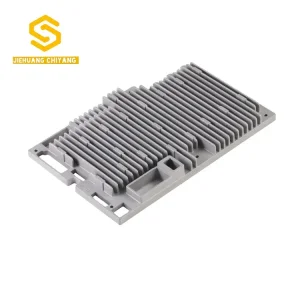
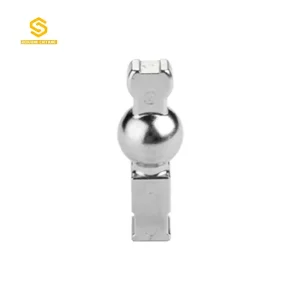
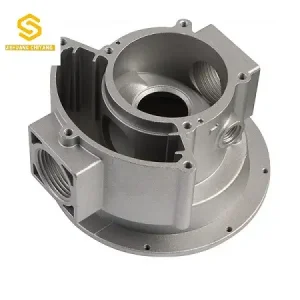
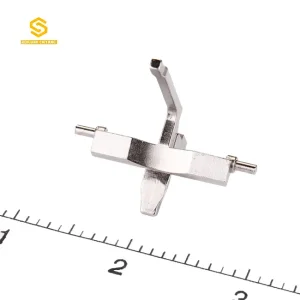
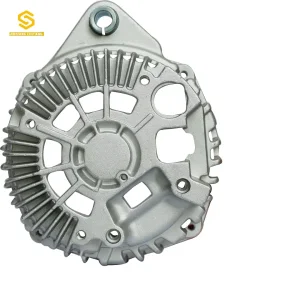
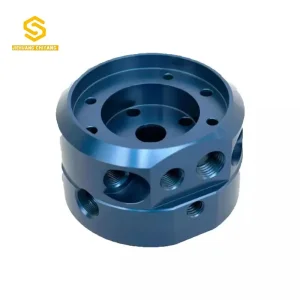
State of Global Aluminum Die Casting Manufacturing
An authoritative analysis of high-pressure die casting (HPDC) technology, material science evolution, and enterprise procurement benchmarks for OEMs worldwide.
High-Pressure Die Casting Dynamics
Modern industrial aluminum die casting is defined by high-velocity liquid metal injection under intense hydrostatic pressures (ranging from 300 to over 1,000 bar). As global OEMs push for structural lightweighting, wholesale aluminum die castings manufacturers must employ automated thermal management, advanced gating simulations (MAGMASOFT), and real-time vacuum assistance to ensure internal sound structure and micro-porosity control.
Information Gain & Metallurgy
Choosing the right aluminum alloy—such as A380, ADC12, A360, or AlSi10Mg—requires evaluating mechanical yield strength against thermal conductivity and fluid fluidity. Advanced squeeze casting and vacuum-assisted HPDC now enable post-casting heat treatment (T6), granting cast aluminum structural characteristics that historically required forged steel or wrought aluminum billets.
Global Industry Trends Shaping Aluminum Die Casting
Understanding the macroeconomic and technological catalysts transforming die casting foundries into smart, highly automated manufacturing hubs.
1. Macro Shift Toward Structural Gigacasting
The automotive industry's pivot toward Electric Vehicles (EVs) has pioneered single-piece large structural die castings (Gigacasting). By integrating dozens of stamped sheet metal parts into a single monolithic die-cast frame, Tier-1 suppliers drastically reduce body-in-white (BIW) assembly complexity, lower vehicle curb weight, and minimize robot weld stations.
2. Vacuum-Assisted Porosity Elimination
Gas porosity and micro-shrinkage have traditionally limited die-cast parts from undergoing high-temperature heat treatment (T6) or structural welding. High-vacuum die casting systems evacuate mold cavity pressure down to under 30 mbar before shot injection, ensuring near-zero trapped air bubbles and allowing critical structural thermal treatment.
3. Decarbonization & Green Secondary Alloys
Leading global buyers prioritize suppliers utilizing recycled aluminum alloys (secondary smelting). Recycled aluminum consumes up to 95% less energy than primary extraction from bauxite, allowing manufacturers to offer low-carbon die castings without compromising tensile strength or fatigue durability.
Global Procurement & Sourcing Intelligence
Strategic guidelines for enterprise purchasing managers, procurement heads, and OEM design engineers seeking reliable wholesale aluminum die casting manufacturers.
| Alloy Grade | Tensile Strength (MPa) | Yield Strength (MPa) | Thermal Conductivity (W/m·K) | Primary Industrial Applications |
|---|---|---|---|---|
| A380 / ADC10 | 320 | 160 | 96.2 | General automotive covers, power tool housings, bracketry |
| ADC12 / A383 | 310 | 150 | 96.0 | Engine cylinder heads, complex electronic enclosures, consumer hardware |
| A360 | 317 | 170 | 113.0 | Corrosion-resistant marine components, liquid pump bodies, HVAC valves |
| AlSi10Mg | 340 (T6) | 230 (T6) | 130.0 | High-stress EV structural frames, aerospace brackets, heat sinks |
Total Cost of Ownership (TCO) Evaluation
Procurement decisions must extend beyond piece-price quotations. Evaluating a die casting partner requires auditing tooling lifespan (using premium H13 or die steel capable of 100,000+ shot cycles), secondary CNC machining capability, surface finishing in-house, and supply chain vulnerability mitigation.
Design for Manufacturability (DFM) Protocol
Engaging engineers early during draft angle (1.5° to 3° recommended), wall thickness equalization (maintaining 2.0mm to 4.0mm nominal thickness), and radius fillet integration prevents localized hot spots, thermal tearing, and mold ejection failure.
Macro-Industry Engineering Solutions
Tailored aluminum die casting solutions engineered to satisfy extreme environmental, thermal, and mechanical demands across mission-critical sectors.
Automotive & E-Mobility
Lightweight powertrain castings, inverter housings, stator frames, battery module trays, and steering knuckles engineered under IATF 16949 quality control with 100% leak testing capability.
Telecommunications & 5G Infrastructure
High thermal conductivity aluminum outdoor enclosures, Massive MIMO heat sinks, and remote radio units (RRU) featuring thin-wall cooling fins designed to withstand harsh outdoor weathering.
Medical & Healthcare Equipment
Precision-cast structural chassis for diagnostic imaging machinery, surgical robotic arm frames, and ergonomic hand-held instrument handles with biocompatible powder-coated finishes.
Industrial Power Tools & Automation
Heavy-duty gearboxes, motor housings, and pneumatic valve manifolds utilizing high-strength A380 alloy to absorb continuous operational vibration and high rotational torque.
Localization Support, Quality Assurance & Compliance
A rigorous quality control ecosystem engineered to eliminate defects, verify microstructural integrity, and streamline global cross-border trade.
Real-Time Industrial X-Ray Inspection
In-line fluoroscopic non-destructive testing (NDT) continuously scans interior walls to identify gas pockets, shrinkage porosity, or inclusions before high-speed CNC finishing operations.
CMM & Laser Scanning Validation
Coordinate Measuring Machines (CMM) integrated with high-density optical lasers perform 100% geometric dimensional testing (GD&T) against native CAD models to guarantee strict dimensional repeatabilities.
Environmental & Regulatory Compliance
Full compliance with international standards including ISO 9001:2015, IATF 16949, RoHS 3, REACH, and ITAR documentation, guaranteeing full material traceability from raw ingot to final shipment.
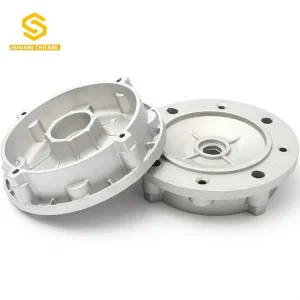
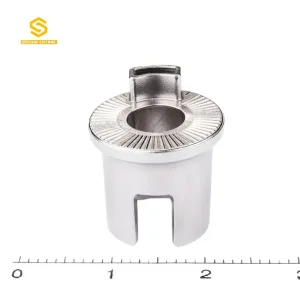
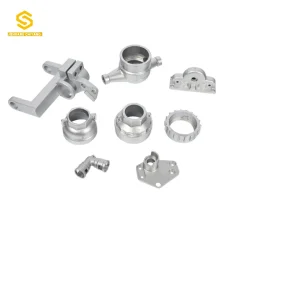
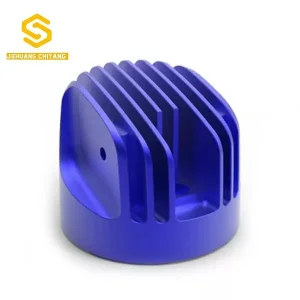
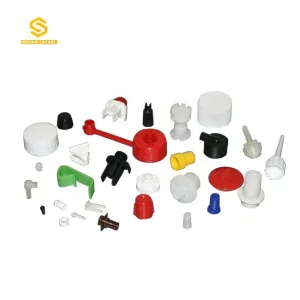
Comprehensive Precision Components Catalog
Browse our complete range of specialized powder metallurgy, custom die-cast housings, and precision tooling solutions manufactured to OEM specs.
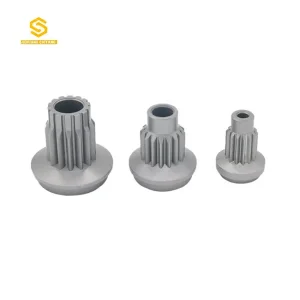
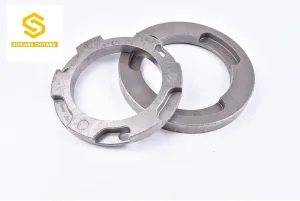
Technology Roadmap & Future Outlook (2025–2030)
Key technological breakthroughs engineered to redefine the precision aluminum die casting landscape over the next decade.
Rheocasting & Semi-Solid Metal (SSM)
Moving from liquid state die casting to semi-solid slurry (rheocasting) significantly reduces thermal shock on die tooling, minimizes solidification shrinkage, and produces pressure-tight parts capable of heat treatment without blister formation.
AI-Driven Smart Closed-Loop Foundries
Integrating IoT sensor arrays within die molds enables real-time monitoring of cavity temperatures, thermal expansion, and injection sleeve pressure curves. Machine learning models automatically fine-tune plunger shot profiles to eliminate scrap rates.
Additive Manufacturing Tooling Inserts
3D printing tool steel inserts with 3D conformal cooling channels allows dies to cool uniformly around deep cores and complex geometry. Conformal cooling cuts die casting cycle times by up to 25% while extending overall die mold lifespan.
Frequently Asked Questions (FAQ)
Expert technical answers addressing core engineering, purchasing, and quality assurance queries regarding wholesale aluminum die castings manufacturing.