
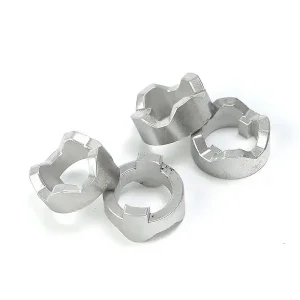
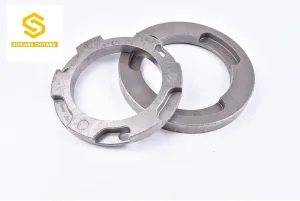
Featured Die Casting & Powder Metallurgy Parts
Direct factory wholesale supply for high-stress automotive, electrical, and industrial structural applications.




Macro Industry Landscape & Executive Technical Summary
In the evolving landscape of global manufacturing, high-pressure aluminum die casting (HPDC) has transitioned from a basic founding technique to a high-precision, thermal-efficient engineering pillar. As global original equipment manufacturers (OEMs) accelerate lightweighting programs across automotive electrification (EVs), telecommunications (5G/6G infrastructure), aerospace, and industrial automation, the strategic selection of a wholesale aluminum die casting supplier directly impacts structural integrity, thermal dissipation capacity, and unit economics.
Lightweighting & Structural Optimization
Replacing heavy grey iron and structural steel with engineered aluminum alloys (A380, ADC12, AlSi10Mg) yields up to 45% weight reduction while preserving yield strength and dimensional stability under extreme mechanical loads.
Zero-Porosity Vacuum Die Casting
By introducing sub-50mbar vacuum-assisted die evacuation systems prior to shot injection, gas entrapment porosity is virtually eliminated, enabling post-casting heat treatment (T6) and structural weldability.
Turnkey OEM Manufacturing Traceability
From raw ingot melt spectrographic analysis to 5-axis CNC finishing, CMM verification, and automated X-ray non-destructive testing, Ningbo Jiehuang delivers complete lot traceability and zero-defect assurance.
Aluminum Alloy Selection Architecture & Mechanical Specifications
Selecting the ideal aluminum foundry alloy requires balancing fluid dynamic castability, mechanical yield strength, thermal conductivity, and post-machining surface treatment compatibility. Below is the engineering matrix utilized by Jiehuang metallurgists:
| Alloy Standard | Silicon (Si) % | Copper (Cu) % | Tensile Strength (MPa) | Yield Strength (MPa) | Thermal Conductivity | Primary Industrial Application |
|---|---|---|---|---|---|---|
| A380 (ANSI/AA) | 7.5 - 9.5 | 3.0 - 4.0 | 320 | 160 | 96 W/m·K | Automotive gearboxes, brackets, electronic chassis |
| ADC12 (JIS H5302) | 9.6 - 12.0 | 1.5 - 3.5 | 310 | 150 | 92 W/m·K | Engine cylinder covers, power tool housings, brackets |
| A360 (High Pressure) | 9.0 - 10.0 | < 0.6 | 300 | 170 | 113 W/m·K | 5G RF heat sinks, marine pump bodies, pressure-tight valves |
| A383 (ADC10) | 9.5 - 11.5 | 2.0 - 3.0 | 310 | 150 | 96 W/m·K | Intricate thin-wall castings requiring superior molten flow |
| AlSi10Mg (EN AC-43000) | 9.0 - 11.0 | < 0.1 | 340 (T6) | 220 (T6) | 130 W/m·K | High-stress EV battery enclosures & aerospace structural mounts |
Fluidity & Fill Dynamics
Higher silicon concentrations (9.5% to 12.0%) reduce the liquidus temperature and enhance liquid metal fluidity, allowing complete fill of micro-cavities and ultra-thin ribs down to 1.2mm wall thickness.
Corrosion Resistance Profile
Low-copper alloys (such as A360 and AlSi10Mg) provide exceptional resistance to galvanic atmospheric corrosion, making them mandatory for marine environments and outdoor power distribution enclosures.
Machinability & Surface Treatment
Copper-bearing alloys like A380 offer superior CNC tool shear capability and chips breakage, while accepting chromate conversion coatings, powder coating, and decorative anodizing.
Comparative Manufacturing Trade-Off Analysis
Determining whether High-Pressure Aluminum Die Casting, Metal Injection Molding (MIM), Powder Metallurgy (PM), or Direct CNC Machining is optimal depends on annual production volumes, part dimensions, and feature complexity.
| Evaluation Parameter | High Pressure Aluminum Die Casting | Metal Injection Molding (MIM) | Powder Metallurgy (PM) | 5-Axis CNC Machining |
|---|---|---|---|---|
| Optimal Part Mass | 50g to 25,000g (0.05kg - 25kg) | 0.2g to 250g (Micro parts) | 10g to 3,000g | Any (Unrestricted) |
| Economic Break-Even Volume | > 2,000 units / year | > 2,000 units / year | > 5,000 units / year | 1 to 500 units |
| Dimensional Tolerance | ±0.05mm (As-cast) / ±0.01mm (CNC) | ±0.3% to ±0.5% linear | ±0.08mm to ±0.12mm | ±0.005mm (Ultra-precision) |
| Wall Thickness Limits | 1.2mm minimum recommended | 0.5mm to 6.0mm max | 2.0mm minimum | No structural minimum |
| Tooling Cost Amortization | Moderate to High (H13 Steel Dies) | Moderate (Injection Molds) | Moderate (Compaction Tooling) | Zero Tooling Cost (Fixtures only) |
| Surface Roughness (Ra) | Ra 1.6 to Ra 3.2 µm | Ra 0.8 to Ra 1.6 µm | Ra 2.0 to Ra 4.0 µm | Ra 0.4 to Ra 1.6 µm |
Engineering Guidelines for High-Yield Aluminum Die Casting
Achieving optimum component performance while minimizing scrap rates requires strict adherence to Design for Manufacturability principles during the CAD modeling stage.
Draft Angle Allocation
To ensure smooth component ejection without surface drag marks, internal walls require a minimum draft angle of 1.5° to 2.0°, while external features require 1.0° to 1.5°. Lower draft angles can be accommodated using hydraulic core pulls.
- Internal Cores: 1.5° - 2.0° minimum
- External Cavities: 1.0° - 1.5° minimum
- Polished Core Pins: 0.5° minimum
Uniform Wall Thickness
Abrupt variations in section thickness induce localized differential thermal contraction, resulting in shrink porosity and internal stresses. Rib structures should be sized at 60% of adjacent nominal wall thickness.
- Nominal Wall Range: 2.0mm - 4.5mm
- Rib Base Radius: 0.5 × Wall Thickness
- Fillet Radius: 1.5mm - 2.5mm minimum
Gating & Venting Optimization
Utilizing MAGMASOFT® mold-fill thermodynamic simulation, runner systems and vacuum overflow blocks are positioned to direct liquid metal fronts without turbulence, preventing cold shuts and oxide inclusion.
- Real-time flow simulation modeling
- Multi-stage vacuum venting vents
- Thermal balance oil circuit channels
Global Industrial Deployment & Case Solutions
Ningbo Jiehuang supplies custom engineered aluminum die castings to Tier-1 suppliers and OEMs across mission-critical global industries.
Automotive Powertrain & EV Systems
Castings include inverter housings, electric motor end bells, battery module trays, gearbox covers, and steering knuckles engineered to withstand high vibration and harsh thermal cycling.
5G Telecom & Electronics Enclosures
High thermal conductivity alloys (A360 / ADC12) cast with dense array cooling fins for outdoor base station RF transceivers, power amplifiers, and remote radio units (RRUs).
Industrial Pumps & Automation Hydraulics
Pressure-tight pump impellers, pneumatic cylinder end-caps, servo motor housings, and robotic arm joints capable of supporting continuous internal hydrostatic pressures up to 25 bar.
IATF 16949 Certified Quality Management & Testing Suite
At Ningbo Jiehuang, quality control is integrated into every phase of melt preparation, shot injection, machining, and surface finishing.
Metrology & CMM Inspection
Zeiss Automated Coordinate Measuring Machines (CMM) perform full geometric dimensioning and tolerancing (GD&T) checks against target CAD STEP files to ensure micron-level compliance.
X-Ray Radiographic Inspection
In-line NDT X-ray imaging screens 100% of critical structural castings for internal gas porosity, shrinkage voids, and oxide inclusions according to ASTM E505 reference standards.
Spectrographic Melt Monitoring
Optical Emission Spectrometry (OES) verifies melt chemistry before every ladle shot, enforcing strict compliance with RoHS, REACH, and custom alloy chemistry requirements.
Next-Generation Die Casting Technology Roadmap (2026–2030)
Ningbo Jiehuang continuously invests in cutting-edge research and manufacturing innovations to deliver superior structural efficiency and carbon neutrality.
Gigacasting & Structural Integration
Deploying ultra-large press forces exceeding 4,500 tons to consolidate multi-piece assemblies into single-piece thin-wall aluminum castings, reducing vehicle chassis weight and tooling complexity.
Recycled Low-Carbon Alloys
Integrating high-ratio secondary recycled aluminum alloys certified to reduce embodied carbon footprints by up to 70% while matching primary alloy tensile performance.
Conformal 3D Printed Tooling Inserts
Utilizing direct metal laser sintered (DMLS) mold inserts with internal cooling channels tailored to part geometry, reducing cycle times by 25% and thermal stress cracking.
Frequently Asked Questions by Global Procurement Managers
Key engineering and commercial questions regarding custom wholesale aluminum die casting manufacturing.
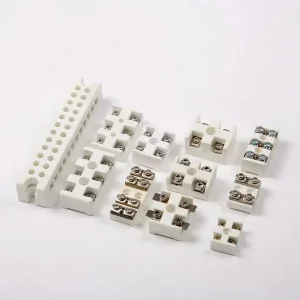
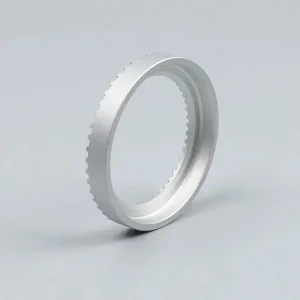
Precision Cast & Sintered Hardware Series
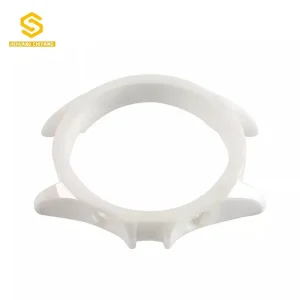
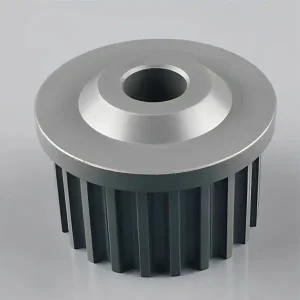
Explore additional custom manufactured MIM, sintered metal, ceramic, and die cast products.





Ready to Optimize Your Die Casting Supply Chain?
Submit your 2D PDF and 3D STEP drawings to receive a comprehensive DFM analysis and transparent factory quotation within 48 hours.